Join us on a literary world trip!
Add this book to bookshelf
Grey
Write a new comment Default profile 50px
Grey
Subscribe to read the full book or read the first pages for free!
All characters reduced
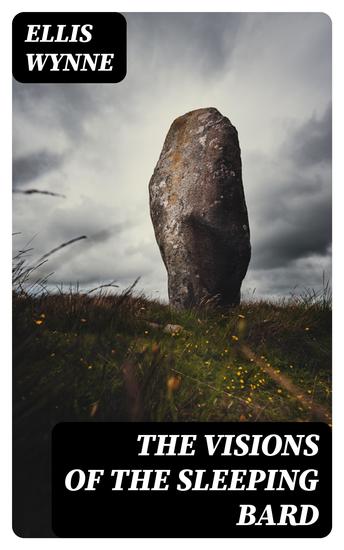
The Visions of the Sleeping Bard - cover

The Visions of the Sleeping Bard

Ellis Wynne

Translator Robert Gwyneddon Davies

Publisher: DigiCat

  • 0
  • 0
  • 0

Summary

In "The Visions of the Sleeping Bard," Ellis Wynne weaves a tapestry of allegorical dreams and mystical experiences that reflect the rich tapestry of Welsh spiritual and literary tradition. Written in an era marked by the flowering of Renaissance thought, Wynne's prose is imbued with a poetic style that invites readers into a multi-layered examination of virtue, morality, and the influence of divine imagination. The book's surreal narrative structure, laden with visionary symbolism, engages with the cultural dialogues of its time, offering an introspective view of the human condition through the lens of a bard's introspections and otherworldly encounters. Ellis Wynne, a prominent figure in Welsh literature, emerged from a culturally vibrant background that informed his fascination with vision and morality. His life in the late 17th and early 18th centuries, coupled with the religious and philosophical currents of the time, deeply influenced his writing. Wynne's commitment to exploring the inner workings of the soul, particularly in contrast with the external worldly challenges, plays a crucial role in shaping the dreamlike quality of this work. Readers seeking a profound exploration of spiritual introspection will find "The Visions of the Sleeping Bard" both enlightening and thought-provoking. Its rich allegorical content and lyrical prose make it a significant contribution to the canon of Welsh literature, inviting modern readers to reflect on their own moral journeys and existential musings.
Available since: 09/16/2022.
Print length: 107 pages.

Other books that might interest you

  • Essential Works of William Blake - cover

    Essential Works of William Blake

    William Blake

    • 0
    • 0
    • 0
    Here are eight fundamental works by one of the few greatest English poets: three lyric pieces, Songs of Innocence, The Book of Thel, Songs of Experience; the prose satire An Island in the Moon, the mystical prose poem The Marriage of Heaven & Hell, and three visionary poems: The French Revolution, Visions of the Daughters of Albion, America, a Prophecy.  William Blake (1757-1827) is one of the great relevant figures of his time, who like Beethoven in music  bridges the classical and romantic, remaining himself uncategorizable.
    Show book
  • Dorothy Parker Reader The - Enough Rope Men I'm Not Married To and Sunset Gun - Unabridged - cover

    Dorothy Parker Reader The -...

    Dorothy Parker

    • 0
    • 0
    • 0
    Collected here are three of Dorothy Parker's earliest works: two collections of poetry - "Enough Rope" and "Sunset Gun" as well as her short, hilarious collection of stories recounting all of the men she managed to avoid marrying named (appropriately) "Men I'm Not Married To." One of the 20th century's most celebrated and renowned humorists, Parker burst upon the unsuspecting literary world with these best-selling books, delivering biting, satiric and insightful comments on love, life and literature that would make her a worldwide sensation.Dorothy Parker - social commentator, political reformer and legendary wit - has enjoyed a special place in American culture and "Sunset Gun" is another early example of Parker's unique and wry commentary on modern life. It is presented here in its original and unabridged format.
    Show book
  • I Done Clicked My Heels Three Times - Poems - cover

    I Done Clicked My Heels Three...

    Taylor Byas

    • 0
    • 0
    • 0
    Inspired by The Wiz, this debut, full-length poetry collection celebrates South Side Chicago and a Black woman's quest for self-discovery—one that pulls her away from the safety of home and into her power 


    I Done Clicked My Heels Three Times takes its inspiration and concept from the cult classic film The Wiz to explore a Black woman's journey out of the South Side of Chicago and into adulthood. The narrative arc of The Wiz—a tumultuous departure from home, trials designed to reveal new things about the self, and the eventual return home—serves as a loose trajectory for this collection, pulling listeners through an abandoned barn, a Wendy's drive-thru, a Beyoncé video, Grandma's house, Sunday service, and the corner store. At every stop, the speaker is made to confront her womanhood, her sexuality, the visibility of her body, alcoholism in her family, and various ways in which narratives are imposed on her. 


    Subverting monolithic ideas about the South Side of Chicago, and re-casting the city as a living, breathing entity, I Done Clicked My Heels Three Times spans sestinas, sonnets, free-verse, and erasures, all to reimagine the concept of home. Chicago isn't just a city, but a teacher, a lingering shadow, a way of seeing the world.
    Show book
  • Lycidas - Much shorter poem from the famed author of Paradise Lost - cover

    Lycidas - Much shorter poem from...

    John Milton

    • 0
    • 0
    • 0
    John Milton was born in Bread Street, London, on December 9th, 1608.  His early years were privately tutored before gaining a place at St Paul’s School and in 1625 he matriculated at Christ's College, Cambridge, earning a BA in 1629 and an MA in 1632. At Cambridge he had developed a reputation for poetic skill but also experienced alienation from his peers and university life as a whole.  
    The next 6 years were spent in private study. He read both ancient and modern works of theology, philosophy, history, politics, literature and science, in preparation for a poetical career.  Milton mastered Latin, Greek, Hebrew, French, Spanish, and Italian. To these he would add Old English (whilst researching his History of Britain) and also acquired more than a passing acquaintance in Dutch.  
    Although he was studying, some of his poetry from this time is remarkable; L’Allegro and Il Penseroso in 1631 and Lycidias in 1638. 
    In May 1638, Milton embarked upon a 15 month tour of France and Italy. These travels added a new and direct experience of artistic and religious traditions, especially Roman Catholicism.  He cut the journey short to return home during the summer of 1639 because of what he claimed were "sad tidings of civil war in England."  
    Once home, Milton wrote prose tracts against episcopacy, in the service of the Puritan and Parliamentary cause.  
    He married 16-year-old Mary Powell in June 1643 but she left him after only a few months during which he wrote and published several writings on divorce. Mary did return after 3 years and their life thereafter seemed harmonious.  Milton received a hostile response to the divorce tracts and drove him to write Areopagitica, his celebrated attack on pre-printing censorship.  
    With the parliamentary victory in the Civil War, Milton wrote The Tenure of Kings and Magistrates (1649) which defended popular government and implicitly sanctioned the regicide which led to his appointment as Secretary for Foreign Tongues by the Council of State.  
    On 24 February 1652 Milton published his Latin defense of the English People, Defensio Pro Populo Anglicano, also known as the First Defense. Milton's Latin prose and intellectual sweep, quickly gained him a European reputation.  
    Tragically his first wife, Mary, died on May 5th, 1652 following the birth of their fourth child.   The following year Milton had become totally blind, probably due to glaucoma.  He then had to dictate his verse and prose to helpers, one of whom was the poet Andrew Marvell.  
    He married again to Katherine Woodcock but she died in February 1658, less than four months after giving birth to a daughter, who also tragically died.  
    Though Cromwell’s death in 1658 caused the English Republic to collapse Milton stubbornly clung to his beliefs and in 1659 he published A Treatise of Civil Power, attacking the concept of a state-dominated church. Upon the Restoration in May 1660, Milton went into hiding for his life. An arrest warrant was issued and his writings burnt. He re-emerged after a general pardon was issued, but was nevertheless arrested and briefly imprisoned before influential friends, such as Marvell, now an MP, intervened 
    His third marriage was to Elizabeth Mynshull. Despite a 31-year age gap, the marriage seemed happy and Milton spent the remaining decade of his life living quietly in London, apart from a short spell in Chalfont St. Giles, during the Great Plague of London.  
    Milton was to now publish his greatest works, which had been gestating for many years.  Paradise Lost, perhaps the classic English Epic poem was originally published in 10 books in 1667.  This was followed by Paradise Regained and Samson Agonistes in 1671.  Because of his anti-monarchy views their reception was muted but over the centuries since Milton has established himself as second only to Shakespeare.  He died of kidney failure on November 8th, 1674 and was buried in the church of St Giles Cripplegate.
    Show book
  • Where Did All The Flowers Come From? - cover

    Where Did All The Flowers Come...

    Gordon MacLeod

    • 0
    • 0
    • 0
    Based on the island of Arran.  
    Sister Rhona, Vicky, and Mary meet to mark the occasion of their mother's burial a year to the day following her funeral. 
    Puzzled by the many flowers left on their mother's grave, they probe the reasons for this and who is responsible. Hatching a plan to catch the donor, the answer leads to some unexpected revelations that their mother did not want to share with her daughters.
    Show book
  • Faust-The Tragedy - cover

    Faust-The Tragedy

    Johann Wolfgang von Goethe

    • 0
    • 0
    • 0
    "Two souls, alas! are dwelling in my breast; and one is striving to forsake its brother."
    
    Dr. Faust is a brilliant scholar who has reached the limits of human knowledge, yet remains profoundly dissatisfied. In his thirst for infinite experience and absolute truth, he strikes a daring wager with the demon Mephistopheles: if the devil can provide a moment of such perfect bliss that Faust wishes it to never end, the devil may claim his soul. What follows is a cosmic journey through the heights of passion, the depths of despair, and the very foundations of Western civilization.
    
    From Personal Tragedy to Global Myth: In Part One, experience the intimate, heartbreaking "Gretchen Tragedy," where Faust's pursuit of earthly pleasure leads to the destruction of an innocent woman. In Part Two, the scope expands into a surreal, phantasmagoric exploration of history, politics, and classical mythology, as Faust seeks to find his place in the broader world.
    
    The Height of German Romanticism: Goethe's Faust is more than a play; it is a "World Poem" that captures the restlessness of the modern spirit. It explores the dangerous allure of progress and the redemptive power of the "Eternal Feminine." With its rich symbolism and breathtaking verse, it remains the ultimate exploration of the human condition—asking if a soul that never stops striving can ever truly be lost.
    
    Witness the wager that defined an era. Purchase "Faust" today and journey to the edge of heaven and hell.
    Show book