Join us on a literary world trip!
Add this book to bookshelf
Grey
Write a new comment Default profile 50px
Grey
Subscribe to read the full book or read the first pages for free!
All characters reduced
The Life of Charlotte Brontë - cover

The Life of Charlotte Brontë

Elizabeth Gaskell

Publisher: Passerino

  • 0
  • 0
  • 0

Summary

Charlotte Brontë was a celebrated English novelist, born on April 21, 1816, in Thornton, Yorkshire, England. She was the third of six children, and her father, Patrick Brontë, was an Irish Anglican clergyman. Charlotte's mother died when she was just five years old, and she and her sisters, Emily and Anne, were sent to a harsh boarding school, which served as inspiration for their novel "Jane Eyre." After leaving school, Charlotte worked as a governess and a teacher before eventually returning home to care for her aging father.
Tragically, Charlotte's life was cut short when she died on March 31, 1855, at the age of 38. She had married her father's curate, Arthur Bell Nicholls, just a year earlier, but her health had been in decline for some time, likely due to complications from pregnancy.
Despite her brief life, Charlotte Brontë's legacy as a pioneering female author continues to inspire readers and writers to this day.

Elizabeth Gaskell was an English novelist and biographer who lived from 1810 to 1865. She was born in Chelsea, London, and grew up in Knutsford, Cheshire. She is best known for her novels that explore the social and economic conditions of Victorian England, as well as her biographies of notable figures such as Charlotte Brontë and her friend, the social reformer Mary Barton.

Gaskell's biography of Charlotte Bronte, "The Life of Charlotte Brontë," was published in 1857, two years after Bronte's death. The biography was controversial at the time because it revealed many details of Bronte's personal life that had been kept private, including her struggles with mental illness and her unrequited love for her publisher. However, it is now considered a landmark work in the field of literary biography.
Available since: 03/06/2023.
Other books that might interest you

  • Literature for the People - How The Pioneering Macmillan Brothers Built a Publishing Powerhouse - cover

    Literature for the People - How...

    Sarah Harkness

    • 0
    • 0
    • 0
    Read by the author, Sarah Harkness.From an impoverished childhood in the Scottish highlands to Victorian London, this is the inspiring story of brothers Daniel and Alexander Macmillan who built a publishing empire - and brought Alice in Wonderland to the world. Their remarkable achievements are revealed in this entertaining, superbly researched biography.Daniel and Alexander arrived in London in the 1830s at a crucial moment of social change. These two idealistic brothers, working-class sons of a Scottish crofter, went on to set up a publishing house that spread radical ideas on equality, science and education across the world. They also brought authors like Lewis Carroll, Thomas Hardy and Charles Kingsley, and poets like Matthew Arnold and Christina Rossetti, to a mass audience. No longer would books be just for the upper classes.In Literature for the People Sarah Harkness brings to life these two warm-hearted men. Daniel was driven by the knowledge that he was living on borrowed time, his body was ravaged by tuberculosis. Alexander took on responsibility for the company as well as Daniel’s family and turned a small business into an international powerhouse. He cultivated the literary greats of the time, weathered controversy and tragedy, and fostered a dynasty that would include future prime minister Harold Macmillan.Including fascinating insights about the great, the good and the sometimes wayward writers of the Victorian era, with feuds, friendships and passionate debate, this vibrant book is bursting with all the energy of that exciting period in history.
    Show book
  • Arch Rascal An - From their pens to your ears genius in every story - cover

    Arch Rascal An - From their pens...

    Knut Hamsun

    • 0
    • 0
    • 0
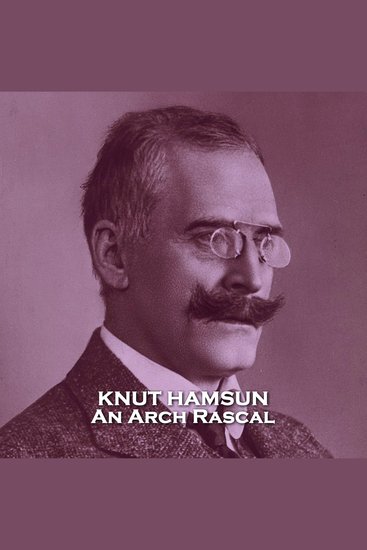
    Knud Pedersen was born in Lom in the Gudbrandsdal valley of Norway on the 4th of August, 1859 in what was then the United Kingdoms of Sweden and Norway.  He was the fourth son of seven children born to poor parents who, when he was three, were invited to an uncle’s farm to work his land. 
    When he was nine he moved away from his family to help another uncle who ran a post office.  Whilst with him he was beaten and starved which manifested in a series of chronic nervous difficulties.  The treatment endured for six years until he managed to escape back to Lom. 
    For some time he now took any job that was available to him, including store clerk, peddler, shoemaker's apprentice, sheriff's assistant, elementary-school teacher and ropemaker's apprentice.  At about the same time, with the wealth of these gained experiences, he began to explore his literary talents. 
    In 1877 he published his first book ‘The Enigmatic Man: A Love Story from Northern Norway’, others soon followed but real success only came in 1890 with ‘Hunger’, an influential work for later novelists with its internal monologue and bizarre logic.  His work is often associated with Pantheism; where nature and mankind are unified in a strong and often mystical bond.   
    His work was so influential that in 1920 he was awarded the Novel Prize for Literature. 
    Shortly after this point his works became fewer and his interests darker.  During World War II he became a fervent admirer of the Nazi’s, even meeting Hitler, even though German armies had overrun Norway.  With the war’s end he was detained on charges of treason.  His old age was apparently the primary reason given for Hamsun receiving only a fine.  Other reasons also sought to excuse his abhorrent behaviour but it was clear that whilst he was loved for his literature he was detested for his politics and morals. 
    His literary canon includes more than 20 novels, a poetry collection, short stories, plays, a travelogue, other works of non-fiction and essays. 
    Knut Hamsun died on the 19th February 1952 in Grimstad. He was 92.
    Show book
  • Corpus Hermeticum - Ancient Wisdom on the Divine the Cosmos and the Soul - A Modern Translation - Adapted for the Contemporary Reader - cover

    Corpus Hermeticum - Ancient...

    Hermes Trismegistus

    • 0
    • 0
    • 0
    What if you could unlock the secrets of the cosmos, understand the nature of the divine, and discover your soul’s purpose? 
    Corpus Hermeticum is a modern translation of the foundational Hermetic texts, designed to make the profound teachings of Hermes Trismegistus accessible to contemporary readers. These ancient writings explore the nature of creation, the connection between the material and spiritual realms, and the path to enlightenment. 
    More than a historical document, the Corpus Hermeticum provides timeless insights into existence, inviting readers to contemplate their relationship with the divine and their place in the universe.What You’ll Discover:The Nature of the Divine and the Cosmos – Explore sacred principles that govern creation and interconnectedness.The Path to Enlightenment – Align your soul with divine wisdom and achieve spiritual awakening.Timeless Spiritual Practices – Discover ancient teachings relevant for personal growth today.Bridging the Material and Spiritual Worlds – Understand the Hermetic principle of “as above, so below” and its impact on daily life. 
    Imagine uncovering divine truths, awakening your inner potential, and gaining clarity on life’s mysteries. The teachings of Hermes Trismegistus have guided seekers for millennia—now, it’s your turn. 
    Take the first step toward spiritual enlightenment. Get your copy today and unlock ancient wisdom that can transform your life.
    Show book
  • Aldous Huxley George Orwell - cover

    Aldous Huxley George Orwell

    Geoffrey Giuliano

    • 0
    • 0
    • 0
    A deep dive into the heart and mind of both Aldous Huxley and George Orwell.The greatest contributions to the tradition of dystopian fiction are two defining masterpieces from the 20th century, both of them bestsellers at the time and ever since: Aldous Huxley’s 1932 Brave New World and George Orwell’s 1949 Nineteen Eighty-Four. The two dystopias have many details in common. Both writers saw a future shaped by weapons of mass destruction — biological and chemical weapons in Huxley’s case, nuclear war in Orwell’s. They agreed about the danger of permanent social stratification, with humanity divided into categories determined by biological engineering and psychological conditioning (Huxley) or traditional class combined with totalitarian loyalty systems (Orwell). Both men imagined future societies completely obsessed with sex, though in diametrically opposite ways: state-enforced repression and celibacy in the case of Orwell; deliberate, narcotizing promiscuity in the case of Huxley. Both men thought the future would be dominated by America. Both men thought that future governments would spend a lot of effort permanently trying to incite economic consumption — not that either man thought of anything as wildly fantastical as quantitative easing. Both began their books with a short sentence designed to signal a world that was familiar but also disconcertingly futuristic “ Here are both literary giants in their own bold words!
    Show book
  • A Little Cloud - From their pens to your ears genius in every story - cover

    A Little Cloud - From their pens...

    James Joyce

    • 0
    • 0
    • 0
    James Augustine Aloysius Joyce was born on the 2nd February 1882 in Dublin into a middle-class family, and the eldest of ten surviving siblings 
    Admired as a brilliant student he briefly attended the Christian Brothers-run O'Connell School before excelling at the Jesuit schools of Clongowes and Belvedere.  From there he went on to attend University College Dublin from 1898, studying English, French and Italian 
    In 1902, Joyce was now in his early twenties, and went to Paris to study Medicine but soon abandoned his teachings.  Back in Dublin to attend to his dying Mother he met Nora Barnacle. They bonded immediately into a life-long match. Together they decided to emigrate to Europe.  The couple lived in Trieste, Rome, Paris, and finally Zürich where Joyce pursued a variety of jobs and ventures to supplement his literary pursuits but none of these paid off.  
    After publishing a poetry volume, ‘Chamber Music’, in 1907, his short story collection ‘The Dubliners’, in 1914, helped establish his talent in the rapidly changing world.  
    Although far from home Joyce’s literary heart and works were set in his recollections of Dublin.  Characters are close resemblances of family and friends and indeed enemies.  His landmark work ‘Ulysses’, published in 1922, is set in the streets and alleyways of the city as it parallels Homer’s Odyssey in a variety of styles including its famed stream of consciousness. 
    His pen continued to produce classics of the order of ‘A Portrait of the Artist as A Young Man’ and ‘Finnegan’s Wake’ together with several volumes of poetry and a play ‘The Exiles, in 1918.   
    On the 11th January 1941, Joyce underwent surgery in Zürich for a perforated duodenal ulcer. The next day he fell into a coma. On the 13th after a brief period of lucidity in which he called for his wife and son he passed.  He was 58.
    Show book
  • Duplicity - My Mothers' Secrets (Unabridged) - cover

    Duplicity - My Mothers' Secrets...

    Donna Freed

    • 0
    • 0
    • 0
    'Just the most amazing story, a brilliant story, it's like discovering another world. How incredible to go back and search for your past in that way.' Jeremy Vine, BBC R2. 'Mesmerising, I couldn't stop reading'. Decca Aitkenhead, The Sunday Times. 'A family scandal straight out of a Hollywood film noir .. what a story it is. I look forward to seeing it on Netflix'. Genevieve Gaunt, The Spectator. Donna's birth parents were infamous con artists at the heart one of the US's biggest crime investigations of the 1960's. Donna Freed was six years old when her sister casually revealed that she and her siblings were all adopted, a subject her parents refused to discuss. The revelation fractured Donna's sense of identity. The death of her tricky yet treasured adoptive mother died left Donna feeling exposed, her life un-witnessed without a mother to look over her. When she became a mother herself, Donna felt compelled to track down her birth mother. Trawling through records of the now notorious Louise Wise Adoption Service, many previously redacted, she uncovered an explosive and salacious story, one of the biggest true crime investigations to grip the USA in the late 1960s. Her (real) parents had faked her mother's death tby drowning o benefit from a massive life insurance payout - a manhunt ensued....This vivid memoir about motherhood and identity, explores the essence of what it is to be a mother and the fundamental truth of nature vs nurture.
    Show book