Join us on a literary world trip!
Add this book to bookshelf
Grey
Write a new comment Default profile 50px
Grey
Subscribe to read the full book or read the first pages for free!
All characters reduced
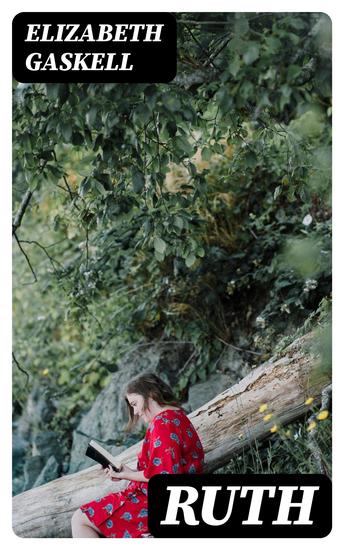
Ruth - cover

Ruth

Elizabeth Gaskell

Publisher: DigiCat

  • 0
  • 0
  • 0

Summary

In her groundbreaking novel "Ruth," Elizabeth Gaskell explores the intricate intersection of virtue, societal expectation, and moral complexities in Victorian England. Through the poignant narrative of Ruth Hilton, a young woman who faces societal scorn after bearing an illegitimate child, Gaskell employs a rich, empathetic prose style that delves deep into the struggles of her characters against the backdrop of class disparity and gender norms. The novel intertwines elements of social realism with profound philosophical inquiries, illustrating the harsh realities faced by women of the era while advocating for compassion and social reform. Elizabeth Gaskell, a prominent literary figure of the 19th century, was deeply influenced by her own experiences and the societal changes surrounding her. Hailing from a background that championed social justice, Gaskell's writing often reflected her keen awareness of the issues that marginalized women faced. Her encounters with diverse communities while living in industrialized Manchester provided her with a unique lens through which she examined the complexities of morality and societal judgment, thus informing her narrative in "Ruth." This compelling novel is a must-read for those interested in feminist literature and social critique. Gaskell's masterful character development and evocative storytelling resonate with contemporary audiences, inviting readers to reflect on the enduring themes of redemption and the transformative power of love. "Ruth" ultimately stands as a powerful testament to the strength of the human spirit, making it a vital addition to any literary collection.
Available since: 09/16/2022.
Print length: 465 pages.
Other books that might interest you

  • step on the stair The - Book 1 The Three Edgars - As night falls the kingdom of lies begins to speak through an invisible footsteps on the staircase - cover

    step on the stair The - Book 1...

    Anna Katharine Green

    • 0
    • 0
    • 0
    Discover The step on the stair, a compelling audiobook by Anna Katharine Green, presented for listeners who enjoy immersive storytelling, memorable characters, and a richly atmospheric journey from the opening scene to the final moment. This edition is crafted to feel engaging in audio, with a clear narrative hook, emotional momentum, and a sense of mystery, drama, romance, conflict, or discovery that invites the listener to keep going chapter after chapter. Whether experienced during a commute, a quiet evening, or a long weekend, The step on the stair offers the pleasure of classic storytelling in a fresh, accessible format. Perfect for audiobook fans, The step on the stair draws the listener into a vivid world shaped by desire, secrets, difficult choices, and lasting consequences. The story is presented with an emphasis on atmosphere, emotional clarity, and narrative tension, making it easy to follow while still offering depth and texture. Listeners who appreciate character-driven fiction, elegant pacing, and immersive scenes will find this audiobook a satisfying companion from beginning to end. This metadata description is intentionally written to provide a fuller retail overview while avoiding spoilers, preserving the pleasure of discovery for new listeners. From its first impression to its closing resonance, The step on the stair is designed to sound inviting, polished, and suitable for a professional audiobook catalog. Perfect for audiobook fans, The step on the stair draws the listener into a vivid world shaped by desire, secrets, difficult choices, and lasting consequences.
    Show book
  • Short Stories for Seniors - 51 Heartwarming Stories for Stimulating Memory Cognition and Relieving Stress - cover

    Short Stories for Seniors - 51...

    Phillip Willis

    • 0
    • 0
    • 0
    If you're looking for a heartwarming collection of stories to bring joy and inspiration to the lives of seniors, then keep reading... 
     "Short Stories for Seniors" is a heartwarming collection of fifty stories that are specifically tailored to bring joy and inspiration to the lives of seniors. Written with the unique perspective of those who have lived a long and fulfilling life, this audiobook offers a poignant look at the human experience through stories that are relatable, engaging, and uplifting. 
    Each of the ten chapters focuses on a specific theme, ranging from family to friendship, love to loss, and even funny and uplifting stories. The stories are carefully curated to provide seniors with a sense of nostalgia, a reminder of the good times and memories they have made throughout their lives. 
    Whether readers are looking for a comforting story about the warmth of family, a touching tale of friendship, or an uplifting anecdote that reminds them of the simple joys of life, "Short Stories for Seniors" has something for everyone. The stories are easy to read and will evoke a range of emotions, from laughter to tears, while reminding seniors of the many reasons to cherish their lives and the people around them. 
    Overall, "Short Stories for Seniors" is a delightful and heartwarming audiobook that will resonate with readers of all ages. It is a perfect gift for seniors, as well as anyone who wants to be reminded of the beauty and value of life.
    Show book
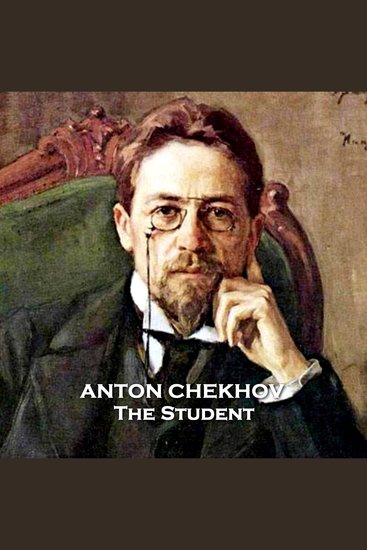
  • The Student - From their pens to your ears genius in every story - cover

    The Student - From their pens to...

    Anton Chekhov

    • 0
    • 0
    • 0
    Anton Pavlovich Chekhov was born on 29th January 1860 in Taganrog, on the south coast of Russia.  
    His family life was difficult; his father was strict and over-bearing but his mother was a passionate story-teller, a subject Chekhov warmed to. As he later said; ‘our talents we got from our father, but our soul from our mother’.  
    At school Chekhov was distinctly average. At 16 his father mis-managed his finances and was declared bankrupt. His family fled to Moscow. Chekhov remained and eked out a living by various means, including writing and selling short sketches to newspapers, to finish his schooling. That completed and with a scholarship to Moscow University obtained he rejoined his family. 
    He was able to help support them by selling satirical sketches and vignettes of Russian lifestyles and gradually obtained further commissions. In 1884, he qualified as a physician and, although it earned him little, he often treated the poor for free, he was fond of saying ‘Medicine is my lawful wife, and literature is my mistress.’ 
    His own health was now an issue as he began to cough up blood, a symptom of tuberculosis.  Despite this his writing success enabled him to move the family into more comfortable accommodation.  
    Chekhov wrote over 500 short stories which included many, many classics including ‘The Kiss’ and ‘The Lady with a Dog’.  His collection ‘At Dusk’ won him the coveted Pushkin Prize when was only 26.  
    He was also a major playwright beginning with the huge success of ‘Ivanov’ in 1887.   
    In 1892 Chekhov bought a country estate north of Moscow. Here his medical skills and money helped the peasants tackle outbreaks of cholera and bouts of famine. He also built three schools, a fire station and a clinic.  It left him with less time for writing but the interactions with real people gained him detailed knowledge about the peasantry and their living conditions for his stories.  
    His most famous work, ‘The Seagull’ was received disastrously at its premiere in St Petersburg. It was later restaged in Moscow to highlight its psychological aspects and was a huge success. It led to ‘Uncle Vanya’, ‘The Three Sisters’ and ‘The Cherry Orchard’.  
    Chekhov suffered a major lung hemorrhage in 1897 while visiting Moscow. A formal diagnosis confirmed tuberculosis and the doctors ordered changes to his lifestyle.  
    Despite a dread of weddings the elusive literary bachelor quietly married the actress Olga Knipper, whom he had met at rehearsals for ‘The Seagull’, on 25th May 1901. 
    By May 1904 with his tuberculosis worsening and death imminent he set off for the German town of Badenweiler writing cheerful, witty letters to his family and assuring them his health was improving.  
    On 15th July 1904 Anton Chekhov died at Badenweiler.  He was 44.
    Show book
  • The Adventures of Peregrine Pickle Volume 1 - cover

    The Adventures of Peregrine...

    Tobias Smollett

    • 0
    • 0
    • 0
    The Adventures of Peregrine Pickle is a rollicking 18th-century picaresque novel chronicling the reckless life of its eponymous anti-hero, a hot-headed and impulsive young gentleman. Born to a wealthy family but disinherited after a quarrel, Peregrine embarks on a turbulent journey through the brothels, gambling dens, and naval ships of Britain and continental Europe. Alongside vivid depictions of debauchery and misadventure, the novel features the unforgettable character of Commodore Trunnion, a comically eccentric naval veteran. Smollett blends satire, bawdy humor, and sharp social critique to expose the vices and follies of the age. A foundational work in the development of the English novel, it captures the wild spirit of youth, rebellion, and self-destruction.
    Show book
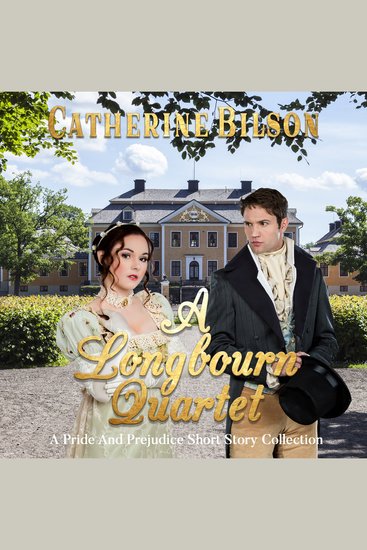
  • A Longbourn Quartet - An Austenesque Short Story Collection - cover

    A Longbourn Quartet - An...

    Catherine Bilson

    • 0
    • 0
    • 0
    Four short stories set in the beloved world of Jane Austen's Pride & Prejudice which explore missing scenes and paths not taken in the original story. 
    A Slip and a Trip 
    This little Mis-step takes place at the dance at Lucas Lodge, at which Elizabeth declines Darcy’s offer of a dance. Though in canon, Jane and Bingley aren’t mentioned as even being present, they must surely have been there. 
    The Darcy Inquisition 
    The Scene: Darcy’s house in London, a week post-Hunsford. Darcy has lapsed into despair; Georgiana, fearing for him, has called for her cousin Colonel Fitzwilliam to help. They intend to interrogate Darcy to find out what is wrong, but somehow things go slightly awry. 
    Based on selected nuggets from the wonderful Monty Python sketches of The Spanish Inquisition. 
    Incidentally, did you know that one of Jane Austen’s suggestions for Colonel Fitzwilliam’s first name was Montgomery? That discovery inspired this whole ficlet… 
    Mr. Bennet’s Call 
    This is my imagining of a scene omitted from P&P: in the original work, we discover that Mr Bennet paid a call upon Bingley when he teases Mrs Bennet about not being able to escape the acquaintance. I found myself wondering, what was said in that call? 
    The Exception That Proves The Rule 
    You know the rule. Eavesdroppers rarely hear good of themselves. 
    So, this is a what-if one-shot that is intended to be the exception to that rule. 
    Our little tale begins at Netherfield, while Elizabeth is there nursing Jane. Elizabeth comes downstairs to dispatch the letter to her mother, requesting that the carriage be sent to collect them. Of course, she must ask Mr Bingley for the use of a rider to convey the message to Longbourn, and so she goes looking for him.
    Show book
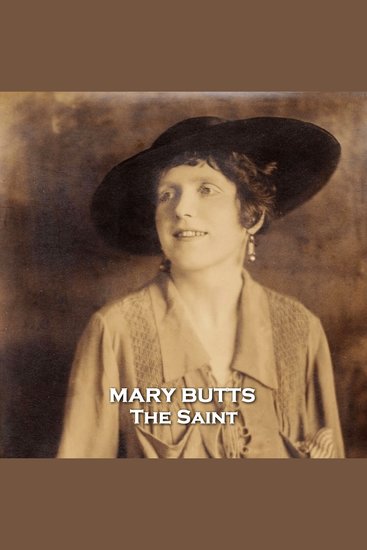
  • The Saint - From their pens to your ears genius in every story - cover

    The Saint - From their pens to...

    Mary Butts

    • 0
    • 0
    • 0
    Mary Frances Butts was born on 13th December 1890 in Poole, Dorset. 
    Her early years were spent at Salterns, an 18th-century house overlooking Poole Harbour.  Sadly in 1905 her father died, and she was sent for boarding at St Leonard's school for girls in St Andrews. 
    Her mother remarried and, from 1909, Mary studied at Westfield College in London, and here, first became aware of her bisexual feelings.  She was sent down for organising a trip to Epsom races and only completed her degree in 1914 when she graduated from the London School of Economics.  By then Mary had become an admirer of the occultist Aleister Crowley and she was given a co-authorship credit on his ‘Magick (Book 4)’. 
    In 1916, she began the diary which would now detail her future life and be a constant reference point for her observations and her absorbing experiences. 
    During World War I, she was doing social work for the London County Council in Hackney Wick, and involved in a lesbian relationship.  Life changed after meeting the modernist poet, John Rodker and they married in 1918. 
    In 1921 she spent 3 months at Aleister Crowley's Abbey of Thelema in Sicily; she found the practices dreadful and also acquired a drug habit.  Mary now spent time writing in Dorset, including her celebrated book of short stories ‘Speed the Plough’ which saw fully develop her unique Modernist prose style. 
    Europe now beckoned and several years were spent in Paris befriending many artists and writing further extraordinary stories.   
    She was continually sought after by literary magazines and also published several short story collections as books. Although a Modernist writer she worked in other genres but is essentially only known for her short stories.  Mary was deeply committed to nature conservation and wrote several pamphlets attacking the growing pollution of the countryside. 
    In 1927, she divorced and the following year her novel ‘Armed with Madness’ was published.  A further marriage followed in 1930 and time was spent attempting to settle in London and Newcastle before setting up home on the western tip of Cornwall.  By 1934 the marriage had failed. 
    Mary Butts died on 5th March 1937, at the West Cornwall Hospital, Penzance, after an operation for a perforated gastric ulcer. She was 46.
    Show book