Join us on a literary world trip!
Add this book to bookshelf
Grey
Write a new comment Default profile 50px
Grey
Subscribe to read the full book or read the first pages for free!
All characters reduced
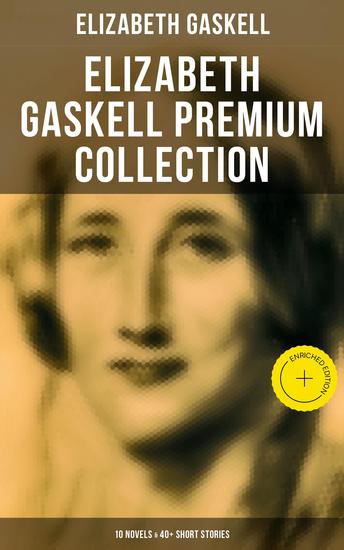
Elizabeth Gaskell Premium Collection: 10 Novels & 40+ Short Stories - Enriched edition Including Poems Essays & Biographies (Illustrated Edition) - cover

Elizabeth Gaskell Premium Collection: 10 Novels & 40+ Short Stories - Enriched edition Including Poems Essays & Biographies (Illustrated Edition)

Elizabeth Gaskell

Publisher: Musaicum Books

  • 0
  • 0
  • 0

Summary

Elizabeth Gaskell's 'Elizabeth Gaskell Premium Collection: 10 Novels & 40+ Short Stories' is a treasury of her most esteemed works, showcasing a blend of social commentary, romance, and realism. Gaskell's literary style is characterized by vivid characterizations and detailed descriptions of industrial England, reflecting her deep understanding of social issues. The collection includes classics such as 'North and South', 'Cranford', and 'Mary Barton', offering readers a glimpse into the complexities of Victorian society through the eyes of compelling protagonists. Gaskell's ability to depict the struggles of the working class and the role of women in society adds depth to her narratives, making them both thought-provoking and engaging. This compilation serves as a testament to Gaskell's versatility as a writer and her enduring relevance in the literary canon. As a prominent figure in the Victorian literary scene, Gaskell's personal experiences and observations of society inform her narratives, providing readers with valuable insights into the social issues of her time. Her dedication to shedding light on the plight of the marginalized and her progressive views on gender roles make her works timeless classics that resonate with modern readers. Fans of Victorian literature and social realism will find Gaskell's 'Premium Collection' a captivating and enriching read, offering a comprehensive view of her literary prowess and social conscience.

In this enriched edition, we have carefully created added value for your reading experience:
- An Introduction draws the threads together, discussing why these diverse authors and texts belong in one collection.
- Historical Context explores the cultural and intellectual currents that shaped these works, offering insight into the shared (or contrasting) eras that influenced each writer.
- A combined Synopsis (Selection) briefly outlines the key plots or arguments of the included pieces, helping readers grasp the anthology's overall scope without giving away essential twists.
- A collective Analysis highlights common themes, stylistic variations, and significant crossovers in tone and technique, tying together writers from different backgrounds.
- Reflection questions encourage readers to compare the different voices and perspectives within the collection, fostering a richer understanding of the overarching conversation.
Available since: 03/21/2018.
Print length: 4957 pages.
Other books that might interest you

  • The Power of a Graceful Leader - cover

    The Power of a Graceful Leader

    Alexsys Thompson

    • 0
    • 0
    • 0
    Do you have a division between who you are as a business leader and who you are as a spouse, friend, sister, brother, mother, or father? The awareness of the division that exists within you and the roles you play creates space for your inner voice. This inner voice is seeking your attention and hinting there is a better, easier way of leading and being. 
    In The Power of a Graceful Leader, Alexsys Thompson shares how to begin integrating who you are and how you lead. Through her experience with this disconnect in her own leadership and having coached hundreds of leaders in their integration journey, Alexsys offers tools, tenets, and some relatable stories to support you in your journey toward becoming an integrated and graceful leader. You will find yourself making better decisions, building healthier relationships, and experiencing joy, love, and compassion as you transcend into the leader you were born to be.
    Show book
  • Byzantium and Constantinople: The History of the Ancient Greek City that Became the Byzantine Empire’s Capital - cover

    Byzantium and Constantinople:...

    Editors Charles River

    • 0
    • 0
    • 0
    Due to the importance of the Roman Empire and the offshoot Byzantine Empire, it’s often forgotten that Constantinople wasn’t chosen at random; in fact, the city already existed, and it lent its name to the empire that was subsequently centered there. Byzantium, known originally as Byzantion, was an ancient Greek city centuries before it became known as Constantinople, and the etymology of Byzantion/Byzantium is still unknown. It has been suggested that Byzantion is of Thracian origin and may be derived from the Thracian personal name Byzas, which means “he-goat.” Ancient Greek legend refers to King Byzas as the leader of the Megaran colonists and the founder of the city, but the earliest name for a city on the site is “Lygos,” which likely corresponds to an earlier Thracian settlement described by Pliny the Elder in his seminal work, Natural History: “On leaving the Dardanelles we come to the Bay of Casthenes, ...and the promontory of the Golden Horn, on which is the town of Byzantium, a free state, formerly called Lygos; it is 711 miles from Durazzo.” 
    Pliny went on to explain that Lygos was a Thracian settlement founded between the 13th and 11th centuries BCE. The site, however, was probably abandoned well before Megara founded Byzantion around 657 BCE across from Chalcedon on the Asiatic side of the Bosphorus. The city was briefly renamed Augusta Antonina in the early 3rd century CE by the Emperor Septimius Severus, who razed the city to the ground in 196 CE for supporting a rival contender in the civil war and had it rebuilt in honor of his son and successor, Marcus Aurelius Antoninus, known as Caracalla. This new name appears to have been quickly forgotten and abandoned, with the city reverting to Byzantium after the assassination of Caracalla in 217 CE, and that’s how it would be known when Constantine fatefully moved the seat of power there over a century later.
    Show book
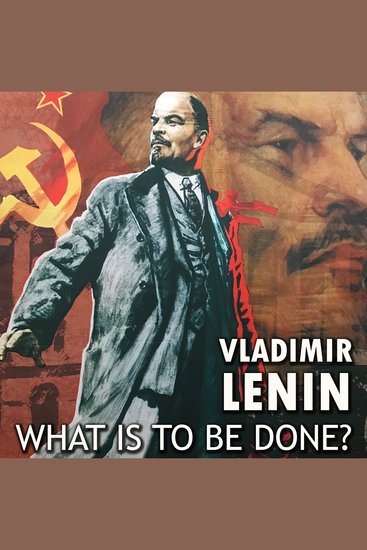
  • What Is to Be Done? - cover

    What Is to Be Done?

    Vladimir Lenin

    • 0
    • 0
    • 0
    "What Is to Be Done?" by Vladimir Lenin is a seminal work that outlines the revolutionary strategy and organizational principles for the Russian Social Democratic Labour Party. Written in 1902, this influential text serves as a cornerstone in the development of Leninist thought.
     Lenin addresses the challenges facing the working class movement, particularly the lack of revolutionary consciousness among the proletariat. He argues for the necessity of a vanguard party composed of professional revolutionaries who possess the political knowledge to guide the working class towards socialist revolution.
     The text delves into Lenin's critique of spontaneity and calls for a disciplined and centralized party that can provide direction and leadership. Lenin emphasizes the importance of theoretical clarity, political education, and a strong organizational structure to achieve the ultimate goal of overthrowing the capitalist system.
    "What Is to Be Done?" has been a subject of extensive debate and interpretation within Marxist circles, and its ideas have had a profound impact on the development of revolutionary movements worldwide. This work remains a key reference for those exploring Leninist theory and the role of the vanguard party in revolutionary change.
    Show book
  • Demographic Dividend - Turning Population Growth into Economic Gold - cover

    Demographic Dividend - Turning...

    Priyank Agrawal

    • 0
    • 0
    • 0
    Demographic Dividend: Turning Population Growth into Economic Gold offers a comprehensive exploration of one of the most pivotal forces shaping the global economy today—demographic change. This insightful and timely book delves into the concept of the demographic dividend, a period of accelerated economic growth driven by shifts in population structure, particularly when the working-age population outnumbers dependents. Through a blend of theory, real-world case studies, and policy analysis, the book reveals how nations can harness their demographic potential to spur sustainable economic development. 
    Drawing on historical examples and contemporary trends, the book uncovers how demographic transitions—such as the shift from youthful to aging populations—can either be a boon or a burden for economies. It explores key drivers of economic success, such as human capital investment, healthcare improvements, and job creation, while also addressing the challenges posed by aging populations, dependency ratios, and unemployment. 
    This book also explores the regional perspectives of Asia, Africa, and Latin America, highlighting diverse strategies for leveraging demographic changes in different contexts. It emphasizes the role of education, healthcare, and economic policies in unlocking the full potential of a growing or transitioning population. With a forward-thinking approach, it concludes with actionable insights and a call to action for policymakers, economists, and citizens to turn demographic challenges into lasting economic opportunities. 
    Whether you are a policymaker, economist, academic, or simply an engaged citizen, Demographic Dividend: Turning Population Growth into Economic Gold provides the essential tools and knowledge to understand and navigate the complexities of demographic transitions and their transformative impact on economic development.
    Show book
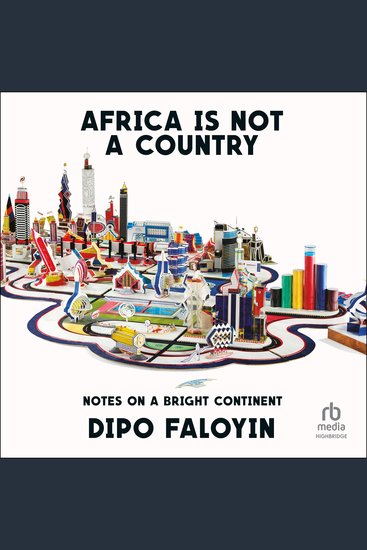
  • Africa Is Not a Country - Notes on a Bright Continent - cover

    Africa Is Not a Country - Notes...

    Dipo Faloyin

    • 0
    • 0
    • 0
    So often, Africa has been depicted simplistically as a uniform land of famines and safaris, poverty and strife, stripped of all nuance. In this bold and insightful book, Dipo Faloyin offers a much-needed corrective, weaving a vibrant tapestry of stories that bring to life Africa's rich diversity, communities, and histories. 


    Starting with an immersive description of the lively and complex urban life of Lagos, Faloyin unearths surprising truths about many African countries' colonial heritage and tells the story of the continent's struggles with democracy through seven dictatorships. With biting wit, he takes on the phenomenon of the white savior complex and brings to light the damage caused by charity campaigns of the past decades. Entering into the rivalries that energize the continent, Faloyin engages in the heated debate over which West African country makes the best jollof rice and describes the strange, incongruent beauty of the African Cup of Nations. With an eye toward the future promise of the continent, he explores the youth-led cultural and political movements that are defining and reimagining Africa on their own terms. 


    Africa Is Not a Country celebrates the energy and particularity of the continent's different cultures and communities, treating Africa with the respect it deserves.
    Show book
  • Claimed by the Vampire Frat Boys (Gay Halloween Erotica) - cover

    Claimed by the Vampire Frat Boys...

    Archer Vale

    • 0
    • 0
    • 0
    Dark, inhuman thirst rages within me—an unquenchable craving for masculinity. 
    They transformed me…but I’m not a normal vampire. 
    I feed on something far filthier than blood. 
    Tonight, the fraternity took me on my first hunt. We crashed the Halloween party and set up shop in the bathroom. One by one, players from the baseball team entered to feed me through a hole in the stall. 
    What have I become? What kind of dark, vile power now festers within my veins? 
    --- 
    CONTAINS EXPLICIT GAY SEXUAL CONTENT. 
    For exclusive stories, visit www.ArcherVale.com.
    Show book