Begleiten Sie uns auf eine literarische Weltreise!
Buch zum Bücherregal hinzufügen
Grey
Einen neuen Kommentar schreiben Default profile 50px
Grey
Jetzt das ganze Buch im Abo oder die ersten Seiten gratis lesen!
All characters reduced
The Burning Bush - Collected Speeches of Elias Simojoki - cover

The Burning Bush - Collected Speeches of Elias Simojoki

Elias Simojoki

Verlag: Antelope Hill Publishing LLC

  • 0
  • 0
  • 0

Beschreibung

Lauri Elias Simojoki (1899-1940) was a Finnish soldier, parliamentarian, Lutheran priest, far right organizer, and leader of an attempted coup in Estonia. As a young man, he served in the Finnish War of Independence in 1918 and fought as a guerrilla fighter in Karelia in 1919. Later, he studied theology at the University of Helsinki and was an essential part of the formation of the youth nationalist organization the Academic Karelia Society.
 
Ordained as a Lutheran minister in 1925, in 1933 he joined the Finnish parliament and took command of the Sinimustat, the youth wing of the Patriotic People’s Movement, inspired by and modeled on similar movements in Germany and Italy. Although the Sinimustat was disbanded a mere three years later due to its involvement in an attempted coup in Estonia, Simojoki remained a Member of Parliament and went on to found the Finnish Mustapaidat (Blackshirts) in 1937. He enlisted as a military chaplain at the outbreak of the Winter War and lost his life to Soviet gunfire while performing a mercy killing to a wounded horse on the battlefield.
 
The Burning Bush (Palava Pensas) is a selection of Simojoki’s patriotic and political speeches compiled by his comrade Vilho Helanen in 1942. It is in these speeches that Simojoki’s commitment to, and love for, Greater Finland stands out above all else. It is for Greater Finland that Simojoki worked all his life, the grand dream for which in the end he sacrificed his life. These speeches, translated by Jarno Alander, are now being made available in English for the first time by Antelope Hill Publishing.
Verfügbar seit: 15.07.2022.

Weitere Bücher, die Sie mögen werden

  • Avatar - The Last Airbender - The Ultimate Trivia And Curious Facts Collection - cover

    Avatar - The Last Airbender -...

    Trivia Hub

    • 0
    • 0
    • 0
    AVATAR: THE LAST AIRBENDER 
    THE ULTIMATE TRIVIA AND CURIOUS FACTS COLLECTION 
      
    CREATED BY TRIVIA HUB 
      
    Avatar: The Last Airbender is an American animated action-adventure series set in an Asian-inspired world where some people can manipulate the four elements: water, earth, fire, or air. The "Avatar" is the only person who can bend all four elements and is responsible for maintaining harmony among the world’s nations. The series follows the journey of Aang, the current Avatar, and his friends as they strive to end the Fire Nation’s war. The show combines anime and American cartoon styles, drawing from Chinese and other Asian cultures, and also incorporates themes of war, genocide, sexism, imperialism, and free choice. It has been widely praised by critics and audiences for its characters, cultural references, and thematic content and has become a cult classic. 
      
    CURIOUS FACT SAMPLES: 
      
    Avatar: The Last Airbender is also known as Avatar: The Legend of Aang in some regions. The show is an American animated fantasy action television series created by Michael Dante DiMartino and Bryan Konietzko. 
      
    The series is set in a world with four nations: the Water Tribes, the Earth Kingdom, the Fire Nation, and the Air Nomads. Certain people in each nation, called "benders," can telekinetically manipulate their corresponding element. 
      
    The "Avatar" is the only person who can bend all four elements and is responsible for maintaining harmony among the four nations. The Avatar also serves as a link between the physical and spirit worlds. 
      
    When an Avatar dies, their spirit is reincarnated in a new body, following a set cycle of Fire, Air, Water, and Earth. The new Avatar must travel the world to learn all four bending arts.
    Zum Buch
  • Delhi Sultanate - Muslim Dynasties That Shaped Medieval India - cover

    Delhi Sultanate - Muslim...

    Rolf Hedger

    • 0
    • 0
    • 0
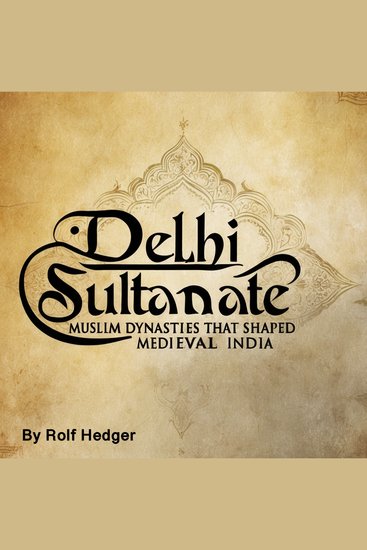
    The Delhi Sultanate was a defining era in Indian history, marking the establishment of Muslim rule in northern India. Its rise was shaped by a series of invasions, strategic conquests, and the formation of a centralized administration. The foundation of the Sultanate can be traced back to the late 12th century when Muslim forces, primarily from Central Asia, began making inroads into the Indian subcontinent. These incursions set the stage for a new political order that would influence the region for centuries. 
    One of the earliest significant Muslim invasions was led by Mahmud of Ghazni in the 11th century. Although he did not establish permanent rule, his raids weakened Indian kingdoms and demonstrated the vulnerability of the region. However, it was Muhammad Ghori in the late 12th century who laid the groundwork for the Delhi Sultanate. Unlike Mahmud, Ghori aimed for long-term control rather than mere plundering. His victory over Prithviraj Chauhan at the Second Battle of Tarain in 1192 was a turning point, allowing Muslim forces to establish a foothold in northern India. 
    Following Ghori’s assassination in 1206, his general, Qutb al-Din Aibak, took control of his Indian territories and proclaimed himself the first Sultan of Delhi. Aibak, originally a slave who rose through the ranks, became the founder of the Mamluk or Slave Dynasty. He consolidated his rule by strengthening administrative structures and commissioning architectural marvels like the Qutb Minar, which symbolized the establishment of Muslim rule. However, his reign was short-lived, and his successor, Iltutmish, played a more crucial role in shaping the Delhi Sultanate into a powerful and stable empire.
    Zum Buch
  • What We Can Do - A Climate Optimist's Guide to Sustainable Living - cover

    What We Can Do - A Climate...

    Charlie Sellars

    • 0
    • 0
    • 0
    In this radically optimistic climate change book, find yourself empowered to achieve sustainable living across every facet of your life—the personal, the professional, and the political. 
      
    “Never has decisive action on climate and environment been more important. This book will help citizens understand that while no one can do everything, everyone can do something—and offers a myriad of ways they can get started too.” —Dr. Trista Patterson, Time100 Climate Leader, 2023, and co-founder of Playing for the Planet 
      
    Charlie Sellars pulls insight from his experience as a director of sustainability at Microsoft, which has underlined its commitment to be a green business with a pledge to become carbon negative, water positive, and zero waste by 2030 while protecting ecosystems. He also serves on the governing body of the iMasons Climate Accord, an industry coalition united to decarbonize digital infrastructure. 
      
    Inside this sustainable living book, you will learn how to: 
     - Harness environmental science to make more sustainable decisions using the “Make It, Move It, Lose It, Use It” impact framework. 
     - Turn your job into a sustainability job, no matter what you do for a living. 
     - Unleash the power of your voice at the ballot box and in your local community. 
      
    This refreshingly optimistic environmental book for adults and recent graduates makes for a great climate change gift, like Hannah Ritchie’s Not the End of the World and Katharine Hayhoe’s Saving Us. 
       
    Nobody can do everything, but everybody can do something. It’s not too late to defeat the climate crisis, and What We Can Do will show you how. 
    “What We Can Do brings cutting-edge sustainability techniques used by chief sustainability officers into the hands and context of everyday individuals. The result? A book that finally empowers readers to maximize their impact across every facet of their lives” —Ann Tracy, chief sustainability officer, Colgate-Palmolive
    Zum Buch
  • Happy Indoor Garden - The easy plant guide for each room of your home - cover

    Happy Indoor Garden - The easy...

    Miranda Janatka

    • 0
    • 0
    • 0
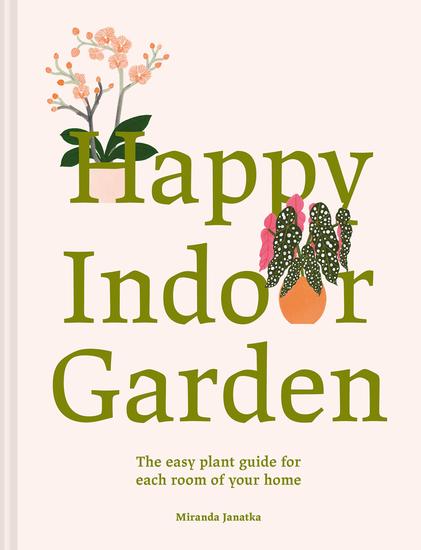
    A happy plant makes for a happy home and a happy life; find the right plant for each room.
    
    Indoor plants have never been so important as we realise the power of their presence in making us feel calmer and more connected to nature. But dying plants around the house are negatives you could do without!
    This unique guide from an indoor plant expert explains what plants you should keep in each room, and whereabouts. It contains:
    • Easy-to-understand but horticulturally accurate information on what affects plants in each room – light, humidity and temperature.
    • What typically makes each room different, which plants best suit which room, and how to care for them so that you and the plant are happy. 
    • Working with individual microclimates within that room – for example, a plant that might work on a coffee table in the middle of a room might not work on a bookshelf next to a window.
    • Invaluable information on how to arrange the plants to make stunning arrangements for your home interior. 
    The first half of the book focuses on the five key rooms in any home, with ideas for the reader who wants to green up specific rooms, while the second half is a comprehensive directory of house plants. Each entry has information on light level requirements and tolerance, detailed information on care and colour inspiration for styling the plant. Each plant is also rated by difficulty. 
    This is the most practical guide to building an indoor garden, room by room, to ensure happy plants, a happy home and happy humans. 
    Zum Buch
  • The Language of Flowers - cover

    The Language of Flowers

    Sarah Cray

    • 0
    • 0
    • 0
    Celebrate the secret language and symbolism of flowers with Sarah Cray’s sixth book. Beautiful watercolor, gouache, and ink illustrations are paired with explorations of flora and the messages we send with each bouquet. Allow it to serve as an intimate gift, a personal art piece, or to complement your spring and Valentine’s Day decor.
    Zum Buch
  • Aboriginal Australia - A Cultural and Historical Overview - cover

    Aboriginal Australia - A...

    Lillian Brooks

    • 0
    • 0
    • 0
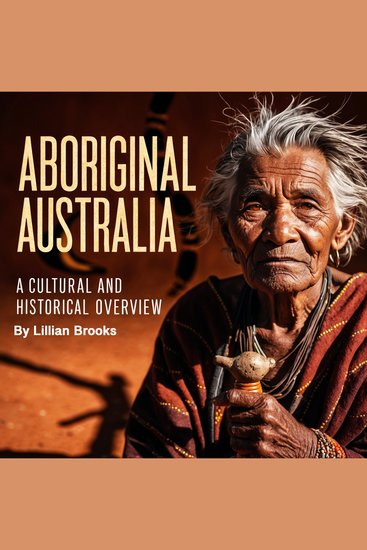
    Aboriginal Australia represents one of the world’s oldest continuous cultures, with a history that spans over 65,000 years. The Aboriginal peoples of Australia have a deep connection to the land, having lived across the continent for millennia, developing diverse societies, languages, and spiritual beliefs. This rich cultural heritage reflects an extraordinary resilience, as Aboriginal communities have adapted to a wide range of environments, from the arid deserts to lush rainforests. 
    The term "Aboriginal" refers to the diverse Indigenous groups that inhabit Australia, each with their own unique customs, languages, and traditions. There are over 250 distinct language groups, with their own dialects and systems of social organization. These communities have historically been hunter-gatherers, using sophisticated methods of land management, such as controlled fire-stick farming, to ensure the sustainability of their environment. The interconnectedness of land, culture, and spirituality is central to Aboriginal identity, where the landscape itself holds profound cultural significance. The concept of “Country” goes beyond mere geography—it is a living, breathing entity with deep spiritual meaning.
    Zum Buch