Join us on a literary world trip!
Add this book to bookshelf
Grey
Write a new comment Default profile 50px
Grey
Subscribe to read the full book or read the first pages for free!
All characters reduced
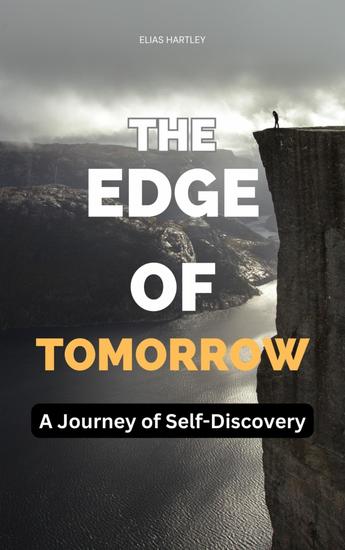
The Edge of Tomorrow - A Journey of Self-Discovery - cover

The Edge of Tomorrow - A Journey of Self-Discovery

Elias Hartley

Publisher: BookRix

  • 0
  • 0
  • 0

Summary

Embark on an extraordinary odyssey of self-discovery in "The Edge of Tomorrow: A Journey of Self-Discovery." Follow the captivating narrative of Alex, a seeker navigating the cosmic realms, guided by an enigmatic cosmic force. Across a series of twelve chapters, each intricately woven with celestial threads, the story unfolds amidst astral symphonies, cosmic pioneers, and transformative thresholds.   In "The Nexus of Beginnings," Alex steps into a realm where foundational energies shape new narratives, setting the stage for an exploration into uncharted territories. Journey alongside Alex as they encounter ethereal beings, the Cosmic Pioneers, embodying the spirit of cosmic exploration in a celestial symposium that echoes the courage required to venture into the unknown.   The narrative deepens at the "Fountain of Intentions," a celestial wellspring where intentional energies and renewed purposes converge. Immerse yourself in this transformative journey, where the act of dipping hands into the celestial waters becomes a symbolic gesture of infusing the cosmic narrative with new intentions.   "The Harmonic Convergence" becomes a celestial gathering, a harmonious union of intentions and cosmic forces, where Alex moves in tandem with the vibrational frequencies of the cosmic dance. Witness the interconnectedness within the cosmic tapestry as Alex aligns personal will with the universal flow in this mesmerizing symphony.   Finally, at the "Threshold Beyond," Alex stands at the juncture where destiny's threads extend into the boundless expanse. The guide, a custodian of cosmic horizons, reveals infinite possibilities awaiting beyond this celestial portal, marking a poignant conclusion to a transformative journey.   "The Edge of Tomorrow" is more than a tale—it is an exploration of self, a cosmic dance between personal will and the forces that shape destinies. Each chapter unfolds like a celestial tapestry, rich with threads of intention, renewal, and discovery
Available since: 01/04/2024.
Print length: 67 pages.

Other books that might interest you

  • We Refuse - A Forceful History of Black Resistance - cover

    We Refuse - A Forceful History...

    Kellie Carter Jackson

    • 0
    • 0
    • 0
    Black resistance to white supremacy is often reduced to a simple binary, between Dr. Martin Luther King Jr.'s nonviolence and Malcolm X's "by any means necessary." In We Refuse, historian Kellie Carter Jackson urges us to move past this false choice, offering an unflinching examination of the breadth of Black responses to white oppression, particularly those pioneered by Black women. 


    The dismissal of "Black violence" as an illegitimate form of resistance is itself a manifestation of white supremacy, a distraction from the insidious, unrelenting violence of structural racism. Force—from work stoppages and property destruction to armed revolt—has played a pivotal part in securing freedom and justice for Black people since the days of the American and Haitian Revolutions. But violence is only one tool among many. Carter Jackson examines other, no less vital tactics that have shaped the Black struggle, from the restorative power of finding joy in the face of suffering to the quiet strength of simply walking away. 


    Clear-eyed, impassioned, and ultimately hopeful, We Refuse offers a fundamental corrective to the historical record, a love letter to Black resilience, and a path toward liberation.
    Show book
  • Robin Hood: The True Story of the Life & Time of the Outlaw Hero - cover

    Robin Hood: The True Story of...

    Liam Dale

    • 0
    • 0
    • 0
    If I asked you how many Robin Hoods you could name, what would the list be like? 
     
    I’m sure you’d reel off a whole host of famous actors, like Errol Flynn, Douglas Fairbanks, Kevin Costner, Michael Praed, Sean Connery, and John Cleese, to name but six. All of these men have played the role of Robin Hood in various television and movie adaptations of the famous story. 
     
    But that’s not what I meant. 
     
    I’m talking about Robin Hood himself; the ever popular and ever noble outlaw hero who robbed from the rich and gave to the poor, with his trusty bow and arrow as his weapon of choice. The leader of a band of like-minded outlaws, christened the Merry Men (‘merry’ – in this instance – derives from an Anglo-Saxon word meaning ‘illustrious, famous, great, mighty’, etc. In the same sense, Hood means ‘hoodlum, thief, thug, criminal’). Robin Hood was a champion for justice, fighting against the oppression of the evil Sheriff of Nottingham and his right-hand man Guy of Gisbourne, all under the watchful eye of the wicked Prince John (who had been placed on the throne as a substitute monarch whilst his brother, King Richard The Lionheart, fought in the Crusades). 
     
    Of course, that was only one Robin Hood. Very much like the various incarnations that have appeared in classic novels, Hollywood movies, television series, radio serials and theatrical plays, Robin Hood was more than one man.
    Show book
  • The Forbidden Knowledge of the Book of Enoch - The Watchers Nephilim Fallen Angels and the End of the World - cover

    The Forbidden Knowledge of the...

    Harold Roth

    • 0
    • 0
    • 0
    Forbidden knowledge is at the core of the Book of Enoch. Its text has captured interest from 300 BCE up to the present day. Ancient people have all consulted the Book of Enoch for their magical and mystical practices. Sometimes part of religious canon and doctrine, and sometimes outright banned, the Book of Enoch has persisted for well over 2,000 years. Roth interprets the content of the Book of Enoch and addresses how that knowledge has been used in the past and can be useful in the present. The Forbidden Knowledge of the Book of Enoch shows that the Book of Enoch remains as vital, if not more so, today as it has been for centuries. 


    From Renaissance magic to early Christian apocalyptic texts, all the way down to today's conspiracy theories and modern magical angelology, the Book of Enoch has been influential in many spiritual and religious traditions. What has been missing from the various approaches to the Book of Enoch has been any real attempt to find not only what is at the center of these stories but also their connections to magic. The Forbidden Knowledge of the Book of Enoch finds and elucidates those connections. 


    This new work will be useful to magic workers, mystics, those who work with angels, those interested in Jewish magic and mystical practices, and those who are simply curious to peek at apocalyptic visions.
    Show book
  • How to Make Money - An Ancient Guide to Wealth Management (series: Ancient Wisdom for Modern Readers) - cover

    How to Make Money - An Ancient...

    PLINY

    • 0
    • 0
    • 0
    Ancient Romans liked money. But how did they make a living and sometimes even become rich? The Roman economy was dominated by agriculture, but it was surprisingly modern in many ways: the Romans had companies with CEOs, shareholders, and detailed contracts regulated by meticulous laws; systems of banking and taxation; and a wide range of occupations, from merchant and doctor to architect and teacher. The Romans also enjoyed a relatively open society, where some could start from the bottom, work, invest, and grow rich. How to Make Money gathers a wide variety of ancient writings that show how Romans thought about, made, invested, spent, lost, and gave away money. 


    The Roman elite idealized farming and service to the state but treated many other occupations with suspicion or contempt, from money lending to wage labor. But whatever their attitudes, pecunia made the Roman world go round. In the Satyricon, Trimalchio brags about his wealth. Seneca accumulated a fortune—but taught that money can't buy happiness. Eumachia inherited a brick factory from her father, married well, and turned to philanthropy after she was widowed. How to Make Money also takes up some of the most troubling aspects of the Roman economy, slavery and prostitution, which the elite deemed unrespectable but often profited from.
    Show book
  • Spelling for Kids - An Interactive Vocabulary & Spelling Workbook for Kids Ages 9-11 (With Audiobook Lessons) - cover

    Spelling for Kids - An...

    Bukky Ekine-Ogunlana

    • 0
    • 0
    • 0
    The Spelling for Kids interactive spelling workbook for kids ages 9-11 features spelling words that will quickly improve vocabulary, reading comprehension, and spelling skills for any child… and it makes a great addition to any school or homeschool curriculum!Your whole family can use our fun and enabling spelling system at home, and schoolteachers can also use it for children in class. They can start their practice one year earlier and at their own pace.Our unique, interactive spelling improvement book teaches students of all ability levels how to spell words and build vocabulary memory by integrating text repetition of age-specific words, along with the audio repetition of the words from the connected spelling workbook, which dramatically speeds memory retention, reading skills and pronunciation of words, as seen in this example from the book:BecauseI will attend Joshua's birthday party because he is my best friend.BecauseB e c a u s eOur powerful but practical spelling book offers these unique benefits to students:Optimizes your kids' learning by offering a variety of learning techniques. This audiobook, along with the workbook, utilizes verbal and visual instruction - students hear, read, and write each spelling word for permanent retention of wordsThe book covers ages 5 to 6 words every child must know and is frequently misspelt in spelling tests - 12 words per week. It is broken down into easy-to-follow spelling exercises that take only 10 minutes daily.Whether your child is just beginning their spelling journey and learning to read, or they are overachievers working to win the next spelling bee, Spelling for Kids is the perfect tool for accelerating spelling skills and ensuring your child is ahead of their class in spelling ability!Page Up and Order Now.
    Show book
  • Trade in the Ancient World: The History and Legacy of Trade in Europe the Near East and Africa during Antiquity - cover

    Trade in the Ancient World: The...

    Editors Charles River

    • 0
    • 0
    • 0
    The concept of international trade was born in the ancient Mediterranean, which provided the perfect set of circumstances needed to produce an intricate trading system whose influence can still be seen in present-day economic practices. The ancient Mediterranean was home to a diverse range of cultures and landscapes, encompassing deserts, forests, islands and fertile plains. Different natural resources were available in different geographical areas, and with the advent of sailing ships around 3000 BCE, people were suddenly able to travel much further afield than ever before. This created an opportunity to trade local resources in international markets in exchange for exotic goods not available at home. At the same time, this shift in Mediterranean trade from a local to international scale was a catalyst for immense social, political and economic changes that helped to shape the course of Western Civilization as a whole. Ancient trade in the Mediterranean brought cultures into increasingly close contact with one another, and just as in the globalized world today, these cross-cultural influences came to shape the development of belief systems, languages, economics, politics, and art throughout wide expanses of land.  
    Over the centuries, the profits generated from trade helped establish wealthy nations and fuel economic development across the sea. By taxing imports and exports, governments could afford large infrastructure projects, like the construction of roads and harbors, which in turn helped to further increase trade and wealth. As a result, wars were fought for control of important trade routes and to maintain access to crucial commodities such as grain and precious metals. Economics became a primary consideration when establishing government policies and dealing with international relations. Some cities, most notably Rome and Athens, even built empires on the back of their mercantile success.
    Show book