Join us on a literary world trip!
Add this book to bookshelf
Grey
Write a new comment Default profile 50px
Grey
Subscribe to read the full book or read the first pages for free!
All characters reduced
Rubber Band Stretches - cover

Rubber Band Stretches

Elian Wildgrove

Translator A AI

Publisher: Publifye

  • 0
  • 0
  • 0

Summary

"Rubber Band Stretches" uncovers the surprisingly significant history of the rubber band, tracing its roots back to 1845 and exploring its impact on technology and society. This book delves into how a seemingly simple invention, born from advancements in rubber production like Charles Goodyear's vulcanization process, has become an indispensable tool across various sectors. 

 
Far from a trivial item, the rubber band exemplifies how basic innovations can reshape industries and daily life. The book examines the rubber band's evolution through its initial invention, subsequent innovations, and lasting influence on sectors ranging from office supplies to specialized fields. Early trade catalogs and advertisements provide unique insights into its dissemination and marketing.

 
The book emphasizes the rubber band’s adaptability and affordability, highlighting its profound impact on efficiency and organization. "Rubber Band Stretches" takes a structured approach, starting with the rubber band's creation and patenting before moving on to manufacturing refinements, applications in stationery and packaging, and specialized uses in agriculture and medicine.

 
The book utilizes patent records, manufacturing data, and archival photographs to support its exploration of the rubber band's enduring legacy.
Available since: 02/27/2025.
Print length: 58 pages.

Other books that might interest you

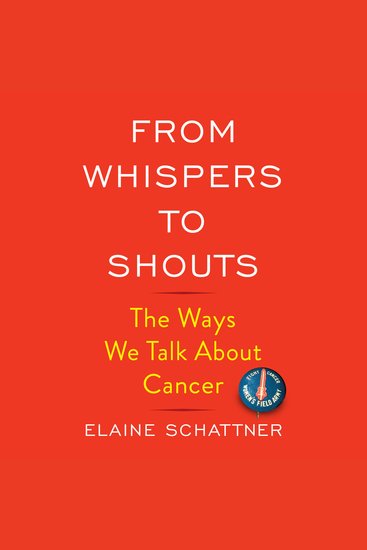
  • From Whispers to Shouts - The Ways We Talk About Cancer - cover

    From Whispers to Shouts - The...

    Elaine Schattner

    • 0
    • 0
    • 0
    It’s hard today to remember how recently cancer was a silent killer, a dreaded disease about which people rarely spoke in public. In hospitals and doctors’ offices, conversations about malignancy were hushed and hope was limited. In this deeply researched book, Elaine Schattner reveals a sea change—from before 1900 to the present day—in how ordinary people talk about cancer. From Whispers to Shouts examines public perception of cancer through stories in newspapers and magazines, social media, and popular culture. It probes the evolving relationship between journalists and medical specialists and illuminates the role of women and charities that distributed medical information. Schattner traces the origins of patient advocacy and activism from the 1920s onward, highlighting how, while doctors have lost control of messages about cancer, survivors have gained visibility and voice. The book’s final section lays out provocative questions facing the cancer community today—including distrust of oncologists, concerns over financial burdens, and disparities in cancer treatments and care. Schattner considers how patients and their loved ones struggle to make decisions amid conflicting information and opinions. She explores the ramifications of so much openness, good and bad, and asks an important question: Has awareness backfired? Instead, Schattner contends, we need greater understanding of cancer’s treatability.
    Show book
  • The Engineered Primate - Natures Blueprint for Optimal Nutrition - cover

    The Engineered Primate - Natures...

    Vaughn Hughes

    • 0
    • 0
    • 0
    What if the greatest mystery of Nutrition… has gone unnoticed? 
    For generations we have accepted tidy explanations: 
    Eat this, avoid that, follow the rules. 
    But beneath the surface, something just doesn’t add up. 
    The human body thrives without our conscious control: 
    Meals disappear, nutrients are sorted, and energy appears out of nowhere – with no chef, no control tower, no captain. 
    Which really begs the question: how does it all work? 
    The Engineered Primate is a journey into the logistics of life. It is an exploration of the hidden mechanisms that shape us from the inside out. Each chapter peels back a layer: 
    Why does digestion even exist? 
    What was the environmental pressure in deep time that made a digestive system necessary? 
    How does order arise in a body with no conscious overseer? 
    …and why have we rarely asked these questions when creating our nutritional models? 
    This is not another diet manual. 
    It is a trail of clues inviting you to reconsider what you thought you knew about the very act of eating.
    Show book
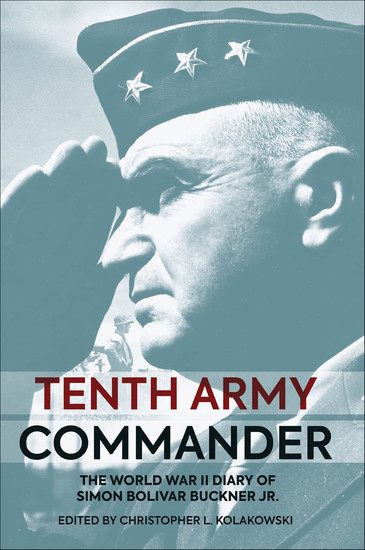
  • Tenth Army Commander - The World War II Diary of Simon Bolivar Buckner Jr - cover

    Tenth Army Commander - The World...

    Christopher L. Kolakowski

    • 0
    • 0
    • 0
    Finalist, 2024 Army Historical Foundation Distinguished Writing Awards"...an outstanding volume, which is extremely beneficial for two key reasons. First, it adds significantly to one’s understanding of the Battle of Okinawa and to the operations of the Alaska Defense Command. Second, it provides readers with an opportunity to become acquainted or to greatly improve their understanding of Buckner." — Military Review
    
    Simon Bolivar Buckner Jr. was a major figure of the Pacific War, both for his command in Alaska and in his key role heading Tenth Army during the Battle of Okinawa in the spring of 1945. Buckner was the senior U.S. officer killed by enemy fire in World War II when Japanese artillery cut him down on June 18, 1945, one month shy of his 59th birthday. The shelling ended a remarkable life – son of a Confederate Lieutenant General and governor of Kentucky, the “Child of the Democracy” in the 1896 Presidential election campaign, educated at West Point, myriad service as a student and instructor at various Army posts and schools from 1917 to 1936, command in Alaska from 1940 to 1944, and ultimately of Tenth Army from 1944 to his death.
    
    General Buckner kept a diary covering the period from January 1, 1944 to June 17, 1945, which has never been fully published until now. Buckner made notes every day, often in great detail; his chief of staff thought Buckner wanted to write a memoir after the war, but the papers were scattered after his death. In addition to the Okinawa material, Buckner’s diaries discuss his departure from Alaska and service in Hawaii as Tenth Army commander. Topics include his daily life in wartime Hawaii, troop training, comments on war events, gossip, notes on his travels to Guam and the Philippines, and his role in the Smith vs Smith controversy after the Battle of Saipan. The diary text is augmented by letters from General Buckner to his wife Adele during March to June 1945, and a letter from the Tenth Army Chief of Staff to Adele detailing Buckner's death.
    
    Tenth Army Commander is an important account from a too-long-silent voice among Pacific War leaders.
    Show book
  • History Speaks - Volume 3 - cover

    History Speaks - Volume 3

    Alfred Lord Tennyson, Frederick...

    • 0
    • 0
    • 0
    Along with historical narrative, hear rare recordings of some of the most people in history, including Alfred Lord Tennyson, William Edward Gladstone, Guiglielmo Marconi, William McKinley, Leo Tolstoy, William Booth, Pope Leo Xlll, Sir Robert Baden-Powell, Dr. Frederick Cook, and Robert E. Peary. Recording obtained and published by Rick Sheridan.
    Show book
  • Warriors - An Infantryman’s Memoir of Vietnam - cover

    Warriors - An Infantryman’s...

    Robert Tonsetic

    • 0
    • 0
    • 0
    On the ground, in the air, and behind the lines, grunts made life-and-death decisions every day—and endured the worst stress of their young lives. 


    It was the tumultuous year 1968, and Robert Tonsetic was Rifle Company commander of the 4th Battalion, 12th Infantry in Vietnam. He took over a group of grunts demoralized by defeat but determined to get even. Through the legendary Tet and May Offensives, he led, trained, and risked his life with these brave men, and this is the thrilling, brutal, and honest story of his tour of duty. Tonsetic tells of leading a seriously undermanned ready-reaction force into a fierce, three-day battle with a ruthless enemy battalion; conducting surreal night airmobile assaults and treks through fetid, pitch-black jungles; and relieving combat stress by fishing with hand grenades and taking secret joyrides in Hueys. 


    During that fateful year, as unrest erupted at home and politicians groped for a way out of the war, Tonsetic and his men did their job as soldiers and earned the title "Warriors."
    Show book
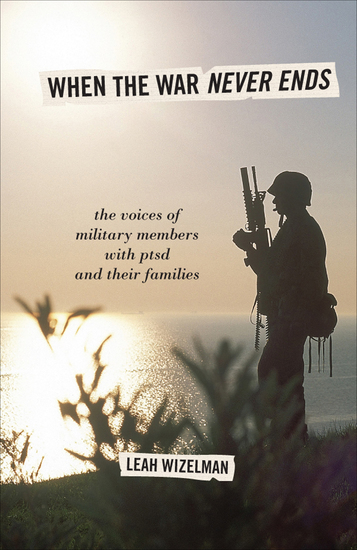
  • When the War Never Ends - The Voices of Military Members with PTSD and Their Families - cover

    When the War Never Ends - The...

    Leah Wizelman

    • 0
    • 0
    • 0
    Veterans with PTSD speak: “Anyone wanting to understand what it is to have a ‘flashback’ will learn more from these firsthand accounts than from any textbook.” ―The British Journal of Psychiatry   The chances of service members developing PTSD after military-related traumas is, according to a U.S. study, at least thirty percent. The effects can be devastating, ranging from distressing flashbacks to nightmares, sleep disorders, physical symptoms, irritability, aggressions, and memory and concentration problems. These symptoms often cause severe impairment in all areas of life and may lead to despair and hopelessness. PTSD is neither a localized nor a temporary problem.    Here, Leah Wizelman relates the true stories of service members from different service branches and ranks from the United States, Canada, Australia, and Germany, who were participants in various wars (Vietnam, Gulf War, Iraq, Afghanistan, Grenada) and peace missions (Kosovo, Bosnia, Croatia, Cambodia, Somalia, Cyprus, Haiti). They talk openly about their lives after trauma and share their fates with the reader. Spouses of affected military members also tell their stories. They talk about the challenges loved ones face when living with a partner with PTSD, how it affects their children, and how they manage to cope.    As these stories show all too vividly, military-related PTSD has not been dealt with effectively or with enough empathy or sympathy. Those affected by PTSD will realize that they are not alone in their suffering—and others will gain insight into the realities of this challenging disorder.   “I highly recommend this volume to all who seek to understand combat-related PTSD.” —Kathryn M. Magruder, MPH., PhD, Department of Psychiatry & Behavioral Sciences, Military Science Division, Medical University of South Carolina
    Show book