Begleiten Sie uns auf eine literarische Weltreise!
Buch zum Bücherregal hinzufügen
Grey
Einen neuen Kommentar schreiben Default profile 50px
Grey
Jetzt das ganze Buch im Abo oder die ersten Seiten gratis lesen!
All characters reduced
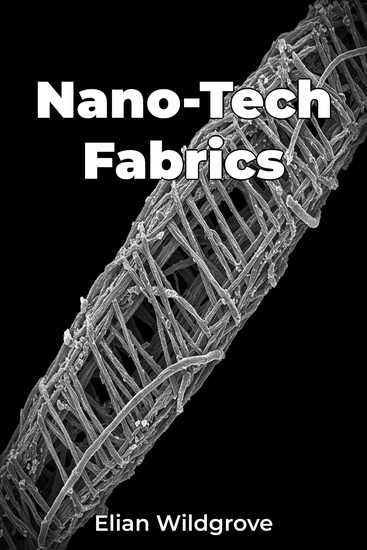
Nano-Tech Fabrics - cover

Nano-Tech Fabrics

Elian Wildgrove

Übersetzer A AI

Verlag: Publifye

  • 0
  • 0
  • 0

Beschreibung

Nano-Tech Fabrics explores the revolutionary intersection of nanotechnology and textiles, revealing how manipulating materials at the nanoscale creates fabrics with unprecedented properties. Imagine clothes that regulate body temperature or self-cleaning textiles that repel water and stains effortlessly. These nano-enhanced fabrics are poised to transform industries, offering solutions in healthcare with antimicrobial textiles, sportswear with enhanced performance, and even energy with conductive fabrics for wearable electronics.

 
The book progresses logically, beginning with a fundamental overview of nanotechnology and its application to textiles, explaining core concepts like nanoparticles and nanofibers. It then examines specific applications, such as water-repellent, self-cleaning, and antimicrobial textiles. Finally, it addresses the challenges and opportunities associated with the widespread adoption of these materials, including environmental concerns and manufacturing costs.

 
The book distinguishes itself by blending technical details with broader industry and societal implications, presenting a holistic view of this rapidly evolving field. This work emphasizes real-world applications of nano-tech fabrics, such as wound dressings that promote faster healing and protective clothing for first responders.

 
By combining empirical evidence with accessible explanations, this book provides a comprehensive understanding of the science, technology, and potential of nano-tech fabrics for a broad audience.
Verfügbar seit: 23.02.2025.
Drucklänge: 81 Seiten.

Weitere Bücher, die Sie mögen werden

  • Skin & Tissue Conditions - When the Body Fights Itself (3 in 1) - cover

    Skin & Tissue Conditions - When...

    Lilly Richardsen

    • 0
    • 0
    • 0
    The human skin is more than a mere protective barrier; it is a dynamic, complex ecosystem that reveals the intricate conversations between our immune system, external environment, and internal health. In this comprehensive exploration of dermatological conditions, we unravel the mysteries of disorders that emerge when the body's delicate biological mechanisms turn against themselves, transforming protective responses into sources of persistent challenge. Rhinophyma, Rosacea, Scabies, and Yeast Infections represent a diverse spectrum of conditions that not only impact physical appearance but profoundly influence an individual's psychological well-being, social interactions, and quality of life. 
    Beyond the clinical descriptions and medical terminology lies a deeply human narrative of resilience, adaptation, and the ongoing struggle between our body's defensive systems and invasive or dysregulated biological processes. Each condition examined in this volume tells a unique story of cellular miscommunication, inflammatory responses, and the complex interplay between genetic predisposition, environmental triggers, and individual immune system variations. By delving into the biological mechanisms, diagnostic challenges, treatment strategies, and personal experiences associated with these skin and tissue conditions, we aim to provide a holistic understanding that transcends traditional medical discourse, offering insights for healthcare professionals, patients, and anyone seeking to comprehend the remarkable complexity of human dermatological health.
    Zum Buch
  • Search for Exoplanets The: The History of the Efforts to Find Planets in Other Solar Systems - cover

    Search for Exoplanets The: The...

    Editors Charles River

    • 0
    • 0
    • 0
    While modern technology has helped astronomers view the furthest reaches of the Solar System, it has also allowed scientists to start discovering planets orbiting distant stars. To make it easier to assess the relative mass and size of the new planets being discovered, scientists give these measurements as multiples of those properties for either Jupiter or Earth. In other words, if the planet is the same mass as Jupiter, then this measure would be listed as 1.0 MJ. If it were three times the mass of Earth, then it would be listed as 3.0 MEarth. The sizes of exoplanets are frequently given by expressing their radii as multiples of Jupiter’s radius or as multiples of Earth’s radius, RJ and REarth, respectively.  
    	Of course, given the immense distances involved, detecting exoplanets has always been hard, even to this day. The variations of light that might be evidence of an exoplanet can be caused by other phenomena, and separating the false positives from the actual detections is part of the rigor required by modern planet hunters. For example, in July 1988, a Canadian team led by astronomers Bruce Campbell, Gordon Walker, and Stephenson Yang discovered persistent indications that a planet orbited the primary star in the Gamma Cephei system, 44.98 light-years (13.79 parsecs) from the Earth. Though the technique they used was successfully employed in many subsequent discoveries, the quality of their data was insufficient for others to verify as unequivocally the result of an extrasolar planet. For reasons of poor data quality, the claimed discovery of Gamma Cephei Ab was retracted in 1992.  
    	The first confirmed discovery of an exoplanet involved a system that surprised most planet hunters. While most astronomers had been looking to find planets orbiting stars in the main sequence (between infancy and old age) or in their old age (giant phase), the first confirmed planets were found to orbit a dead star.
    Zum Buch
  • Bioinformatics Guide - A Comprehensive Guide to Bioinformatics Techniques and Tools - cover

    Bioinformatics Guide - A...

    James Ferry

    • 0
    • 0
    • 0
    "Bioinformatics Guide: A Comprehensive Guide to Bioinformatics Techniques and Tools" is an indispensable resource for students, researchers, and professionals eager to master the rapidly evolving field of bioinformatics. This guide offers an in-depth exploration of the fundamental techniques and cutting-edge tools that are transforming how we analyze and interpret complex biological data. 
    Starting with the basics, the book covers essential concepts in molecular biology, including the central dogma and the structure and function of DNA, RNA, and proteins. It then delves into advanced topics such as genomics, transcriptomics, proteomics, and metabolomics, providing a thorough understanding of these critical areas. 
    Readers will gain valuable insights into sequencing technologies, from traditional Sanger sequencing to the latest advancements in next-generation and third-generation sequencing. The book discusses the advantages and limitations of various sequencing platforms and their applications in research and medicine. 
    The guide also addresses genome assembly and annotation, detailing the algorithms and strategies used to assemble genomes and predict genes, functional elements, and regulatory regions. It explores sequence alignment and homology searching, explaining the algorithms behind these processes and their applications in evolutionary studies. 
    In the realm of structural bioinformatics, readers will learn about protein structure prediction methods, molecular visualization tools, and the resources available in protein structure databases. The book further covers phylogenetics and evolutionary analysis, including methods for constructing phylogenetic trees and the molecular clock hypothesis.
    Zum Buch
  • Nostradamus - The Prophesies of an Astrologer Physician and Reputed Seer - cover

    Nostradamus - The Prophesies of...

    Kelly Mass

    • 0
    • 0
    • 0
    Michel de Nostredame, referred to as Nostradamus in Latin, was a French astronomer, doctor, and presumed seer mostly known for his work Les Prophéties, a collection of 942 poetic quatrains supposedly predicting future events. In the year 1555, the book was first released. 
    Since the release of his Les Prophéties, Nostradamus has acquired a very large following of followers who, in addition to the majority of the well-known press, credit him with properly anticipating many essential historic events. 
    Many of scholastic sources deny that Nostradamus had any true super prophetic skills, saying that the connections he made between international events and his quatrains were the repercussion of misconceptions or mistranslations (at times purposeful). 
    These experts also point out that Nostradamus' predictions are usually uncertain, meaning they might be applied to practically anything, and for that reason are unhelpful in developing whether or not the writer has true prophetic powers. 
    In this book, let’s take a look at what he predicted and if any of it came true.
    Zum Buch
  • Data Mesh - Comprehensive Guide on How to Become Truly Data-Driven - cover

    Data Mesh - Comprehensive Guide...

    Alexa Campbell

    • 0
    • 0
    • 0
    Gain a broader understanding of Data Mesh and logical architecture. 
    Have you ever asked yourself why you need to learn about Data Mesh? 
    What is their use in our daily life? 
    Have you ever wondered what the logical architecture is for a data mesh? 
    Your data is like a mesh. It's everywhere, and it's connected. 
    You have data on your servers, your networks, and your clients. And it's not just one kind of data—it's all different types that need to be organized and made sense of to be useful. The problem is that these data types are often stored in different places with different formats, making them hard to access and use together. 
    This book will help you understand the root causes of this problem and how to solve them using today's most advanced techniques in data management. 
    It is a book about the structure of a data mesh. It defines data mesh, how it works, and why you might want to use it. 
    In this book, you will:Learn the Data Mesh, its state, and its futureLearn about the practical uses of Data MeshGet background knowledge about Data Mesh with concrete examplesMaster Domain Ownership PrincipleDiscover the principle behind the self-serve data platformLearn about the federated computational government principleDiscover the point of inflectionMaster the logical architecture 
    Data Mesh is not just a framework; it's an approach to data modeling that emphasizes simplicity, clarity, and scalability. This book will teach you how to use Data Mesh to build a logical architecture that scales. 
    Don't wait another second; click the “Add to Cart” button now, and the possibilities are endless!
    Zum Buch
  • How to develop and launch a drink brand - cover

    How to develop and launch a...

    RICHARD HORWELL

    • 0
    • 0
    • 0
    If you are considering getting into the Food & Drink Industry then this is a MUST read book. Richard Horwell’s knowledge spans four decades and as many continents, having lived and worked in the UK, USA, Australia and for a short time in the Middle East, he has started and built up a multitude of his own products and companies, then successfully selling them on. As the leading expert in Food & Drink Development and Branding he has been behind over 150 Food & Drink Brands Worldwide, so he is sharing his experiences and knowledge to help you build your own brand. 
    In any sector new businesses have a low survival rate, no matter how good the products are, this book is here as a guide to illustrate the pitfalls, drawbacks and shortcuts, whether you are in this industry or contemplating entering, knowledge is power and this book could be the difference between success and failure. 
    This is a fun industry and there is a LOT of money to be made, so enjoy and read on.
    Zum Buch