¡Acompáñanos a viajar por el mundo de los libros!
Añadir este libro a la estantería
Grey
Escribe un nuevo comentario Default profile 50px
Grey
Suscríbete para leer el libro completo o lee las primeras páginas gratis.
All characters reduced
Floating Lighthouses - cover

Floating Lighthouses

Elian Wildgrove

Traductor A AI

Editorial: Publifye

  • 0
  • 0
  • 0

Sinopsis

"Floating Lighthouses" explores the fascinating story of maritime navigation aids that defied convention by operating adrift at sea. It examines the technological innovation behind these structures, highlighting how engineers overcame challenges in hull design and anchoring systems to create stable beacons in harsh marine environments. These floating sentinels played a crucial role in maritime safety, guiding ships through treacherous waters and promoting maritime trade. The book offers a unique perspective on the lives of lighthouse keepers, who bravely manned these isolated stations, enduring solitude and constant dangers. The narrative progresses chronologically, beginning with the historical origins and early prototypes of floating lighthouses before delving into specific engineering challenges and case studies from around the world. "Floating Lighthouses" argues that these often-overlooked aids represent a pivotal chapter in maritime safety, demonstrating human ingenuity in overcoming geographical constraints. The book also incorporates historical documents, engineering schematics, and personal accounts to support its arguments. Ultimately, the book examines the decline of floating lighthouses due to technological advancements, while considering their enduring legacy as symbols of maritime innovation.
Disponible desde: 20/02/2025.
Longitud de impresión: 61 páginas.

Otros libros que te pueden interesar

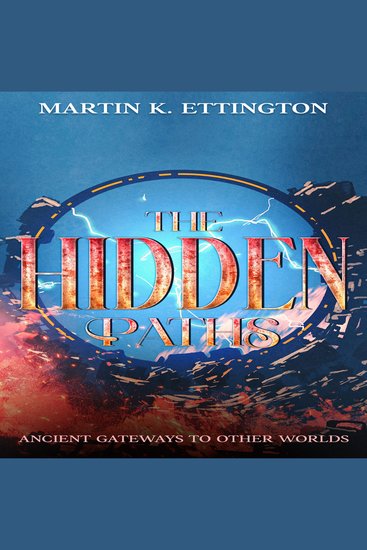
  • The Hidden Paths - Ancient Gateways to Other Worlds - cover

    The Hidden Paths - Ancient...

    Martin K. Ettington

    • 0
    • 0
    • 0
    Several years ago I became interested in the ideas of real time travel and dimensional travel. I’ve been trained in science and modern physics as well as engineering so I knew that modern theories of our physical world did not include the possibilities that time or dimensional travel existed. 
    As I did my research on stories of people who had travelled through time or additional dimensions there were many very credible stories. These stories eventually led me to conclude that time or dimensional travel through portals or veils does exist and some persons have experienced it. 
    On a book I wrote about the Tuatha Da Dannon who were the forerunners of elves, the Druids, and more there were stories that they originated in a different dimension called the Otherworld. And there were some interesting stories of humans who had traveled to the Otherworld and back. 
    It also turns out that the more one studies these subjects the more historical stories there are of portal, dimensional, and time travel experiences people have had. 
    This book then is a detailed review and exploration of portals around the world. Some of which are very plausible and others just might exist. Also could these portals be used today? 
    There are also lots of stories of individuals travelling through time and dimensional portals. 
    There are lots of interesting questions on this subject and we are just starting to learn the answers.
    Ver libro
  • Human Righats - cover

    Human Righats

    Ismail Serageldin

    • 0
    • 0
    • 0
    Ismail Serageldin is the Co-Chair of the Board of Trustees of the Nizami  Ganjavi International Center (NGIC).  He was the Founding Director of the Bibliotheca Alexandrina, the New Library of Alexandria in Egypt (2001-2017).  Before that he was the Vice-President of the World Bank (1993-2000) in charge of Environmentally Sustainable Development (ESD), and the Chairman of the Consultative Group for International Agricultural Research (CGIAR).  He served on many international committees and commissions, including serving as a member of the High Level group for the Alliance of Civilizations convened by the Secretary General of the United Nations (2006-2007).   He was also a distinguished professor at Wageningen University and the College de France. He is a member of many Academies and serves on many commissions, boards, and advisory committees for academic, research, and NGO institutions. He has lectured widely and published more than 100 books and 500 articles. He has received many awards from many countries and has received more than 40 honorary doctorates from all over the world.
    Ver libro
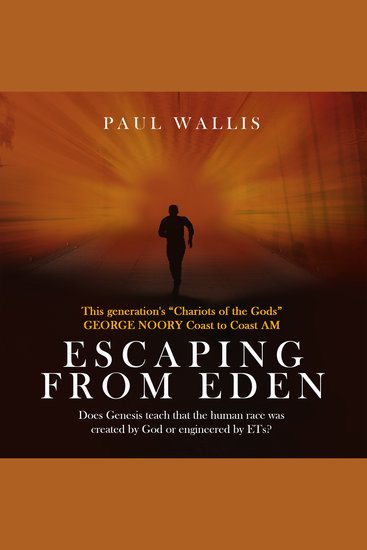
  • Escaping from Eden - Does Genesis teach that the human race was created by God or engineered by ETs? - cover

    Escaping from Eden - Does...

    Paul Wallis

    • 0
    • 0
    • 0
    The familiar stories of the book of Genesis affirm that God made the universe, planet Earth, and you and me. However, various anomalies in the text clue us that we are not reading the original version of these stories. So what were the original narratives and what did they say about who we are and where we all came from? What was the earlier story of human origins, almost obliterated from the Hebrew Scriptures in the 6th century BC, and suppressed from Christian writing in the 2nd and 3rd centuries AD? And what does any of this have to do with extraterrestrials? 
    Escaping from Eden will take you on a journey around the world and into the mythologies of ancient Sumeria, Mesoamerica, India, Africa, and Greece, to reveal a profound secret, hidden in plain sight in the text of the Bible. Far reaching and deepy controversial, this book points to truths about ourselves, the universe and everything which you may have long suspected but not dared to speak!
    Ver libro
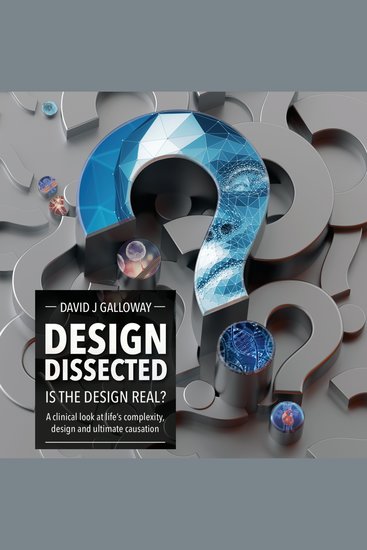
  • Design Dissected - Is the design real? - cover

    Design Dissected - Is the design...

    David Galloway

    • 0
    • 0
    • 0
    Many people assert that all of reality, including life, has simply emerged as a result of natural law and circumstance. How credible is that assumption? How well does it fit with what we find? Exquisite features of apparent design are in evidence everywhere we look. Either something is responsible for all the molecular engineering of life or, it just happened and nothing is directly responsible. Which option offers the best explanation? 
    This book provides a clinician’s perspective on the evidence for design in living things. Specific scenarios are dissected from examples of real cases in clinical medicine and surgery, as well as descriptions of some of the amazing integrated systems that exist in human physiology. Read about the critical processes that must be successfully navigated at the time of birth for every individual to have any prospect of survival. Beyond that, think about thinking itself. This book is a powerful challenge to the belief that the universe, life, and conscious experience can result only from unguided, natural processes.  
    “Excellent ... a most enjoyable mix of personal anecdote and scientific precision.”  Prof John C Lennox  
    “Fresh and original. Beautifully written and extensively researched. Highly recommended.”  Dr Stephen C. Meyer  
    “Impressive and thought provoking”  Prof Frank Dunn  
    For further information visit:  www.davidgalloway.co.uk  
    DAVID J GALLOWAY MD DSc FRCS FRCP FACS FACP  
    David Galloway is a Scottish surgeon who trained in Glasgow, London, and New York City. He was a Consultant Surgeon in Glasgow and a Former President of the Royal College of Physicians and Surgeons of Glasgow. He is also a Fellow of numerous international medical and surgical Colleges and has held academic appointments in Glasgow, Kuala Lumpur and Hong Kong. 
    Ver libro
  • Mastering Large Language Models - An Essential Guide to Understanding and Implementing AI - cover

    Mastering Large Language Models...

    Virversity Online Courses

    • 0
    • 0
    • 0
    Explore the transformative world of large language models with our comprehensive course designed to provide essential knowledge and skills. Dive into foundational concepts, architecture, and applications to understand the impact of this revolutionary technology.Master Large Language Models for Real-World Applications:- Build a strong foundation in language model principles and their historical development.- Gain insights into their powerful architecture and core components.- Understand text tokenization and word embeddings to enhance efficiency.- Explore ethical considerations and future directions.- Acquire practical skills through hands-on model evaluation and fine-tuning.Large language models are revolutionizing AI, transforming how machines understand and generate human language. Start with foundational concepts, history, and architectural structures. Intermediate modules cover tokenization and word embeddings to improve performance, and explore popular models, datasets, and training techniques. We address ethical challenges in deploying language models, highlighting responsibilities.The course emphasizes practical application through hands-on practice. Evaluate and fine-tune a simple language model, gaining skills for real-world applications. Learn to integrate models into applications, leveraging their potential in your projects.By the end, you'll harness large language models' transformative power, understanding their technical and ethical implications. Be prepared to navigate the complexities of these models and innovate in your field.
    Ver libro
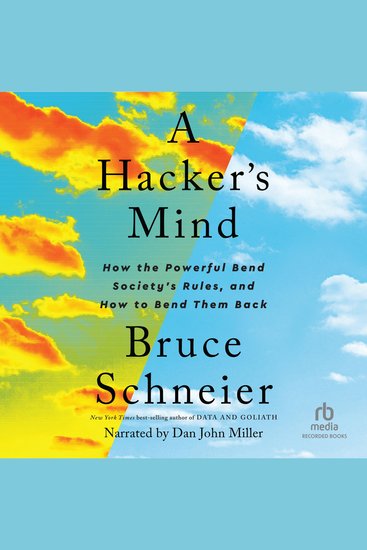
  • A Hacker's Mind - How the Powerful Bend Society's Rules and How to Bend them Back - cover

    A Hacker's Mind - How the...

    Bruce Schneier

    • 0
    • 0
    • 0
    It’s not just computers—hacking is everywhere. 
     
    A hack is any means of subverting a system’s rules in unintended ways. The tax code isn’t computer code, but a series of complex formulas. It has vulnerabilities; we call them “loopholes.” We call exploits “tax avoidance strategies.” And there is an entire industry of “black hat” hackers  
    intent on finding exploitable loopholes in the tax code. We call them accountants and tax attorneys. 
     
    In A Hacker’s Mind, Bruce Schneier takes hacking out of the world of computing and uses it to analyze the systems that underpin our society: from tax laws to financial markets to politics. He reveals an array of powerful actors whose hacks bend our economic, political, and legal  
    systems to their advantage, at the expense of everyone else. 
     
    Once you learn how to notice hacks, you’ll start seeing them everywhere—and you’ll never look at the world the same way again. Almost all systems have loopholes, and this is by design. Because if you can take advantage of them, the rules no longer apply to you. 
     
    Unchecked, these hacks threaten to upend our financial markets, weaken our democracy, and even affect the way we think. And when artificial intelligence starts thinking like a hacker—at inhuman speed and scale—the results could be catastrophic. 
     
    But for those who would don the “white hat,” we can understand the hackingmindset and rebuild our economic, political, and legal systems to counter those who would exploit our society. And we can harness artificial intelligence to improve existing systems, predict and defend  
    against hacks, and realize a more equitable world.
    Ver libro