Join us on a literary world trip!
Add this book to bookshelf
Grey
Write a new comment Default profile 50px
Grey
Subscribe to read the full book or read the first pages for free!
All characters reduced
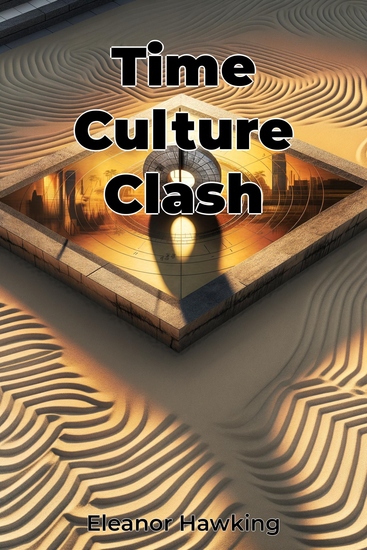
Time Culture Clash - cover

Time Culture Clash

Eleanor Hawking

Translator A AI

Publisher: Publifye

  • 0
  • 0
  • 0

Summary

Time Culture Clash presents a fascinating exploration of how time perception varies dramatically across different cultures, challenging our fundamental assumptions about what we consider normal time management. Through comprehensive research spanning twenty countries, the book reveals how our understanding of time shapes everything from business practices to personal relationships, demonstrating that temporal frameworks range from rigid Western linear concepts to more fluid, cyclical approaches found in traditional societies.

 
The book's journey begins with theoretical foundations of time measurement before delving into illuminating case studies, including Japanese precision timing and Indigenous Australian dreamtime concepts. Drawing from anthropological field studies, psychological experiments, and business case analyses, it presents compelling evidence of how deeply time perception is embedded in cultural values and social structures. These insights become particularly relevant as global collaboration increases, making temporal misunderstandings a significant source of cross-cultural friction.

 
What sets this work apart is its practical approach to bridging cultural time differences in our interconnected world. While maintaining scholarly rigor, the book offers accessible strategies for international business professionals, cross-cultural consultants, and anyone working in global contexts. By examining how digital technology impacts traditional time perspectives and addressing the ethics of imposing Western time standards globally, it provides valuable tools for navigating an increasingly complex landscape where different temporal frameworks regularly intersect.
Available since: 01/24/2025.
Print length: 106 pages.

Other books that might interest you

  • The Gauls - The People of Western Europe in Roman Times - cover

    The Gauls - The People of...

    Kelly Mass

    • 0
    • 0
    • 0
    This is a book about a people that has often been overlooked. Wallowing in the shadow of the seemingly almighty Romans, and dispersed throughout the ages into other peoples, the Gauls appear as if they had nothing going for them. Quite the opposite is true. The Gauls had a distinct culture, with habits, warfare, and so much more to offer to the intrigued historian and everyday researcher. 
    Throughout the Iron Age and the Roman period, the Gauls were a collection of Celtic tribes from Continental Europe (circa from the fifth century BC to the fifth century advertisement). Gaul was the name of the area where they used to live. Their Gaulish language is the significant branch of the Celtic languages of the continent. 
    The Gauls are worth studying. I implore you to do so.
    Show book
  • The Inside Scoop on Eating Disorder Recovery - Advice from Two Therapists Who Have Been There - cover

    The Inside Scoop on Eating...

    PSYD Colleen Reichmann, LCSW-C...

    • 0
    • 0
    • 0
    The Inside Scoop on Eating Disorder Recovery is a fresh, smart, how-to book that helps people with eating disorders to heal their relationship with food, their bodies, and ultimately themselves. 


    Written from the perspective of two eating disorder therapists, both of whom are recovered from their own eating disorders, this book uses humor, personal narratives, and research-proven techniques to offer specific actionable guidelines on how to reclaim one's life from an eating disorder. The authors explain the difference between dieting and eating disorders, break down the stages of recovery, and provide tips on how to thrive in each stage. The book provides powerful myth-busting on topics that have historically not been addressed in eating disorder recovery books, such as clean eating and orthorexia, exercising in recovery, and fat positivity. Tangible exercises at the end of each chapter provide listeners with advice and tips on implementing this approach to recovery in their day-to-day lives. 


    The humorous and down-to-earth tone of the book creates an authentic and genuine feel that leaves those who struggle with chronic dieting, eating disorders, and negative body image feeling connected and heard.
    Show book
  • A Rare Recording of President John F Kennedy’s "Ich Bin Ein Berliner" Speech - cover

    A Rare Recording of President...

    President John F. Kennedy

    • 0
    • 0
    • 0
    President John F. Kennedy gave his "Ich bin ein Berliner" speech on June 26, 1963, in West Berlin. It is one of the best-known speeches of the Cold War, and among the most famous anti-communist speeches. Twenty-two months earlier, East Germany had erected the Berlin Wall to prevent mass emigration to West Berlin. The speech was aimed as much at the Soviet Union as it was at West Berliners. The speech is considered one of Kennedy's finest, delivered at the height of the Cold War and the New Frontier. It was a great morale boost for West Berliners, who lived in an enclave deep inside East Germany and feared a possible East German occupation. 
     
    President John Fitzgerald Kennedy (May 29, 1917 - November 22, 1963), often referred to by his initials JFK, was an American politician who served as the 35th president of the United States from 1961 until his assassination in 1963. He was the youngest person to assume the presidency by election and the youngest president at the end of his tenure. Kennedy served at the climax of the Cold War, and the majority of his foreign policy concerned relations with the Soviet Union and Cuba. A Democrat, Kennedy represented Massachusetts in both houses of the U.S. Congress prior to his presidency.
    Show book
  • Ireland’s Forgotten Past - A History of the Overlooked and Disremembered - cover

    Ireland’s Forgotten Past - A...

    Turtle Bunbury

    • 0
    • 0
    • 0
    This volume delves into Ireland's forgotten history bringing to light some of the most colorful characters and intriguing episodes of the country's long history. 


    Ireland is approximately the size of the state of Indiana, yet this small country boasts an extensive, rich, and fascinating history. Ireland's Forgotten Past is an alternative history that covers 13,000 years in thirty-six stories that are often left out of history books. Among the characters in these absorbing accounts are a pair of ill-fated prehistoric chieftains, a psychopathic Viking, a gallant Norman knight, a dazzling English traitor, an ingenious tailor, an outstanding war-horse, a brothel queen, an insanely prolific sculptor, and a randy prince. 


    This volume offers a succinct account of the Stone Age and Bronze Age, as well as insights into the Bell-Beakers, the Romans, and the Knights Templar. Historian Turtle Bunbury writes a gently off-beat take on monumental events like the Wars of the Roses, the Tudor Conquest and the Battle of the Boyne, as well as the Home Rule campaign and the Great War. Ireland's Forgotten Past adds color to the existing histories of the country by focusing on the unique characters and intriguing events. This volume will delight anyone interested in the rich untold history of Ireland.
    Show book
  • Theosophy - A Modern Revival of Ancient Wisdom - cover

    Theosophy - A Modern Revival of...

    Alvin Boyd Kuhn

    • 0
    • 0
    • 0
    Since this work was designed to be one of a series of studies in American religions, the treatment of the subject was consciously limited to those aspects of Theosophy which are in some manner distinctively related to America. This restriction has been difficult to enforce for the reason that, though officially born here, Theosophy has never since its inception had its headquarters on this continent. The springs of the movement have emanated from foreign sources and influences. Its prime inspiration has come from ancient Oriental cultures. 
    America in this case has rather adopted an exotic cult than evolved it from the conditions of her native milieu.
    Show book
  • Caesar’s Civil War: The History of the Conflict against Pompey the Great that Ended the Roman Republic - cover

    Caesar’s Civil War: The History...

    Editors Charles River

    • 0
    • 0
    • 0
    The ultimate conqueror, statesman, dictator, visionary, and opportunist, during his time in power, Julius Caesar expanded the borders of Rome to almost twice their previous size, revolutionized the infrastructure of the Roman state, and destroyed the Roman Republic for good, leaving a line of emperors in its place. His legacy is so strong that his name has become, in many languages, synonymous with power: the emperors of Austria and Germany bore the title Kaiser, and the Tsars of Russia also owe the etymology of their title to Caesar. 
    Even in his time, Caesar was in many ways larger than life, and because of his legacy as virtual founder of the Roman Empire, much of what was written about – and by – him during his life and immediately after his assassination was politically motivated. The fact that he was murdered on the Ides of March is universal knowledge, but it’s often forgotten that he was stabbed while entering the Curia of Pompey, one of the Senate’s meeting places, in March of 44 BCE. The curia was a theater dedicated to Pompey the Great, Caesar’s rival in the civil war that ended the Republic and made Caesar dictator. When Caesar was stabbed, he fell at the base of a colossal statue of Pompey. 
    Thanks to Caesar’s victory in the civil war, Pompey is mostly remembered not for being one of Rome’s greatest generals, but for being defeated by Caesar and then ignominiously murdered after he fled to Egypt, where the boy pharaoh Ptolemy XIII decapitated Pompey and offered his head to Caesar as a gift. Although Caesar was there chasing Pompey’s men, he quickly became involved in Egypt’s own civil war. As a consequence of Ptolemy’s barbarity, Caesar impulsively decided to side with his sister Cleopatra in her bid for the throne of Egypt, escalating what was rapidly becoming an all-out civil war.
    Show book