Join us on a literary world trip!
Add this book to bookshelf
Grey
Write a new comment Default profile 50px
Grey
Subscribe to read the full book or read the first pages for free!
All characters reduced
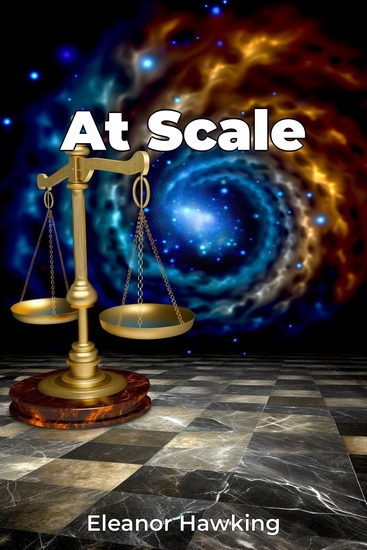
At Scale - cover

At Scale

Eleanor Hawking

Publisher: Publifye

  • 0
  • 0
  • 0

Summary

"At Scale" explores the transformative power of measurement science, revealing how our ability to quantify the world has shaped human civilization from ancient trading systems to modern technological achievements. The book presents a fascinating journey through the evolution of measurement, from rudimentary units based on human body parts to today's sophisticated International System of Units (SI), demonstrating how standardized measurements have become the backbone of scientific progress and global innovation.

 
Through a well-structured exploration across three main sections, the book illuminates the fundamental principles of metrology, contemporary measurement technologies, and emerging frontiers in measurement science. Readers discover how precision engineering and standardization have enabled remarkable achievements, from semiconductor manufacturing to space exploration. The text skillfully balances technical content with accessible explanations, using real-world case studies to illustrate complex concepts in measurement accuracy, precision, and uncertainty.

 
What sets this book apart is its comprehensive examination of measurement science's interdisciplinary impact, connecting physical measurements to global trade, human perception, and information theory. The author methodically builds understanding through practical examples, making advanced concepts accessible to both specialists and general readers. This approach creates a valuable resource for scientists and engineers while remaining engaging for anyone interested in understanding how measurement capabilities continue to drive technological advancement and scientific discovery.
Available since: 01/06/2025.
Print length: 99 pages.

Other books that might interest you

  • Exploring the Britannic - The Life Last Voyage and Wreck of Titanic's Tragic Twin - cover

    Exploring the Britannic - The...

    Simon Mills

    • 0
    • 0
    • 0
    A revelatory and wide-ranging exploration of HMS Britannic—her life at sea and on the seabed—by the owner of her wreck. 


    Launched in 1914, two years after the ill-fated voyage of her sister ship, RMS Titanic, the Britannic was intended to be superior to her tragic twin in every way. But war intervened and in 1915 she was requisitioned as a hospital ship. Just one year later, while on her way to collect troops wounded in the Balkans campaign, she fell victim to a mine laid by a German U-boat and tragically sank in the middle of the Aegean Sea. 


    There her wreck lay, at a depth of 400 feet, until it was discovered fifty-nine years later by legendary explorer Jacques Cousteau. In 1996 the wreck was bought by the author of this book, Simon Mills. 


    Exploring the Britannic tells the complete story of this enigmatic ship: her construction, launch and life, her fateful last voyage, and the historical findings resulting from the exploration of the well-preserved wreck over a period of forty years. This book finally details how the mysteries surrounding the 100-year-old enigma were laid to rest, and what the future might also hold for her.
    Show book
  • The Slow Moon Climbs - The Science History and Meaning of Menopause - cover

    The Slow Moon Climbs - The...

    Susan Mattern

    • 0
    • 0
    • 0
    This audiobook narrated by Jennifer Woodward provides the first comprehensive account of menopause from prehistory to today
    
    Are the ways we look at menopause all wrong? Historian Susan Mattern says yes, and The Slow Moon Climbs reveals just how wrong we have been. Taking readers from the rainforests of Paraguay to the streets of Tokyo, Mattern draws on historical, scientific, and cultural research to reveal how our perceptions of menopause developed from prehistory to today. For most of human history, people had no word for menopause and did not view it as a medical condition. Rather, in traditional foraging and agrarian societies, it was a transition to another important life stage. This book, then, introduces new ways of understanding life beyond fertility.
    
    Mattern examines the fascinating "Grandmother Hypothesis"—which argues for the importance of elders in the rearing of future generations—as well as other evolutionary theories that have generated surprising insights about menopause and the place of older people in society. She looks at agricultural communities where households relied on postreproductive women for the family's survival. And she explores the emergence of menopause as a medical condition in the Western world. It was only around 1700 that people began to see menopause as a dangerous pathological disorder linked to upsetting symptoms that rendered women weak and vulnerable. Mattern argues that menopause was another syndrome, like hysterical suffocation or melancholia, that emerged or reemerged in early modern Europe in tandem with the rise of a professional medical class.
    The Slow Moon Climbs casts menopause, at last, in the positive light it deserves—not only as an essential life stage, but also as a key factor in the history of human flourishing.
    Show book
  • Mastering Machine Learning: A Blueprint for Success in the AI Era - Practical Techniques Tools and Strategies for Building Intelligent Systems - cover

    Mastering Machine Learning: A...

    Rachel Chen

    • 0
    • 0
    • 0
    Anyone hoping to succeed in the rapidly expanding field of artificial intelligence will find "Mastering Machine Learning: A Blueprint for Success in the AI Era: Practical Techniques, Tools, and Strategies for Building Intelligent Systems" to be an invaluable resource. The book offers a comprehensive examination of machine learning, covering everything from its most basic applications to its underlying concepts. Its authors have an excellent knowledge of both the novice and seasoned expert. 
    The way the book is organized offers a thorough educational experience. It starts by providing a strong foundation in fundamental ideas, including selecting an algorithm, preparing data, and evaluating models. After that, readers are led through increasingly difficult subjects, including natural language processing, reinforcement learning, and deep learning. Every component is designed to be extremely practical, with examples from real-world situations and detailed instructions that promote hands-on learning. 
    "Mastering Machine Learning" explores the strategic and ethical aspects of artificial intelligence in addition to its technological aspects. It covers important topics, including project management, moral AI behavior, and how to effectively convey AI discoveries to stakeholders who aren't technical. This all-encompassing method guarantees that readers will be able to create complex machine-learning models and be ready to apply them ethically and successfully in a range of professional settings. 
    The book is a vital toolset for data scientists, engineers, and business executives alike because of its unique combination of theory, useful methodologies, and strategic advice. As a definitive manual for thriving in the AI era, "Mastering Machine Learning" stands out for providing readers with the necessary abilities and mentality.
    Show book
  • Climate Hope - Stories of Action in an Age of Global Crisis - cover

    Climate Hope - Stories of Action...

    David Geselbracht

    • 0
    • 0
    • 0
    Climate change is a problem so enormous and complex—with threats so frightening in their implications—that many of us fend off confusion and hopelessness by simply turning away. Meanwhile, with delayed action, missed targets, and increasingly dire reports at the international level, a notion that the crisis is intractable continues to spread. And the proposed solutions can be just as daunting. They often involve jargon about gigatons of carbon and kilowatt-hours of electricity. In a deeply polarized political environment, any sense of the common purpose required to make these work seems to dissolve into denial or paralysis. With all this fear and conflict, the question must be asked: How do we find the tools and the hope we need to tackle such a wickedly difficult issue? 


    In Climate Hope, journalist David Geselbracht blends in-depth research, expert interviews, and on-the-ground reporting in multiple countries, revealing remarkable efforts to identify the causes and impacts of climate change—and devise crucial ways to address them. The scale of the challenge is clear in the range of fields he covers, from glaciology and climate science to law and diplomacy. But in drawing these approaches together, he shares stories of hope, awe, and wonder that encourage us to confront this long-term, world-warping phenomenon with a renewed sense of purpose and possibility.
    Show book
  • The Future Told by AI - Predicting Humanity's Next 100 years Through the Mind of Artificial Intelligence - cover

    The Future Told by AI -...

    Jen E. Candy

    • 0
    • 0
    • 0
    Peering Into Tomorrow: How Artificial Intelligence Forecasts Our World’s Next Century 
    Imagine a future meticulously mapped by the most advanced minds of our generation, not human, but artificial. "The Future Told by AI: Predicting Humanity's Next 100 years Through the Mind of Artificial Intelligence" offers an unprecedented glimpse into the next century, as foreseen by the algorithms and neural networks that are starting to shape our present. With expert analysis intertwined with AI’s projections, this book is your compass to navigating what lies ahead. 
    Embark on a journey from the roots of predictive AI in The Dawn of Predictive AI, exploring the leap from simple algorithms to the complex neural networks that now forecast weather patterns, market trends, and even human behavior. This evolution sets the stage for a deep dive into the immediate 25 years. Here, we unveil how technology, culture, and daily life are anticipated to transform, making the future feel like it’s just around the corner. 
    As you traverse further, the book challenges your perception of humanity and technology. By the 50-Year Horizon chapter, witness the intimate dance between AI and human intelligence, revealing a world where the lines between man and machine blur. The far-reaching implications on the global economy, employment, and innovation are thoroughly examined, shedding light on a reimagined earth and beyond. 
    Whether you’re a tech enthusiast, a skeptic of digital prophecy, or simply intrigued by the unknown, this book demystifies the next 100 years with clarity and vision. Prepare to be inspired, challenged, and excited about the future. "The Future Told by AI" is more than a read; it’s a journey to the heart of tomorrow’s possibilities.
    Show book
  • The Sterilization Experiments - The Barbaric Legacy of Carl Clauberg - cover

    The Sterilization Experiments -...

    Davis Truman

    • 0
    • 0
    • 0
    In the shadows of history, some stories challenge our understanding of humanity. 'The Sterilization Experiments: The Barbaric Legacy of Carl Clauberg' is one such story. 
    The atrocities committed during the Nazi era are a dark stain on human history. Among the many horrors of this period were the medical experiments conducted on concentration camp prisoners by Nazi doctors. One of the most notorious of these doctors was Carl Clauberg, an expert in gynecology who was tasked with developing a method for sterilizing women quickly and inexpensively. Clauberg's experiments were carried out with a callous disregard for human life and dignity, resulting in immeasurable suffering for his victims. The legacy of these experiments continues to shape our understanding of medical ethics, human rights, and the dangers of unchecked power and ideology.  
    The Sterilization Experiments' is not just a recounting of facts; it is a solemn reminder of the depths to which humanity can sink and a call to remember the victims who endured unimaginable suffering. 
    This book is an essential read for those who seek to understand the true cost of hatred and the importance of vigilance against such evils. It challenges us to confront the past and ensure that such atrocities never happen again.
    Show book