¡Acompáñanos a viajar por el mundo de los libros!
Añadir este libro a la estantería
Grey
Escribe un nuevo comentario Default profile 50px
Grey
Suscríbete para leer el libro completo o lee las primeras páginas gratis.
All characters reduced
Scarlet and Hyssop - A Novel - cover

Scarlet and Hyssop - A Novel

E.F. Benson

Editorial: Publisher s11838

  • 0
  • 1
  • 0

Sinopsis

Scarlet and Hyssop: A Novel written by E. F. Benson who was an English novelist, biographer, memoirist, archaeologist and short story writer.  This book was published in 1902. And now republish in ebook format. We believe this work is culturally important in its original archival form. While we strive to adequately clean and digitally enhance the original work, there are occasionally instances where imperfections such as missing pages, poor pictures or errant marks may have been introduced due to either the quality of the original work. Despite these occasional imperfections, we have brought it back into print as part of our ongoing global book preservation commitment, providing customers with access to the best possible historical reprints. We appreciate your understanding of these occasional imperfections, and sincerely hope you enjoy reading this book.
Disponible desde: 16/08/2018.

Otros libros que te pueden interesar

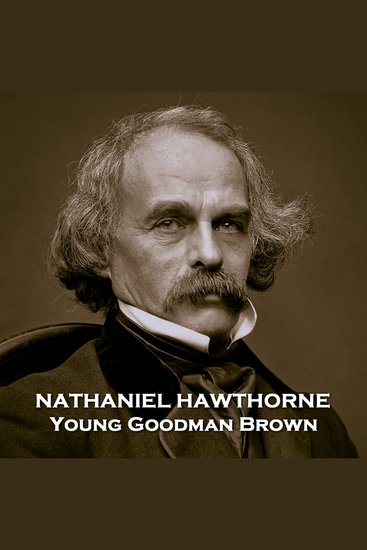
  • Young Goodman Brown - From their pens to your ears genius in every story - cover

    Young Goodman Brown - From their...

    Nathaniel Hawthorne

    • 0
    • 0
    • 0
    Nathaniel Hawthorne was born on 4th July 1804 in Salem, Massachusetts, a town synonymous with the earlier Salem Witch Trials. It was instrumental in Hawthorne’s later use of American Gothic and dark romanticism in his writing. 
    He was a mere four years old when his father died and his mother took him and his two sisters to live with her family and then on to their own home in Raymond, Maine. The young Hawthorne had a passion for fiction and poetry and voraciously read the works of Ann Radcliffe, Henry Fielding and Lord Byron.  
    He was sent to college at his maternal uncle’s insistence. During these years he met and befriended Henry Wadsworth Longfellow and future U S president Franklin Pierce. These friendships were lifelong and to have a crucial impact on his writings and career.  
    At college Hawthorne had made attempts at writing short stories and essays but without opportunities to publish. It was only in 1828 that he finally published his novel ‘Franshawe’ to little success and so he began work as editor for the American Magazine of Useful and Entertaining Knowledge.  
    Hawthorne’s short stories were first published in magazines but in 1837 were collected and published as ‘Twice-Told Tales’. A steady literary career still did not come his way and so he worked in a good position at Salem’s port and married the love of his life Sophia Peabody. They moved to live in ‘The Old Manse’ at Concord, Massachusetts.   
    Finally. in 1850 came spectacular literary and commercial success with ‘The Scarlet Letter’ followed by ‘The House of the Seven Gables’ the following year.  
    In 1852, Hawthorne published a biography of presidential candidate Franklin Pierce. After Pierce’s victory he was appointed consul in Liverpool, a position that offered prestige, money and fame. At the end of this appointment he returned several times to Europe before settling in Massachusetts and resuming writing and publication. 
    During the early 1860’s his health declined and on 19th May 1864 during a trip to Plymouth, New Hampshire. He was 59 and was buried in Sleepy Hollow Cemetery in Concord, Massachusetts.
    Ver libro
  • Top 10 Short Stories The - The Decadent - Five poems each from some of the best decadent poets - cover

    Top 10 Short Stories The - The...

    Oscar Wilde

    • 0
    • 0
    • 0
    In the late 19th Century, a literary movement arose across both prose and poetry, that championed the idea that art should exist for its aesthetic value, unburdened by moral or social obligations.  As a consequence, it challenged the strict moral codes of the Victorian era, often exploring themes associated with eroticism, forbidden desires, artificiality, the ravages of time, beauty, death, and decay which were often perceived as transgressive, even taboo. 
    Within its ranks are a who’s-who of unconventional and confrontational talent as well as perhaps its greatest exponent; Oscar Wilde, whose embracing of moral rebelliousness and unmasking of Victorian hypocrisy sums up the movement’s greatest achievement.
    Ver libro
  • The Woman in White - cover

    The Woman in White

    Wilkie Collins

    • 0
    • 0
    • 0
    A trailblazing work in the mystery and sensation fiction genres, "The Woman in White" enthralls readers with its complex plot, intriguing characters, and spine-tingling atmosphere. The story begins with Walter Hartright's chance encounter with a mysterious woman in white, setting off a chain of events that unravels dark secrets, mistaken identities, and psychological suspense. As the narrative unfolds through multiple narrators, including the unforgettable character of the cunning Count Fosco, the novel keeps readers guessing until its thrilling conclusion. 
     
    Wilkie Collins, an English novelist, and playwright, is renowned as a pioneer of the detective fiction genre. His most famous work, "The Woman in White," published in 1859, captivated readers with its intricate plot, suspenseful narrative, and innovative use of multiple narrators. Collins' contributions to mystery and sensation fiction significantly influenced the development of crime literature.
    Ver libro
  • Berenice - cover

    Berenice

    Edgar Allan Poe

    • 0
    • 0
    • 0
    Berenice — A Tale. Misery is manifold. The wretchedness of earth is multiform. Overreaching the wide horizon like the rainbow, its hues are as various as the hues of that.
    Misery is manifold. The wretchedness of earth is multiform. Overreaching the wide horizon like the rainbow, its hues are as various as the hues of that arch, as distinct too, yet as intimately blended. Overreaching the wide horizon like the rainbow! How is it that from Beauty I have derived a type of unloveliness? — from the covenant of Peace a simile of sorrow? But thus is it. And as, in ethics, Evil is a consequence of Good, so, in fact, out of Joy is sorrow born. Either the memory of past bliss is the anguish of to-day, or the agonies which are, have their origin in the ecstasies which might have been. I have a tale to tell in its own essence rife with horror — I would suppress it were it not a record more of feelings than of facts.
    Ver libro
  • Snow White & Rose Red and Other Stories - cover

    Snow White & Rose Red and Other...

    The Brothers Grimm

    • 0
    • 0
    • 0
    This charming collection of Grimms' Fairy Tales includes "Snow White & Rose Red", "Doctor Knowall", "The Seven Ravens", "King Grisly-Beard" and "The Twelve Huntsmen". Grimms' Fairy Tales was first published in Germany in 1812 as "Kinder und Hausmärchen". This series of recordings is based on the original 1823 English translation by Edgar Taylor, with subsequent editing by Marian Edwardes.
    Ver libro
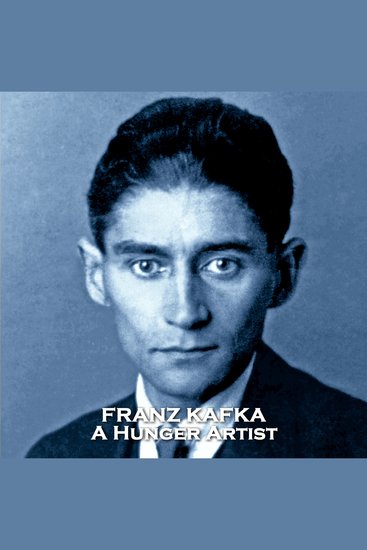
  • A Hunger Artist - A study in artistic pursuit and the sacrifices one must make - cover

    A Hunger Artist - A study in...

    Franz Kafka

    • 0
    • 0
    • 0
    Franz Kafka was born on 3rd July 1883 in Prague, then in Bohemia, the eldest of 6, into a middle-class Jewish family. 
     
    Life for the young Kafka and his passion for literature was often made an ordeal by his over-bearing and domineering entrepreneur of a father.   
     
    In 1889 Kafka was sent to the Deutsche Knabenschule, an elementary school in Prague. His father would only allow him to be educated in German-speaking schools and even went so far as to limit visits to the synagogue to four a year. 
     
    In 1901 he graduated from the classics-oriented Altstädter Gymnasium. Kafka did well there and across a large range of subjects.  He now enrolled at the Charles Ferdinand University, to study chemistry, but quickly switched to law for which he obtained his degree in June 1906 and then performed the mandatory year of unpaid service as clerk at the civil and criminal courts. 
     
    A job at an Italian insurance company left him little time to write and after a year he took another job with the Worker's Accident Insurance Institute for the Kingdom of Bohemia where he stayed until ill health led to his resignation in 1922. 
     
    Although he saw work as a means to pay the bills and to allow him time to write, he received several promotions and was noted as a good employee. 
     
    By 1917 Kafka was suffering from tuberculosis, which required frequent periods of convalescence. Interspersed with this, were several intense affairs before he settled in Berlin with Dora Diamant, a 25-year-old kindergarten teacher who herself having left the ghetto now influenced Kafka's interest in the book of Jewish law, the Talmud. 
     
    Kafka’s on-going health was littered with problems. Apart from TB there were several other ailments, including migraines, insomnia, boils, depression, all usually brought on by excessive stresses and strains. He attempted to counteract all of this by naturopathic treatments, a vegetarian diet and consuming large quantities of unpasteurized milk. 
     
    His tuberculosis still worsened. He returned to Prague, where he died on 3rd June 1924. He was 40. 
     
    His literary works are few in number but towering in influence.  His masterpieces include ‘The Trial’, ‘The Metamorphosis’ as well as a number of short stories which reveal facets of humankind that truthfully could only be born from Kafka’s brain and pen.
    Ver libro