Join us on a literary world trip!
Add this book to bookshelf
Grey
Write a new comment Default profile 50px
Grey
Subscribe to read the full book or read the first pages for free!
All characters reduced
Lost with Lieutenant Pike - Journey into the American West: A Tale of Exploration and Adventure - cover

Lost with Lieutenant Pike - Journey into the American West: A Tale of Exploration and Adventure

Edwin L. Sabin

Publisher: Good Press

  • 0
  • 0
  • 0

Summary

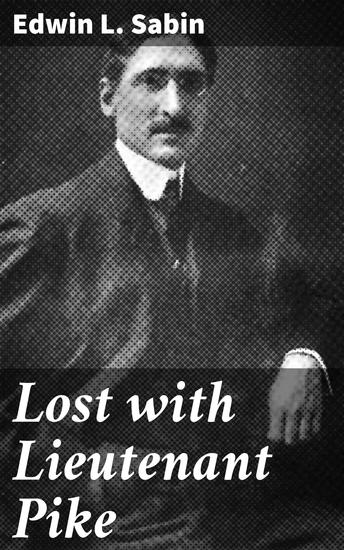
In "Lost with Lieutenant Pike," Edwin L. Sabin masterfully intertwines historical narrative with vivid storytelling, culminating in a thrilling account of the ill-fated expedition led by Lieutenant Zebulon Pike in the early 19th century. Sabin's literary style is characterized by an engaging blend of descriptive prose and meticulous historical detail, immersing readers in the perilous adventures and harsh realities faced by Pike and his party in uncharted American territories. Set against the backdrop of America's westward expansion, the book addresses themes of exploration, survival, and the human spirit, all while drawing from extensive research and primary sources that enhance its authenticity and depth. Edwin L. Sabin, a prominent author and historian, crafted this work amidst a deep fascination with American exploration narratives and the enduring legacy of figures like Pike. His own experiences and extensive research into early American history shaped his understanding of the broader socio-political context of the time. This background not only informs the authenticity of his writing but also highlights the complexities faced by explorers as they traversed vast and often hostile landscapes. "Lost with Lieutenant Pike" is a compelling read for anyone interested in the intricacies of early American exploration, history enthusiasts, and those captivated by tales of adventure and resilience. Sabin's skillful storytelling and rich historical insight will resonate with readers, inviting them to explore the remarkable journey that ultimately shaped the course of the American frontier.
Available since: 08/21/2022.
Print length: 155 pages.
Other books that might interest you

  • Dark Ages - Historical Facts about the Plague the Inquisition and the Knights from the Middle Ages - cover

    Dark Ages - Historical Facts...

    Kelly Mass

    • 0
    • 0
    • 0
    This book contains the following titles: 
    Crusaders - The Crusaders is one of those dark chapters in history that we would rather forget, especially religious people. In name of the church, or other religions, like the Muslim faith, people killed, destroyed, looted, and burned cities to the ground. 
    Middle Ages - In the history of Europe, the Middle Ages or middle ages time period lasted around from the 5th to the late 15th centuries, likewise to the Post-classical period of worldwide history. 
    William Shakespeare - William Shakespeare is the celebrated script writer of the most popular plays in the English language. By writing both tragedies, romances, and comedies in the 16th century, he made a name for himself and became successful in the art of drama. 
    Black Death - Here we have it: We may be looking at the years 2020-2021 and think a certain virus has been bad for the world population. However, what happened in these two years is nothing, proportionally, to the hundreds of millions of people who got wiped out by rat infestations. 
    Anglo-Saxons - In the Early Middle Ages, the Anglo-Saxons were a cultural group that resided in England. They traced their roots back to the arrival of incomers to Britain in the fifth century, who originated from the North Sea coastlands of continental Europe. 
    Viking History - We all have a typical image of Vikings, from the horns on their helmets to the beards and the clothes they wear. Their ships have a certain charm, and their reputation is that they were brutal, raw, and believed in multiple gods. 
    Inquisition - Perhaps you have heard of the horrible stories of the Spanish, Portuguese, or French inquisition, the Catholic body of persecutors who would arrest the supposed “heathens” and accuse them of witchcraft, heresies, blasphemy, adultery, and a whole list of other sins or crimes.
    Show book
  • Self-Reliance and Other Essays - cover

    Self-Reliance and Other Essays

    Ralph Waldo Emerson

    • 0
    • 0
    • 0
    Trust Thyself. Every Heart Vibrates to That Iron String.
    
    In an age of overwhelming social pressure and inherited traditions, Ralph Waldo Emerson issued a revolutionary manifesto for the soul. Self-Reliance and Other Essays represents the heartbeat of American Transcendentalism, challenging every reader to look inward for truth rather than toward the dictates of the crowd. This collection gathers the foundational thoughts of a man who believed that to be great is to be misunderstood.


    Within these pages, you will explore the pillars of Emersonian thought:
    
    The Doctrine of Individualism: A powerful defense of personal intuition over social imitation, urging you to "insist on yourself; never imitate."
    
    The Living Universe: Emerson's profound meditations on Nature, viewing the physical world not just as a resource, but as a gateway to spiritual enlightenment and a mirror for the human mind.
    
    The Over-Soul and Universal Unity: An exploration of the shared spiritual force that connects all living beings, suggesting that every individual contains a spark of the divine.
    
    The Rejection of Consistency: A bold call to live in the "now," discarding the "hobgoblin of little minds"—foolish consistency—in favor of authentic, present-moment growth.
    
    Emerson's prose is a masterclass in aphoristic brilliance—sentences that spark like lightning and remain etched in the mind. His work is the cornerstone of American philosophy and an essential roadmap for anyone seeking personal autonomy, creative inspiration, and a deeper spiritual connection to the world.
    
    Stop searching outside yourself. Buy "Self-Reliance and Other Essays" today and awaken your true genius.
    Show book
  • Sparking Desire: Balancing Intimacy and Everyday Life - "Ignite Passion: Audio Lessons to Harmonize Love and Daily Life for Unmatched Balance!" - cover

    Sparking Desire: Balancing...

    Ethan Lawson

    • 0
    • 0
    • 0
    Sparking Desire: Balancing Intimacy and Everyday Life  
    ⭐⭐ Simplified Guide & Explanations Included⭐⭐   
    Are you looking to transform intimacy and life with balanced passion? 
    Seeking a comprehensive guide that provides all necessary elements to harmonize intimacy and everyday life? 
    Your search ends here! 
    This guide serves as your definitive companion for deepening your understanding, applying your skills, and engaging in hands-on exercises. With this, you're geared for success. 
    Updated for the latest insights and techniques. 
    Key features of this enriched guide: 
    - Profound insights about balancing intimacy and life 
    - Detailed explanation of fostering intimate connections 
    - Fruitful strategies for harmonizing relationships and daily responsibilities 
    Our guide distinguishes itself through comprehensive coverage, which is essential for your personal growth. Concepts aren't merely skimmed; they are delved into with precision. 
    Please note that this guide is not affiliated with any official entity and is purely an independent resource for your benefit. 
    Designed with a clear structure and easy-to-understand language, our guide ensures smooth transitions between topics. Say goodbye to dense jargon and welcome clear, precise, and technically accurate content. 
    So, why wait? Click the BUY NOW button, secure your guide, and begin your journey to balanced intimacy and everyday life transformation!
    Show book
  • A Rare Recording of Corrie ten Boom Vol 1 - cover

    A Rare Recording of Corrie ten...

    Corrie ten Boom

    • 0
    • 0
    • 0
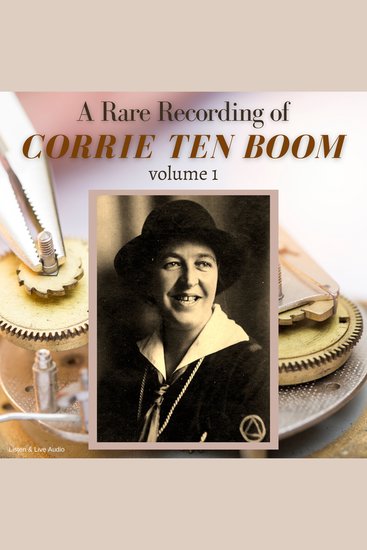
    Cornelia Arnolda Johanna "Corrie" ten Boom (April 15, 1892 - April 15, 1983) was a Dutch watchmaker who worked with her father Casper and other family members to help, reportedly, 800 Jews escape the Nazi Holocaust during World War II by hiding them in their home. Eventually, the family was caught, and ten Boom was arrested and sent to Ravensbrück concentration camp, but released after ten months due to a clerical error. Later in life, ten Boom wrote, "The Hiding Place," a biography that recounts the story of her family's efforts and how she was able to find hope while imprisoned at the concentration camp. It was later made in to a movie.
    Show book
  • Carlist Wars The: The History and Legacy of the Spanish Civil Wars in the 19th Century - cover

    Carlist Wars The: The History...

    Editors Charles River

    • 0
    • 0
    • 0
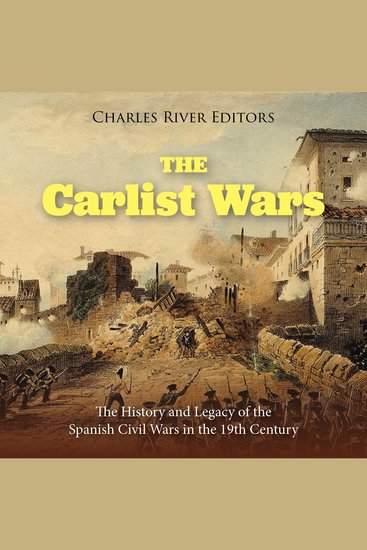
    Thinking of Spain as a modern nation state today distorts the complicated reality that the Iberian Peninsula faced in the past. Spain was a nation in progress, consisting of regions united under the Spanish crown, but with strong regional identities based on different historical and cultural experiences. The largest entities were the kingdoms of León and Castile, but Spain also included the kingdoms of Navarre, Andalusia, Granada, Jaén, Aragon, and Valencia. There were also the principalities of Asturias and Catalonia, the lordship of Vizcaya, and both Guipúzcoa and Alava were “exempted provinces.” Navarre, Aragon, and Catalonia had separate Cortes, which were versions of parliaments (Parker 18-19). This complex system of entities granted privilege to local power structures over the concept of a unified nation and made administration difficult, because there were few standards that applied to all of Spain. Many of the regions had special laws that respected and allowed traditional institutions, administrative patterns, and cultural patterns. These local and regional rights were called fueros and were fiercely defended against centralization. The fueros originated as rights agreed to when the regions joined the Spanish crown. Before becoming king, the king-designate had to swear to maintain and respect the fueros. This meant that the rights of the king were to a considerable extent limited. 
    Inevitably, liberals and centralizing monarchs alike tried to change the situation over the years, which produced political tensions. The Carlists promised to maintain the older system, which is why they were so firmly backed in the Basque regions by most of the peasants and nobility. The Carlist claimants were strong Catholics and were strongly supported by the Church, and thus by the more fervently Catholic portions of the population. 
    Show book
  • The Indonesian Famine of 1945-1946 - A Study in Post-War Disruption - cover

    The Indonesian Famine of...

    Sarah Willards

    • 0
    • 0
    • 0
    The conclusion of World War II marked a pivotal turning point in Indonesia’s history. As the Japanese forces surrendered in August 1945, the vacuum left behind in their wake exposed the fragility of colonial and wartime institutions. Indonesia, long under Dutch colonial rule and occupied by Japan since 1942, was suddenly thrust into a state of political and administrative chaos. The power void that followed the Japanese capitulation was quickly filled by nationalist fervor, culminating in the proclamation of Indonesian independence on August 17, 1945. However, the declaration did not result in immediate recognition or control. Instead, the country found itself caught between competing powers and clashing agendas. 
    The collapse of Japanese administrative structures left the newly proclaimed Republic of Indonesia struggling to assert its legitimacy. Republican leaders, including Sukarno and Mohammad Hatta, faced the monumental task of organizing a new government while also managing the fallout of war. Meanwhile, Dutch authorities, with Allied support, sought to re-establish their colonial presence. This led to violent confrontations and widespread instability, as various factions—including local militias, former Japanese-trained troops, and returning colonial forces—vied for control over towns, supply routes, and administrative posts. 
    The disintegration of centralized governance had far-reaching consequences. Essential services, including food distribution and public health, were severely disrupted. The chaos was further compounded by a breakdown in communication lines and transportation infrastructure, much of which had been damaged during the war or repurposed by occupying forces. With no clear authority in many regions, local leaders and grassroots organizations were left to manage crises as best they could, often with limited resources and no coordination.
    Show book