Join us on a literary world trip!
Add this book to bookshelf
Grey
Write a new comment Default profile 50px
Grey
Subscribe to read the full book or read the first pages for free!
All characters reduced
The Founding of South Australia - Enriched edition - cover

The Founding of South Australia - Enriched edition

Edwin Hodder

Publisher: DigiCat

  • 0
  • 0
  • 0

Summary

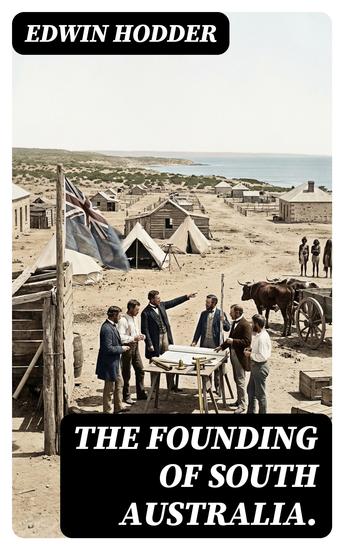
In "The Founding of South Australia," Edwin Hodder offers a meticulously researched and engaging narrative that chronicles the establishment of the South Australian colony in the early 19th century. The book blends historical analysis with vivid anecdotes and contemporary accounts, immersing readers in the trials and triumphs faced by the early settlers. Hodder's literary style is reflective and detailed, employing a chronological approach that captures the social, political, and economic factors influencing the colony's formation, illustrating how it emerged as a unique experiment in colonial governance and societal organization amidst the backdrop of Victorian England's expansionist ambitions. Edwin Hodder, a journalist and author born in 1837, was influenced by his profound interest in British colonization and its impact on society. His career as an editor and journalist allowed him to access a wealth of primary sources and firsthand accounts, which he adeptly weaves into the narrative. Hodder's engagement with the Ethos of colonialism, alongside his personal experiences, informs his nuanced perspective on South Australia's founding, providing critical insights into the challenges inherent in creating a new society. This compelling work is highly recommended for readers interested in the complexities of Australian history, colonialism, or those seeking to understand the transformative power of human endeavor in the face of adversity. Hodder's rich narrative not only educates but also evokes a deep appreciation for the spirited pioneers who shaped a nascent society. It is a must-read for historians, students, and anyone captivated by the story of Australia.

In this enriched edition, we have carefully created added value for your reading experience:
- Hand‐picked Memorable Quotes shine a spotlight on moments of literary brilliance.
- Interactive footnotes clarify unusual references, historical allusions, and archaic phrases for an effortless, more informed read.
Available since: 09/15/2022.
Print length: 170 pages.

Other books that might interest you

  • Mughal Empire - The Taj Mahal Legacy - cover

    Mughal Empire - The Taj Mahal...

    Rolf Hedger

    • 0
    • 0
    • 0
    The Mughal Empire emerged as one of the most powerful and influential dynasties in Indian history, leaving a lasting impact on culture, architecture, and governance. Its foundation was laid by Babur, a descendant of both Timur and Genghis Khan, who established Mughal rule in the early 16th century. Babur's military prowess and strategic vision enabled him to defeat the Delhi Sultanate in the First Battle of Panipat in 1526. This victory marked the beginning of Mughal dominance in the Indian subcontinent. However, Babur’s reign was short-lived, and it was his grandson, Akbar, who truly solidified the empire’s foundation. 
    Akbar ascended the throne at a young age and quickly proved himself to be an exceptional leader. His reign, which lasted from 1556 to 1605, was marked by territorial expansion, administrative reforms, and a commitment to cultural and religious harmony. Unlike previous rulers, Akbar recognized the diversity of India and sought to integrate different communities into his empire. He abolished the jizya tax on non-Muslims, promoted interfaith dialogue, and appointed talented individuals from various backgrounds to key positions in his administration. His policy of religious tolerance and inclusive governance earned him the loyalty of many, contributing to the stability and prosperity of the empire. 
    One of Akbar’s most remarkable achievements was the establishment of an efficient administrative system. He divided his empire into provinces, each governed by appointed officials who reported directly to the central authority. This system ensured effective governance and facilitated tax collection, trade, and law enforcement. Additionally, Akbar introduced a standardized revenue system that helped regulate the economy and promote agricultural growth. His emphasis on merit-based appointments created a well-organized bureaucracy that endured long after his reign.
    Show book
  • After All: A Twenty-Two-Year-Old's Observations on Living and Passing Through - cover

    After All: A...

    Joel Holland

    • 0
    • 0
    • 0
    It's been said that one cannot write well if he does not read well, and Joel Holland reads well. The collection draws inspiration from dozens of poets and hundreds of stories accumulated in thoughts and journals from Holland's first 22 years of living. Ever-present through the collection is Holland's advice, ultimately to himself, to let these stories orient him toward an intentional present. Through the celebration of life and the heartache of its inevitable end, Holland vulnerably lets the reader know of his own deep need for a Savior and how that Savior helps him to see others' stories as real and meaningful. 
    In just the first line of the collection, Holland tells of how he collects stories that stir his heart and it is evident throughout that he allows them change his heart through pondering, journaling, and prayer. The title After All may seem arrogant for a 22-year-old's poetry collection, but the collection serves as an earnest attempt to tell others' stories. Through grandparents' wisdom, roommates' heartbreak, and other poets' eye for beauty, Holland writes of wisdom he's still learning to apply through the lense of those about whom he cares most deeply. After All is, ironically, an admission of ignorance and a call to listen and to understand.
    Show book
  • Limitless Mind - "Unlock your potential with engaging audio lessons that optimize your Limitless Mind experience!" - cover

    Limitless Mind - "Unlock your...

    Orson Vexley

    • 0
    • 0
    • 0
    Limitless Mind 
     ⭐⭐ A Simplified Guide for Transforming Failures into Opportunities ⭐⭐ 
    Are you eager to advance in your career and solidify your knowledge by successfully turning failures into opportunities for continuous improvement? 
    Searching for a comprehensive guide that offers everything you need for this transformative journey? 
    Your quest ends here! 
    This guide is your ultimate ally in enhancing your understanding, applying your skills, and engaging in practical exercises. With this resource, you’re set on the path to success. 
    Updated to reflect the latest transformations for continuous improvement. 
    Key features of this informative guide: 
    - In-depth insights regarding the journey of turning failures into opportunities 
    - Thorough explanation of the transformation process 
    - Effective strategies for preparation and overcoming challenges 
    Our guide stands out due to its extensive coverage, which is crucial for your success. Concepts are thoroughly explored—not just lightly touched upon. 
    Please note that this guide is an independent resource and is not affiliated with any official entity regarding continuous improvement. 
    Structured clearly and written in an accessible manner, our guide ensures smooth transitions between topics. Bid farewell to complex jargon and embrace clear, concise, and technically accurate content. 
    So, why hesitate? Click the BUY NOW button, secure your guide, and embark on your journey to success in transforming failures into opportunities!
    Show book
  • Gay Erotica - 10 Gay Men First Time Stories - cover

    Gay Erotica - 10 Gay Men First...

    Karl Cumin

    • 0
    • 1
    • 0
    Ten explicit man on man and threesome stories, this bundle has everything you could want to get you going including coming out, spanking, doctors, younger man - older man, sex toys, bondage, and much more!  
      
    The stories:"Burning Pleasures" "Darren’s First Gay Experience""From Voyeur to More""Loving His Friend’s Confession""Shafted by the Mechanic""Plowed by the Waiter""Spanked by the Bodyguard" "Stretched and Plowed by an Older Guy""The Ex-Navy Seal’s Kinky Assignment""Under Doctor’s Orders" 
    All characters are over 18 and fictional.
    Show book
  • Atlas: blueprints for the new world and the future of the human race - cover

    Atlas: blueprints for the new...

    DR SHAWN PRICE

    • 0
    • 0
    • 0
    The progress of the human race has been haphazard and inefficient with too much left to chance. We have been wasteful with our time, resources, and human effort. We have suffered unnecessarily with pointless wars and with billions still in poverty today. And now, our very existence is threatened by multiple Global Catastrophic Risks – from climate change and nuclear war, to AI and pandemics. But the global ‘order’ of today shows no chance of being able to solve and effectively coordinate the global responses so critically required to ensure the future of humanity. This is not good enough. It is far too soon for us to end. Our future, our potential as a species – we must protect and realise it. 
    This book explores what the human race could achieve with true global cooperation. 
    In this book are the Blueprints for the New World – with the global systems and institutions of the world re-engineered and re-designed to solve the global problems of today. To create the most prosperous Future of the Human Race. It explores the benefits of achieving global demilitarisation, a true global economy centred around Value creation and not consumerism, a new global currency and global language. The ability to effectively respond to global emergencies and threats, accelerating scientific progress through restructuring academia, global infrastructure projects such as a global electricity grid. True global justice crippling evil across the entire world. Reforming the global education system. Long term planning for the benefit of the entire human race. A global space agency to establish our foothold in space as fast as possible. And more. 
    No more should humanity blindly stumble forward into the future. It is time we finally took a firm hold of and controlled the destiny of the human race. 
    “The world is my country, all mankind are my brethren, and to do good is my religion.” 
    -   Thomas Paine
    Show book
  • Meroitic Kingdom - Forgotten Kingdom of the Nile's Black Pharaohs - cover

    Meroitic Kingdom - Forgotten...

    Rolf Hedger

    • 0
    • 0
    • 0
    The Land of Kush, an ancient and powerful civilization, thrived along the banks of the Nile in what is now Sudan. Situated south of Egypt, Kush was a land of vast deserts, fertile floodplains, and rich natural resources. This region played a crucial role in shaping the history of northeastern Africa, serving as a bridge between central Africa and the Mediterranean world. The rise of the Kingdom of Kush was deeply influenced by its geography, trade networks, and interactions with neighboring civilizations. 
    The Nile River was the lifeline of Kush, providing water for agriculture, transportation, and trade. The river's annual flooding deposited nutrient-rich silt, allowing the Kushites to cultivate crops such as barley, wheat, and sorghum. This agricultural abundance supported growing populations and enabled the kingdom to expand its influence. The vast deserts surrounding Kush acted as natural barriers, protecting the civilization from invasions while also encouraging the development of trade routes that connected Kush to Egypt, the Red Sea, and beyond. 
    Kush's wealth was largely derived from its abundant natural resources, particularly gold, iron, and precious stones. Gold mines in Nubia were among the richest in the ancient world, making Kush a major supplier of gold to Egypt and other civilizations. Ironworking became another defining feature of Kushite industry, allowing the kingdom to produce advanced tools and weapons that strengthened its economy and military. The Kushites also controlled trade routes that transported luxury goods such as ivory, ebony, and incense, further enriching their civilization.
    Show book