Join us on a literary world trip!
Add this book to bookshelf
Grey
Write a new comment Default profile 50px
Grey
Subscribe to read the full book or read the first pages for free!
All characters reduced
The Huge Hunter - Western Novel: The Steam Man of the Prairies - cover

The Huge Hunter - Western Novel: The Steam Man of the Prairies

Edward S. Ellis

Publisher: e-artnow

  • 0
  • 0
  • 0

Summary

The Huge Hunter; or, The Steam Man of the Prairies is a western novel set against the frontier west of the Mississippi in the 1870s. It tells the tale of Johnny Brainerd, a young inventor who builds a steam powered mechanical man. Brainerd's acquaintance Baldy Bicknell convinces him to take the creature across the western territories in order to test it out on the prairies and eventually help with Bicknell's rough miners who seek gold. On this adventure they are under constant threat from Indian attacks who can't deal with the mechanical creature.
Available since: 08/17/2022.
Print length: 95 pages.

Other books that might interest you

  • Anthology of Classic Short Stories Mystery and Adventure Vol 4 - The Adventure of the Blue Carbuncle by Arthur Conan Doyle The Arrow of Heaven by G K Chesterton The Diamond as Big as the Ritz by F Scott Fitzgerald and others - cover

    Anthology of Classic Short...

    Arthur Conan Doyle, G. K....

    • 0
    • 0
    • 0
    Read the best mystery and adventure short stories. Be it cozy, historical, detective or murder mystery stories; our collection includes them all:
    The Red-Headed League by Arthur Conan Doyle
    The Adventure of the Blue Carbuncle by Arthur Conan Doyle
    The Arrow of Heaven by G. K. Chesterton
    The Sign of the Broken Sword by G. K. Chesterton
    The Purloined Letter by Edgar Allan Poe
    The Master of Mystery by Jack London
    The Problem of Cell 13 by Jacques Futrelle
    The Three Strangers by Thomas Hardy
    The Diamond as Big as the Ritz by F. Scott Fitzgerald
    A Jury of Her Peers by Susan Glaspell
    Show book
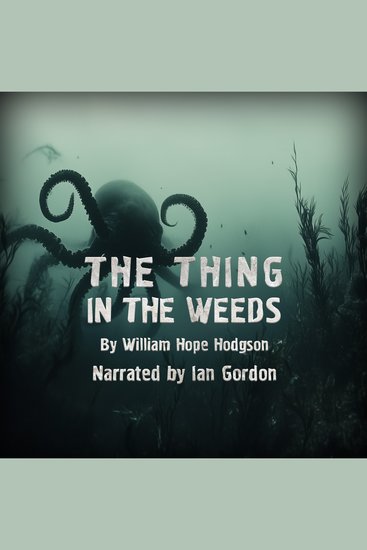
  • The Thing in the Weeds - cover

    The Thing in the Weeds

    William Hope Hodgson

    • 0
    • 0
    • 0
    William Hope Hodgson's "The Thing in the Weeds" is a short horror tale of the Sargasso Sea, in which a ship and her crew venture near a mysterious, weed-choked waterway where an unseen, malevolent presence lurks. The story first appeared in the magazine The Storyteller, in its January 1913 edition.
    Show book
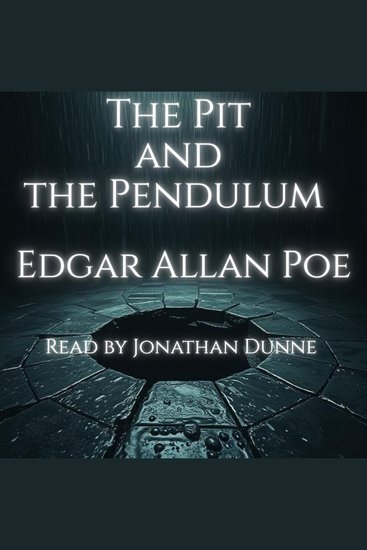
  • The Pit and the Pendulum - cover

    The Pit and the Pendulum

    Edgar Allan Poe

    • 0
    • 0
    • 0
    Title: The Pit and the Pendulum 
    Author: Edgar Allan Poe 
    Narrator: Jonathan Dunne 
    Original Publication: 1842 
    Public Domain: Yes 
    Series Placement: Number 32 in the Timeless Terrors series 
    Description: 
    The Pit and the Pendulum by Edgar Allan Poe is a harrowing descent into psychological and physical torment — a masterpiece of suspense that explores the extremities of fear and the indomitable will to survive. Set during the horrors of the Spanish Inquisition, a condemned man awakens in a pitch-black chamber where terror comes not from the unseen alone, but from the cruel machinery of death itself. 
    Through meticulous pacing and sensory detail, Poe transforms the simple elements of darkness, time, and confinement into instruments of unbearable dread. The swinging blade, the narrowing walls, and the unseen abyss below merge into a nightmare of pure existential terror. 
    Narrated by horror author Jonathan Dunne, this performance captures Poe’s rhythm of panic and revelation — the tightening pulse of a man struggling against both despair and death. While the text itself is in the public domain, this narration is an original performance and copyright © 2025 Jonathan Dunne. 
    Part of Timeless Terrors, a series dedicated to resurrecting the classic voices of the macabre, The Pit and the Pendulumendures as one of literature’s most visceral portrayals of horror — a story where every heartbeat echoes the pendulum’s swing, and every breath might be the last. 
    Prepare for a journey into darkness, dread, and the thin line between reason and madness — a tale that proves the greatest terror is to be conscious while facing the inevitable.
    Show book
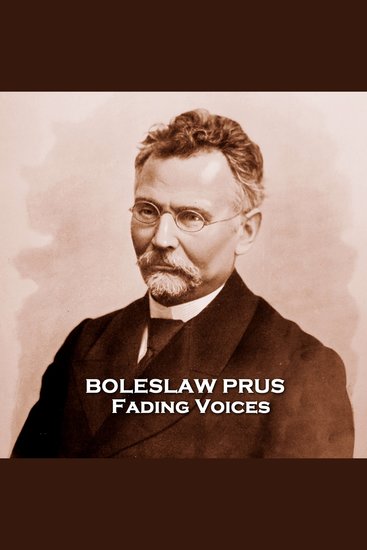
  • Fading Voices - From their pens to your ears genius in every story - cover

    Fading Voices - From their pens...

    Boleslaw Prus

    • 0
    • 0
    • 0
    Aleksander Głowacki who wrote under the nom de plume Boleslaw Prus was born on 20th August 1847 at Hrubieszów in the Kingdom of Poland, at that time, controlled by the Russian Empire. 
    At three his mother died and then at nine his father.  Female relatives helped raise him but at 15 he joined the Polish uprising against the might of Imperial Russia.  Wounded on the battlefield, arrested and imprisoned, he was later released into the care of a relative and resumed secondary school and then Warsaw University but poverty forced him to leave after two years.  At some point he developed agoraphobia which often caused problems. 
    In 1869, he enrolled in the Forestry Department at Puławy but was soon sacked and so he began a system of self-education that led to work as a newspaper columnist on a wide-ranging series of topics that eventually became the ‘Weekly Chronicles’ and spanned 40 years. 
    With his finances now stabilized he married and then adopted his late brother-in-law’s son.  
    It seems he had doubts as to the scale of his talents and early on adopted the name ‘Boleslaw Prus’ for both his journalistic and literary offerings. 
    His work as a short-story writer met with much acclaim. He wrote several dozen of them, originally published in newspapers and ranging in length from micro-story to novella. His keen observation of everyday life and sense of humor are evident in them.  
    During his career he also wrote novels. After ‘Pharoah’, in 1895, he embarked on a four-month journey taking in Berlin, Dresden, Nuremberg, Rapperswil in Switzerland, where he stayed for two months, and his final destination, Paris.  Here his agoraphobia was so bad he couldn’t cross the Seine.  
    However, his writing continued and in 1911 his novel ‘Changes’, though uncompleted, began to be serialised.  It was never finished. 
    Boleslaw Prus died on 19th May 1912, at his Warsaw apartment.  He was 64.  A National Hero, thousands attended both his funeral service and interment.
    Show book
  • F Scott Fitzgerald - Six of the Best - Their legacy in 6 classic stories - cover

    F Scott Fitzgerald - Six of the...

    F. Scott Fitzgerald

    • 0
    • 0
    • 0
    Six has always been a number we group things around – Six of the best, six of one half a dozen of another, six feet under, six pack, six degrees of separation and a sixth sense are but a few of the ways we use this number. 
     
    Such is its popularity that we thought it is also a very good way of challenging and investigating an author’s work to give width, brevity, humour and depth across six of their very best. 
     
    In this series we gather together authors whose short stories both rivet the attention and inspire the imagination to visit their gems in a series of six, to roam across an author’s legacy in a few short hours and gain a greater understanding of their writing and, of course, to be lavishly entertained by their ideas, their narrative and their way with words. 
     
    These stories can be surprising and sometimes at a tangent to what we expected, but each is fully formed and a marvellous adventure into the world and words of a literary master.
    Show book
  • The Mappined Life - cover

    The Mappined Life

    Saki Saki

    • 0
    • 0
    • 0
    In Saki's short story "The Mappined Life," the narrative unfolds through a conversation between Mrs. James Gurtleberry and her niece, who reflect on the nature of existence and the illusion of freedom within societal constraints. The story is set against the backdrop of the Mappin Terraces at the Zoological Gardens, which symbolize a façade of natural living for both animals and humans.
    Show book