Join us on a literary world trip!
Add this book to bookshelf
Grey
Write a new comment Default profile 50px
Grey
Subscribe to read the full book or read the first pages for free!
All characters reduced
A passage to India - cover

A passage to India

Edward Morgan Forster

Publisher: Sanzani

  • 0
  • 0
  • 0

Summary

A Passage to India is a 1924 novel by English author E. M. Forster set against the backdrop of the British Raj and the Indian independence movement in the 1920s. It was selected as one of the 100 great works of 20th century English literature by the Modern Library and won the 1924 James Tait Black Memorial Prize for fiction. Time magazine included the novel in its "All Time 100 Novels" list. The novel is based on Forster's experiences in India, deriving the title from Walt Whitman's 1870 poem "Passage to India" in Leaves of Grass.
The story revolves around four characters: Dr. Aziz, his British friend Mr. Cyril Fielding, Mrs. Moore, and Miss Adela Quested. During a trip to the fictitious Marabar Caves (modeled on the Barabar Caves of Bihar), Adela thinks she finds herself alone with Dr. Aziz in one of the caves (when in fact he is in an entirely different cave), and subsequently panics and flees; it is assumed that Dr. Aziz has attempted to assault her. Aziz's trial, and its run-up and aftermath, bring to a boil the common racial tensions and prejudices between Indians and the British during the colonial era.
Available since: 10/17/2022.
Other books that might interest you

  • A Fight with a Cannon - From their pens to your ears genius in every story - cover

    A Fight with a Cannon - From...

    Victor Hugo

    • 0
    • 0
    • 0
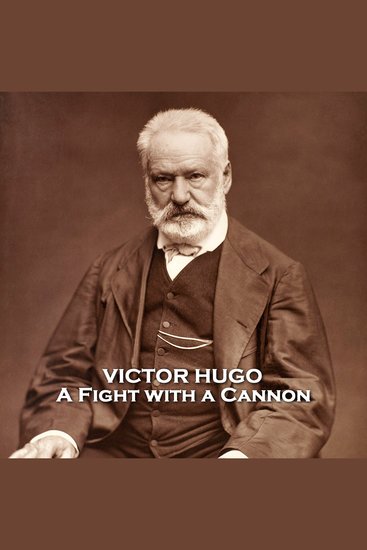
    Victor Marie Hugo was born on 26th February 1802 in Besançon, France.   
    There can be no doubt that Hugo is ranked as the greatest of French authors and poets. In addition to this he fought against social injustice throughout his life and from his frequent elections to the French Assembly. 
    Hugo published his first novel, Han d’Islande (1823), the year after his marriage and so began an immense canon of fiction and poetry not only for France but to World literature.  
    He was elected to the Académie Française in 1841 and the same year came a peerage and entrance to the Higher Chamber as a pair de France, where he spoke against the death penalty, social injustice and in favour of press freedom.  
    In the years leading up to the Revolution of 1848 Hugo began to lean towards Republicanism and greater freedoms.  With the formation of the Second Republic, he was again elected to the Assembly. 
    When Napoleon III seized power in 1851, and established an anti-parliamentary constitution, Hugo openly declared him a traitor to France. This, of course, meant exile where he remained until 1870.  In exile he published his greatest work ‘Les Misérables’, and further widely honoured collections of poetry. 
    Returning home he was again elected to the National Assembly and the Senate.  It was the time of the Franco-Prussian war and with Paris under siege and food ever more scarce, he wrote in his diary that he was now "eating the unknown". 
    Later he was instrumental in strengthening the rights of artists and copyright, steps which led to the international protections of the Berne Convention.  
    Victor Hugo died on 22nd May 1885, aged 83.
    Show book
  • Conversation On Conversation - From their pens to your ears genius in every story - cover

    Conversation On Conversation -...

    Harriet Beecher Stowe

    • 0
    • 0
    • 0
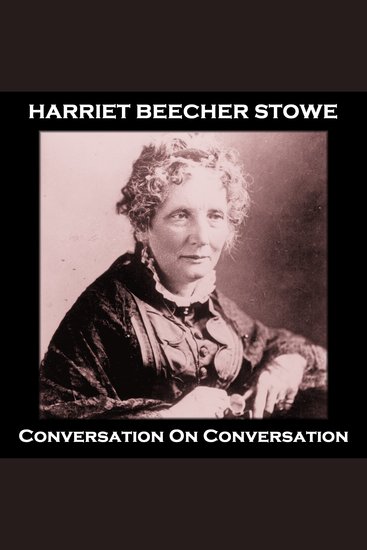
    The bookshelves of American literature are incredible collections that have gathered together centuries of very talented authors.  From this continent their fame spread and whilst among their number many are now forgotten or neglected their talents endure.  Among them is Harriet Beecher Stowe.
    Show book
  • Revisionist- Volume 2 The: The Torture of Love - cover

    Revisionist- Volume 2 The: The...

    Michael A. Delitala

    • 0
    • 0
    • 0
    In The Torture of Love, the second volume of The Revisionist series, Michael A. Delitala guides readers through a deeply emotional journey of love, heartbreak, and self-discovery. Rather than focusing on the individuals from his past, the narrative explores the recurring patterns that define these relationships. Each person represents a different emotional cycle that keeps him tethered to familiar habits—until he learns to break free. This memoir isn't just about romance; it's about the growth that comes from recognizing and breaking emotional patterns to find one's authentic self. 
    Michael A. Delitala begins with reflections on a strict upbringing, which limited his ability to express individuality. This foundation sets the stage for the romantic struggles that follow—where passion, insecurity, and emotional distance become familiar themes. The women in his life are presented as symbols of repeated patterns, not named as individuals, emphasizing the idea that we often fall into familiar cycles in love until we learn to change. By reflecting on these relationships, The Revisionist discovers how breaking these patterns leads to personal growth and deeper self-understanding.
    Show book
  • Adventureholic - Extraordinary Journeys on Seven Continents by Land Sea and Air - cover

    Adventureholic - Extraordinary...

    Neil Laughton

    • 0
    • 0
    • 0
    More than fifty expeditions across all seven continents – by land, sea and air – have led adventurer Neil Laughton to some of the most remote places in the world. 
    Adventureholic tells the stories of Neil’s most unforgettable and daring adventures yet. From summiting Mount Everest with Bear Grylls and playing cricket at the Geographic South Pole to piloting the world’s first road-legal flying car on a 10,000km journey across the Sahara Desert to Timbuktu, running with bulls, and train-surfing in Myanmar, Neil really has seen and done it all. 
    Readers are invited to join Neil on a roller-coaster ride around the world, gaining the necessary insight, confidence and inspiration to add a little more adventure to their own lives.
    Show book
  • Queen Elizabeth I and Mary Queen of Scots: The Controversial History of Cousins Turned Rivals - cover

    Queen Elizabeth I and Mary Queen...

    Editors Charles River

    • 0
    • 0
    • 0
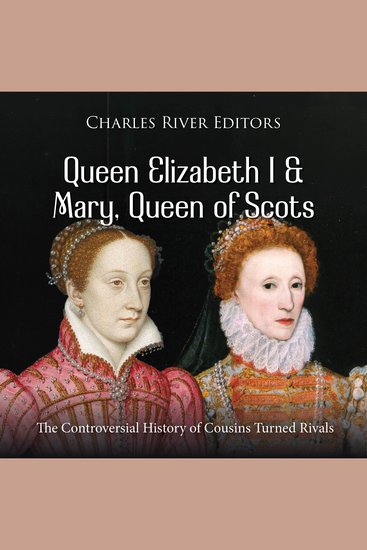
    England's Queen Elizabeth had to fight for her life and position time and again in an era that was already unsafe for female leaders and she probably had remembered the searing feeling of realizing that her mother, Anne Boleyn had been executed by her father on a trumped-up charge. Danger was pervasive, and strategy was needed not just to thrive but to survive.  
    	Perhaps nothing underscored that fact quite like Elizabeth’s relationship with her cousin, Mary, Queen of Scots. Mary’s fame as a monarch lies less in her personality or achievements than in her position within the dynastic maneuvers and political and religious upheavals taking place in Europe in the 16th century. Most monarchs spent their early years learning in preparation to rule and then spend the latter part of their lives wielding power and status, but Mary was thrust upon the throne when she was only a week old, and she ceased to be queen nearly 20 years before her death. 
    	Mary's tragedy was intertwined with her country's transformation. As a second cousin once removed of England’s Queen Elizabeth I, that potentially made Mary a rival for the throne. Mary was the granddaughter of Margaret Tudor, Henry VIII's sister, and her Catholicism made Mary the true and rightful Queen of England in the eyes of many Catholics and the Vatican. These facts, coupled with the realization that several English Catholics (especially rebels active in the Rising of the North movement) supported Mary, ardently made Elizabeth uneasy. Mary also did not help herself when she married James Hepburn, 4th Earl of Bothwell, who was widely accused of raping her. The Scottish people rebelled, after which Mary abdicated and fled southwards towards England.  
    	Elizabeth I was unsure at first what to do with Mary, so she kept Mary imprisoned in several castles and manor houses inside England, making escape difficult and thus unlikely.
    Show book
  • The Count of Monte Cristo - cover

    The Count of Monte Cristo

    Alexandre Dumas

    • 0
    • 0
    • 0
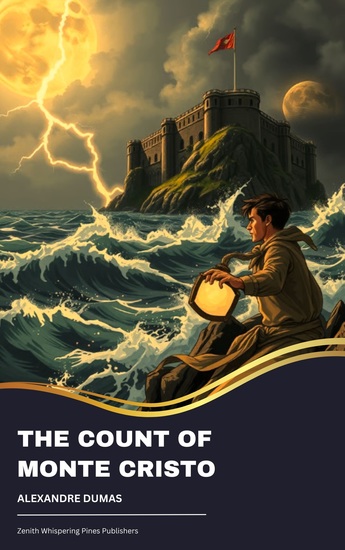
    Betrayed by friends, imprisoned without cause, and reborn as a mysterious nobleman—Edmond Dantès returns with one purpose: unforgettable revenge.
    From the moment the young sailor is falsely accused and cast into the dungeons of Château d'If, his life becomes a breathtaking journey of suffering, transformation, and calculated justice. When he escapes and uncovers a hidden fortune, he reinvents himself as the enigmatic Count of Monte Cristo—striking fear, awe, and wonder into the hearts of those who once destroyed him.
    
    Praised as "the greatest adventure novel ever written," this story blends danger, romance, betrayal, and destiny with unmatched emotional depth. Readers across generations adore its breathtaking twists, rich characters, and epic sense of justice fulfilled.
    
    If you crave sweeping drama, powerful emotion, and a story that refuses to let go, this is the masterpiece you'll return to again and again.
    
    Begin the journey now—and experience the revenge that became legend.
    Show book