Join us on a literary world trip!
Add this book to bookshelf
Grey
Write a new comment Default profile 50px
Grey
Subscribe to read the full book or read the first pages for free!
All characters reduced
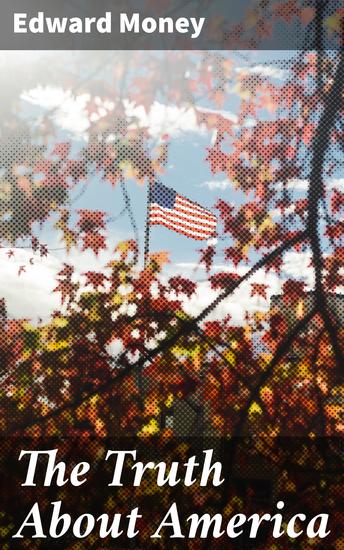
The Truth About America - Unveiling the Layers of American Society: A Critical Exploration - cover

The Truth About America - Unveiling the Layers of American Society: A Critical Exploration

Edward Money

Publisher: Good Press

  • 0
  • 0
  • 0

Summary

In "The Truth About America," Edward Money deftly navigates the complex tapestry of American identity, intertwining historical analysis with poignant reflections on modern society. Through a blend of narrative non-fiction and socio-political critique, Money explores themes of class, race, and cultural disillusionment, employing a vivid, accessible style that demystifies intricate historical contexts. The book is situated within contemporary American literature, drawing parallels with the works of authors like Ta-Nehisi Coates and Jonathan Franzen, while remaining distinctly original in its multifaceted examination of the American experience. Edward Money, a seasoned journalist and social commentator, has long been captivated by the pulsating heart of America. His diverse background, infused with experiences ranging from grassroots activism to scholarly research, has equipped him with a nuanced perspective on societal dynamics. Influenced by the tumultuous events of the 21st century, Money's urgency in writing this book reflects a profound desire to confront uncomfortable truths and foster dialogue around the nation's complexities. This compelling exploration is a must-read for anyone seeking a deeper understanding of America'Äôs multifaceted nature. "The Truth About America" not only challenges preconceptions but also invites rigorous discussion, making it an essential contribution to contemporary socio-political discourse.
Available since: 10/04/2023.
Print length: 118 pages.
Other books that might interest you

  • The Secret Life of Special Advisers - cover

    The Secret Life of Special Advisers

    Peter Cardwell

    • 0
    • 0
    • 0
    "A cracking read by a great writer." – Chris Mason, BBC political editor
    "A rare, fascinating and funny look at life in the corridors of power." – Isabel Hardman, author of Why We Get the Wrong Politicians and Spectator assistant editor
    "It's the book we have long needed." – Michael Crick
    "A timely look at how some of the key relationships in Westminster work, and how they sometimes misfire." – Laura Kuenssberg, BBC presenter and former political editor
    ***
    Shadowy geniuses whispering, Rasputin-like, into the ears of our elected politicians under a cloak of secrecy, or a crucial but undervalued cog in the machinery of government? … Or just a rag-tag band of weirdos and misfits?
    Despite the acres of speculation devoted to special advisers from Alastair Campbell to Dominic Cummings, their role is much misunderstood. Who are the people Piers Morgan once called 'these miserable little creatures' and just how much influence do they have?
    Peter Cardwell served as SpAd to four Cabinet ministers, acting as media adviser, political fixer, troubleshooter and occasional wardrobe consultant. In this candid, compelling and frequently hilarious insider account, he reveals what the job really involves, from dealing with counter-terror emergencies in Cobra to explaining to the Justice Secretary what a dental dam is, to having your inside leg measured in a government office.
    Packed with advice on navigating the perks and pitfalls of the job, The Secret Life of Special Advisers will inform and entertain anyone who has ever wondered what these mysterious figures really do all day.
    Show book
  • Living Your Unlived Life - Coping with Unrealized Dreams and Fulfilling Your Purpose in the Second Half of Life - cover

    Living Your Unlived Life -...

    Robert A. Johnson, Jerry Ruhl

    • 0
    • 0
    • 0
    The esteemed Jungian psychologist counsels on how to cope with feelings of failure or regret in the latter half of life and how to open to a more meaningful existence, even if outer circumstances cannot be changed. 


    In Living Your Unlived Life, the renowned therapist Robert A. Johnson, writing with longtime collaborator and fellow Jungian psychologist Jerry M. Ruhl, offers a simple but transformative premise: Our abandoned, unrealized, or underdeveloped talents, when they are not fully integrated into our lives, can become profoundly troublesome in midlife, leading us to depression, suddenly hating our spouses, our jobs, or even our lives. When our unlived lives are brought to consciousness, however, they can become the fuel that can propel us beyond our limitations, even if our outer circumstances cannot always be visibly altered.
    Show book
  • Modern Jewish Identity - Tradition and Innovation in Contemporary Life - cover

    Modern Jewish Identity -...

    Joseph Arston

    • 0
    • 0
    • 0
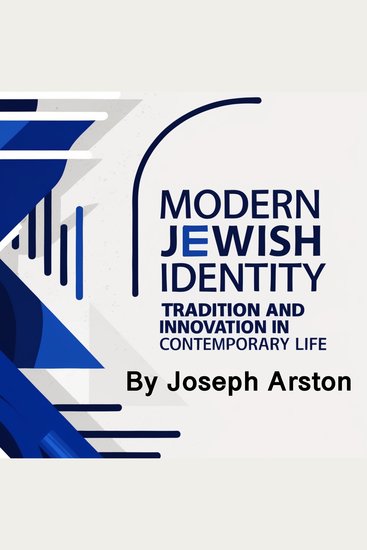
    Jewish identity is a complex and evolving concept shaped by history, culture, religion, and personal experiences. The foundation of modern Jewish identity is deeply rooted in ancient traditions while continually adapting to contemporary realities. Over time, Jewish communities have navigated periods of both integration and exclusion, influencing the ways in which identity is expressed today. The balance between maintaining heritage and embracing modernity remains central to the Jewish experience. 
    Historically, Jewish identity was primarily defined by religious observance and communal affiliation. Jewish law, customs, and shared ancestry created a strong sense of belonging. The Hebrew Bible, Talmud, and centuries of rabbinic teachings established religious principles that guided Jewish life. However, as Jewish communities spread across different regions, cultural variations emerged, shaping unique traditions within Ashkenazi, Sephardic, and Mizrahi communities. These distinctions continue to influence modern Jewish identity, highlighting both unity and diversity within the Jewish world. 
    The Enlightenment and Emancipation movements of the 18th and 19th centuries significantly altered Jewish identity. As European Jews gained citizenship and civil rights, many embraced secular education, professional opportunities, and broader societal engagement. This period saw the emergence of different expressions of Judaism, including Reform, Conservative, and Orthodox movements. While some Jews sought to modernize religious practices to align with contemporary life, others remained committed to traditional observance. These differing approaches to Judaism persist today, contributing to a broad spectrum of Jewish identities.
    Show book
  • A Brilliant Commodity - Diamonds and Jews in a Modern Setting - cover

    A Brilliant Commodity - Diamonds...

    Saskia Coenen Snyder

    • 0
    • 0
    • 0
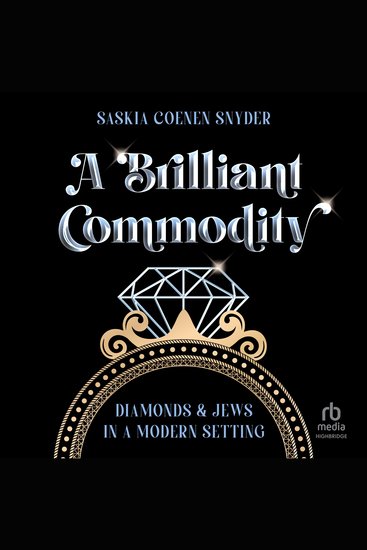
    During the late nineteenth century, tens of thousands of diggers, prospectors, merchants, and dealers extracted and shipped over 50 million carats of diamonds from South Africa to London. The primary supplier to the world, South Africa's diamond fields became one of the formative sites of modern capitalist production. At each stage of the diamond's route through the British empire and beyond—from Cape Town to London, from Amsterdam to New York City—carbon gems were primarily mined, processed, appraised, and sold by Jews. 


    In A Brilliant Commodity, historian Saskia Coenen Snyder traces how once-peripheral Jewish populations became the central architects of a new, global exchange of diamonds. Centuries of restrictions had limited Jews to trade and finance, businesses that often heavily relied on internal networks. Jews were well-positioned to become key players in the earliest stage of the diamond trade and its growth into a global industry. Relying on mercantile and familial ties across continents, Jews created a highly successful commodity chain that included buyers, brokers, cutters, factory owners, financiers, and retailers. 


    Working within a diasporic ethnic community that bridged city and countryside, metropole and colony, Jews helped build a flourishing diamond industry and a place for themselves in the modern world.
    Show book
  • Write Your Why (What Will Follow) - cover

    Write Your Why (What Will Follow)

    Julia Whelan

    • 0
    • 0
    • 0
    An approachable craft talk, written and read by Julia Whelan. Combining her perspectives as a writer, an educator, and a narrator, she breaks down what makes books connect with readers. Using Simon Sinek's seminal TedTalk for the business community, "Knowing Your Why", as a starting point, Julia applies this to the broader craft of storytelling: If you know why you are writing something, your audience will know why they're reading it. So... how does one do that? Originally presented as a keynote speech at Nashville's WriterFest. 
    Show book
  • Summary: Hidden Potential - The Science of Achieving Greater Things By Adam Grant: Key Takeaways Summary and Analysis - cover

    Summary: Hidden Potential - The...

    Brooks Bryant

    • 0
    • 0
    • 0
    DISCLAIMER: THIS IS NOT THE OFFICIAL BOOK. 
    This is a summary, and it does not accompany the official 
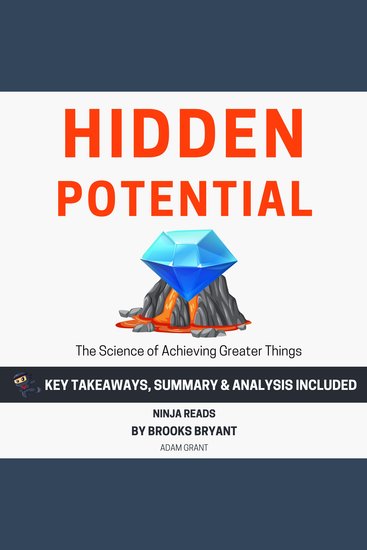
    "Hidden Potential: The Science of Achieving Greater Things" by Adam Grant challenges the notion of talent worship in our society. While we often celebrate those with innate advantages, Grant reminds us of our capacity for growth and skill development. He presents a fresh perspective on raising aspirations and exceeding expectations, emphasizing that progress is more about effective learning than sheer effort. Grant's book draws on compelling evidence and stories from various contexts, illustrating that our potential is not determined solely by our innate genius but by the character we cultivate. He explores how to develop the character skills and motivations necessary to unlock our hidden potential and design systems that offer opportunities to those who have been underrated or overlooked. Ultimately, the book inspires readers to focus on the journey of personal growth rather than fixating on the peak they aim to reach.
    Show book