Join us on a literary world trip!
Add this book to bookshelf
Grey
Write a new comment Default profile 50px
Grey
Subscribe to read the full book or read the first pages for free!
All characters reduced
Gettysburg Oration - cover

Gettysburg Oration

Edward Everett

Publisher: DigiCat

  • 0
  • 0
  • 0

Summary

In his Gettysburg Oration, delivered on November 19, 1863, Edward Everett crafts a profound meditation on the significance of the Battle of Gettysburg and the broader implications of the American Civil War. With a style that artfully intertwines eloquence and rhetoric, Everett's address echoes the traditions of classic oratory while embedding itself within the frameworks of 19th-century American nationalism. He masterfully employs historical reference, with poignant reflections on sacrifice and unity, framing the address not only as a remembrance of fallen soldiers but also as a call to preserve the nation and its ideals of democracy. Edward Everett was a preeminent orator, academic, and politician of his time, having served as a U.S. Senator and the Governor of Massachusetts. His extensive background in literature, divinity, and politics informed his thoughts on national identity and duty. The oration was delivered during a time of immense turmoil in America, reflecting Everett's profound commitment to the Union and his wish to inspire a collective resolve among a fractured populace. I highly recommend the Gettysburg Oration to anyone interested in American history, oratory, and the themes of sacrifice and unity. Everett's words resonate with timeless wisdom and offer important insights into the struggles that shaped the nation.
Available since: 08/10/2022.
Print length: 37 pages.


Other books that might interest you

  • Effective Anger Management for Teens - Handle Frustration Stop The Rage And Build A Happier Life - Navigate The Storms Of Adolescence With Mindfulness Empathy And Strength - cover

    Effective Anger Management for...

    Emma Davies

    • 0
    • 0
    • 0
    Treated like a child and expected to behave like an adult? Discover when your anger is justified and when it screams “management issue.”ATTN: PARENTS, THERAPISTS, SOCIAL WORKERS, OF TEENAGERS AND SCHOOL COUNSELORS. 
    The areas of Teens' brain that are responsible for emotional regulation and impulse control experience significant remodeling during teenage years. Add hormonal fluctuations caused by puberty into the equation, and the result may be mood swings and emotional volatility. 
    If you’re tired of feeling overwhelmed by your uncontrolled bursts of anger or struggling to maintain healthy relationships, look no further. 
    This comprehensive guide is specifically tailored to help Teen reclaim control over emotions. 
    Here’s just a snippet of what you will discover inside:Hurt, sad, or something else? Find the root causes and triggers of your angerHow your anger can rule your emotions – recognize early signs before your anger gets out of hand (and ruin your relationships)Erecting safe spaces – master the art of boundary setting to manage your anger with friends, family, and others around youSelf-control with emotional intelligence – 5 helpful tips on building empathy and compassion to truly comprehend opposing opinions without losing your cool! 
    And much more. 
    Take positive steps towards managing your anger effectively. Start today!If you are fed up with feeling like you can’t control your anger, here’s your chance to effectively manage your emotions, and your life. Scroll up and click the “Add to Cart” button right now.
    Show book
  • The Great Dictionary English - French - 130000 Entries - cover

    The Great Dictionary English -...

    Benjamin Maximilian Eisenhauer

    • 0
    • 0
    • 0
    This dictionary contains around 130,000 English terms with their French translations, making it one of the most comprehensive books of its kind. It offers a wide vocabulary from all areas as well as numerous idioms.
    The terms are translated from English to French. If you need translations from French to English, then the companion volume "The Great Dictionary French - English" is recommended.
    Show book
  • Racial Justice and the Catholic Church - cover

    Racial Justice and the Catholic...

    Bryan N. Massingale

    • 0
    • 0
    • 0
    Confronting racism is difficult but essential work if we are to heal the brokenness in our society and our church. In the author's words, "We all are wounded by the sin of racism . . . How can we struggle together against an evil that harms us all?" 


    Racial Justice and the Catholic Church examines the presence of racism in America from its early history through the Civil Rights Movement and the election of Barack Obama. It also explores how Catholic social teaching has been used—and not used—to promote reconciliation and justice. 


    Massingale writes from an abiding conviction that the Catholic faith and the black experience make essential contributions in the continuing struggle against racial injustice that is the work of all people. His book is a must-listen for all those concerned with justice and healing in our world.
    Show book
  • The National Assembly - Crafting a Constitution - cover

    The National Assembly - Crafting...

    Amara Blackwood

    • 0
    • 0
    • 0
    The formation of the National Assembly marked a turning point in history, reshaping governance and laying the foundation for constitutional rule. It emerged from the political turmoil of a monarchy struggling with financial crises, social unrest, and an outdated feudal system. The roots of the National Assembly can be traced back to the Estates-General, a centuries-old advisory body that had long been dormant. When King Louis XVI convened the Estates-General in 1789 to address France’s dire economic situation, he unintentionally set the stage for a political transformation that would redefine the nation. 
    The Estates-General was composed of three estates: the clergy, the nobility, and the commoners, known as the Third Estate. Each estate traditionally held equal voting power despite vast disparities in population and influence. The Third Estate, which represented the majority of the French people, found itself consistently outvoted by the privileged classes. Frustration over this imbalance, coupled with widespread demands for political reform, led the Third Estate to take a decisive stand. Rejecting the old voting structure, its representatives declared themselves the true voice of the nation and proclaimed the formation of the National Assembly on June 17, 1789. This act was not merely a procedural shift but a bold assertion of sovereignty, challenging the very legitimacy of absolute monarchy. 
    The declaration of the National Assembly was met with immediate resistance from the monarchy and conservative factions. King Louis XVI initially dismissed the move, attempting to maintain control through traditional authority. However, support for the Assembly grew rapidly, fueled by Enlightenment ideals advocating for representative government and individual rights.
    Show book
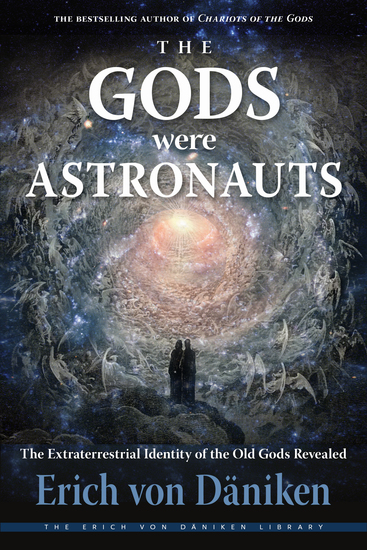
  • The Gods Were Astronauts - The Extraterrestrial Identity of the Old Gods Revealed - cover

    The Gods Were Astronauts - The...

    Erich von Däniken

    • 0
    • 0
    • 0
    Bestselling author Erich von Däniken explores the evidence of ancient visitors treated as gods in religious scripture and mythology. His findings shake the foundations of both science and faith. Why do nearly all the world’s major religions share similar myths and legends? Whether it’s the Old Testament, ancient legends, or the creation myths of New Zealand’s natives, you come across similar stories everywhere. Erich von Däniken, author of the international bestseller Chariots of the Gods, believes he knows the answer—and it is as wondrous and awe-inspiring as it is controversial: The winged angels populating the Bible, the Koran, and other religious texts from cultures the world over were, in reality, extraterrestrials who visited the Earth in ages long past. Who were the gods of ancient lore? How can the contradictions in the Bible be explained? Why are the pagodas of Myanmar (formerly Burma) so amazingly similar to space-capable rockets? Erich von Däniken provides convincing new and surprising interpretations and answers that fundamentally contradict both the teachings of religion and current science. His astonishing conclusion: The gods were not metaphysical beings that humans created in their imagination, but extraterrestrial intelligences that have left their traces all over the Earth. He offers persuasive evidence that actual living beings inspired the legends that became the basis for many of our religious traditions.
    Show book
  • Russian Made Easy - Beginner - Volume 2 of 3 - cover

    Russian Made Easy - Beginner -...

    Lingo Wave

    • 0
    • 0
    • 0
    We broke our new series on learning Russian down into different learning stages. Start with the "Lower Beginner" books followed by the "Beginner" and "Upper Beginner" books. Next, progress to the "Intermediate" series, then test and reinforce your knowledge with the "Conversations" series. 
    This audiobook is divided into units. While it provides different learning patterns and accommodates various needs, this audiobook focuses on helping you improve your ability to understand, speak, and memorise Russian.  
    In Unit 1 you will hear Russian decoded with each syllable spoken very slowly and clearly with repetition. Immediately before each sentence is spoken, you will hear the translation, so you will always understand what is being said. 
    Unit 2 focuses solely on increasing your listening ability, which will improve your abilities to engage in dialogue with a native Russian speaker. This chapter requires you to listen very carefully to nuances in the language. 
    By Unit 3 you will already notice progress in your abilities to speak and understand Russian. The spoken translation is followed by two repetitions in Russian at a completely natural speed. While you are learning to process naturally spoken Russian, Units 3 and 4 will help you memorise new vocabulary and full sentences. 
    In Unit 5 you can test yourself on how much you have learned. If you are having difficulties, we suggest you revisit the listening, speaking, or memorisation section of Units 1, 2 3 or 4, according to what you need more help with. 
    Topics covered in this book: 
    1. Asking about family 
    2. Asking about relationship status 
    3. Expressing frequency 
    4. Talking about spare time activities and hobbies 
    5. Using quantifiers/determiners 
    6. Talking about preference 
    7. Talking about abilities 
    8. Talking about location of places 
    9. Describing appearance 
    10. Talking about personality 
    ...
    Show book