Join us on a literary world trip!
Add this book to bookshelf
Grey
Write a new comment Default profile 50px
Grey
Subscribe to read the full book or read the first pages for free!
All characters reduced
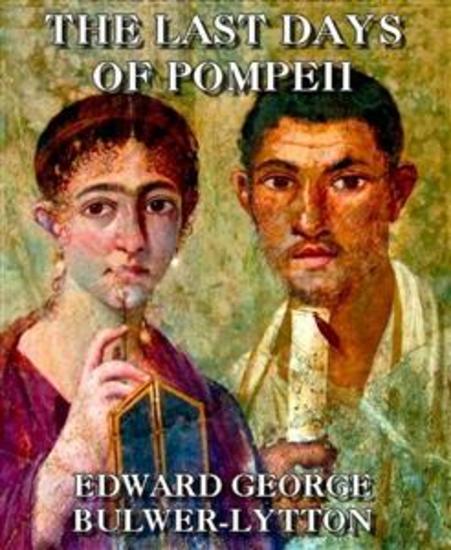
The Last Days of Pompeii - cover

The Last Days of Pompeii

Edward Bulwer-Lytton

Publisher: BookRix

  • 0
  • 0
  • 0

Summary

The Last Days of Pompeii is a novel written by the baron Edward Bulwer-Lytton. The novel uses its characters to contrast the decadent culture of 1st-century Rome with both older cultures and coming trends. The protagonist, Glaucus, represents the Greeks who have been subordinated by Rome, and his nemesis Arbaces the still older culture of Egypt. Olinthus is the chief representative of the nascent Christian religion, which is presented favourably but not uncritically. The Witch of Vesuvius, though she has no supernatural powers, shows Bulwer-Lytton's interest in the occult – a theme which would emerge in his later writing, particularly The Coming Race.
Available since: 12/19/2023.
Print length: 597 pages.


Other books that might interest you

  • Against Decolonization - Taking African Agency Seriously - cover

    Against Decolonization - Taking...

    Olúfẹ́mi Táíwò

    • 0
    • 0
    • 0
    Decolonization has lost its way. Originally a struggle to escape the West's direct political and economic control, it has become a catch-all idea, often for performing "morality" or "authenticity;" it suffocates African thought and denies African agency. 


    Olúfemi Táíwò fiercely rejects the indiscriminate application of 'decolonization' to everything from literature, language and philosophy to sociology, psychology and medicine. He argues that the decolonization industry, obsessed with cataloguing wrongs, is seriously harming scholarship on and in Africa. He finds 'decolonization' of culture intellectually unsound and wholly unrealistic, conflating modernity with coloniality, and groundlessly advocating an open-ended undoing of global society's foundations. Worst of all, today's movement attacks its own cause: "decolorizers" themselves are disregarding, infantilizing and imposing values on contemporary African thinkers. 


    This powerful, much-needed intervention questions whether today's 'decolonization' truly serves African empowerment. Táíwò's is a bold challenge to respect African intellectuals as innovative adaptors, appropriators and synthesizers of ideas they have always seen as universally relevant.
    Show book
  • Sealand Dynasties The: The History and Mystery of the Southern Mesopotamian Kings Who Conquered Babylon - cover

    Sealand Dynasties The: The...

    Editors Charles River

    • 0
    • 0
    • 0
    Thanks to countless written sources and corroborating archaeological evidence, the chronology of the ancient Near East is fairly well-known by modern scholars, but as with most periods in history, there are exceptions. In ancient Mesopotamia’s otherwise well-documented history, there were two dynasties that historians and archaeologists are only now beginning to understand: the Sealand I, or First Sealand Dynasty (c. 1742-1460 BCE), and the Sealand II, or Second Sealand Dynasty (c. 1025-1005 BCE). These dynasties are named after the way they are referred to in ancient texts, and they likely originated in the marshy region of southern Mesopotamia. The texts mentioning these dynasties documented them as legitimate Babylonian dynasties for the most part, but few details are ever related about the dynasties or their rulers, even though both dynasties coincided with periods when there was a lack of central power in Mesopotamia and the Sealand dynasties were briefly able to assume control of the city of Babylon itself. 
    	The ephermal nature of Sealand’s rule is not completely understood by experts, to the extent that all kinds of aspects of these dynasties remain open to debate. Ancient sources provide an outline of these dynasties, as well as some information concerning major events, but the nature of the Sealand government, how the people lived, and even where their cities were located (if any existed) all remain unclear. Due to problems with sources, scholars have largely avoided the Sealand dynasties and the topic of the Sealand in general in favor of better-documented periods in Mesopotamian history. That being said, some recent archaeological discoveries have helped provide a base for future research that may solve some of these riddles. 
    Show book
  • A Treatise of Human Nature - cover

    A Treatise of Human Nature

    David Hume

    • 0
    • 0
    • 0
    A Treatise of Human Nature is a philosophical work written by the Scottish philosopher David Hume and published in three volumes between 1739 and 1740. The book explores a wide range of philosophical topics, including metaphysics, epistemology, ethics, and aesthetics, and it is considered one of the most influential works in the history of philosophy. 
    Hume's central thesis is that all human knowledge is ultimately derived from sensory experience, and that there is no inherent connection between cause and effect. He argues that our beliefs about cause and effect are based on custom and habit, rather than any rational or logical foundation. This leads him to challenge many traditional metaphysical and religious beliefs, including the existence of God and the immortality of the soul. 
    Hume's skeptical approach to knowledge and causality is also applied to ethics and aesthetics. He argues that moral judgments and aesthetic preferences are not based on reason, but rather on subjective feelings and emotions. This leads him to reject the idea of objective moral and aesthetic standards, and to propose a theory of moral and aesthetic relativism. 
    Despite its controversial and radical views, A Treatise of Human Nature is widely regarded as a masterpiece of philosophical writing, and has had a profound influence on subsequent philosophical thought.
    Show book
  • Virtues of Character - Strength in Integrity and Action (3 in 1) - cover

    Virtues of Character - Strength...

    Esther Jameson

    • 0
    • 0
    • 0
    This book bundle delves into three fundamental virtues that define an individual's character and their ability to build trust, maintain strong relationships, and act in alignment with their values. By embracing Honesty, Integrity, and Fidelity, we can lead lives of authenticity, accountability, and dedication, enhancing not only our personal growth but also our impact on those around us. 
    Honesty is the cornerstone of any relationship, whether personal or professional. This section explores the importance of truthfulness, transparency, and the courage to speak the truth even when it’s difficult. Honesty builds trust, fosters respect, and allows for genuine connections with others. 
    Integrity goes beyond telling the truth; it’s about doing what is right, even when no one is watching. This part emphasizes the importance of moral uprightness, consistency in one’s actions, and standing firm in one’s values and principles. Integrity is about maintaining a strong moral compass, regardless of external pressures. 
    Fidelity involves loyalty and faithfulness, particularly in relationships and commitments. This section highlights the value of remaining dedicated, whether in marriage, friendships, or work, and the importance of standing by one's promises and commitments. Fidelity is a virtue that enhances personal relationships and professional integrity. 
    Together, these virtues represent a strong character founded on trust, consistency, and dedication. This book provides practical guidance on how to cultivate these virtues in everyday life, promoting a life of genuine action, steadfast relationships, and lasting impact.
    Show book
  • The Mythic Life of Crazy Horse - Warrior Hero And Martyr in Three Biographical Visions - cover

    The Mythic Life of Crazy Horse -...

    Davis Truman

    • 0
    • 0
    • 0
    This audiobook is narrated by an AI Voice.   
    The Mythic Life of Crazy Horse: Warrior, Hero, and Martyr in Three Biographical Visions offers a profound and multifaceted exploration of one of the most iconic figures in Native American history. Through the lens of three distinct biographical perspectives, this compelling narrative paints a rich portrait of Crazy Horse, the legendary Lakota warrior who resisted U.S. expansion with unmatched bravery and an unwavering commitment to his people. 
    In this captivating work, the author delves into Crazy Horse's life as both a historical figure and a mythic hero, drawing on historical accounts, oral traditions, and spiritual interpretations to create a nuanced understanding of his significance. Each of the three visions — rooted in war, protection, and sacrifice — reveals new layers of his character, offering a deeper appreciation of his role in the battle for Native American sovereignty. 
    From his legendary leadership at the Battle of the Little Bighorn to his enduring legacy as a symbol of resistance, The Mythic Life of Crazy Horse intertwines biography with myth and historical fact with spiritual truth. This book is essential for anyone interested in the complexities of Native American history, the enduring legacy of Crazy Horse, and the intersection of history and legend in shaping cultural identities.
    Show book
  • African Maritime Powers - Seafaring Kingdoms and Urban Centers of African Prosperity (5 in 1) - cover

    African Maritime Powers -...

    Rolf Hedger

    • 0
    • 0
    • 0
    This book contains the following five titles: 
    - Axum Empire  
    - Carthaginian Empire  
    - Empire of Ife  
    - Mali Empire  
    - Zulu Kingdom  
    Enjoy this elaborate combination of books about African empires and history.
    Show book