Join us on a literary world trip!
Add this book to bookshelf
Grey
Write a new comment Default profile 50px
Grey
Subscribe to read the full book or read the first pages for free!
All characters reduced
Sketches from the Subject and Neighbour Lands of Venice - cover

Sketches from the Subject and Neighbour Lands of Venice

Edward A. Freeman

Publisher: DigiCat

  • 0
  • 0
  • 0

Summary

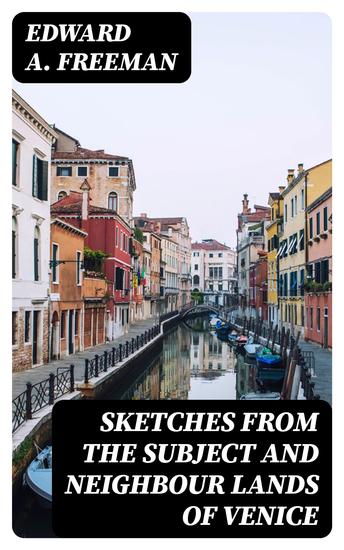
In "Sketches from the Subject and Neighbour Lands of Venice," Edward A. Freeman masterfully intertwines travel writing with historical narrative, offering readers a vivid tapestry of Venetian culture and its surrounding territories. Freeman's literary style is characterized by his eloquent prose and deep introspection, providing a rich exploration of the landscapes, customs, and historical significance of both Venice and its neighboring regions. The book emerges from the Victorian era's fascination with travel and cultural exploration, reflecting the zeitgeist of an age eager to understand the complexities of European identity amid the backdrop of Italy's Renaissance heritage. Edward A. Freeman was not merely a historian but also an ardent traveler, whose passions for history and geography shaped his perspectives on the lands he encountered. His scholarly pursuits and his profound admiration for Italy inspired him to capture the enchanting essence of Venice and its surroundings. Freeman's experiences and observations serve as a lens through which readers can examine the broader historical narratives that define a region renowned for its art, architecture, and multifaceted culture. I highly recommend "Sketches from the Subject and Neighbour Lands of Venice" to enthusiasts of travel literature, history, and Italian culture. Freeman's keen insights and poetic descriptions will transport you to the enchanting canals and vibrant life of Venice, inviting you to ponder the profound connections between place, identity, and memory.
Available since: 09/16/2022.
Print length: 239 pages.

Other books that might interest you

  • Utilitarianism - cover

    Utilitarianism

    John Stuart Mill

    • 0
    • 0
    • 0
    Utilitarianism is a moral theory that was developed by British philosopher John Stuart Mill in the 19th century. According to Mill, the ethical basis for decision-making should be the greatest happiness or pleasure for the greatest number of people. This principle is also known as the "greatest happiness principle." 
    Mill believed that human happiness was the ultimate goal of morality and that actions should be judged according to their ability to promote happiness. He argued that actions that bring about the greatest amount of happiness for the greatest number of people are morally right, while actions that lead to pain or suffering are morally wrong. 
    Mill believed that happiness should be measured by the amount of pleasure that people experience, and he distinguished between two types of pleasure: higher pleasures and lower pleasures. Higher pleasures are those that are associated with the intellect, such as the pursuit of knowledge or the appreciation of art, while lower pleasures are those that are associated with the body, such as the satisfaction of hunger or the gratification of sexual desire. According to Mill, higher pleasures are more desirable than lower pleasures because they are more intellectual and have a more lasting impact on a person's happiness. 
    Mill's utilitarianism has been influential in many areas of philosophy, including ethics, political philosophy, and social theory. His emphasis on the importance of promoting the happiness of the greatest number of people has been used to justify a wide range of policies and practices, including democracy, public health measures, and the redistribution of wealth. However, Mill's theory has also been criticized for its focus on pleasure and its potential to justify actions that are harmful to minorities or individuals.
    Show book
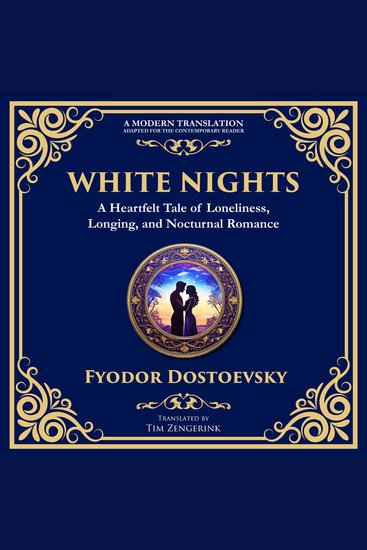
  • White Nights - A Poignant Tale of Love Loneliness and Dreams - cover

    White Nights - A Poignant Tale...

    Fyodor Dostoevsky, Tim Zengerink

    • 0
    • 0
    • 0
    What if one summer night could change your heart forever? 
    Set in the pale glow of St. Petersburg’s “white nights,” this touching short novel by Fyodor Dostoevsky explores the tender connection between a lonely dreamer and a heartbroken young woman.  
    White Nights captures the raw honesty of two souls who share their inner worlds, only to find that love, like twilight, doesn’t always last. 
    What you'll discover inside: 
    - A Poignant Story of Longing and Connection – A shy man’s fleeting romance with a woman still bound to another 
    - An Emotional Exploration of Urban Solitude – Intimate reflections on being invisible in a bustling world 
    - One of Dostoevsky’s Most Romantic Works – A short novel that shows his rarely seen sentimental side 
    - A Clear, Contemporary Translation – Faithfully adapted for the modern listener while retaining the original beauty 
    Whether you're a lover of literary romance or seeking a moving meditation on love and loneliness, White Nights is a gentle masterpiece that will linger in your heart long after the final line. 
    Start listening and let the dream begin.
    Show book
  • Jewish Ethics - The Basics - cover

    Jewish Ethics - The Basics

    Geoffrey D. Claussen

    • 0
    • 0
    • 0
    Jewish Ethics: The Basics demonstrates how ancient and contemporary ideas have shaped and reshaped Jewish traditions about how to act toward others. Listeners are introduced to foundational questions, controversies, and diverse ethical conclusions developed by Jewish thinkers throughout the ages. Topics addressed include: assumptions about authority; love, compassion, justice, and humility; human rights, war, land, and power; gender and sexuality; personal and social ethics; environmental and animal Ethics; and bioethical issues. 


    Concise and engaging, this is the ideal introduction for anyone interested in religious ethics, secular traditions, Judaism, and the field of Jewish ethics.
    Show book
  • Plantagenet Princesses - The Daughters of Eleanor of Aquitaine and Henry II - cover

    Plantagenet Princesses - The...

    Douglas Boyd

    • 0
    • 0
    • 0
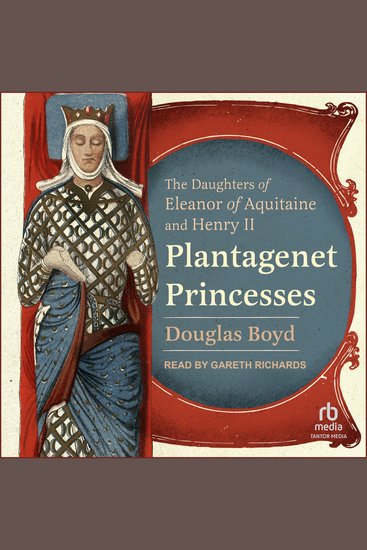
    A unique look at the lives of two daughters that highlights the dichotomy of lives of royal women, as both daughters and mothers of kings, who also knew both prison and power. 


    The names of few medieval monarchs and their queens are better known than Eleanor of Aquitaine, uniquely queen of France and queen of England, and her second husband Henry II. Although academically labeled "medieval," their era was the violent transition from the Dark Ages, when countries' borders were defined with fire and sword. If princes fought for their succession to crowns, the princesses were traded—usually by their mothers—to strangers for political power without the bloodshed. Years before what would today be marriageable age, royal girls were dispatched to countries whose speech was unknown to them and there became the property of unknown men. Eleanor's daughters Marie and Alix were abandoned in Paris when she divorced Louis VII of France. By Henry II, she bore Matilda, Aliénor, and Joanna. Joanna was imprisoned by William II of Sicily and worse treated by her brutal second husband in Toulouse. If Eleanor was libeled as a whore, Aliénor's descendants include two saints, Louis of France and Fernando of Spain. And then there were the illegitimate daughters, whose lives read like novels . . .
    Show book
  • History of Czechoslovakia - Czech Republic Slovakia Czechia & Habsburg Monarchy - cover

    History of Czechoslovakia -...

    HISTORY FOREVER

    • 0
    • 0
    • 0
    ★ Do you want to discover the History of Czechoslovakia? ★ 
    If your answer is yes, get this book now! 
    ★ BUY THIS BOOK NOW AND DISCOVER MORE ABUOT Czechoslovakia TODAY! ★ 
    In this book you will discover; 
    ·       History of the Bohemia, Slovakia & Czechia 
    ·       The Habsburg Rule 
    ·       The 30-year war 
    ·       Time of Darkness 
    ·       The Seven Years War 1756-1763 
    ·       The Second World War 
    ·       Czechoslovakia after WW2 
    ·       History of Prague 
    ·       Travel Guide to Prague 
    ·       Czech Republic’s UNESCO World Heritage 
    ·       Real Name of Czech Republic 
    ★ BUY THIS BOOK NOW AND DISCOVER MORE ABUOT Czechoslovakia TODAY! ★
    Show book
  • Frederick Douglass and Harriet Tubman: The History of the Most Influential Black Activists in 19th Century America - cover

    Frederick Douglass and Harriet...

    Charles River Editors

    • 0
    • 0
    • 0
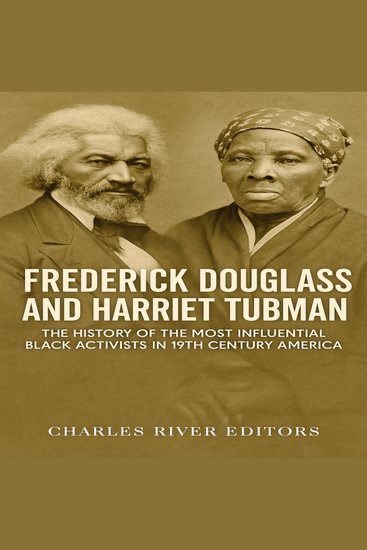
    With the possible exception of Dr. Martin Luther King, Jr., no African American has been more instrumental in the fight for minorities’ civil rights in the United States than Frederick Douglass, an American social reformer, orator, writer and statesman. His list of accomplishments would be impressive enough even without taking into account the fact that he was born into slavery.  
    	Douglass was born into slavery, and it’s believed his father was a white man, even perhaps his master Aaron Anthony. When Douglass was about 12, his slaveowner’s wife, Sophia Auld, began teaching him the alphabet in defiance of the South’s laws against teaching slaves how to read. When her husband Hugh found out, he was furious, reminding her that if the slave learned to read, he would become dissatisfied with his condition and desire freedom. Those words would prove prophetic. 
    	Douglass is noted as saying that "knowledge is the pathway from slavery to freedom,” and he took that advice to heart, teaching himself how to read and write with his knowledge of the alphabet. On September 3, 1838, Douglass successfully escaped slavery, traveling by boat to Delaware, Philadelphia, and finally New York, all in the span of a day. Douglass found a “new world had opened upon me.” 
    	Harriet Tubman is one of the most famous women in American history, and from an early age every American learns of her contributions to abolition and the Underground Railroad. The woman who became known as the Moses of her people personally led more than 13 expeditions to free slaves in the South, and she was so integral in helping escaped slaves achieve freedom that her name is practically synonymous with the Underground Railroad today.  
    	If anything, the central role she played in the Underground Railroad has become so ingrained among subsequent generations that Tubman’s life has been shrouded in legend, and other important aspects have been overlooked.
    Show book