Join us on a literary world trip!
Add this book to bookshelf
Grey
Write a new comment Default profile 50px
Grey
Subscribe to read the full book or read the first pages for free!
All characters reduced
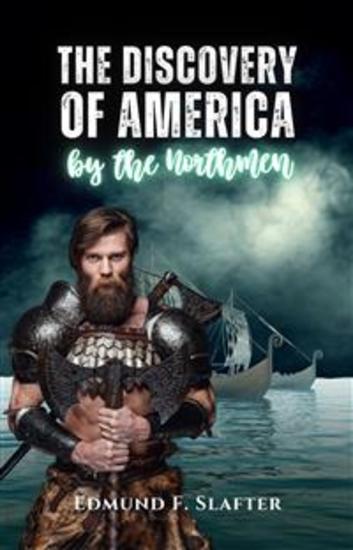
The discovery of America by the Northmen - cover

The discovery of America by the Northmen

Edmund F. Slafter

Publisher: Cervantes Digital

  • 0
  • 0
  • 0

Summary

"The Discovery of America by the Northmen" is a captivating exploration of the Norse exploration and settlement of North America centuries before the arrival of Christopher Columbus. In this intriguing account, readers are taken on a journey back in time to the Viking Age, where intrepid Norse sailors embarked on daring voyages across the Atlantic Ocean.

As the story unfolds, readers are introduced to legendary figures such as Leif Erikson and Erik the Red, who led expeditions to the shores of North America long before Columbus set foot in the New World. Through meticulous research and vivid storytelling, the author paints a vivid picture of the Norsemen's encounters with the indigenous peoples of North America and their attempts to establish settlements in this distant land.

But "The Discovery of America by the Northmen" is more than just a retelling of historical events—it's a thought-provoking exploration of the complexities of cultural exchange and interaction. Through the lens of the Norse exploration of North America, readers gain insight into the encounters between different cultures and the lasting impact of these early voyages on the history of the Americas.

With its blend of adventure, discovery, and historical analysis, "The Discovery of America by the Northmen" offers readers a fascinating glimpse into a lesser-known chapter of American history. Whether you're a history buff or simply curious about the early exploration of the Americas, this book is sure to captivate and enlighten.
Available since: 03/20/2024.

Other books that might interest you

  • Artist's Way The: Book summary & analysis - cover

    Artist's Way The: Book summary &...

    Briefly Summaries

    • 0
    • 0
    • 0
    This is a concise summary and analysis of The Artist's Way, by Julia Cameron.
     
    It is not the original book and is not affiliated with or endorsed by Julia Cameron.
     
    Ideal those seeking a quick and insightful overview


    "The Artist's Way" is a transformative guidebook for nurturing creativity and overcoming artistic blocks. It offers a structured approach to discovering and recovering one's creative self. Through a series of exercises and reflections, the book guides readers on a spiritual path to higher creativity, emphasizing the importance of self-discovery, resilience, and inspiration. The author advocates for a daily practice of writing morning pages and weekly artist dates to cultivate creativity and break through creative barriers. Ultimately, "The Artist's Way" encourages readers to embrace their artistic talents and live more creatively, fostering personal growth and fulfillment.
    Show book
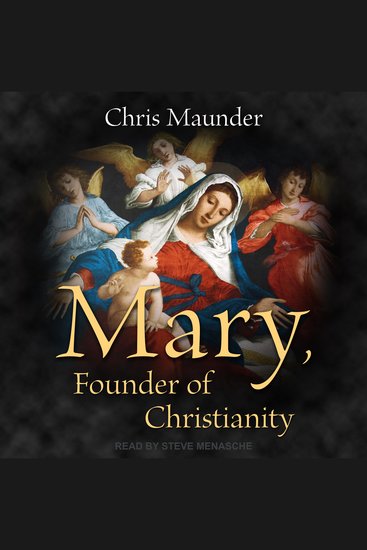
  • Mary Founder of Christianity - cover

    Mary Founder of Christianity

    Chris Maunder

    • 0
    • 0
    • 0
    A radical reassessment of the role of Mary the mother of Jesus and other women in the early Church 


    Despite the commonly held assumption that the Bible says little about the mother of Jesus, there are many indications that Mary preceded and inspired her son in fostering the emergence of a new faith community. In the Gospel of John, Mary instigates Jesus' first miracle, and in all four gospels she is present at the crucifixion, suggesting hers was a place of unparalleled importance in the Christian story. 


    Setting aside presuppositions based on doctrine, Chris Maunder returns to the New Testament to answer the question 'Who was Mary?' He re-examines the virgin conception of Jesus, Mary's contribution to Jesus' ministry, and her central role in the events of the crucifixion and the resurrection. In so doing, Maunder casts a thought-provoking new light on Mary and the women, including Mary Magdalene, who stood alongside her.
    Show book
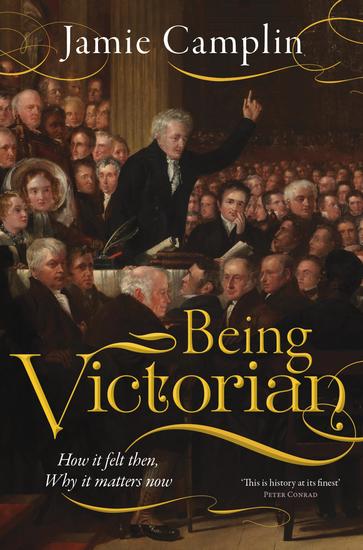
  • Being Victorian - How it felt then Why it matters now - cover

    Being Victorian - How it felt...

    Jamie Camplin

    • 0
    • 0
    • 0
    Writers and poets, academics and art critics, mathematicians and experimental scientists, churchmen and politicians, women of strong opinions gather for a summer weekend in the 1870s. Is it real, or is it a fantasy? One thing's sure: their debates – about life's aims, rural and urban living, love and money, civilization and belief, the social framework, the past, the present and the future take us to the heart of the Victorian dream and its reality: the idea that their society exemplified 'Progress'. What did 'Progress' mean? Were things (and which things) getting better? What did 'better' mean? And for whom? The history of the world before the Victorians, from Aberdeen to Africa, showed a particular form of equality for almost everyone: an equality of poverty and no prospects, with kindness often in short supply. Victorians wanted to change that world, thought they were changing it, did change it. They did it in a human way: a melange of muddle, vision, certainty, doubt, too slow for many, too fast for some. Yet their changes were decisive both for creating the modern world, but also for revealing the dilemmas attached to mass living in urban, technological societies, as well as the moral flaws in imposing one civilization's or one person's beliefs on another. Most remarkably of all, the upheaval in making major transitions in every area of life, which produced revolutions and violence across Europe, in the Americas and in Asia, was carried out – at least in Britain itself – almost entirely peacefully. The past will always be a foreign country for those unwilling to engage with its people. Whether viewing the lives of rulers or the ruled, 'Being Victorian' corrects innumerable preconceptions.
    Show book
  • On Airs Waters and Places - cover

    On Airs Waters and Places

    Hippocrates

    • 0
    • 0
    • 0
    On Airs, Waters, and Places is a treatise by Hippocrates in which he sets forth his ideas on the impact of climate and geography on human health. In particular, he believed that certain climates and types of terrain were more conducive to good health than others, and that people who lived in unhealthy environments were more likely to suffer from illness. Read in English, unabridged.
    Show book
  • Witnesses of Change: Book summary & analysis - cover

    Witnesses of Change: Book...

    Margot Langley

    • 0
    • 0
    • 0
    This content is an independent and unofficial summary created for informational and educational purposes only. It is not affiliated with, authorized, approved, licensed, or endorsed by the original author or publisher. All rights to the original work belong to its respective copyright holders. This summary is not intended to substitute the original book, but to offer a concise overview and interpretation of its main ideas.


    Witnesses of Change is a compelling tapestry of voices that have lived through transformation—personal, cultural, and global. Through heartfelt stories, reflective insights, and profound moments of awakening, this audiobook captures what it means to observe, endure, and shape change from within. Each chapter offers a unique perspective, revealing how ordinary individuals become extraordinary witnesses to pivotal moments in time.
     
    Powerful, honest, and deeply human, this is an essential listen for those who seek understanding, connection, and the courage to navigate a rapidly shifting world.
    Show book
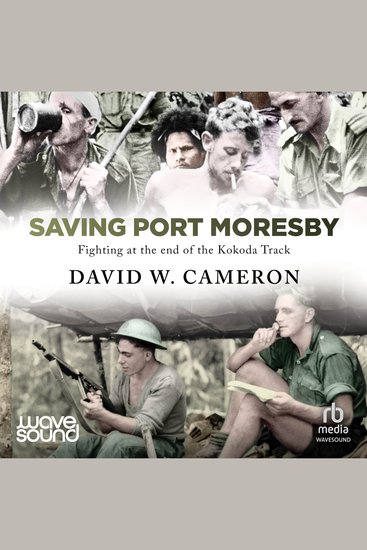
  • Saving Port Moresby - Fighting at the end of the Kokoda Track - cover

    Saving Port Moresby - Fighting...

    David W. Cameron

    • 0
    • 0
    • 0
    Powerfully written by Australia's leading military historian, Saving Port Moresby commemorates the 80th Anniversary of the Battles in New Guinea. 
    Japanese Major General Horii Tomitarô, commanding the South Seas Force, was after taking Kokoda Plateau in late July tasked with entering the Owen Stanley Range to capture Port Morseby.  
    After the battles for Deniki and Isurava, his troops were pushing south through the mountains. The Australians under Brigadier Arnold Potts, however, were not in rout, but were involved in a determined fighting withdraw. After fighting a delaying action at Templeton’s Crossing, the Australians took up a position along Mission Ridge, just south of Efogi Village.  
    Horii and his battalions attacked and after two days of bloody hand-to-hand fighting, the Australians were forced to again withdraw. To the veterans who fought here the battle would become known as ‘Butcher’s Corner’. After several further delaying actions, Potts and his men took up a position on Ioribaiwa Ridge, just 50-kilometres north of Port Moresby. 
    His brigade by now numbered fewer than 300 men. Here they were reinforced with the men of the 25th Brigade. Horii decided that he would establish himself of Ioribaiwa Ridge as his base for operations against the township. After a week of fighting the Japanese cut through the centre right flank of the Australian 25th Brigade, forcing the Australians to fall back to Imita Ridge, the last defensible ridge in the Owen Stanleys immediately behind lay Port Moresby.
    Show book