Join us on a literary world trip!
Add this book to bookshelf
Grey
Write a new comment Default profile 50px
Grey
Subscribe to read the full book or read the first pages for free!
All characters reduced
C G Jung and the Scientific Attitude - cover

We are sorry! The publisher (or author) gave us the instruction to take down this book from our catalog. But please don't worry, you still have more than 500,000 other books you can enjoy!

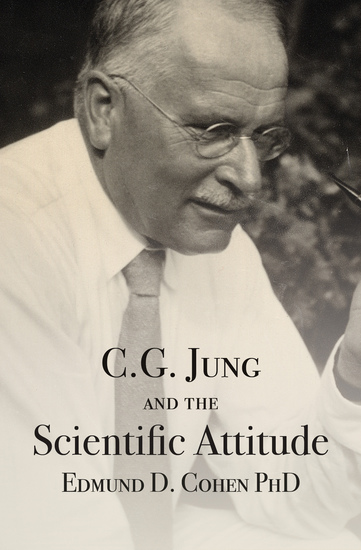
C G Jung and the Scientific Attitude

Edmund D. Cohen

Publisher: Philosophical Library/Open Road

  • 0
  • 0
  • 0

Summary

This probing study of the pioneering psychologist dispels many of the popular misconceptions about his work. Though Carl Jung is well known as one of the great pioneers of psychology and psychoanalysis, there are many persistent misconceptions about his work and legacy. Jungian psychology is rigorously scientific, yet its critics dismiss it as obscure and mystical. In C. G. Jung and the Scientific Attitude, Edmund D. Cohen sheds light on significant aspects of Jung’s work that academic psychology has previously all but overlooked.  Though Jung’s productivity spanned more than fifty years, his reputation rests largely on statements he made early in his career—statements upon which he later improved. In this fascinating and enlightening analysis, Cohen explores these statements and the misunderstandings they have caused. He also looks at the many paradoxes of Jungian psychology, showing that what first appears to be merely contradictory turn out to reveal a deeper meaning.
Available since: 12/06/2022.
Print length: 155 pages.
Other books that might interest you

  • The Black Man's President - Abraham Lincoln African Americans & the Pursuit of Racial Equality - cover

    The Black Man's President -...

    Michael Burlingame

    • 0
    • 0
    • 0
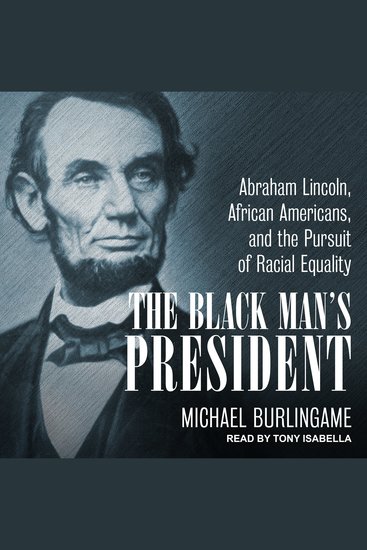
    In a little-noted eulogy delivered after Lincoln's assassination, Frederick Douglass called the president "emphatically the black man's president," the "first to show any respect for their rights as men." Douglass pointed not just to Lincoln's official acts and utterances, like the Emancipation Proclamation or the Second Inaugural Address, but also to the president's own personal experiences with Black people. 


    But Lincoln's description as "emphatically the black man's president" rests on more than his relationship with Douglass or on his official words and deeds. Lincoln interacted with many other African Americans during his presidency. His unfailing cordiality to them, his willingness to meet with them in the White House, to honor their requests, to invite them to consult on public policy, to treat them with respect whether they were kitchen servants or leaders of the Black community, to invite them to attend receptions, to sing and pray with them in their neighborhoods—all those manifestations of an egalitarian spirit justified the tributes paid to him by Frederick Douglass and other African Americans. 


    Historian David S. Reynolds observed that only by examining Lincoln's "personal interchange with Black people do we see the complete falsity of the charges of innate racism that some have leveled against him over the years."
    Show book
  • The American Operations in WW2: Ardennes-Alsace - 16 December 1944–25 January 1945 - cover

    The American Operations in WW2:...

    U.S. Army Center of Military...

    • 0
    • 0
    • 0
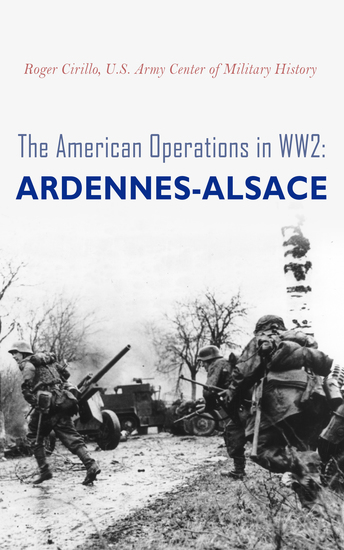
    World War II was the largest and most violent armed conflict in the history of mankind. Highly relevant today, World War II has much to teach us, not only about the profession of arms, but also about military preparedness, global strategy, and combined operations in the coalition war against fascism. This book follows military operations of the US Army in France from 16 December 1944 to 25 January 1945. 
    In his political testament Mein Kampf ("My Struggle") Adolf Hitler wrote, "Strength lies not in defense but in attack." Throughout World War II, attempts to gain or regain the initiative had characterized Hitler's influence on military operations. Thus, when the military situation in late 1944 looked darkest on the Western Front, an enemy offensive to redress the balance on the battlefield—and thereby cripple or delay the Allied advance—should have come as no surprise.
    Hitler's great gamble began during the nights of 13, 14, and 15 December, when the initial assault force of German armor, artillery, and infantry gradually staged forward to attack positions along the Belgian-German-Luxembourg border. This mustered force, with more than 200,000 men in thirteen infantry and seven panzer divisions and with nearly 1,000 tanks and almost 2,000 guns, deployed along a front of 60 miles—its operational armor holdings equaling that on the entire Eastern Front. Five more divisions moved forward in a second wave, while still others, equipped with at least 450 more tanks, followed in reserve.
    On the Allied side the threatened American sector appeared quiet. The 15 December daily situation report for the VIII Corps, which lay in the path of two of Hitler's armies, noted: "There is nothing to report." This illusion would soon be shattered.
    Show book
  • Naval Warfare of World War II The: The History of the Ships Tactics and Battles that Shaped the Fighting in the Atlantic and Pacific - cover

    Naval Warfare of World War II...

    Editors Charles River

    • 0
    • 0
    • 0
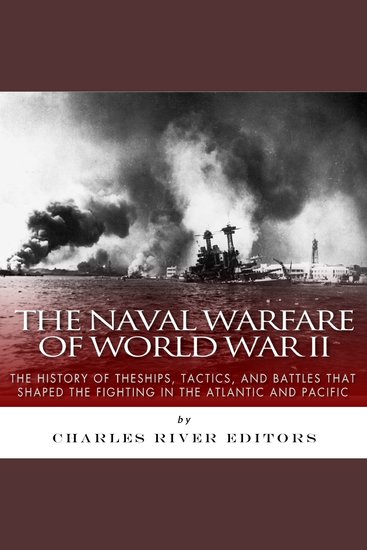
    Naval combat underwent a significant metamorphosis during World War II. Nazi Germany and Imperial Japan launched some of the most powerful battleships ever to sail the world's oceans, yet the conflict witnessed the emergence and triumph of the aircraft carrier as the 20th century's true monarch of the seas. Submarine warfare expanded and developed, while aircraft technology and doctrine experienced several revolutionary changes due to the unforgiving demands of the new combat environment. 
    In time, the American and British navies progressively destroyed their Axis counterparts, ensuring clear sea lanes, high strategic mobility for seaborne invasions, and large-scale air support that eventually battered the Axis armies into submission. Just as the Luftwaffe paralyzed Poland's defenders in 1939 with air superiority, so the Allies' mastery of naval and aerial warfare turned the tables to paralyze the Nazis and Japanese: “The fate of Germany and Japan was sealed by the many-layered application of Anglo-American air and sea power. The totality of this pressure [...] eventually choked off Axis mobility. Air and sea power could operate throughout the productive process, not only to affect the battlefield, but to determine how much and what kinds of military equipment were produced and deployed.” (O'Brien, 2015, 480). 
    Indeed, the “ultimate weapon” of World War II proved to be not a powerful tank or a specific type of aircraft, but a gigantic piece of military hardware combining the newly augmented power of both air and naval operations, the aircraft carrier. Every diverse element of the military machine had a crucial role to play, but the aircraft carrier stood head and shoulders above any other single system as the key to victory in the mid 1940s.
    Show book
  • Wild Democracy - Anarchy Courage and Ruling the Law - cover

    Wild Democracy - Anarchy Courage...

    Anne Norton

    • 0
    • 0
    • 0
    Wild Democracy calls for a more anarchic, more courageous democracy. This is an ethic for people who know the rights they hold, and who struggle to rule themselves. This is an ethic for unfinished revolutions; an ethic for those who will not be mastered. This is an ethic for those who hold fast to the rights they have by nature. 


    Democracy is always a risky business; full of promise and danger. The promise is the freedom to rule ourselves. The danger is fear: fear of the unknown, fear of the unruly, fear of one another, fear of anarchy. The fearful look for a strong hand, a powerful leader, a protector, a gun. Anarchy leads to courage, to self-reliance, self-discipline, self-rule, and solidarity. Anarchy is the nursery of democracy. It is not anarchy we have to fear, it is authoritarianism. 


    We have been taught to see the people as a problem to be managed. Anne Norton sees them as a source of strength. Anarchic democracy grows wild: springing from the everyday actions of ordinary human beings. 


    Liberalism and conservatism alike have turned away from the democratic, to institutions, rules, and regulations. Anne Norton turns to anarchic people who practice democratic ethics.
    Show book
  • My Brother's Keeper - Netanyahu Obama & the Year of Terror & Conflict that Changed the Middle East Forever - cover

    My Brother's Keeper - Netanyahu...

    Ari Harow

    • 0
    • 0
    • 0
    My Brother's Keeper tells the behind-the-scenes story of how the American president and the Israeli prime minister clashed about peace, war, and the future of the region. 


    Barack Obama and Benjamin Netanyahu viewed the world—and especially the Middle East—differently. The US president wanted to end what he saw as America's perpetual war against the Muslim and Arab worlds, use diplomacy to bring about a Palestinian state coexisting peacefully with Israel, and apply his signature foreign policy vision to reward the Islamic Republic of Iran in exchange for the scaling back of their nuclear pursuits. The Israeli premier wanted his country to thrive without the senseless bloodshed of terror and violence, and he was determined to protect the Jewish state from threats of annihilation by a member of the axis of evil that would one day be armed with nuclear weapons. Netanyahu wanted peace for peace, as well as the acceptance of Israel as a full-fledged part of the Middle East. In 2014, during a pivotal summer of terrorist violence, a war in Gaza, and the advancement of a nuclear deal with Iran, the two men clashed, threatening the US-Israeli strategic alliance and the future of the region. The Middle East would never be the same.
    Show book
  • Bible Trivia: 850 Interesting Questions and Answers! - cover

    Bible Trivia: 850 Interesting...

    Ahoy Publications

    • 0
    • 0
    • 0
    Discover the Magic of the Bible Like Never Before!  
    Embark on an epic journey with "Bible Trivia: 850 Interesting Questions and Answers"! This audiobook is your golden ticket to exploring the most captivating aspects of the Bible. 
    Imagine uncovering the secrets of ancient times:From the creation of the world in just a handful of days,To Adam and Eve's life before their big oops in the Garden,Noah's incredible task of building an ark under God's guidance,And the jaw-dropping moment when languages got all mixed up at Babel Tower. 
    But that's not all! You'll also delve into:The mystifying Ten Plagues that hit Egypt hard,The awe-inspiring miracles performed by Jesus,And the teachings that have guided millions. 
    "Bible Trivia: 850 Interesting Questions and Answers" is not just an audiobook; it's a treasure trove of divine knowledge waiting for you to explore. 
    Whether you're a seeker of wisdom, a fan of epic tales, or simply in love with history, this audiobook is your perfect companion. Dive into this audiobook and let your soul be touched by the timeless knowledge found within. 
    Don't miss out on this incredible adventure through time and faith. Grab your copy today and let the exploration begin!
    Show book