Join us on a literary world trip!
Add this book to bookshelf
Grey
Write a new comment Default profile 50px
Grey
Subscribe to read the full book or read the first pages for free!
All characters reduced
On Conciliation with America - cover

On Conciliation with America

Edmund Burke

Publisher: DigiCat

  • 0
  • 0
  • 0

Summary

In "On Conciliation with America," Edmund Burke articulates a compelling argument for understanding and reconciling with the American colonies during the escalating tensions leading to the Revolutionary War. Written in 1775, Burke employs eloquent rhetoric and philosophical reasoning, drawing on classical traditions and Enlightenment principles to advocate for a conciliatory approach rather than conflict. The text exemplifies Burke's literary style, characterized by its eloquence and emotional appeal, as he navigates the complexities of governance and colonial autonomy, ultimately calling for an acknowledgment of shared values and mutual respect between Britain and America. Edmund Burke, a prominent Irish statesman and philosopher, is often regarded as a forerunner of modern conservatism. His extensive political career and interest in social justice and governance deeply influenced his writing. Witnessing the early seeds of rebellion in America, Burke felt a profound sense of duty to address the British Parliament on the need for understanding, reflecting his belief in the importance of moderation and the underlying principles of liberty, justice, and order. "On Conciliation with America" remains a pivotal read for anyone interested in the foundations of political philosophy and the historical context of American independence. Burke's insights not only resonate with contemporary discussions on governance and civil society but also serve as a reminder of the power of dialogue in the face of division.
Available since: 11/22/2022.
Print length: 24 pages.
Other books that might interest you

  • The Miracle of the Black Leg - Notes on Race Human Bodies and the Spirit of the Law - cover

    The Miracle of the Black Leg -...

    Patricia J. Williams

    • 0
    • 0
    • 0
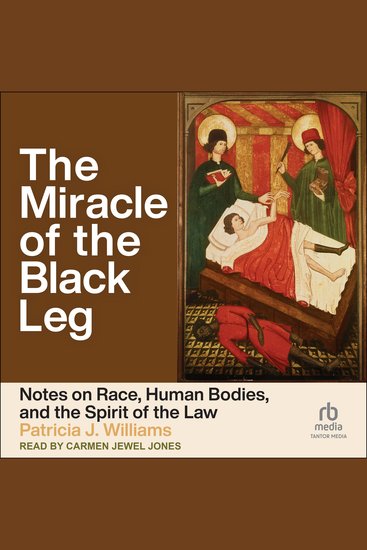
    Beginning with a jaw-dropping rumination on a centuries-old painting featuring a white man with a Black man's leg surgically attached (with the expired Black leg-donor in the foreground), contracts law scholar and celebrated journalist Patricia J. Williams uses the lens of the law to take on core questions of identity, ethics, and race. 


    With her trademark elegant prose and critical legal studies wisdom, Williams brings to bear a keen analytic eye and a lawyer's training to chapters exploring the ways we have legislated the ownership of everything from body parts to gene sequences—and the particular ways in which our laws in these areas isolate nonnormative looks, minority cultures, and out-of-the-box thinkers. 


    At the heart of "Wrongful Birth" is a lawsuit in which a white couple who use a sperm bank sue when their child "comes out Black." And "Hot Cheeto Girl" examines the way that algorithms give rise to new predictive categories of human assortment, layered with market-inflected cages of assigned destiny. 


    The Miracle of the Black Leg offers a brilliant meditation on the tricky place where law, science, ethics, and cultural slippage collide.
    Show book
  • Slavery By Consent Interviews & Purports - Talks by Aldous Huxley - cover

    Slavery By Consent Interviews &...

    Geoffrey Giuliano

    • 0
    • 0
    • 0
    "There is only one corner of the universe you can be certain of improving, and that's your own self.""One of the great attractions of patriotism - it fulfills our worst wishes.""The secret of genius is to carry the spirit of the child into old age, which means never losing your enthusiasm." Aldous HuxleyAldous Huxley was an English writer and philosopher. He wrote nearly fifty books, both novels and non-fiction works—as well as wide-ranging essays, narratives, and poems.Born into the prominent Huxley family, he graduated from Oxford, with an undergraduate degree in English literature. Early in his career, he published short stories and poetry and edited the literary magazine Oxford Poetry, before going on to publish travel writing, satire, and screenplays. Huxley spent the latter part of his life in the United States, living in Los Angeles from 1937 until his death. By the end of his life, Huxley was widely acknowledged as one of the foremost intellectuals of his time. He was nominated for the Nobel Prize in Literature nine times and was elected Companion of Literature by the Royal Society of Literature in 1962.Includes a rare treasury of ultra-rare previously unheard conversations with the esteemed intellectual.©2022 Eden Garret Giuliano (P) 2022 Eden Garret GiulianoGeoffrey Giuliano is the author of over thirty internationally bestselling biographies, including the London Sunday Times bestseller 'Blackbird: The Life and Times of Paul McCartney' and 'Dark Horse: The Private Life of George Harrison'. He can be heard on the Westwood One Radio Network and has written and produced over seven hundred original spoken word albums and documentaries on various aspects of popular culture.
    Show book
  • Deceptive Charisma - Using Charm to Deceive or Manipulate - cover

    Deceptive Charisma - Using Charm...

    Cito Harder

    • 0
    • 0
    • 0
    Charisma is one of the most powerful tools of influence. Throughout history, charismatic individuals have captivated audiences, inspired movements, and shaped the course of events. Whether in politics, business, entertainment, or everyday life, people with magnetic personalities often seem to have an almost hypnotic effect on others. But what exactly gives someone charisma, and why is it so effective? 
    At its core, charisma is a blend of confidence, charm, and emotional intelligence. It is not just about good looks or eloquent speech, though those can play a role. Instead, true charisma lies in the ability to make others feel special, understood, and valued. Charismatic individuals have an innate or developed talent for reading people and adjusting their approach accordingly. They know when to listen, when to speak, and how to convey messages in ways that resonate deeply with their audience. 
    The psychological impact of charisma is profound. People are naturally drawn to those who exude confidence and warmth. Studies in social psychology suggest that individuals with charismatic traits are often perceived as more competent, trustworthy, and even more likable, regardless of their actual abilities or intentions. This perception creates a halo effect, where one positive trait overshadows potential flaws or red flags.
    Show book
  • Responsible and Responsive Parenting in Autism - Between Now and Dreams - cover

    Responsible and Responsive...

    Shahla Ala'i-Rosales, Peggy...

    • 0
    • 0
    • 0
    Parents of children with autism have so much to learn and to manage, it’s easy for them to feel alone and become emotionally drained. But there is a framework for making progress, whether the child is newly diagnosed or an adult. Now available in audiobook, reviewers call Responsible and Responsive Parenting in Autism: Between Now and Dreams a first-stop, must-read for parents, family members and caregivers, one that is also eloquent and engaging. The essence of any parenting journey relies on learning, connecting and loving. Each power informs the other. Each amplifies the other. Each power is essential for meaningful, courageous parenting. Writing with compassion and empathy, Shahla Ala’i-Rosales, a professor and clinician who’s worked with hundreds of autism families, and Peggy Heinkel-Wolfe, a science writer and parent of an adult with autism, teamed up to offer effective, practical suggestions. Learn how to harness your parenting powers to tailor both scientific information and cultural wisdom to your family’s needs. “Five out of five stars for structure, content and practical advice.” – Adam Hockman, learning architect at the Heifetz Institute and ABA Technologies
    Show book
  • You Can't Kill a Man Because of the Books He Reads - Angelo Herndon's Fight for Free Speech - cover

    You Can't Kill a Man Because of...

    Brad Snyder

    • 0
    • 0
    • 0
    The story of a young, Black Communist Party organizer wrongly convicted of attempting to incite insurrection and the landmark case that made him a civil rights hero. 


    Decades before the impeachment of an American president for a similar offense, Angelo Herndon was charged under Georgia law with "attempting to incite insurrection"—a crime punishable by death. In 1932, the eighteen-year-old Black Communist Party organizer was arrested and had his room illegally searched and his radical literature seized. Charged under an old slave insurrection statute, Herndon was convicted by an all-white jury and sentenced to eighteen to twenty years on a chain gang. 


    A legal odyssey of Herndon's narrow escape from certain death because of his unpopular political beliefs, You Can't Kill a Man Because of the Books He Reads explores Herndon's journey from Alabama coal miner to Communist Party organizer to Harlem hero and beyond. Brad Snyder tells the stories of the diverse coalition of people who rallied to his cause and who twice appealed his case to the US Supreme Court. They forced the Court to recognize free speech and peaceable assembly as essential rights in a democracy—a landmark decision in 1930s America as well as today.
    Show book
  • Battle of Sluys The: The History and Legacy of the First Major Naval Battle of the Hundred Years’ War - cover

    Battle of Sluys The: The History...

    Editors Charles River

    • 0
    • 0
    • 0
    Although it ended over 550 years ago, the Hundred Years’ War still looms large in the historical consciousness of England and France, even if the name of the famous war is a misnomer. Actually a series of separate conflicts between the English and French monarchies, interspersed with periods of peace, its historical image is an odd one, in part because its origins were based on royal claims that dated back centuries and the English and French remained adversaries for nearly 400 years after it ended.  
    	That said, the war was transformative in many respects, and the impact it had on the geopolitical situation of Europe cannot be overstated. While some might think of the war as being a continuation of the feudal tradition of knights and peasants, the Hundred Years’ War revolutionized Western European warfare, and it truly helped to usher in the concept of nationalism on the continent. In England, it is remembered as a period of grandeur and success, even though the English lost the war and huge swathes of territory with it, while the French remember it as a strategic victory that ensured the continued independence of France and the denial of English hegemony. The legacy of the war has lived on ever since, helping determine how England became politically severed from the continent, how the knightly chivalric tradition slid into irrelevance, and how battlefield dominance can still leave a nation a loser in war. 
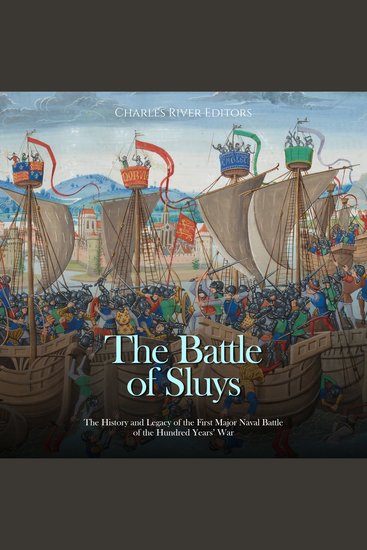
    	At the same time, the English forged a reputation for naval superiority, and one of their first demonstrations came at the Battle of Sluys. The town of Sluys (in Dutch Sluis and in French l’Ecluse) is located on the west coast of the region of Zeelandic Flanders in the province of Zeeland in the Netherlands. It has a population of about 23,000 and is relatively isolated, but its main claim to fame today is being the site of one of the first military encounters of the Hundred Years’ War in 1340.
    Show book