Join us on a literary world trip!
Add this book to bookshelf
Grey
Write a new comment Default profile 50px
Grey
Subscribe to read the full book or read the first pages for free!
All characters reduced
The Roman Empire - The History and Legacy of the Ancient World’s Most Famous Empire from Julius Caesar to Its Collapse - cover

The Roman Empire - The History and Legacy of the Ancient World’s Most Famous Empire from Julius Caesar to Its Collapse

Editors Charles River

Publisher: Charles River Editors

  • 0
  • 0
  • 0

Summary

The importance of Gaius Julius Caesar Augustus (or as he was known from birth, Gaius Octavius “Octavian” Thurinus) to the course of Western history is hard to overstate. His life, his rise to power, his political, and his social and military achievements all laid the foundations for the creation of an empire which would endure for almost five centuries, and whose traditions, laws, architecture and art continue to influence much of Europe and the world today. Octavian was the first true Roman Emperor, and the first man since the Etruscan Tarquins five centuries earlier to establish a successful hereditary ruling dynasty in what had been a proud Republic for over half a millennium. He was a canny strategist, an excellent orator, a fine writer, a generous patron of the arts and enthusiastic promoter of public works, but above all he was a master politician. Octavian’s great-uncle (and adoptive father) Julius Caesar was a great general, and his rival Mark Antony was a great soldier, but as a politician Octavian outmatched them all.
 
Certainly, like all men, Octavian had his defects. Like many of the most successful politicians, he could connive, plot and prevaricate with the best of them, and he made full use of the emotional pull that his late beloved great-uncle had over the legions during the course of his rise to power. His justice was also famously heavy-handed, and he was not known for his mercy towards those he defeated in battle or marginalized political opponents. Yet despite all this, he still stands in bronze on Rome’s Via dei Fori Imperiali to this day, along with the likes of Caesar, Hadrian, Trajan and Marcus Aurelius, and he is forever immortalized in all Western calendars as the patron of the month of August, which was dedicated to him when he was deified, following his death, as Divus Augustus.
 
Like his adoptive father before him, Octavian is one of those figures whom it is difficult to know exactly what to make of, because he appears, even at a distance, to be larger than life. Yet the amount of personal correspondence and contemporary writings penned by Octavian himself, as well as his friends, associates, and rivals, helps form a clear picture of the man behind the bronze statue. Indeed, he was the ruler who found Rome a city of bricks and left it a city of marble.
 
One of the most overlooked emperors was also one of the first, and he lived in chaotic times. Tiberius was born in 42 BCE, just as the Roman Republic was dissolving and a new Roman imperial power structure emerged under Octavian, who became Rome’s first emperor as Caesar Augustus. Tiberius’s life soon became caught up with Augustus’s as the emperor worked to found and establish a dynasty, but it is unclear if Tiberius ever really wanted to be part of Augustus’s plans or inherit imperial power - Tiberius was known as a man who schemed and planned, but he was also a scholar and showed a marked desire throughout his life to retreat and escape the demands of power. Partially due to this continual tension, Tiberius’s life is enigmatic in many ways.
 
Tiberius championed the Republic and seemed to desire its return, yet his acceptance of imperial power and his reign solidified Rome’s transition to an empire. He was a skilled general who showed concern for the well-being of his troops, and he displayed a remarkable patience as a military tactician. After he rose to become emperor in 14 CE, he ruled for over 22 years, which would be the longest reign of a Roman emperor over the next 100 years, but he remained suspicious of everyone and eventually chose the wrong person to trust, being eventually misled and betrayed by a man whom he thought was his closest friend. When he finally died, aged and lonely, he had become so hated that crowds celebrated his death.
Available since: 05/01/2025.
Print length: 348 pages.

Other books that might interest you

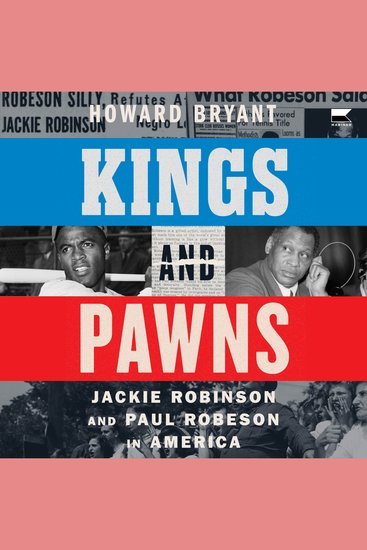
  • Kings and Pawns - Jackie Robinson and Paul Robeson in America - cover

    Kings and Pawns - Jackie...

    Howard Bryant

    • 0
    • 0
    • 0
    “I loved this book.... I looked forward to [it] more than any other in a long time, and Howard Bryant exceeded my great expectations. Kings and Pawns is brilliantly conceived and powerfully written.” — David Maraniss, author of Path Lit by Lightning 
    A path-breaking work of biography of two American giants, Jackie Robinson and Paul Robeson, whose lives would forever be altered by the Cold War, and would explosively intersect before its most notorious weapon, the House Un-American Activities Committee — from one of the best sports and culture writers working today.  
    Kings and Pawns is the untold story of sports and fame, Black America and the promise of integration through the Cold War lens of two transformative events. The first occurred July 18, 1949 in Washington, D.C., when a reluctant Jackie Robinson, the Brooklyn Dodgers baseball star who integrated the game and at the time was the most famous Black man in America, appeared before the House Un-American Activities Committee to discredit Paul Robeson, the legendary athlete, baritone, and actor — himself once the most famous Black man in America. The testimony would be a defining moment in Robinson’s life and contribute heavily to the destruction of Robeson’s iconic reputation in the eyes of America. 
    The second occurred June 12, 1956, in the midst of the last, demagogic roar of McCarthyism, when a battered, defiant Robeson – prohibited from leaving the United States – faced off in a final showdown with HUAC in the same setting Robinson appeared in seven years earlier. These two moments would epitomize the ongoing Black American conflict between patriotism and protest. On the cusp of a nascent civil rights movement, Robinson and Robeson would represent two poles of a people pitted against itself by forces that demanded loyalty without equality in return – one man testifying in conflicted service to and the other in ferocious critique of a country that would ultimately and decisively wound both. 
    In a time of great division, with America in the midst of a new era of retrenchment and Black athletes again chilled into silence advocating for civil rights, the story of these two titans reverberates today within and beyond Black America. From the revival of government overreach to curb civil liberties to the Cold War-era rhetoric of “the enemy within” levied against fellow citizens, Kings and Pawns is a story of a moment that remains hauntingly present.
    Show book
  • American Monsters: The History of America’s Most Persistent Urban Tales about Strange Birds Serpents and Wolfmen - cover

    American Monsters: The History...

    Editors Charles River

    • 0
    • 0
    • 0
    People have always been fascinated with the hidden, the mysterious, and the unexplained. Every society has its tall tales and ghost stories, its odd legends, and heroes. Also, every society has its stories of strange beasts, dangerous or benign, that live in the twilight world between the everyday and the legendary. Through most of history, people have been closely tied to nature, hunting in forests and having an intimate knowledge of the animals in their regions. So-called “primitive” peoples were walking encyclopedias of the natural world, and yet most believed there were more creatures lurking in those woods than the ones they usually encountered. Even as the world becomes more connected, the belief in strange creatures continues as strong as ever. 
    	As a result, in one sense it shouldn’t be surprising that people across the United States have reported seeing weird cryptids, including giant birds, sea serpents, wolfmen, and a creature so bizarre it defies any rational classification. The only thing these monsters have in common is that all have been seen regularly and reported by seemingly sober, rational witnesses in the United States, even as conventional science suggests these monsters cannot exist and that all the sightings are mistakes, misidentifications, or hoaxes.  
    	In some cases, this may be true, but in others, it’s harder to accept. For example, one story about a 10-year-old boy being carried off by a giant bird was witnessed by several other people. Likewise, the Gloucester sea serpent seen by hundreds of people and carefully and scientifically investigated, and during one week in 1909, hundreds if not thousands of people reported seeing the Jersey Devil. Sightings of wolf-like creatures walking on two legs have been reported for more than 100 years. 
    Show book
  • Ordinary People Don't Carry Machine Guns - Thoughts on War - cover

    Ordinary People Don't Carry...

    Artem Chapeye

    • 0
    • 0
    • 0
    In Ordinary People Don't Carry Machine Guns, Artem Chapeye reveals his war, intimate and senseless, withholding nothing about his motivations, his nightmares, his new relationship with the world. Here one man, a pacifist turned fighter, a story writer turned soldier considers the reasons for and reactions to war on a very personal level. 


    Chapeye investigates his role in the Ukrainian people's defense against the Russian army and his responsibilities as a father, a writer, a soldier, and a man of conviction. An avowed pacifist until 2022, Chapeye joined the Ukrainian army in the first days of the invasion. He tries to understand the large-scale decision-making that has a defining impact on both individual citizens and society-at-large: many of his fellow soldiers never considered enlisting before finding themselves at war; others fled the country. He wonders what his young children at home are doing and what they're feeling. 


    The book has three parts, offering historical analogies and literary references throughout. Deeply thought-provoking, intelligent, and heartbreaking, this is an essential book for anyone who wants to understand the ways that war can change everything.
    Show book
  • The Perils of Prosperity 1914-1932 - Second Edition - cover

    The Perils of Prosperity...

    William E. Leuchtenburg

    • 0
    • 0
    • 0
    Beginning with Woodrow Wilson and U.S. entry into World War I and closing with the Great Depression, The Perils of Prosperity traces the transformation of America from an agrarian, moralistic, isolationist nation into a liberal, industrialized power involved in foreign affairs in spite of itself.
     
    William E. Leuchtenburg’s lively yet balanced account of this hotly debated era in American history has been a standard text for many years. This substantial revision gives greater weight to the roles of women and minorities in the great changes of the era and adds new insights into literature, the arts, and technology in daily life. He has also updated the lists of important dates and resources for further reading.
     
    “This book gives us a rare opportunity to enjoy the matured interpretation of an American Historian who has returned to the story and seen how recent decades have added meaning and vividness to this epoch of our history.”—Daniel J. Boorstin, from the Preface
    Show book
  • Monkey to Man - The Evolution of the March of Progress Image - cover

    Monkey to Man - The Evolution of...

    Gowan Dawson

    • 0
    • 0
    • 0
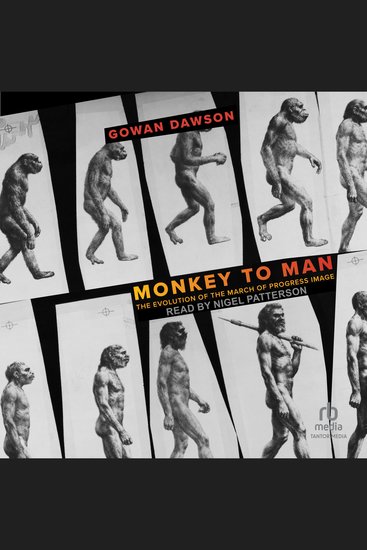
    The first book to examine the iconic depiction of evolution, the "march of progress," and its role in shaping our understanding of how humans evolved 


    We are all familiar with the "march of progress," the representation of evolution that depicts a series of apelike creatures becoming progressively taller and more erect before finally reaching the upright human form. Its emphasis on linear progress has had a decisive impact on public understanding of evolution, yet the image contradicts modern scientific conceptions of evolution as complex and branching. 


    This book is the first to examine the origins and history of this ubiquitous and hugely consequential illustration. In a story spanning more than a century, from Victorian Britain to America in the Space Age, Gowan Dawson traces the interconnected histories of the two most important versions of the image: the frontispiece to Thomas Henry Huxley's Evidence as to Man's Place in Nature (1863) and "The Road to Homo Sapiens," a fold-out illustration in the bestselling book Early Man (1965). Dawson explores how the recurring appearances of this image pointed to shifting scientific and public perspectives on human evolution, as well as indicated novel artistic approaches, and advancements in technology.
    Show book
  • On the Improvement of the Understanding - cover

    On the Improvement of the...

    Benedict Spinosa

    • 0
    • 0
    • 0
    Benedict Spinoza's 'On the Improvement of the Understanding' is a philosophical treatise guiding readers toward a clear and rational comprehension of the world. Emphasizing reason and ethics, Spinoza challenges traditional beliefs, advocating for intellectual freedom. This foundational work explores the nature of knowledge, paving the way for a profound understanding of reality and the human mind, making it an enduring contribution to philosophy and critical thought. Read in English, unabridged.
    Show book