Junte-se a nós em uma viagem ao mundo dos livros!
Adicionar este livro à prateleira
Grey
Deixe um novo comentário Default profile 50px
Grey
Assine para ler o livro completo ou leia as primeiras páginas de graça!
All characters reduced
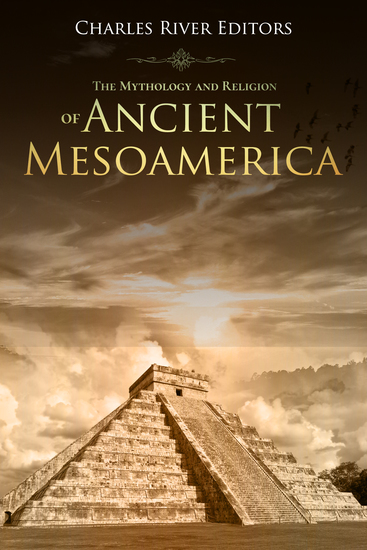
The Mythology and Religion of Ancient Mesoamerica - cover
LER

The Mythology and Religion of Ancient Mesoamerica

Editors Charles River

Editora: Charles River Editors

  • 0
  • 0
  • 0

Sinopse

"They strike open the wretched Indian's chest with flint knives and hastily tear out the palpitating heart which, with the blood, they present to the idols…They cut off the arms, thighs and head, eating the arms and thighs at ceremonial banquets. The head they hang up on a beam, and the body is…given to the beasts of prey." – Bernal Diaz, a Spaniard who described the Aztec’s human sacrifice
 
The Olmec people are widely recognized as the first major civilization of Mexico and are thus generally regarded as the mother civilization of Mesoamerica, making them the people from which all subsequent Mesoamerican cultures derived. In fact, the term Olmec is thought to have originated with the Aztec people, as Olmec in their Nahuatl language means “the rubber people”, a reference to the inhabitants of the land from which they accessed rubber.  By and large, the Olmec culture is perhaps best identifiable by their so-called colossal heads, mammoth basalt head-statues wearing helmet-like headdresses found throughout Olmec habitation sites.
 
Around 2500 B.C., the Olmec settled primarily along Mexico's Gulf Coast in the tropical lowlands of south-central Mexico (in the modern-day States of Veracruz and Tabasco), and they flourished during North America's Prehistoric Indian Formative period from about 1700-400 B.C. Their direct cultural contributions were still evident as late as 300 A.D. Among Mesoamerican scholars, the Formative period is subdivided into the Preclassic (Olmec period), Classic (Maya period), and Postclassic (Toltec and Aztec periods). 
 
From a cultural standpoint, their pyramids, open plazas, their ballgame, and possibly even centers of human sacrifice are thought to have established the societal model that subsequent societies like the Maya, Zapotec, Teotihuacano, Toltec, Mixtec, and Aztec would emulate. In the same vein, some scholars believe that they also affected the cultural development of  the Native American groups of the United States and those of Central and South America as well. Proving to be one the most enduring models ever, the religious and cultural structure the Olmec established held reign for over 3,000 years, and it would likely have endured much longer without the arrival of the Spanish conquistadors.
 
In the years leading up to 2012, there has been much interest in the Maya calendar. Largely, this is because the calendar will complete its 5,200-year cycle on December 21, 2012, and this auspicious event has been misinterpreted as signaling the end of the world. For the Maya, the endings of calendar period of all lengths (cycles ranged from 20 days to centuries in length) were very important and required various types of rituals and offerings to be properly recognized. Often, the best acceptable “offering” was human blood, and Maya elites engaged in autosacrificial bloodletting to appease the deity presiding over the transition in question. Combined with the detailed Maya knowledge of astronomy, the calendar system functioned as a way for Maya priests and elites to know which particular god in their crowded pantheon was ruling at a particular moment. The Maya believed that each interval of time, embedded in units like the day, the night, the solar year, the k’atun (20 year cycle), the lunar cycle, and Venus’s cycle, was governed by a certain deity. Such knowledge was considered vital in Maya cosmology and allowed the elites to maintain and consolidate power, effect political change, and lend religious veracity to monumental building projects. The blending of technologies and religion extended to writing for the Maya, who used a writing system to codify and standardize religio-political beliefs.
Disponível desde: 01/05/2025.
Comprimento de impressão: 90 páginas.
Outros livros que poderiam interessá-lo

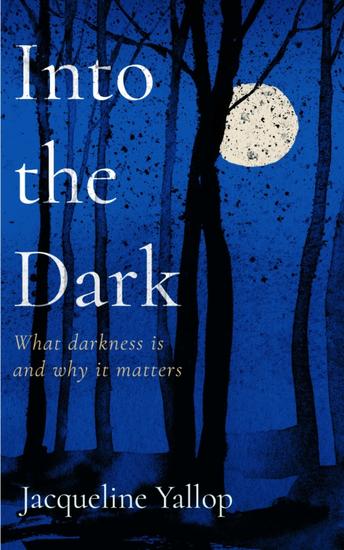
  • Into the Dark - What darkness is and why it matters - cover

    Into the Dark - What darkness is...

    Jacqueline Yallop

    • 0
    • 0
    • 0
    'Often poetic ... highly-researched and thought-provoking'New Scientist
    'Gently and thoughtfully enquiring' The Spectator
    
    Can you remember the first time you encountered true darkness? The kind that remains as black and inky whether your eyes are open or closed? Where you can't see your hand in front of your face?
    
    Jacqueline Yallop can. It was in an unfamiliar bedroom while holidaying in Yorkshire as a child, and ever since then she has been fascinated by the dark, by our efforts to capture or avoid it, by the meanings we give to it and the way our brains process it.
    
    Taking a journey into the dark secrets of place, body and mind, she documents a series of night-time walks, exploring both the physical realities of darkness and the psychological dark that helps shape our sense of self. Exploring our enduring love-hate relationship with states of darkness, she considers how we attempt to understand and contain the dark, and, as she comes to terms with her father's deteriorating Alzheimer's, she reflects on how our relationship to the dark can change with time and circumstance.
    
    Darkness captivates, baffles and appals us. It's a shifty thing of many textures, many moods, a state of fascination and of horror, an absence and a presence, solace and threat, a beginning and an end. Into the Dark is the story of the many darks that fascinate and assail us. It faces the darkness full on in all its guises and mysteries, celebrating it as a thing of beauty while peering into the void.
    Ver livro
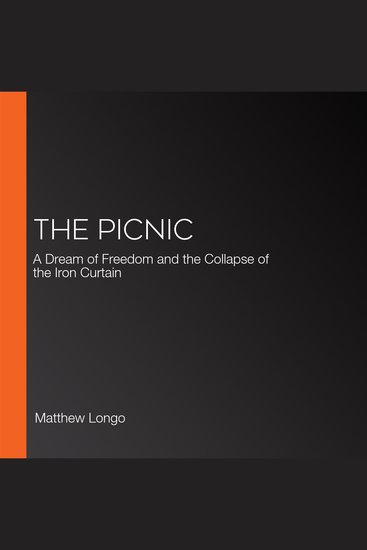
  • The Picnic - A Dream of Freedom and the Collapse of the Iron Curtain - cover

    The Picnic - A Dream of Freedom...

    Matthew Longo

    • 0
    • 0
    • 0
    In August 1989, a group of Hungarian activists organized a picnic on the border of Hungary and Austria. But this was not an ordinary picnic—it was located on the dangerous militarized frontier known as the Iron Curtain. Tacit permission from the highest state authorities could be revoked at any moment. On wisps of rumor, thousands of East German "vacationers" packed Hungarian campgrounds, awaiting an opportunity, fearing prison, surveilled by lurking Stasi agents. The Pan-European Picnic set the stage for the greatest border breach in Cold War history: hundreds crossed from the Communist East to the longed-for freedom of the West. 


    Drawing on dozens of original interviews, Matthew Longo tells a gripping and revelatory tale of the unraveling of the Iron Curtain and the birth of a new world order. Just a few months after the Picnic, the Berlin Wall fell, and the freedom for which the activists and refugees had risked imprisonment was suddenly available to everyone. But were they really free? And why, three decades since the Iron Curtain was torn down, have so many sought once again to build walls? 


    Cinematically told, The Picnic recovers a time when it seemed possible for the world to change. With insight and panache, Longo explores the opportunities taken—and the opportunities we failed to take—in that pivotal moment.
    Ver livro
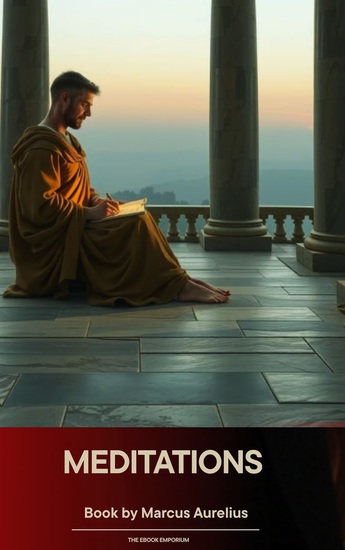
  • Meditations - cover

    Meditations

    Marcus Aurelius

    • 0
    • 0
    • 0
    "Written in the heat of battle and the halls of power—the ultimate guide to mastering your mind."
    
    Meditations is a collection of twelve books containing the private thoughts of the most powerful man in the ancient world. Writing to himself as a form of spiritual exercise, Marcus Aurelius explores how to remain virtuous in a world of vice, how to find tranquility in the face of death, and how to perform one's duty without complaint. He argues that while we cannot control external events, we have absolute power over our own thoughts and reactions. This isn't just a book of philosophy; it is a practical blueprint for living a life of purpose, integrity, and calm.
    
    The Core Principles of Stoicism: Through pithy aphorisms and deep introspection, Aurelius focuses on the concept of the Amor Fati (love of fate) and the Dichotomy of Control. He reminds himself—and the reader—that everything is change, and that the only thing that truly matters is the quality of one's character.
    
    A Leader's Inner Battle: Unlike other philosophical texts, Meditations is deeply personal. It captures an emperor reminding himself to be patient with "tiresome people," to avoid the temptations of fame, and to stay grounded in the present moment. It remains a favorite of world leaders, athletes, and entrepreneurs for its brutal honesty and practical application.
    
    Why It Matters Today: In an age of constant distraction and anxiety, Marcus Aurelius's words are more relevant than ever. He teaches us that "the happiness of your life depends upon the quality of your thoughts" and provides the tools to build an "inner citadel" that no external force can break.
    
    Master your mind and conquer your world. Purchase "Meditations" today.
    Ver livro
  • Singlehandedly - Learning to Unhide and Embrace Connection - cover

    Singlehandedly - Learning to...

    Ruth Rathblott

    • 0
    • 0
    • 0
    What are you hiding? 
    Chances are there is something about you that makes you different, that makes you feel you don’t belong. Many of us hide—our ethnicity, sexuality, mental health, disability, religion…the list goes on. The diversity and inclusion movement has emboldened some to come out of the shadows. But too often, disability is not included in that conversation. 
    Ruth Rathblott was born with a limb difference. In her compelling and intimate memoir, she recounts the exhausting and often lonely years she spent overachieving and trying to hide her disability before she learned to unhide. She takes us on a journey of self-discovery: discovering her difference, being taught to hide it, and ultimately finding self-acceptance and connection with others. 
    This book will show you how to build a world of true acceptance, inclusion, and belonging. By the end, you will understand the need to:Own your difference—it’s your greatest gift!Find connection and community by allowing others in to support youCreate inclusive conversations that allow for curiosity and empathyRecognize why representation is essential to creating an inclusive environmentRealize the power of sharing your story 
    Singlehandedly is a book for all of us who have been hiding our differences and want to find freedom, for leaders who want to build more inclusive teams, and for diversity and inclusion directors committed to expanding the diversity conversation to include everyone.
    Ver livro
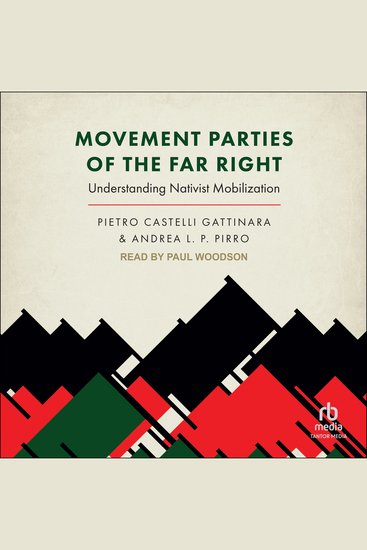
  • Movement Parties of the Far Right - Understanding Nativist Mobilization - cover

    Movement Parties of the Far...

    Pietro Castelli Gattinara,...

    • 0
    • 0
    • 0
    In an era of traditional political party decline, this book explores a new phase of nativist mobilization, in which street politics plays an increasingly important role. Movement parties offer an exceptional object of study since they challenge the conventional distinction between institutional and non-institutional politics. Examining the "production structure" of ten movement parties across nine European countries, the authors identify key factors that affect their engagement in protest activity. They address the organizational capacity, decision-making processes, and external mobilization of these collective actors using unique empirical material, including quantitative data on far-right protest mobilization spanning over a decade, protest network visualizations, and qualitative interviews with high-ranking officials. 


    The book provides fresh insights into how the far right spreads its influence and relates to non-institutional politics, making it essential for anyone concerned about the way in which nativist collective actors transform society from the ground up. A compelling study looking at the relationship between electoral politics and grassroots activism, Movement Parties of the Far Right illuminates the complex organizational and strategic choices underlying far-right mobilization.
    Ver livro
  • WORKBOOK and SUMMARY for PEAK MIND - Find Your Focus Own Your Attention Invest 12 Minutes a Day by Amishi P Jha - cover

    WORKBOOK and SUMMARY for PEAK...

    BOOK TIGERS

    • 0
    • 0
    • 0
    I wish I had more time. 
     I hope I don't forget. 
     Where are my clothes? 
     Every day, we miss a lot. We miss the bus. We miss our promises. We miss our time. The things we miss can be mundane or not. But one thing sticks out: we feel disconnected. We feel lost. It feels like a reality that we cannot escape in our ever-changing world: that we are born to forget. It sucks, right? 
     This book will help you learn to keep your attention more than what is written here. Every chapter is essential to keep our minds at their peak. It tackles the concepts about our minds while showing their importance to our daily lives. It seeks to give us insights into what we can do to triumph over our distractions. 
     This book, Peak Mind: Find Your Focus, Own Your Attention, Invest 12 Minutes a Day By Amishi P. Jha is an unofficial Workbook and Summary of the original which includes:Book Summary OverviewChapter-by-Chapter AnalysisLessons Issues Surrounding the Subject MatterAction StepsChecklistAnd much more… 
    This book serves as a guide. It’s not a quick fix yet; it can give us a lot. It can assist us in reclaiming our minds and living our lives once more. The only requirement is to be dedicated. 
     Scroll up and click Add to Cart for your copy now! 
     Disclaimer: 
     This is an UNOFFICIAL Workbook, not the original book. 
     It is designed to record all the key points of the original and will provide you with an overview before or after reading the original.
    Ver livro