

Join us on a literary world trip!
Add this book to bookshelf
Grey
Write a new comment Default profile 50px
Grey
Subscribe to read the full book or read the first pages for free!
All characters reduced
The Life of John Hancock - cover

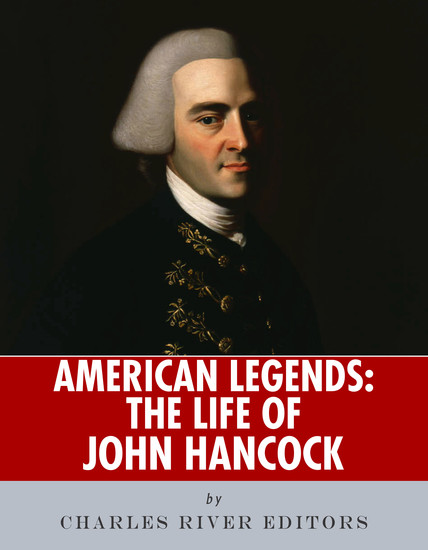
The Life of John Hancock

Editors Charles River

Publisher: Charles River Editors

  • 0
  • 0
  • 0

Summary

"The greatest ability in business is to get along with others and to influence their actions.” – John Hancock
 
A lot of ink has been spilled covering the lives of history’s most influential figures, but how much of the forest is lost for the trees? In Charles River Editors’ American Legends series, readers can get caught up to speed on the lives of America’s most important men and women in the time it takes to finish a commute, while learning interesting facts long forgotten or never known.
 
At the National Archives Building in Washington D.C., the foundational documents of the United States are kept under layers of bulletproof glass in an atmosphere of argon gas, in casements designed to retract in case of emergency into vaults designed to survive a nuclear blast. Americans are familiar with the famous phrases contained in the Constitution, Bill of Rights, and Declaration of Independence, but viewers immediately notice how faded the documents on display are, especially the Declaration of Independence. The words can scarcely be read, nor can most of the signatures of the signers be made out, with one famous exception: the large, bold, distinctive, and most recognizable signature in American history.
 
Most Americans are familiar with John Hancock solely because of his famous signature, and his name has become a slang phrase for signing a document. But his conspicuous signature on the Declaration of Independence has overshadowed the various and important contributions Hancock made in colonial Boston before the Revolution, the Continental Congress during the Revolution, and Massachusetts state politics after the Revolution.
 
Hancock’s story is also unique because of his position as one of the richest men in the colonies, a byproduct of inheriting a shipping business from his father. That put him in a position of prominence in the merchant world right as the British began imposing taxes on the colonies after the Seven Years War, infuriating British and colonial shippers alike. The growing hostility led Hancock to join patriot circles, and he became a protégé of Samuel Adams.
 
Hancock soon became a prominent figure in the tension between colonial Boston and the British, especially when his sloop Liberty was seized and Hancock was accused of smuggling. There are still questions surrounding the extent to which Hancock smuggled goods, but there is no doubt that he was one of the most important Sons of Liberty by the time the Revolution started. Hancock and Adams were believed to be targets of the British raid toward Lexington and Concord on April 19, 1775, thus setting in motion the events that triggered Paul Revere’s Midnight Ride and culminated with the shots heard round the world.
 
American Legends: The Life of John Hancock chronicles the amazing life and career of John Hancock before, during, and after the Revolution, from his time as a merchant to Massachusetts’ first governor. Along with pictures of important people, places, and events in his life, you will learn about John Hancock like you never have before, in no time at all.
Available since: 06/03/2025.
Print length: 43 pages.

Other books that might interest you

  • Sound N’ Fury - Rock N’ Roll Stories - cover

    Sound N’ Fury - Rock N’ Roll...

    Alan Niven

    • 0
    • 1
    • 0
    Most rock ’n’ roll books are a bore. They all have the same narrative arc and are aimed at the dwindling following that now follows an artist that has long passed their AARP date. 
    		 
    Sound N’ Fury does not have a story arc. It is a collection of anecdotes, like a record comprised of various tracks — each one has its point and purpose. Alan Niven, who guided Guns N’ Roses from the gutter of Los Angeles to Wembley Stadium, shares stories from his remarkable life as a manager with an immediacy delivered by an extraordinary recall of dialogue. Readers will encounter not just Guns N’ Roses (who have sold almost 10 million tickets to their shows) but The Rolling Stones, Aerosmith, Clarence Clemons, Whitesnake, Elton John, and others who came from humble origins and experienced fame known only to few. Small-town minds collided with worldwide adulation, expectations, and demands. The results are amusing, affirming, and, predictably, disastrous. Keep in mind that rock ’n’ roll is God’s occupation for the unemployable.
    		 
    Written with a crisp and fluid style, the magnificence and idiocy of the music world will dance off the pages and engross even those who are not rock fans.
    Show book
  • Twelve Years a Slave - cover

    Twelve Years a Slave

    Solomon Northup

    • 0
    • 1
    • 0
    "They can take your freedom, but they cannot take your identity."
    
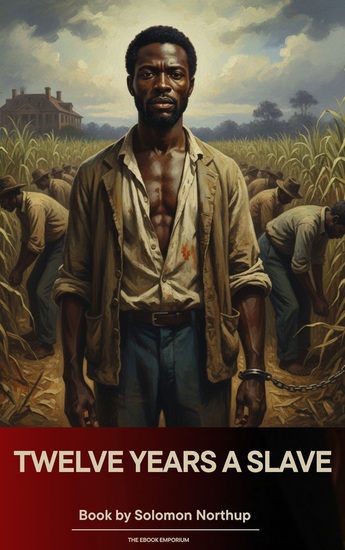
    In 1841, Solomon Northup was a professional violinist and family man living in Saratoga Springs, New York. After being lured to Washington D.C. with the promise of work, he was drugged, shackled, and stripped of his name. For the next twelve years, he was passed from master to master in the bayous of Louisiana, enduring the sadistic cruelty of men like Edwin Epps while witnessing the quiet heroism of his fellow enslaved people. Twelve Years a Slave is a visceral, unflinching look at the "peculiar institution" through the eyes of a man who knew both the dignity of liberty and the agony of the lash. It remains a foundational text of American history and a testament to the endurance of the human spirit.
    
    The Mechanics of Oppression: Northup provides a meticulous, almost journalistic description of the economics and daily operations of the slave trade. He details the cultivation of cotton and sugar, the social hierarchies of the plantation, and the psychological warfare used to keep human beings in subjection.
    
    A Quest for Justice: The narrative is propelled by Northup's secret attempts to communicate with his family in the North. His eventual rescue is a heart-stopping moment of tension and triumph, highlighting the legal and social complexities of a divided nation where a man's status as "property" or "person" could depend entirely on the color of his skin and the geography of his location.
    
    Why It Is a Vital Classic: While many narratives were edited to suit political agendas, Northup's account is praised for its stark realism and descriptive power. It provides names, dates, and locations that were later verified by historians, making it one of the most credible and devastating indictments of slavery ever written.
    
    Bear witness to the truth. Purchase "Twelve Years a Slave" today.
    Show book
  • The Boy Who Survived Auschwitz - cover

    The Boy Who Survived Auschwitz

    Adriana Lerman

    • 1
    • 1
    • 0
    Levi Lerman was a cheerful and lively boy from the town of Ostrowiec. He was only fourteen years old when his life took an unimaginable turn with the outbreak of World War II in 1939, when the Nazi forces invaded Poland and occupied his hometown.
    Over a painful six-year period, Levi endured a harsh life in the Ostrowiec ghetto, suffered devastating losses, performed exhausting forced labor, and survived countless transfers to concentration camps, including the extermination camp of Auschwitz-Birkenau.
    In the middle of this torment, a single light guided him through the darkness: his unbreakable determination to live and to protect his father—a strength that helped him survive against all odds.
    Show book
