Join us on a literary world trip!
Add this book to bookshelf
Grey
Write a new comment Default profile 50px
Grey
Subscribe to read the full book or read the first pages for free!
All characters reduced
The Life of Amelia Earhart - cover

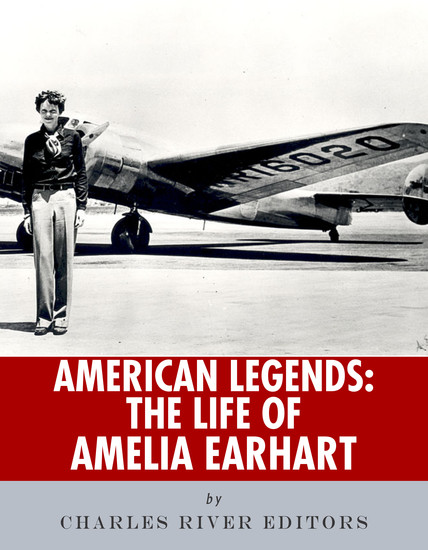
The Life of Amelia Earhart

Editors Charles River

Publisher: Charles River Editors

  • 0
  • 0
  • 0

Summary

"The stars seemed near enough to touch and never before have I seen so many. I always believed the lure of flying is the lure of beauty, but I was sure of it that night." – Amelia Earhart
 
A lot of ink has been spilled covering the lives of history’s most influential figures, but how much of the forest is lost for the trees? In Charles River Editors’ American Legends series, readers can get caught up to speed on the lives of America’s most important men and women in the time it takes to finish a commute, while learning interesting facts long forgotten or never known.
 
During the early 20th century, groundbreaking technology revolutionized transportation both on the ground and in the sky, with new motors making automobiles and airplanes a reality in the 1910s. Around that same time, the feminist movement was underway in the United States, spearheaded by women seeking the right to vote, lobbying for the temperance movement, and trying to make their voices heard.
 
It was at that crossroads that flight pioneer Amelia Earhart found herself in 1919, the very year President Wilson and Congress were trying to shepherd through the 19th Amendment to the Constitution, giving women the right to vote. That year, Earhart was given a ride on a plane piloted by legendary air racer Frank Hawks, and as she recalled, "By the time I had got two or three hundred feet off the ground, I knew I had to fly."
 
Earhart’s unbridled joy for flying was only occasionally abated by a lack of finances, and a recurring sinus issue, but throughout the 1920s she was one of the few women licensed to fly, and she set an altitude record of 14,000 feet for women in 1922. In 1928, Earhart was the first woman to fly across the Atlantic Ocean, but she was disappointed that she had to do so as a passenger, complaining, “I was just baggage, like a sack of potatoes.”
 
Nevertheless, that trip made “Lady Lindy” the “Queen of the Air” in America, and Earhart was now the nation’s best known aviatrix. With her fresh face available for promoting everything from luggage to women’s clothing, Earhart was able to finance her own aviation and remain involved in promoting air travel and flying to skeptical Americans. In May 1932, Earhart finally made her solo flight across the Atlantic, for which she received the Distinguished Flying Cross from Congress, the Cross of Knight of the Legion of Honor from the French Government and the Gold Medal of the National Geographic Society from President Herbert Hoover.
 
By the mid-1930s, Earhart had set a multitude of altitude and distance records, but she wanted to attempt a circumnavigation of the world. After an ill-fated first attempt, Earhart and Fred Noonan set off on another attempt, creating one of the 20th century’s most enduring mysteries. Earhart and Noonan were to land on Howland Island, 1700 miles southwest of Hawaii, but radio transmissions ceased between the plane and authorities on the ground the morning of July 2, 1937. Earhart and Noonan had disappeared, never to be seen again, despite one of the nation’s largest and costliest manhunts to date.
 
Unfortunately, the speculation over exactly what happened to Earhart and the mystery of her disappearance have come to overshadow and obscure her many accomplishments. American Legends: The Life of Amelia Earhart looks at the theories attempting to explain her disappearance, but it also humanizes the woman whose sheer love of flying propelled her to unprecedented heights among both the clouds and her countrymen. Along with pictures of important people, places, and events in her life, you will learn about Lady Lindy like you never have before, in no time at all.
 
 
Available since: 05/27/2025.
Print length: 38 pages.
Other books that might interest you

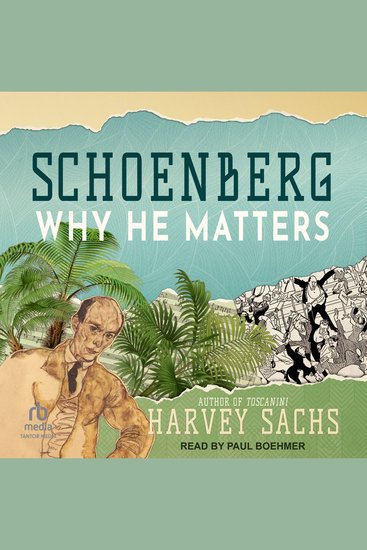
  • Schoenberg - Why He Matters - cover

    Schoenberg - Why He Matters

    Harvey Sachs

    • 0
    • 0
    • 0
    An astonishingly lyrical biography that rescues Schoenberg from notoriety, restoring him to his rightful place in the pantheon of twentieth-century composers. 


    In his time, the Austrian American composer Arnold Schoenberg (1874–1951) was an international icon. His twelve-tone system was considered the future of music itself. Today, however, leading orchestras rarely play his works, and his name is met with apathy, if not antipathy. With this interpretative account, the acclaimed biographer of Toscanini finally restores Schoenberg to his rightful place in the canon, revealing him as one of the twentieth century's most influential composers and teachers. Sachs shows how Schoenberg, a thorny character who composed thorny works, raged against the "Procrustean bed" of tradition. Defying his critics—among them the Nazis, who described his music as "degenerate"—he constantly battled the anti-Semitism that eventually precipitated his flight from Europe to Los Angeles. Yet Schoenberg, synthesizing Wagnerian excess with Brahmsian restraint, created a shock wave that never quite subsided, and, as Sachs powerfully argues, his compositions must be confronted by anyone interested in the past, present, or future of Western music.
    Show book
  • Queens Who Ruled England The: The History and Legacy of the Female Sovereigns’ Reigns - cover

    Queens Who Ruled England The:...

    Editors Charles River

    • 0
    • 0
    • 0
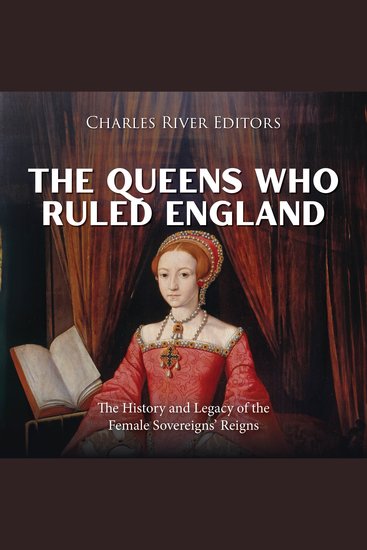
    Until the implementation of new legislation on March 26, 2015, men were given preference to women in the British royal line. This system of male primogeniture meant that women seldom inherited the throne, and even when they did, they were often dominated by male councillors. Those women who married British kings gained the title of Queen, but they were queen consorts, holding the title with no power. This meant only a select few women ruled in their own right.  
    	When Queen Elizabeth II came to the throne in 1952, many commentators heralded the beginning of her reign as the second Elizabethan age. The first one, of course, concerned the reign of Henry VIII’s second surviving daughter and middle surviving child, Queen Elizabeth I, one of England’s most famous and influential rulers. It was an age when the arts, commerce and trade flourished. It was the epoch of gallantry and great, enduring literature. It was also an age of wars and military conflicts in which men were the primary drivers and women often were pawns.  
    Then, there was Queen Mary I of England, who earned herself the less-than-pleasant moniker of “Bloody Mary.” While in power, Mary vowed to restore papal authority and revert England to Catholicism, placing the bullseye on Protestants. Laws against heresy made a bloody comeback, which saw hundreds of Protestants dragged to the stakes.  
    	England has had no shortage of influential monarchs, but only Queen Elizabeth I and Queen Victoria had their nation’s age literally named after them. Both the Elizabethan era and Victorian era have come to symbolize a golden age of peace and progress in every aspect of British life, with the long reigns of both queens also providing stability.
    Show book
  • Discovering Rickey: America’s Baseball Icon Reinvented - "Revamp Your Learning: Dive into Engaging Audio Lessons on Rickey America’s Baseball Icon!" - cover

    Discovering Rickey: America’s...

    Cormac Thorne

    • 0
    • 0
    • 0
    Discovering Rickey: America’s Baseball Icon Reinvented 
    ⭐⭐ Simplified Audio Guide & Explanations Included ⭐⭐ 
    Are you passionate about understanding the incredible journey of one of baseball's greatest icons, Rickey Henderson? 
    Seeking a comprehensive guide that sheds light on Rickey's transformative career and lasting impact on America's favorite pastime? 
    Your search ends here! 
    This guide serves as your definitive companion for deepening your appreciation, applying your knowledge, and engaging in insightful reflections. With this, you're geared for an enriching experience. 
    Updated for the latest insights on Rickey’s journey and his contributions to baseball. 
    Key features of this enriched guide: 
    - Profound insights about Rickey Henderson's Career 
    - Detailed explanation of his extraordinary achievements 
    - Fruitful strategies for understanding his impact on the game 
    Our guide distinguishes itself through comprehensive coverage, which is essential for understanding Rickey’s legacy. Concepts aren't merely skimmed; they are delved into with precision. 
    Please note that this guide is not affiliated with any official MLB entity and is purely an independent resource for your benefit. 
    Designed with a clear structure and easy-to-understand language, our Rickey Henderson Guide ensures smooth transitions between topics. Say goodbye to dense jargon and welcome clear, precise, and technically accurate content. 
    So, why wait? Click the BUY NOW button, secure your guide, and begin your journey to discovering Rickey Henderson’s remarkable contributions to baseball history!
    Show book
  • It's Too Late Now - The Autobiography of a Writer - cover

    It's Too Late Now - The...

    A. Milne

    • 0
    • 0
    • 0
    With characteristic self-deprecating humour, A.A. Milne recalls the formative events of his life: from a blissfully happy childhood to the writing of Winnie-the-Pooh and Christopher Robin. 
     
    ––––––––––––– 
     
    In his classic memoirs A. A. Milne, with his characteristic self-deprecating humour, recalls a blissfully happy childhood in the company of his brothers, and writes with touching affection about his father whom he adored. 
     
    From Westminster School he won a scholarship to Cambridge University where he edited the university magazine, Granta. He then went out into the world, determined to be a writer. He was assistant editor at Punch Magazine and enjoyed great success with his novels, plays and stories. And of course he is best remembered for his children's novels and verses featuring Winnie-the-Pooh and Christopher Robin. 
     
    This is both an account of how a writer was formed and a charming period piece on literary life – Milne met countless famous authors including H. G. Wells, J. M Barrie of Peter Pan fame and Rudyard Kipling. 
     
    ––––––––––––– 
     
    * Praise for It’s Too Late Now * 
     
    ‘A funny book, beautifully written’ NEIL GAIMAN 
     
    ‘A fascinating and insightful read into one of the greatest authors’ INDEPENDENT 
     
    ‘Warm and candid’ NEW YORK TIMES
    Show book
  • A Profitable Weakness - From their pens to your ears genius in every story - cover

    A Profitable Weakness - From...

    George Gissing

    • 0
    • 0
    • 0
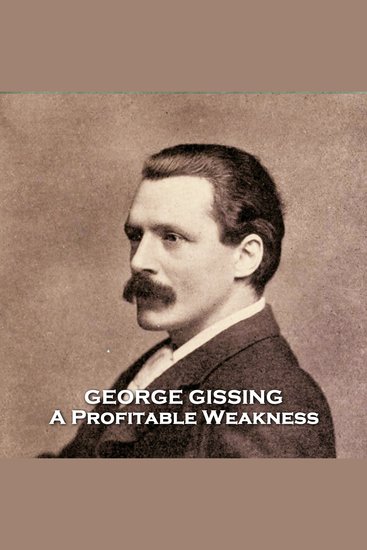
    George Robert Gissing was born on November 22nd, 1857 in Wakefield, Yorkshire.  
    He was educated at Back Lane School in Wakefield. Gissing loved school. He was enthusiastic with a thirst for learning and always diligent.  By the age of ten he was reading Dickens, a lifelong hero. 
    In 1872 Gissing won a scholarship to Owens College. Whilst there Gissing worked hard but remained solitary. Unfortunately, he had run short of funds and stole from his fellow students. He was arrested, prosecuted, found guilty, expelled and sentenced to a month's hard labour in 1876. 
    On release he decided to start over.  In September 1876 he travelled to the United States. Here he wrote short stories for the Chicago Tribune and other newspapers. On his return home he was ready for novels. 
    Gissing self-published his first novel but it failed to sell.  His second was acquired but never published. His writing career was static.  Something had to change.  And it did. 
    By 1884 The Unclassed was published.  Now everything he wrote was published. Both Isabel Clarendon and Demos appeared in 1886. He mined the lives of the working class as diligently as any capitalist. 
    In 1889 Gissing used the proceeds from the sale of The Nether World to go to Italy. This trip formed the basis for his 1890 work The Emancipated. 
    Gissing's works began to command higher payments. New Grub Street (1891) brought a fee of £250.  
    Short stories followed and in 1895, three novellas were published; Eve's Ransom, The Paying Guest and Sleeping Fires. Gissing was careful to keep up with the changing attitudes of his audience.  
    Unfortunately, he was also diagnosed as suffering from emphysema. The last years of his life were spent as a semi-invalid in France but he continued to write. 1899; The Crown of Life. Our Friend the Charlatan appeared in 1901, followed two years later by The Private Papers of Henry Ryecroft. 
    George Robert Gissing died aged 46 on December 28th, 1903 after catching a chill on a winter walk.
    Show book
  • Tough Crowd - How I made and lost a career in comedy (Unabridged) - cover

    Tough Crowd - How I made and...

    Graham Linehan

    • 0
    • 0
    • 0
    Having cut his teeth in music journalism, Graham Linehan became the finest sitcom writer of his generation. He captured the comedy zeitgeist not just as the co-creator of Father Ted but also with The IT Crowd and Black Books, winning five Baftas and a lifetime achievement award. Then his life took an unexpected turn. When he championed an unfashionable cause, TV commissioners no longer returned his emails, showbiz pals lost his number and his marriage collapsed. In an emotionally charged memoir that is by turns hilarious and harrowing, he lets us into the secrets of the writing room and colourfully describes the high-octane atmosphere of a sitcom set. But he also berates an industry where there was no one to stand by his side when he needed help. Bruised but not beaten, he explains why he chose the hill of women and girls' rights to die on - and why, despite the hardship of cancellation, he's not coming down from it any time soon.
    Show book