Join us on a literary world trip!
Add this book to bookshelf
Grey
Write a new comment Default profile 50px
Grey
Subscribe to read the full book or read the first pages for free!
All characters reduced
The Life and Philosophy of Plato - cover

The Life and Philosophy of Plato

Editors Charles River

Publisher: Charles River Editors

  • 0
  • 0
  • 0

Summary

"Until philosophers are kings, or the kings and princes of this world have the spirit and power of philosophy, and political greatness and wisdom meet in one, and those commoner natures who pursue either to the exclusion of the other are compelled to stand aside, cities will never have rest from their evils — no, nor the human race, as I believe — and then only will this our State have a possibility of life and behold the light of day.” – Plato, The Republic
 
A lot of ink has been spilled covering the lives of history’s most influential figures, but how much of the forest is lost for the trees? Among all the knowledge and pursuits handed down by our ancestors, few were as important as philosophy, which literally taught people how to think and became directly responsible for ideas like reason and empiricism. Men like Socrates, Plato and Aristotle formed the backbone of Western philosophy, and subsequent philosophers like Marcus Aurelius and Thomas Aquinas expounded on previous philosophy. In Charles River Editors’ Legendary Philosophers series, readers can get caught up to speed on the lives of the most important philosophers in history in the time it takes to finish a commute, while learning interesting facts long forgotten or never known.
 
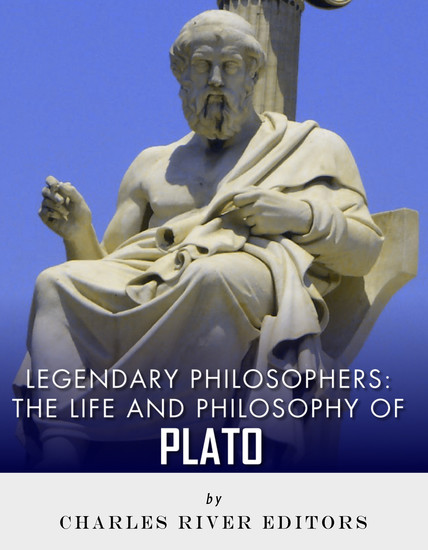
In 427 B.C., the Ancient Greek city-state of Athens was flourishing.  Approximately 80 years earlier, the Athenians had formed the first self-representative democracy in history, the Peloponnesian War against Sparta had only just started, and Socrates was only beginning to lay the foundation of what would become Western philosophy.  That year Plato was born to a wealthy family, and with an uncle who was close friends with Socrates, Plato was seemingly destined to become a philosopher.  By the end of his life, Plato had indeed become the foremost philosopher of his time, and perhaps the most famous philosopher in Western history.
 
None of Socrates’ works survived antiquity, so most of what is known about him came from the writings of his followers, most notably Plato.  What is known about Socrates is that he seemed to make a career out of philosophy, and Plato was intent on following in his footsteps. Yet for all of the influence of Socrates’ life on Plato, it was Socrates’ death around 399 B.C. that truly shaped him.  Plato was so embittered by Socrates’ trial in Athens that he completely soured on Athenian democracy, and he began to travel around the Mediterranean, studying topics like mathematics, honing his approach to philosophical thinking, and continuing to refine his philosophical beliefs.
 
About a decade later, Plato returned to Athens and founded his famous Platonic Academy around 387 B.C., which he oversaw for 40 years until his death.  One of Plato’s philosophical beliefs was that writing down teachings was less valuable than passing them down orally, and several of Plato’s writings are responses to previous writings of his, so Plato’s personally held beliefs are hard to discern.  However, Plato educated several subsequent philosophers, chief among them Aristotle, and his writings eventually formed the backbone of Western philosophy.
 
Legendary Philosophers: The Life and Philosophy of Plato chronicles Plato’s life, but it also discusses his canon of work, examines his philosophy in depth, and analyzes his enduring legacy. Along with pictures of important people in his life, you will learn about Plato like you never have before, in no time at all.
Available since: 06/06/2025.
Print length: 31 pages.
Other books that might interest you

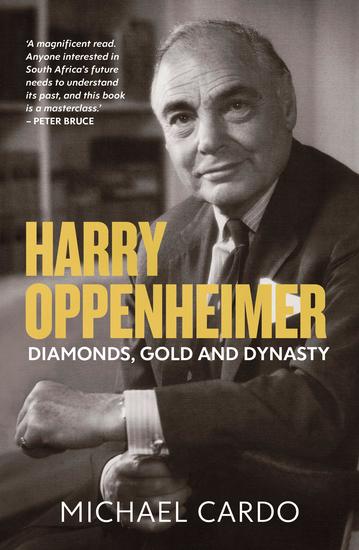
  • Harry Oppenheimer - Diamonds Gold and Dynasty - cover

    Harry Oppenheimer - Diamonds...

    Michael Card

    • 0
    • 0
    • 0
    This book will surely be the most readable, best informed, most complete account of Harry Oppenheimer's life there is ever likely to be.' – Bill Nasson, historian and author
    As chairman of Anglo American and De Beers, Harry Oppenheimer held sway over his family's gold and diamond empire for a quarter of a century. He combined a passion for commerce with a streak of creative genius.
    In this, the first comprehensive biography of Oppenheimer, Michael Cardo has produced a vivid portrait based on unrestricted access to his subject's private papers and interviews with Oppenheimer's relatives and associates.
    Cardo brings to life the places, people and events that shaped Oppenheimer's career at the intersection of business and politics. From the diamond fields of Kimberley, where his father, Ernest, arrived to seek his fortune in 1902, through his long apprenticeship as heir apparent, to Harry Oppenheimer's emergence on the world stage as a magnate and monarch in his own right – the 'King of Diamonds' and the man with the Midas touch – Cardo tells the story of a dynasty.
    As a financier, philanthropist and public figure, Oppenheimer straddles the history of 20th-century South Africa. In the 1950s the National Party regarded him as a threat to Afrikanerdom, the sinister embodiment of English 'money power'. Forty years later, Nelson Mandela praised Oppenheimer as a nation-builder, a key figure in South Africa's transition to democracy. Yet nowadays, Oppenheimer is demonised in some quarters as the archetype of 'white monopoly capital' and blamed, in part, for democracy's disappointing dividends.
    Meticulously researched and superbly written, this authoritative work sheds new light on the multifaceted legacy of a renowned South African industrialist.
    Show book
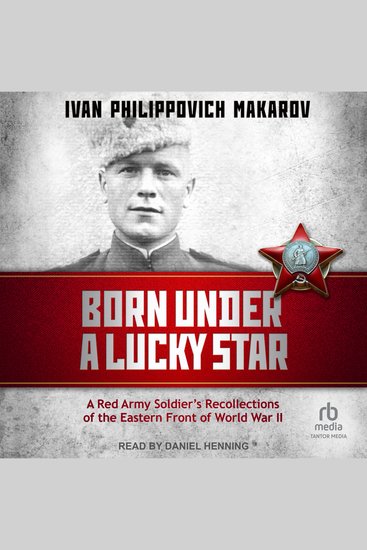
  • Born Under a Lucky Star - A Red Army Soldier's Recollections of the Eastern Front of World War II - cover

    Born Under a Lucky Star - A Red...

    Ivan Philippovich Makarov,...

    • 0
    • 0
    • 0
    As a Russian recruit in World War II, Ivan Makarov witnessed General Chuikov pull out his pistol and shoot their regimental commander as a traitor. That was on his first day at the front. Thrown into an open field to face German tanks and artillery fire, with only rifles and machine guns to defend themselves with, almost 2,000 men of his regiment were wiped out in only six days at the Eastern Front. At this rate, Ivan struggled to comprehend how he would survive the hundreds of battles that lay before him, with death seeming to be the only certainty. 


    In his raw and trenchant memoir, Ivan recounts the terror and despair faced by a Red Army soldier on the Eastern Front. He has no sympathy for Stalin and his incompetent commanders, who sought awards and recognition at the expense of their soldiers' lives. He simply wanted to serve his country. 


    It is rare to find first-hand accounts of the Great Patriotic War from Red Army soldiers, as many did not survive to tell the tale. For the first time, Ivan reveals his gripping recollections of battles, times, places, and people encountered throughout World War II, from when he was drafted in 1941 until their victory in 1945. These recollections he dared not put on paper until 1992.
    Show book
  • Apple Blossom in Brittany - From their pens to your ears genius in every story - cover

    Apple Blossom in Brittany - From...

    Ernest Dowson

    • 0
    • 0
    • 0
    The bookshelves of British literature are incredible collections that have gathered together centuries of very talented authors.  From these Isles their fame spread and whilst among their number many are now forgotten or neglected their talents endure.  Among them is Ernest Dowson.
    Show book
  • Star Man Peter Max - The Face Of God In Art - cover

    Star Man Peter Max - The Face Of...

    Sripad Jaganantha Das

    • 0
    • 0
    • 0
    Peter Max was born in Berlin in 1937, Max and his family fled Nazi Germany in 1938, settling in Shanghai before eventually immigrating to the United States in 1953. Max studied at the Art Students League and Pratt Institute in New York, where he began experimenting with new techniques and styles. Max's artwork is characterized by its vibrant colors and whimsical subject matter. His work was heavily influenced by the psychedelic and countercultural movements of the 1960s, and he became one of the most recognized artists of the era. Max's paintings, drawings, and sculptures have been exhibited in galleries and museums worldwide, and his designs have been featured on everything from postage stamps to the sides of airplanes. Peter was also deeply committed to promoting social and political causes, including environmentalism, animal rights, and the anti-war movement. He was also a dedicated practitioner of yoga and meditation, which he credited with helping him develop a greater awareness of the interconnectedness of all things. Max's life has been marked by controversy and legal battles over his estate and conservatorship. However, his legacy as an artist and cultural figure continues to endure, and his work remains an iconic representation of the colorful and dynamic spirit of the 1960s. 
      
    Written and narrated by his longtime friend and collaborator, Sripad Jagannatha Das (Geoffrey Giuliano), this biography provides an in-depth look at Max's journey from a young artist in Nazi Germany to becoming a prominent figure in the pop art movement of the 1960s and beyond. Das's firsthand knowledge and personal anecdotes make this audiobook a must-listen for fans of Peter Max and anyone interested in the art world of the 20th century. With his engaging storytelling style, Das brings Max's story to life, providing a fascinating and comprehensive account of the life and legacy of this groundbreaking artist.
    Show book
  • Sergeant York - A Biography of an American Patriot and World War I Hero - cover

    Sergeant York - A Biography of...

    John Perry

    • 0
    • 0
    • 0
    Growing up in the Tennessee hills, Alvin York was equally renowned as a marksman and as a hard-drinking brawler. A dramatic New Year's conversion convinced him that killing was against God's will, and yet this shy, big-boned mountaineer single-handedly dispatched two dozen Germans and captured 132 in the closing days of World War I. He earned the Medal of Honor and a ticker tape parade but refused to cash in on his fame, insisting "Uncle Sam's uniform ain't for sale." 
    This succinct and gripping new account of Sgt. York's remarkable life includes details from exclusive interviews with the sergeant's three surviving children and information drawn from battlefield eyewitness reports and original film studio archives: fresh reminders of the legacy of one of America's great Christian patriots. 
    We learn about life through the lives of others. Their experiences, their trials, their adventures become our schools, our chapels, our playgrounds. Christian Encounters, a series of biographies from Thomas Nelson Publishers, highlights important lives from all ages and areas of the Church through prose as accessible and concise as it is personal and engaging. Some are familiar faces. Others are unexpected guests. Whether the person is D.L. Moody, Sergeant York, Saint Nicholas, John Bunyan, or William F. Buckley, we are now living in the world that they created and understand both it and ourselves better in the light of their lives. Their relationships, struggles, prayers, and desires uniquely illuminate our shared experience.
    Show book
  • Tallulah Bankhead: The Colorful Life of an American Actress and Activist - cover

    Tallulah Bankhead: The Colorful...

    Editors Charles River

    • 0
    • 0
    • 0
    "I'm as pure as the driven slush." – Tallulah Bankhead 
    	Exhibitionism and narcissism coupled with talent are not the sole property of modern entertainment, as some might suppose. From the beginnings of American theater and film, various personality types prone to self-intoxication by the status of their own careers have acted-out at will in their public lives. For them there is no barrier between the professional and the private. 
    	In the early years of the 20th century, members of a clique residing at the Algonquin Hotel in New York City were emblematic of a shocking behavioral rebellion against societal norms. Led by humorist Dorothy Parker and others, they defended and glorified extremes of outspoken sexual expression and contrary lifestyles. In doing so, they became a popular source of entertainment in themselves, with behavior flying in the face of the normal decorum of the time. To those most staid in society, they represented the perfect foil for the righteously indignant, while to the titillated masses, they were a constant presence in the news of the day, and perversely admired for their brazenness.  
    	Tallulah Bankhead was a latecomer to the Algonquin Circle, and even the most hardened social rebels were not sure what to make of her. Demonstrating an early talent for the stage, Bankhead went on to stardom in live theater, film, radio, and early television. She was among the most parodied public figures of her time and could always be counted upon to shock by bringing her private behavior into the public arena of entertainment.  
    	At the same time, Bankhead had no qualms voicing her opinions about current events and hot button political topics, which often came at the expense of her own family, a fixture in Alabama politics. She became an avid supporter of the Civil Rights Movement, and that, along with her background in show business, helped land her on various lists.
    Show book