Join us on a literary world trip!
Add this book to bookshelf
Grey
Write a new comment Default profile 50px
Grey
Subscribe to read the full book or read the first pages for free!
All characters reduced
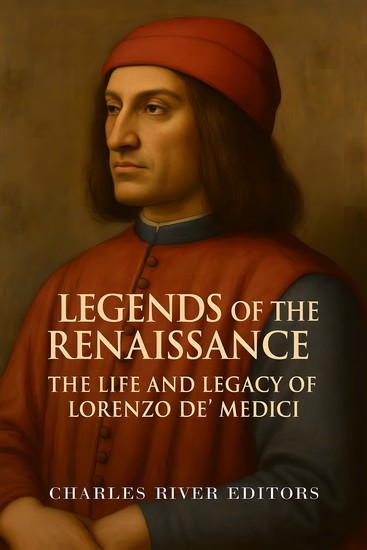
The Life and Legacy of Lorenzo de' Medici - cover

The Life and Legacy of Lorenzo de' Medici

Editors Charles River

Publisher: Charles River Editors

  • 0
  • 0
  • 0

Summary

"How beautiful is youth that is always slipping away.” – Lorenzo de' Medici
 
A lot of ink has been spilled covering the lives of history’s most influential figures, but how much of the forest is lost for the trees? When historians are asked to pick a point in history when Western civilization was transformed and guided down the path to modernity, most of them point to the Renaissance. Indeed, the Renaissance revolutionized art, philosophy, religion, sciences and math, with individuals like Galileo, Leonardo, Michelangelo, Raphael, Dante, and Petrarch bridging the past and modern society. In Charles River Editors’ Legends of the Renaissance, readers can get caught up to speed on the lives of the most important men and women of the Renaissance in the time it takes to finish a commute, while learning interesting facts long forgotten or never known.
 
Most historians credit the city-state of Florence as the place that started and developed the Italian Renaissance, a process carried out through the patronage and commission of artists during the late 12th century. If Florence is receiving its due credit, much of it belongs to the Medicis, the family dynasty of Florence that ruled at the height of the Renaissance. The dynasty held such influence that some of its family members even became Pope. 
 
Among all of the Medicis, its most famous member ruled during the Golden Age of Florence at the apex of the Renaissance’s artistic achievements. Lorenzo de Medici, commonly referred to as Lorenzo the Magnificent, was groomed both intellectually and politically to rule Venice, and he took the reins of power at just 20 years old.
 
Of all the fields that were advanced during the Renaissance, the period’s most famous works were art, with iconic paintings like Leonardo’s Mona Lisa and timeless sculptures like Michelangelo’s David. Thus it is fitting that both Leonardo and Michelangelo were at times members of Lorenzo’s court, and the Florentian ruler, who also considered himself an artist and poet, became known for securing commissions for the most famous artists of the age, including the aforementioned legends, Piero and Antonio del Pollaiuolo, Andrea del Verrocchio, Sandro Botticelli and Domenico Ghirlandaio. When Lorenzo died in April 1492, he was buried in a chapel designed by Michelangelo.
 
Legends of the Renaissance: The Life and Legacy of Lorenzo de' Medici chronicles the life and reign of Lorenzo the Magnificent, examines the relationships he had with other Renaissance legends, and analyzes his enduring legacy. Along with pictures of important people, places, and events in his life, you will learn about Lorenzo de’ Medici like you never have before, in no time at all.
Available since: 06/20/2025.
Print length: 37 pages.
Other books that might interest you

  • Understanding Human Evolution - cover

    Understanding Human Evolution

    Ian Tattersall

    • 0
    • 0
    • 0
    Human life, and how we came to be, is one of the greatest scientific and philosophical questions of our time. This compact and accessible book presents a modern view of human evolution. Written by a leading authority, it lucidly and engagingly explains not only the evolutionary process, but the technologies currently used to unravel the evolutionary past and emergence of Homo sapiens. By separating the history of palaeoanthropology from current interpretation of the human fossil record, it lays numerous misconceptions to rest, and demonstrates that human evolution has been far from the linear struggle from primitiveness to perfection that we've been led to believe. It also presents a coherent scenario for how Homo sapiens contrived to cross a formidable cognitive barrier to become an extraordinary and unprecedented thinking creature. Understanding Human Evolution is for anyone interested in the complex and tangled story of how we came to be.
    Show book
  • Cherokee - History and Culture of the Native American Tribes - cover

    Cherokee - History and Culture...

    Kelly Mass

    • 0
    • 0
    • 0
    The Cherokee are among the native tribes of the United States' Southeastern Woodlands. They resided in communities along river valleys in what's now southwestern North Carolina, southeastern Tennessee, the limits of western South Carolina, northern Georgia, and northeastern Alabama just before the 18th century. 
    Cherokee belongs to the Iroquoian language family. One oral legend tells of the people moving south in age-old times from the Great Lakes area, where other Iroquoian-speaking tribes were based, according to James Mooney, an early American ethnographer.
    Show book
  • Mastering Plot Development - Crafting Captivating Plots - cover

    Mastering Plot Development -...

    Virversity Online Courses

    • 0
    • 0
    • 0
    Embark on a transformative journey with our online course, Mastering Plot Development, designed to enhance your storytelling prowess. Whether you're an aspiring author or a seasoned writer, this course offers essential skills to craft compelling narratives that captivate your audience.Master Plot Development to Craft Engaging Stories- Gain a profound understanding of plot structures and their importance.- Learn to construct a narrative arc that keeps readers engaged.- Discover methods to overcome writer's block and boost creativity.- Develop skills to create multi-dimensional characters that drive your plot.- Seamlessly weave subplots into your main storyline.Master the Art of Plot Development to Create Captivating NarrativesExplore fundamental plot elements and their contribution to storytelling. Learn about various plot structures, from the three-act structure to more complex models, and apply them effectively. Understand how to build tension, create climaxes, and resolve conflicts to satisfy readers.Character development is crucial, and this course guides you in crafting believable characters integral to your story's progression. Learn to create character arcs that enrich the plot and add narrative depth. Discover techniques to incorporate subplots that complement the main story, balancing multiple storylines without overshadowing the central theme.By the end of this course, transform your storytelling skills and gain confidence to write structurally sound and emotionally engaging stories. Emerge as a more adept and imaginative writer, crafting stories that leave a lasting impression.
    Show book
  • On Nothing & Kindred Subjects - cover

    On Nothing & Kindred Subjects

    Hilaire Belloc

    • 0
    • 0
    • 0
    In On Nothing & Kindred Subjects, Hilaire Belloc masterfully blends humor, philosophy, and social commentary in a series of essays that explore seemingly trivial or abstract topics—what he playfully calls "Nothing." With wit and wisdom, Belloc delves into themes like idleness, the absurdities of conversation, and the fleeting nature of modern trends, all while revealing deeper truths about human nature and society. Though lighthearted in title and tone, the book offers sharp critiques of contemporary culture and the loss of enduring values. Rooted in Belloc’s Catholic worldview and love for reason, these reflections encourage readers to see significance in the mundane and to question the emptiness of superficial pursuits. A delightful and thought-provoking read.
    Show book
  • Ottoman-Portuguese Conflicts The: The History and Legacy of the Military Encounters Between the Ottoman Empire and Portugal in the Indian Ocean - cover

    Ottoman-Portuguese Conflicts...

    Editors Charles River

    • 0
    • 0
    • 0
    The Ottoman conquest of Constantinople played a decisive role in fostering the Renaissance in Western Europe. The Byzantine Empire’s influence had helped ensure that it was the custodian of various ancient texts, most notably from the ancient Greeks, and when Constantinople fell, Byzantine refugees flocked west to seek refuge in Europe. Those refugees brought books that helped spark an interest in antiquity that fueled the Italian Renaissance and essentially put an end to the Middle Ages altogether.  
    	It was also roughly around this time that a period of European exploration began, and major factors that contributed to this period of exploration were introduced by the Chinese, albeit indirectly. The magnetic compass had already been developed and used by the Chinese sailors since the 12th century, although it had first been created in the 3rd century BCE as a divination device. The Song Dynasty then began using the device for land navigation in the 11th century and sailors began using it shortly after. The technology slowly spread west via Arab traders, although a case can be made for the independent European creation for the compass (Southey 1812: 210). Regardless, by the 13th century the compass had found its way to Western traders, coming at a time that trade had been increasing across Europe.  
    	The Portuguese started exploring the west coast of Africa and the Atlantic under orders from Prince Henry the Navigator. At this point, Europeans had not yet been capable of navigating completely around Africa since the ships being built were not yet fully capable of being able to sail very far from the coast and navigation in open waters was difficult, but the Portuguese continued pushing down the western African coast looking for ways to bypass the Ottomans and Muslims of Africa who had been making overland trade routes difficult. .
    Show book
  • Brain and Mind - Neurology and Psychiatry (3 in 1) - cover

    Brain and Mind - Neurology and...

    Ava Westwood

    • 0
    • 0
    • 0
    The complexities of the human brain and mind have long fascinated scientists and clinicians alike, as they play a central role in shaping our behavior, cognition, and overall well-being. In this comprehensive guide, we explore the interrelated fields of neurology, psychiatry, and the study of the human brain, offering a thorough understanding of the nervous system and its disorders. 
    The 3 titles are as follows: 
    The Neurology section focuses on the study of the nervous system, including the brain, spinal cord, and nerves. It delves into the diagnosis, treatment, and management of neurological disorders such as Alzheimer's disease, epilepsy, and Parkinson's disease, highlighting the latest advancements in treatments and technologies used to combat these conditions. 
    In Psychiatry, we examine the mental health aspects of brain function, exploring how psychiatric disorders, such as depression, anxiety, and schizophrenia, are diagnosed and treated. This section highlights the importance of understanding the mind in the context of mental well-being and emphasizes the relationship between neurological and psychiatric conditions. 
    Finally, the Human Brain section provides an in-depth exploration of the brain's structure, function, and intricate networks. Understanding how the brain controls our thoughts, emotions, and actions is essential for diagnosing and treating both neurological and psychiatric disorders. 
    This book serves as a valuable resource for healthcare professionals, students, and anyone interested in the fascinating interplay between the brain and mind. With detailed explanations, the latest research, and clinical insights, it provides a deeper understanding of how we can care for and treat conditions that affect our most vital organ.
    Show book