Join us on a literary world trip!
Add this book to bookshelf
Grey
Write a new comment Default profile 50px
Grey
Subscribe to read the full book or read the first pages for free!
All characters reduced
The Life and Legacy of Ferdinand Magellan - cover

The Life and Legacy of Ferdinand Magellan

Editors Charles River

Publisher: Charles River Editors

  • 0
  • 0
  • 0

Summary

Ferdinand Magellan, known in his native Portugal as Fernão de Magalhães and in Spain, where he moved later in life, as Fernando de Magallanes, was unquestionably one of the more remarkable figures of the so-called Age of Discovery, a period in which Europeans spread their political and commercial influence around the globe.  Accordingly, his name is often invoked alongside that of Columbus, but the nature of his achievements has sometimes been misunderstood.  Magellan has sometimes been credited with “proving the world was round,” since he and his crew were the first Europeans to reach Asia via a westward route.  But such a claim is based on a popular misconception, referred to by historian Jeffrey Burton Russell as the “myth of the flat earth”: the belief that medieval Europe had erroneously believed the earth was flat.  In reality, essentially no educated Europeans of the late 15th and early 16th centuries doubted the spherical shape of the earth, which had been persuasively established by the scientists of ancient Greece – even down to Eratosthenes’s relatively accurate measurement of its circumference in the third century B.C.  It is also not quite true that Magellan himself circumnavigated the globe – in fact, he died in combat in the Philippines, leaving his surviving crew to complete the voyage.  It is, on the other hand, certainly the case that Magellan was one of the most accomplished navigators of his time, and that he crucially charted territories previously unexplored by Europeans. 
 
Perhaps the most important fact about Magellan, though, is that he succeeded precisely where Christopher Columbus before him had failed.  While Columbus has gone down in history as the discoverer of America (for Europeans), finding a new continent was never his true goal: in fact, America came into Columbus’s life as an unanticipated and troublesome obstacle on his planned journey to Asia.  He had staked his career and his nautical reputation on the theory that the breadth of the body of water separating Europe from Asia was far less than most geographers had predicted.  While most thought that a ship heading west toward Asia would run out of supplies long before arriving.  As it turned out, Columbus was wrong and his detractors were right: the figure for the circumference of the earth first arrived at by Eratosthenes was more or less correct, and were there nothing in between Europe and Asia, sailors attempting to reach the East by the West would starve in mid-ocean.  Yet as Columbus unwittingly demonstrated, there was something in between: namely, the adjoining continents of North and South America.  When Columbus arrived in the Caribbean islands scattered between these two continents, he believed he was on the edge of Asia, and initially interpreted the northern coast of Cuba as a part of China.  Only toward the end of his career, as he sailed along the coast of what is now Venezuela, did Columbus begin to acknowledge that he was in fact on the edge of a new continent, but in his bewildered state he associated it with the earthly paradise of Christian legend.   
Available since: 06/29/2025.
Print length: 33 pages.

Other books that might interest you

  • Sound N’ Fury - Rock N’ Roll Stories - cover

    Sound N’ Fury - Rock N’ Roll...

    Alan Niven

    • 0
    • 1
    • 0
    Most rock ’n’ roll books are a bore. They all have the same narrative arc and are aimed at the dwindling following that now follows an artist that has long passed their AARP date. 
    		 
    Sound N’ Fury does not have a story arc. It is a collection of anecdotes, like a record comprised of various tracks — each one has its point and purpose. Alan Niven, who guided Guns N’ Roses from the gutter of Los Angeles to Wembley Stadium, shares stories from his remarkable life as a manager with an immediacy delivered by an extraordinary recall of dialogue. Readers will encounter not just Guns N’ Roses (who have sold almost 10 million tickets to their shows) but The Rolling Stones, Aerosmith, Clarence Clemons, Whitesnake, Elton John, and others who came from humble origins and experienced fame known only to few. Small-town minds collided with worldwide adulation, expectations, and demands. The results are amusing, affirming, and, predictably, disastrous. Keep in mind that rock ’n’ roll is God’s occupation for the unemployable.
    		 
    Written with a crisp and fluid style, the magnificence and idiocy of the music world will dance off the pages and engross even those who are not rock fans.
    Show book
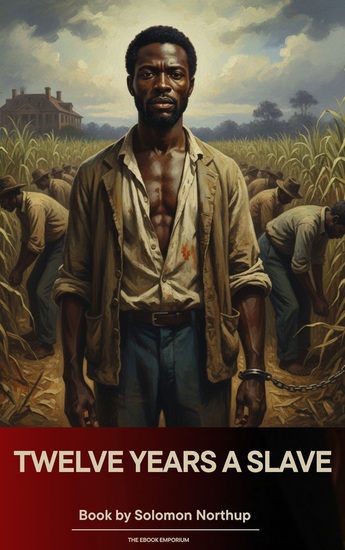
  • Twelve Years a Slave - cover

    Twelve Years a Slave

    Solomon Northup

    • 0
    • 1
    • 0
    "They can take your freedom, but they cannot take your identity."
    
    In 1841, Solomon Northup was a professional violinist and family man living in Saratoga Springs, New York. After being lured to Washington D.C. with the promise of work, he was drugged, shackled, and stripped of his name. For the next twelve years, he was passed from master to master in the bayous of Louisiana, enduring the sadistic cruelty of men like Edwin Epps while witnessing the quiet heroism of his fellow enslaved people. Twelve Years a Slave is a visceral, unflinching look at the "peculiar institution" through the eyes of a man who knew both the dignity of liberty and the agony of the lash. It remains a foundational text of American history and a testament to the endurance of the human spirit.
    
    The Mechanics of Oppression: Northup provides a meticulous, almost journalistic description of the economics and daily operations of the slave trade. He details the cultivation of cotton and sugar, the social hierarchies of the plantation, and the psychological warfare used to keep human beings in subjection.
    
    A Quest for Justice: The narrative is propelled by Northup's secret attempts to communicate with his family in the North. His eventual rescue is a heart-stopping moment of tension and triumph, highlighting the legal and social complexities of a divided nation where a man's status as "property" or "person" could depend entirely on the color of his skin and the geography of his location.
    
    Why It Is a Vital Classic: While many narratives were edited to suit political agendas, Northup's account is praised for its stark realism and descriptive power. It provides names, dates, and locations that were later verified by historians, making it one of the most credible and devastating indictments of slavery ever written.
    
    Bear witness to the truth. Purchase "Twelve Years a Slave" today.
    Show book
  • The Boy Who Survived Auschwitz - cover

    The Boy Who Survived Auschwitz

    Adriana Lerman

    • 1
    • 1
    • 0
    Levi Lerman was a cheerful and lively boy from the town of Ostrowiec. He was only fourteen years old when his life took an unimaginable turn with the outbreak of World War II in 1939, when the Nazi forces invaded Poland and occupied his hometown.
    Over a painful six-year period, Levi endured a harsh life in the Ostrowiec ghetto, suffered devastating losses, performed exhausting forced labor, and survived countless transfers to concentration camps, including the extermination camp of Auschwitz-Birkenau.
    In the middle of this torment, a single light guided him through the darkness: his unbreakable determination to live and to protect his father—a strength that helped him survive against all odds.
    Show book