Join us on a literary world trip!
Add this book to bookshelf
Grey
Write a new comment Default profile 50px
Grey
Subscribe to read the full book or read the first pages for free!
All characters reduced
The Life and Legacy of Che Guevara - cover

The Life and Legacy of Che Guevara

Editors Charles River

Publisher: Charles River Editors

  • 0
  • 0
  • 0

Summary

"The revolution is not an apple that falls when it is ripe. You have to make it fall.” – Che Guevara
 
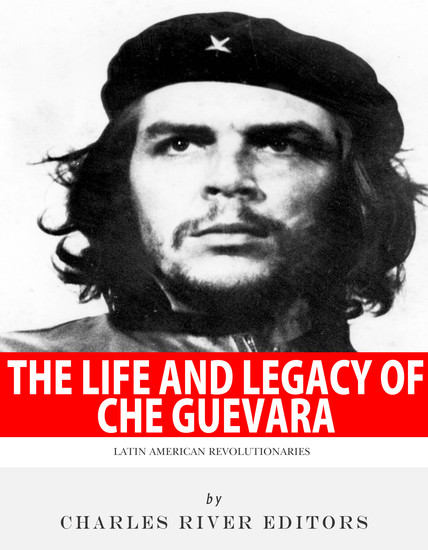
Ernesto Guevara de la Serna, known to the world as Che, has led two lives.  In the first of these lives, the Argentine-born revolutionary was a remarkable and flawed doctor-turned-guerilla who left behind a highly controversial political legacy.  In the second, he was – and is – first and foremost an image.  Specifically, he is one particular image in which he appears as a wavy-haired, bearded young man with a beret and an intense gaze.  The photograph, entitled Guerrillero Heroico and taken on March 5, 1960 by Cuban photographer Alberto Korda, is said to be the most reproduced image in the history of photography.  Although Che’s face, as captured by Korda, first achieved its global iconic status during the student revolts of the 1960s, it has subsequently reappeared again and again as a branding device for a wide array of products.  Korda himself brought a copyright lawsuit against Smirnoff Vodka for using Guerillero Heroico in an advertising campaign, and since Korda’s 2001 death his daughter has gone to court with several other companies.  There is little market for the type of revolution that Che advocated and pursued, but the aura of rebellion that his image exudes still carries a notable sway. 
 
The current status of Che Guevara, then, is paradoxical.  The political platform he advocated as a communist revolutionary has been almost universally repudiated and only maintains a weak hold even in Cuba, the country where he exercised the greatest impact.  The violent struggles he spearheaded in the Congo and Bolivia look at best quixotic and at worst foolish and pointlessly destructive.  Yet Che is in no danger of being forgotten, mainly due to the persistent appeal of a decontextualized image.  Most ironically of all, his image is frequently deployed to the direct economic benefit of the kinds of multinational corporations whose power he hoped to obliterate.  In contrast to the quaint and hoary air that now surrounds other revolutionaries like Lenin, Mao, and even Fidel Castro, Che has managed to maintain a youthful glamour and allure in the post-Cold War world.  And although any future revolutionary movements in an increasingly urbanized world are unlikely to look much like the peasant insurgencies Che led and theorized, it is likely that their leaders will continue to invoke his image and his example. 
 
When considered as a political figure, Che is most notable for his unwavering commitment to the ideals and goals that motivated him.  Even his fiercest critics would never accuse him of cynicism, and his lack of willingness to compromise probably did him significant damage and shortened his life.  Unusually among revolutionary leaders and in stark contrast to his compañero Castro, Che seemed to have no strong attachment to power.  Having reached the pinnacle of his authority as the second-in-command of the new revolutionary Cuba and having occupied several prominent government positions, he preferred to leave Cuba and take part in obscure and ultimately hopeless struggles in remote corners of Africa and South America.  He was as vulnerable as any of the far less famous men he fought with, and he suffered the same fate as many of them.  Depending on who’s asked, his dogged and fierce commitment may be described as admirable idealism or as deranged dogmatism.    
Available since: 05/28/2025.
Print length: 82 pages.
Other books that might interest you

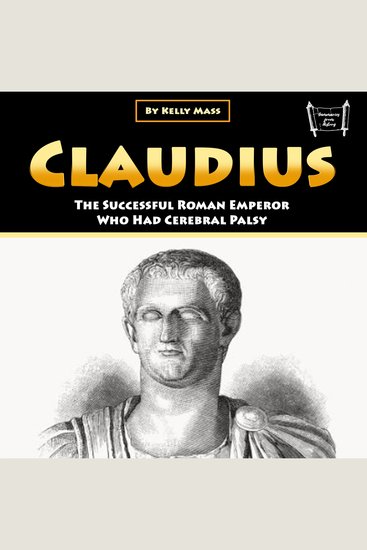
  • Claudius - The Successful Roman Emperor Who Had Cerebral Palsy - cover

    Claudius - The Successful Roman...

    Kelly Mass

    • 0
    • 0
    • 0
    Tiberius Claudius Caesar Augustus Germanicus, better known as Emperor Claudius, ruled the Roman Empire from 41 to 54 AD. Born in Lugdunum (modern-day Lyon, France), in 10 BC, Claudius was the son of Drusus and Antonia Minor, both prominent figures in the Roman elite. His birthplace marked a significant departure from previous emperors, as he was the first Roman Emperor born outside Italy. Though Claudius’ family was rooted in the ancient Sabine people, his upbringing would not follow the traditional path of an elite Roman, largely due to his physical infirmities. He suffered from a limp and mild deafness, conditions that led his family to deem him unfit for public life and dismiss him from military and political endeavors. 
    Growing up in the shadows of more capable and ambitious relatives, Claudius was largely ignored by the Roman aristocracy. His health issues, though perhaps a result of childhood illness, kept him out of sight and out of mind during the brutal purges of Tiberius and Caligula. This absence from political life proved advantageous, as it spared him the many assassination attempts that claimed the lives of his more prominent family members. In a twist of fate, following the assassination of Caligula in 41 AD, the Praetorian Guard, upon finding him hiding in fear, declared Claudius the new emperor. As the only remaining adult male in his family, Claudius ascended to the throne, despite his perceived weakness. 
    Despite initial doubts about his ability to rule, Claudius quickly proved to be a capable and intelligent administrator. He worked tirelessly to stabilize the Roman Empire, which had suffered under the excesses of Caligula’s reign. One of his first actions was to restore the empire’s finances, expanding the imperial bureaucracy to include freedmen, and re-establishing order in the imperial administration.
    Show book
  • Aristocratic Education - From their pens to your ears genius in every story - cover

    Aristocratic Education - From...

    Stephen Leacock

    • 0
    • 0
    • 0
    Stephen P H Butler Leacock FRSC was born on the 30th December 1869 in Swanmore, near Southampton, England, the third of eleven children. 
    The family emigrated to Canada in 1876 to live on a 100-acre farm in Sutton, Ontario.  There Leacock was home-schooled and later enrolled into the elite private school Upper Canada College in Toronto.  Academically he was very strong and enrolled at the University of Toronto to study languages and literature.  He left there after his alcoholic father abandoned the family and finances were too stretched to continue his attendance.  He now enrolled in a three-month course at Strathroy Collegiate Institute to become a qualified high school teacher and with it a regular income. 
    Leacock published humorous articles in many Canadian and US magazines but his real passion was economics and political theory.  In 1899 he enrolled for postgraduate studies at the University of Chicago and earned his PhD in 1903. 
    His marriage to Beatrix Hamilton produced a single child 15 years later.  Over time father and son developed a love-hate relationship, partially caused by his son’s diminutive stature of only four feet.  
    He accepted a post at McGill University and kept it until he retired in 1936.  His work ‘Elements of Political Science’, was adopted as a standard textbook for two decades and was also his most profitable.  He now also began public speaking and lecturing.  
    In 1910, he privately printed some articles as ‘Literary Lapses’.  It was then released by a recognised publisher, and he became a commercially successful writer.  His collections of light-hearted whimsy, parody, nonsense, and satire were now frequently published along with biographies and several award-winning volumes on Canada. 
    Politically Leacock was a difficult creature.  He opposed women’s right to vote, was a champion of Empire but advocated social welfare legislation and wealth redistribution, but he often caused friction with his racist views. 
    Leacock has been forgotten as an economist, but it’s often said that in 1911 more people had heard of him than had heard of Canada.  For the decade after 1915 Leacock was the most popular humorist in the English-speaking world. 
    Stephen Leacock died on 28th March 1944 of throat cancer in Toronto, Canada.  He was 74.
    Show book
  • Babble On - A Drug Memoir - cover

    Babble On - A Drug Memoir

    Andrew Brobyn

    • 0
    • 0
    • 0
    A mid-level drug trafficker and self-proclaimed low-life with a big vocabulary comes to terms with his actions and his mental health. 


    Andrew Brobyn's relationship was in shambles before he took the terrible acid that sent him on an almost decade-long journey seeking redemption. His immediate plans following university were to liquidate his illicit assets, sell his client list, pack up shop, and retire to his parents' home in Toronto, while he figured out what to do with a bachelor's degree in philosophy and a quarter million in cash. As his drug use and bipolar disorder spiral, his situation gets stranger and stranger, taking him from his university campus to strip clubs, psych wards, and the slammer. 


    Equal parts hilarious and terrifying, Babble On is a psycho-philosophical memoir that tracks Brobyn as he navigates the consequences of his eccentric choices and struggles with profound ambivalence toward his own health and well-being.
    Show book
  • Quit Smoking with Ease: Transform Your Life Today! - "Revamp your quit smoking journey! Dive into dynamic audio lessons tailored for effortless transformation" - cover

    Quit Smoking with Ease:...

    Kieran Lansbury

    • 0
    • 0
    • 0
    Quit Smoking with Ease: Transform Your Life Today!   
    ⭐⭐ Simplified Guide & Explanations Included ⭐⭐   
    Are you aiming to enhance your well-being and break free from the smoking habit once and for all?   
    Looking for a comprehensive resource that covers everything you need to successfully quit smoking and reclaim your health?   
    Your search ends here!   
    This guide is your ultimate companion for deepening your understanding of smoking cessation, applying effective strategies, and engaging in practical exercises. With this guide, you are equipped for success.   
    Updated for the latest techniques and insights.   
    Key features of this enhanced guide:   
    - In-depth insights into quitting smoking   
    - Detailed explanations of effective cessation methods   
    - Proven strategies for preparing for a smoke-free life   
    Our guide stands out with its thorough coverage, essential for achieving your goal of quitting smoking. Concepts are explored in-depth, not just skimmed over.   
    Please note that this guide is an independent resource and is not affiliated with any official smoking cessation program.   
    Crafted with a clear structure and easy-to-understand language, our guide ensures seamless transitions between topics. Say goodbye to confusing jargon and welcome clear, concise, and accurate content.   
    So, why wait? Click the BUY NOW button, secure your guide, and start your journey to a healthier, smoke-free life today!
    Show book
  • Darkest Hour - How Churchill Brought England Back from the Brink - cover

    Darkest Hour - How Churchill...

    Anonymous

    • 0
    • 0
    • 0
    “McCarten's pulse-pounding narrative transports the reader to those springtime weeks in 1940 when the fate of the world rested on the shoulders of Winston Churchill. A true story thrillingly told. Thoroughly researched and compulsively readable.”—Michael F. Bishop, Executive Director of the International Churchill Society 
    From the acclaimed novelist and screenwriter of The Theory of Everything comes a revelatory look at the period immediately following Winston Churchill’s ascendancy to Prime Minister 
    “He was speaking to the nation, the world, and indeed to history....” 
    May, 1940. Britain is at war. The horrors of blitzkrieg have seen one western European democracy after another fall in rapid succession to Nazi boot and shell. Invasion seems mere hours away. 
    Just days after becoming Prime Minister, Winston Churchill must deal with this horror—as well as a skeptical King, a party plotting against him, and an unprepared public. Pen in hand and typist-secretary at the ready, how could he change the mood and shore up the will of a nervous people? 
    In this gripping day-by-day, often hour-by-hour account of how an often uncertain Churchill turned Britain around, the celebrated Bafta-winning writer Anthony McCarten exposes sides of the great man never seen before. He reveals how he practiced and re-wrote his key speeches, from ‘Blood, toil, tears and sweat’ to ‘We shall fight on the beaches’; his consideration of a peace treaty with Nazi Germany, and his underappreciated role in the Dunkirk evacuation; and, above all, how 25 days helped make one man an icon. 
    Using new archive material, McCarten reveals the crucial behind-the-scenes moments that changed the course of history. It’s a scarier—and more human—story than has ever been told.
    Show book
  • Reading the Bible with Ten Church Fathers - How to Interpret Teach and Preach Like the Early Christians - cover

    Reading the Bible with Ten...

    Gerald Bray

    • 0
    • 0
    • 0
    How 10 Church Fathers Interpreted, Taught, and Preached the Bible 
    · Explore the lives and writings of those who shaped the practices of Christianity as we know it today 
    · Discover a spiritual legacy that still resonates today 
    · A unique look at shared vision and purpose amidst remarkable diversity of perspective 
     
     
    By AD 100, all the original disciples had died and a new generation of preachers, teachers, and scholars had taken on the responsibility to preach, teach, and interpret the Scriptures. These men have become known as the church fathers. But who were they? When and where did they live? And, most importantly, what did they teach about how to read and understand the Bible? 
     
    Join professor and author Gerald Bray as he uncovers the fascinating history of the men who shaped the faith for the first few centuries after the apostles, including 
    · Justin Martyr 
    · Origen 
    · Gregory of Nyssa 
    · Ambrosiaster 
    · John Chrysostom 
    · Theodore of Mopsuestia 
    · Jerome 
    · Augustine of Hippo 
    · Cyril of Alexandria 
    · Theodoret of Cyrrhus 
     
    This compelling introduction reveals how early Christians read, preached, and understood the Bible, offering a unique look at their shared vision to spread the gospel with clarity amid remarkable diversity of perspective. Pastors, teachers, and thoughtful laypeople alike will find this book both educational and inspiring.
    Show book