Junte-se a nós em uma viagem ao mundo dos livros!
Adicionar este livro à prateleira
Grey
Deixe um novo comentário Default profile 50px
Grey
Assine para ler o livro completo ou leia as primeiras páginas de graça!
All characters reduced
The Legends of the West Point Class of 1846 - Stonewall Jackson George McClellan AP Hill and George Pickett - cover
LER

The Legends of the West Point Class of 1846 - Stonewall Jackson George McClellan AP Hill and George Pickett

Editors Charles River

Editora: Charles River Editors

  • 0
  • 0
  • 0

Sinopse

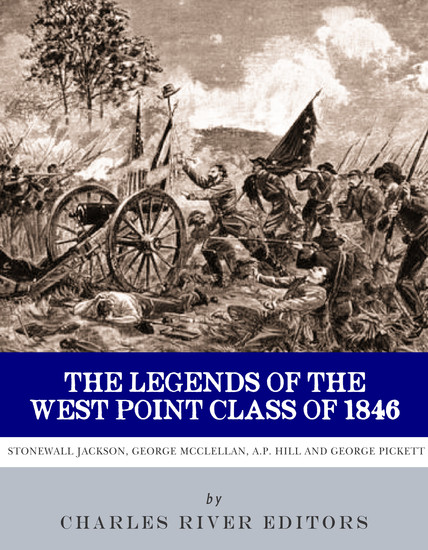
Thomas Jonathan Jackson is one of the most famous generals of the Civil War, but many of the people he continues to fascinate probably don’t remember his whole name. That’s because Jackson earned his famous “Stonewall” moniker at the First Battle of Manassas or Bull Run, when Brigadier-General Bee told his brigade to rally behind Jackson, whose men were standing like a stone wall. Ironically, it’s still unclear whether that was a compliment for standing strong or an insult for not moving his brigade, but the nickname stuck for the brigade and the general itself.
 
Jackson would only enhance his legend over the next two years, first leading his army on one of the most incredible campaigns of the war in the Shenandoah Valley in 1862.. Known as the Valley Campaign, Jackson kept 3 Union armies occupied north of Richmond with less than 1/3 of the men, marching his army up and down the Valley 650 miles in three months. The impressive feat helped his men earn the nickname “foot cavalry.”
 
He is equally known for his famous flank march and attack at Chancellorsville on May 2, 1863, which completely surprised the Army of the Potomac’s XI Corps and rolled the Union line up. The attack would end up winning the battle for the Confederates, who were outnumbered by nearly 50,000 men at Chancellorsville. As fate would have it, Jackson was mortally wounded at the height of what may have been his finest hour, depriving the Confederacy of one of its best generals. Many still wonder how the outcome of Gettysburg or the Civil War itself may have changed if Jackson had lived.
 
In 1861, McClellan was looked upon as a hero and even possibly a savior. Dubbed “The Young Napoleon”, the 35 year old had been a prodigy at West Point, finishing in second place in the Academy’s most famous class, the Class of 1846. After earning praise for his service in the Mexican-American War, McClellan had a short but successful career in the railroad industry and had been a foreign observer at the siege of Sevastopol during the Crimean War. At the outbreak of the Civil War, there was no question that McClellan was one of the brightest and most experienced of the North’s generals.
 
Ultimately, of course, McClellan went from hero to goat, at least in the eyes of President Lincoln, who famously wrote that McClellan “has the slows”. It was a sharp critique of McClellan’s cautious movements, but McClellan was also faulted for conservative battlefield leadership in the Peninsula Campaign and at Antietam. McClellan also constantly overestimated his opponent’s manpower, at times thinking the Confederates had double his Army of the Potomac when the exact opposite was the case. It was after Antietam and his bickering with the War Department over why he wasn’t chasing Lee’s battered Army of Northern Virginia that Lincoln finally sacked him, effectively ending his Civil War career.
 
Pickett’s reputation for bravery extended into the early years of the Civil War, to the extent that former West Point classmate George McClellan wrote, "Perhaps there is no doubt that he was the best infantry soldier developed on either side during the Civil War." A native Virginian, the impeccably styled Pickett represented all of the antebellum South’s most cherished traits, and as such he was a “beau-ideal” Confederate soldier.
 
 After proving himself a capable brigadier during the Peninsula Campaign, during which he was wounded and forced to recuperate, Pickett was given command of a division in Longstreet’s corps of the Confederate Army of Northern Virginia, putting him in position for a rendez-vous with destiny. Today Pickett is best remembered for the charge that has taken his name and is now remembered as the most famous assault of the Civil War. Pickett’s division was so decimated by the charge that when Lee asked him to reform his division in case of a Union counterattack, Pickett is alleged to have responded, “I have no division!”
Disponível desde: 21/06/2025.
Comprimento de impressão: 191 páginas.

Outros livros que poderiam interessá-lo

  • God is Good - Revised Second Edition - cover

    God is Good - Revised Second...

    Margaret Liu Collins

    • 0
    • 0
    • 0
    God is Good is the story of the transformational power of faith in our everyday lives. While the world portrays God as wrathful and scolding, our Heavenly Father is the most loving kind of father. He wants for all of His children to live in safety, joy, health, and prosperity, free of worry, sickness, and sorrow.  
    Margaret Liu Collins was born in China during a time of wartime strife, born a girl in a culture that values males, and later found herself in a marriage filled with ridicule and abuse with two young children to care for. By learning to seek, recognize, and heed God's voice, she was able to welcome the abundance that God offered: a life of spiritual riches, financial abundance, exuberant health, and loving relationships. All of this came about, not because of any exceptional qualities of her own, but because God is Good.
    Ver livro
  • A Profitable Weakness - From their pens to your ears genius in every story - cover

    A Profitable Weakness - From...

    George Gissing

    • 0
    • 0
    • 0
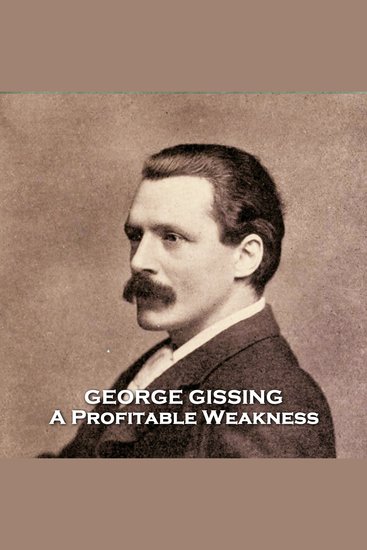
    George Robert Gissing was born on November 22nd, 1857 in Wakefield, Yorkshire.  
    He was educated at Back Lane School in Wakefield. Gissing loved school. He was enthusiastic with a thirst for learning and always diligent.  By the age of ten he was reading Dickens, a lifelong hero. 
    In 1872 Gissing won a scholarship to Owens College. Whilst there Gissing worked hard but remained solitary. Unfortunately, he had run short of funds and stole from his fellow students. He was arrested, prosecuted, found guilty, expelled and sentenced to a month's hard labour in 1876. 
    On release he decided to start over.  In September 1876 he travelled to the United States. Here he wrote short stories for the Chicago Tribune and other newspapers. On his return home he was ready for novels. 
    Gissing self-published his first novel but it failed to sell.  His second was acquired but never published. His writing career was static.  Something had to change.  And it did. 
    By 1884 The Unclassed was published.  Now everything he wrote was published. Both Isabel Clarendon and Demos appeared in 1886. He mined the lives of the working class as diligently as any capitalist. 
    In 1889 Gissing used the proceeds from the sale of The Nether World to go to Italy. This trip formed the basis for his 1890 work The Emancipated. 
    Gissing's works began to command higher payments. New Grub Street (1891) brought a fee of £250.  
    Short stories followed and in 1895, three novellas were published; Eve's Ransom, The Paying Guest and Sleeping Fires. Gissing was careful to keep up with the changing attitudes of his audience.  
    Unfortunately, he was also diagnosed as suffering from emphysema. The last years of his life were spent as a semi-invalid in France but he continued to write. 1899; The Crown of Life. Our Friend the Charlatan appeared in 1901, followed two years later by The Private Papers of Henry Ryecroft. 
    George Robert Gissing died aged 46 on December 28th, 1903 after catching a chill on a winter walk.
    Ver livro
  • After the Dance - The Illusion of Romance and the Cost of Conscience - cover

    After the Dance - The Illusion...

    Leo Tolstoy, Tim Zengerink

    • 0
    • 0
    • 0
    Can a single moment of clarity undo a lifetime of dreams? 
    In After The Dance by Leo Tolstoy, a tender memory of romance at a glittering ball suddenly transforms into a harrowing meditation on morality, justice, and the cost of staying true to your conscience. 
    This modern audio adaptation breathes new life into Tolstoy’s masterful short story. With updated language for today’s listener, the emotional power and philosophical weight remain fully intact. 
    What You’ll Hear in This Modern Translation: 
    •	A captivating retelling of one man’s romantic memory turned moral reckoning 
    •	A vivid depiction of how love can be shadowed by the darkest sides of society 
    •	A moving journey from innocence to awakening—told with clarity and emotional depth 
    Included in This Edition: 
    This audiobook maintains the original’s profound message while streamlining its language for modern ears, offering an immersive and thought-provoking experience. 
    Whether you’re a first-time Tolstoy reader or revisiting a classic, After The Dance will challenge your views on love, justice, and the quiet decisions that define us. 
    Listen now—and discover the moment that changed everything.
    Ver livro
  • Into my Hands - A Midwife’s Memoir - cover

    Into my Hands - A Midwife’s Memoir

    Catherine Rae Shields

    • 0
    • 0
    • 0
    "Into My Hands" is an intimate and inspiring memoir that delves into the life of a passionate midwife, tracing her path from childhood to her fulfilling career in midwifery. This poignant narrative was born from a transformative moment in the author's early twenties, following a traumatic birth experience with her own daughter. It was then that she resolved to put an end to birth trauma and dedicate her life to supporting women during the sacred journey of childbirth. 
    With a background as a labor and delivery nurse and a nurse-midwife, she embarked on a remarkable journey to achieve her mission. In her role, she went above and beyond to provide comfort, aid, and unwavering reassurance to mothers in their birthing moments. "Into My Hands" is not only a personal account but also a tribute to the countless mothers she had the privilege to work with, as they generously share their own unique birth stories. 
    This memoir beautifully captures the profound impact of having a midwife's skilled and caring hands present during childbirth. It's a testament to the strength, resilience, and the incredible bond that forms between midwives and the women they serve. Through this book, readers will gain a deep appreciation for the transformative power of compassionate care during one of life's most extraordinary experiences.
    Ver livro
  • 3 Stories - Blind Characters - A trio of classic tales perfect for a commute walk or quiet night in - cover

    3 Stories - Blind Characters - A...

    Mikhail Lermontov, Aphra Behn,...

    • 0
    • 0
    • 0
    There is something about the number 3.    
     
    The Ancient Greeks believed 3 was the perfect number, and in China 3 has always been a lucky number, and they know a thing or two.   
     
    Most religions also have 3 this and 3 that and, of course, in these more modern times, three’s a crowd may be too many, except when it’s a ménage à trois.  It seems good things usually come in threes. 
     
    Whatever history and culture says WE think 3, a hat-trick of stories, is a great number to explore themes and literary avenues that classic authors were so adept at creating. 
     
    From their pens to your your ears.
    Ver livro
  • Me & Issy - A Four Seasons Romance - cover

    Me & Issy - A Four Seasons Romance

    Rosalie Wise Sharp

    • 0
    • 0
    • 0
    The rags to riches tale of a larger-than-life romance of over seven decades
    		 
    Me & Issy is a love story about how a troubled and deprived child chanced to meet a man who worshipped her, brought her a fantasy life of four boys and extraordinary opulence — and banished her self-doubt. She in turn was awestruck and mystified by his acumen and daring during his founding of the Four Seasons Hotels.
    		 
    Beginning with her childhood in North Toronto, in a very Jewish home surrounded by non-Jews, Rosalie enchants us with anecdotes about her family, Isadore Sharp’s family, and the growth of their own in the light of the expanding Four Seasons chain. How did she go to the Ontario College of Art & Design while simultaneously raising four rambunctious boys? How did Issy open hotel after hotel with only his collateral of confidence and charisma? Rosalie is a rapt follower of his astonishing success and the first fan of his legendary town hall talks to 40,000 employees.
    		 
    And with success came tragedy. The devastating death of their son Chris shook them, but they coped. Here, all of Rosalie’s life is opened up for viewing, the good and the bad, the success and the failures, but especially her inspired romance with Issy. In the words of their second eldest son, Greg, “Their mutual love and respect growing stronger over the past 69 years is as extraordinary as it is beautiful.”
    Ver livro