Join us on a literary world trip!
Add this book to bookshelf
Grey
Write a new comment Default profile 50px
Grey
Subscribe to read the full book or read the first pages for free!
All characters reduced
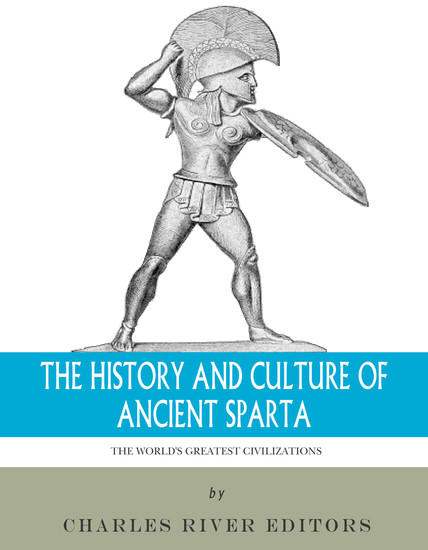
The History and Culture of Ancient Sparta - cover

The History and Culture of Ancient Sparta

Editors Charles River

Publisher: Charles River Editors

  • 0
  • 0
  • 0

Summary

“The walls of Sparta were its young men, and its borders the points of their spears.” – attributed to King Agesilaos
 
There have been no shortage of great warrior societies in history, including the Romans, Mongols, Macedonians, and Vikings, the list goes on. Yet one humble city in particular, nestled in a valley near the Eurotas river in the Greek region of the Peloponnese and once ridiculed as little more than a cluster of villages inhabited by uncouth shepherds, produced the most famous warrior elite the world has ever known.
 
The most unique city-state in Ancient Greece was Sparta, which continues to fascinate contemporaneous society.  It is not entirely clear why Sparta placed such a great emphasis on having a militaristic society, but the result was that military fitness was a preoccupation from birth.  If a Spartan baby did not appear physically fit at birth, it was left to die.  Spartan children underwent military training around the age of 7 years old, and every male had to join the army around the age of 18. 
 
The Spartans, whose carefully constructed approach to warfare and – there is no other word for it – Spartan way of life, earned the grudging admiration of all of Greece and succeeded in establishing themselves in the years following the reforms of the semi-legendary ruler Lycurgus as the greatest military force in all of Hellas. Athens might have the mightiest fleet and the greatest cadre of philosophers and dramatists, Thessaly might have had the most vaunted cavalry, and the great city-states of Argos, Thebes and Corinth all had their own claims to fame, but on the battlefield the Spartan phalanx stood without peer. So feared were they in Greece that their very appearance on the battlefield could cause entire enemy armies to flee in terror, and in one of history’s most famous battles, 300 Spartan warriors headed a combined Greek force which held off the hundreds of thousands of Persian warriors of Xerxes’s invading army for three days at Thermopylae, inflicting an estimated 20,000 casualties upon them before dying to the last man rather than retreating.
 
Sparta will forever be known for its military prowess, but they had lives off the battlefield as well, and their way of life was also unique. For example, Spartan females were formally educated, which was a rarity among the city-states, and the Spartan way of life was entirely dependent on a class of indentured servants known as the helots. Yet the Laws of Lycurgus, which ordered all Spartans to disregard art (with the exception of song, which the Spartans prized, and some forms of music and poetry), to distrust philosophy, and to abhor excess in all things, were designed to create the perfect warrior society, and they did. As a result, the Spartans became notorious for “Laconic phrases”
 
The World’s Greatest Civilizations: The History and Culture of Ancient Sparta comprehensively covers the history and culture of the famous Greek city-state, looking at their religious, political, and military past, and examining all their accomplishments. Along with historic artwork depicting important people, places, and events, The History and Culture of Ancient Sparta will bring readers up to speed on Ancient Sparta today.    
Available since: 06/20/2025.
Print length: 36 pages.
Other books that might interest you

  • Attitudes to Life - cover

    Attitudes to Life

    Ruth Walshe

    • 0
    • 0
    • 0
    "As long as we have the delusion of an ego, we will have all sorts of attitudes, convictions and views, which are all thought-created. In fact, instead of having a direct experience of life in the present, we live in a world of thoughts of either the past or the future. We live by our memories, speculations and fears. 
     
    We miss so much of life by reproducing it second-hand in our mind. 
     
    But once we have realized our true nature by breaking through our protective shell, we will live in the present moment. All our bare attention will be given to the act without the assumption of an ego outside the act. That moment will fill the whole of our action—the whole of our sense-impressions: the seeing, the hearing, the smelling, the touching, the tasting, the knowing." 
    —Ruth Walshe
    Show book
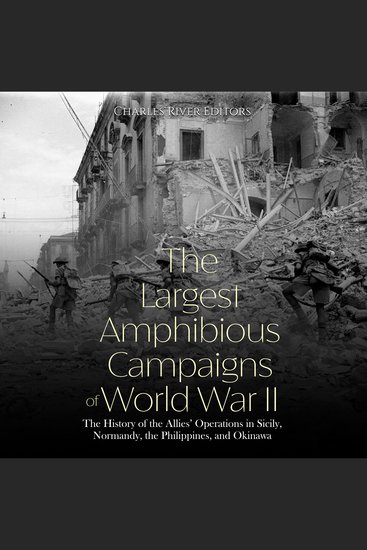
  • The Largest Amphibious Campaigns of World War II - cover

    The Largest Amphibious Campaigns...

    Editors Charles River

    • 0
    • 0
    • 0
    Despite the gargantuan scale and the importance of Operation Husky, the invasion of Sicily has since taken a backseat to the landings on D-Day. During the first half of 1944, the Americans and British commenced a massive buildup of men and resources in the United Kingdom, while Allied Supreme Commander Dwight D. Eisenhower and military brass planned the details of an enormous and complex amphibious invasion of Europe. Though the Allies used misinformation to try deceiving the Germans, the most obvious place for an invasion was just across the narrow English Channel, and the Germans had built coastal fortifications throughout France to protect against just such an invasion. 
    	The invasion across the Channel came in the early morning hours of June 6, 1944. That day, forever known as D-Day, the Allies commenced Operation Overlord by staging the largest and most complex amphibious invasion in human history. The complex operation would require tightly coordinated naval and air bombardment, paratroopers, and even inflatable tanks that would be able to fire on fortifications from the coastline, all while landing over 150,000 men across nearly 70 miles of French beaches. Given the incredibly complex plan, it’s no surprise that General Eisenhower had already written a letter apologizing for the failure of the invasion, which he carried in his coat pocket throughout the day, but the operation’s success eventually guaranteed the liberation of Paris and victory in Europe.   
    	By the time the second Phillipines campaign started, Japan was on the defensive, but as they would prove in other places like Iwo Jima and Okinawa, Japanese soldiers would act fanatically before admitting defeat or surrendering. During this second major Philippines campaign, an estimated 330,000 Japanese died, and only a bit more than 10,000 were willing to be taken prisoner.
    Show book
  • From Shattered to Restored - Recovering Hope Discovering Purpose - cover

    From Shattered to Restored -...

    Nanette V Larson

    • 0
    • 0
    • 0
    In this stunningly transparent memoir, Nanette Larson shares her journey from a life of constant hopelessness and despair, deep depression, crippling anxiety, and suicidality to one full of victorious hope and purpose. Realizing that she had allowed the labels that had been pasted upon her by medical professionals and society alike to define who she was, Nanette changed her perspective by seeing herself through the eyes of her Maker. Taking control of her thoughts was only the first step of a winding road to wellness, however. As a mental health professional herself, Nanette now shares with her readers the techniques that helped her address every part of her being - spirit, soul, and body. From distressed patient to nationally recognized deputy director and ambassador of Wellness and Recovery Services for the Illinois Division of Mental Health, Nanette is living proof that full recovery from mental health issues is, indeed, possible, and a successful, happy, healthy life can be found on the other side of the struggle.
    Show book
  • My Blue Book of Grammar for Class 5 - cover

    My Blue Book of Grammar for Class 5

    Meigha Rawat

    • 0
    • 0
    • 0
    A Grammar Series That Uses the Functional Approach
    
    KEY FEATURES 
    - Functional approach to grammar teaching, using exemplars to illustrate the usage before defining the structure and rules
    - Vocabulary taught through language-in-use to build the learners’ vocabulary through use rather than memorisation of rules
    - Contemporary topics to inculcate 21-century skills amongst learners
    - Use of literature to help learners understand how grammar is used in text
    - A comprehension section comprising texts from different genres so that learners may relate grammar to different types of works produced in English
    - Phonics in Grades 1 and 2 to teach the very basis of language
    - Uniquely stylised illustrations
    - Activities such as puzzles, crosswords, word grids and games to aid the facilitator in using the concept of ‘flipped classroom’
    - Periodic tests to help the learners self-assess the acquisition of concepts
    - Digital component to cater to a technology-driven classroom
    
    DESCRIPTION: 
    My Blue Book of Grammar is a course that has been conceptualized and designed keeping in mind the increasingly dynamic role of the English language in today’s world. Especially in our country, where English serves as the lingua franca, a grammar course has to offer not only an exposition of the pedagogy but also the exhibition of the utility of that pedagogy. The aim of a grammar series should be to encourage the development of competency amongst learners, even though their proficiency levels may vary. While the level of exposure to English of all learners may be different, a grammar series should aid in the development of a certain level of confidence amongst the learners, with the end result being that they are able to converse without hesitation in English. 
    
    WHAT WILL YOU LEARN
    - Understand grammar concepts
    - Learn how to use different vocabulary concepts taught through language-in-use 
    - Learn 21-century skills 
    - Develop deeper understanding of and appreciation for literature
    - Have clearer pronunciation through a better understanding of phonics
    
    WHO THIS BOOK IS FOR: 
    School students of Grades 5
    
    TABLE OF CONTENTS
    GRAMMAR
    1. Gerunds, Infinitives and Participles 
    2. Coordinating and Subordinating Conjunctions 
    3. Sentences, Clauses and Phrases 24
    4. Correlative Conjunctions
    5. Present Perfect Form 
    6. Present Perfect Continuous Form 
    7. Past Perfect Form 
    8. Past Perfect Continuous Form 
    9. Auxiliaries and Modals 
    10. Adjectives versus Adverbs 
    11. Semicolon 
    Test Paper 1 
    VOCABULARY
    12. Adjective–Noun Collocations 
    13. Question Tags 
    14. Prefixes – mis–, dis–, un–, in–, im–, non– 
    15. Alliteration 
    16. Using Which and That in Restrictive and Non-Restrictive Clauses 
    17. Similes and Metaphors 
    18. Dictionary Entries 
    19. Idioms 
    20. Using since, for and from 
    21. Phrasal Verbs
    Test Paper 2 
    WRITING
    22. Autobiography 
    23. Essay 
    24. Book Review – Be a Critic 
    25. Article 
    26. Newspaper Report 
    27. Message 
    28. Writing a Postcard 
    29. Letter to the Editor 
    30. Narrative 
    31. Writing a Story with an Alternate Ending 
    Test Paper 3 
    COMPREHENSION
    32. The Old Man and the Sea
    33. Hercule Poirot: The Detective with a Big Moustache 
    34. The Raven 
    35. Madhubani Painting: The Art that Subverts 
    Orange Global Olympiad – English Sample Paper
    Show book
  • Moving House and other Poems from Hong Kong - cover

    Moving House and other Poems...

    Gillian Bickley

    • 0
    • 0
    • 0
    The old is contrasted with the new, fictional with actual life. Links are made between different cultures, different lives, different experiences. The expatriate life-style of constant movement runs parallel with the title of the book. 
     "Gillian Bickley writes as she responds to everyday events, always with the echo of 'time's winged chariot' in her ears. The fact of moving house sends her speeding back through the moves of a lifetime and forward to the last move, to the small room of the grave. The opening poem suggests the elusive presence of the author, and the deeper themes glimpsed through her deceptively simple poems. The variety of human life and the individual response to life, these are Gillian Bickley's central interests. The power that invigorates the poems in Moving House is the control of language. In this bare, tight poetry, no idle words are allowed. Its vocabulary draws on the base language of essences and epiphanies. The chosen spare language is the perfect partner for this poetry of mature experience." — Emeritus Professor I. F. Clarke and M. Clarke. 
    "The poetic observations of a sensitive writer responding to the reality of being alive." "Insightful probing into the darker issues of our lives . . . to make sense of human experience." — Paul Bench, Speech & Drama: Journal of the Society of Teachers of Speech and Drama. 
    "A privileged view into the emotional, intellectual and spiritual life of its writer." "The profound intimacy of the personal poems, reflecting universal truths about the human condition, renders the reader at once intruder and confidant." — Solveig Bang, Sunday Morning Post. 
    "Bickley's delicately-crafted poems are faithful word portraits of various aspects of Hong Kong at the turn of the millennium: its landscape, its people, its myths and spirits." —Tammy Ho, Asian Review of Books. 
    Show book
  • The Vikings' Journey to North America – Fact or Fiction? - Exploring the Myths Evidence and Legacy of Norse Explorers in the New World - cover

    The Vikings' Journey to North...

    William Mason

    • 0
    • 0
    • 0
    Did the Vikings reach North America long before Columbus? For centuries, historians debated whether the Norse sagas describing Vinland were truth or myth. Today, new archaeological discoveries are uncovering evidence that Vikings may have explored and settled parts of North America nearly 500 years before other Europeans arrived. 
    This audiobook takes you on a thrilling journey through historical records, Norse mythology, and modern science, uncovering the truth behind Leif Erikson, Vinland, and Viking explorations of the west. Discover: 
    ✅ What the Icelandic sagas tell us about Viking journeys to the New World 
    ✅ The archaeological evidence found at L’Anse aux Meadows, Canada 
    ✅ Why the Viking settlements disappeared from history 
    ✅ How Viking exploration changed the course of history forever 
    The Vikings' Journey to North America – Fact or Fiction? is a must-listen for history lovers, mystery seekers, and those fascinated by lost civilizations.
    Show book