Join us on a literary world trip!
Add this book to bookshelf
Grey
Write a new comment Default profile 50px
Grey
Subscribe to read the full book or read the first pages for free!
All characters reduced
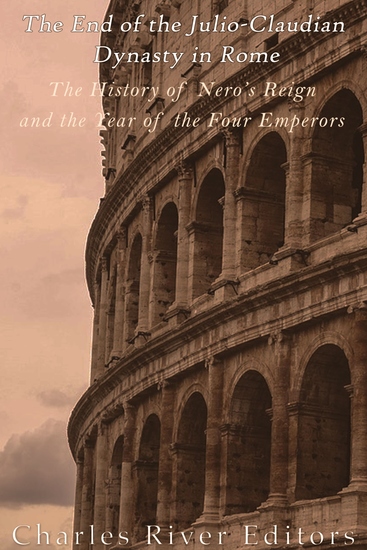
The End of the Julio-Claudian Dynasty in Rome - The History of Nero’s Reign and the Year of the Four Emperors - cover

The End of the Julio-Claudian Dynasty in Rome - The History of Nero’s Reign and the Year of the Four Emperors

Editors Charles River

Publisher: Charles River Editors

  • 0
  • 0
  • 0

Summary

Throughout the annals of history, there have been few figures as reviled as Lucius Domitius Ahenobarbus, better known as Nero Claudius Caesar Drusus Germanicus, or more simply, Nero. Even today, he remains one of the Roman Empire’s most famous – or notorious – figures, a villain whose impact on popular culture is so vast that his name crops up consistently to this day in literature, film, TV and mediums as unlikely as video games and anime.
 
Nero ranks among the very worst of the Caesars, alongside the likes of mad Caligula, slothful Commodus, and paranoid Domitian, a figure so hated that, in many ancient Christian traditions, he is literally, without hyperbole, considered the Antichrist; according to a notable Biblical scholar, the coming of the Beast and the number 666 in the Book of Revelation are references to Nero. He was the man who, famously, “fiddled while Rome burned”, an inveterate lecher, a murderous tyrant who showed little compunction in murdering his mother and who liked to use Christian martyrs as a source of illumination at night – by burning them alive. His economic policies, according to many historians, virtually bankrupted Rome.
 
Even his appearance, apparently, was ill-favoured. His busts show him to be fleshy-faced, with a weak chin that he attempted to disguise with a distinctly unprepossessing beard, and according to Suetionius he was also spotty, stinking, pot-bellied and thin-legged – not a pretty picture.
 
The best known accounts of Nero come from biographers like Tacitus, Cassius Dio, Suetionius and Josephus, but there are also indications that, to some extent, reports of Nero’s cruelty were exaggerated. Nero was popular with the common people and much of the army, and during his reign the Empire enjoyed a period of remarkable peace and stability. Many historians, including some of his ancient biographers – such as Josephus – suggest that there existed a strong bias against Nero. Part of this is because his successors wished to discredit him, and justify the insurrections which eventually drove him, hounded from the throne, to a lonely suicide. Much of the bias against Nero can also be attributed to the fact that he was a renowned persecutor of Christians, and since many of the historians who wrote about Nero in the years after his death were Christians themselves, it made sense for them to have a jaundiced view of their erstwhile nemesis. Because of this, some historians have suggested that Nero’s demeanour and reputation might not be as black as the original sources might be inclined to suggest.
 
Having left no heir, Nero’s death plunged the empire into confusion and chaos, bringing to an end the Julio-Claudian lineage while at the same time offering no clear rule of succession. This presented the opportunity for influential individuals in the empire, and in particular provincial governors who also commanded large military garrisons, to express and further their own ambitions to power. The result was a period of instability and civil war as several pretenders to the throne, among them the emperors Galba, Otho and Vitellius, gained and lost power, until finally the emperor Vespasian seized and retained the imperial principate.  Vespasian imposed order and discipline on a chaotic empire and founded the Flavian Dynasty, which survived until CE 96, encompassing the reigns of Vespasian himself (69–79), and his two sons Titus (79–81) and Domitian (81–96).
Available since: 05/01/2025.
Print length: 51 pages.

Other books that might interest you

  • Divine Feminine Energy: Unlock Your Goddess Energy Heal The Wounds Of Your Inner Child & Master Your Sacred Femininity To Create The Life Of Your Dreams - cover

    Divine Feminine Energy: Unlock...

    Abigail M. Brooks

    • 0
    • 0
    • 0
    If you've always wanted to unlock your inner goddess, heal your deepest wounds, and create the life of your dreams but struggle with self-doubt and past traumas, then keep reading… 
    Are you sick and tired of feeling disconnected from your true self and unable to manifest the life you desire? 
    Have you tried countless other self-help solutions, but nothing seems to bring lasting change? 
    Do you finally want to say goodbye to the limitations of your past and discover a path that truly works for you? 
    If so, then you've come to the right place. 
    You see, embracing your divine feminine energy and creating the life of your dreams doesn't have to be difficult. 
    Even if you've struggled with inner child healing or tapping into your femininity in the past, Divine Feminine Energy can guide you to the transformation you've been seeking. 
    In fact, it's easier than you think. 
    Here's just a tiny fraction of what you'll discover in Divine Feminine Energy:The 4 essential steps to healing your inner child and embracing your divine feminineWhy suppressing your femininity is holding you back – and how to reverse itHow to tap into your goddess energy and use it to manifest the life you've always wanted5 harmful myths about femininity that keep you from realizing your true powerThe 3 best practices to maintain your divine energy and keep your dreams on track 
    …and much, much more! 
    Take a moment to imagine how you'll feel once you've fully unlocked your divine feminine energy, and how those around you will be inspired by your newfound confidence and grace. 
    So even if you're someone who has struggled with self-love or feels disconnected from your femininity, you can awaken your inner goddess with the guidance in this book.
    Show book
  • The Art of War - cover

    The Art of War

    Sun Tzu

    • 0
    • 0
    • 0
    The Art of War is an ancient Chinese military treatise dating from the Late Spring and Autumn Period. The work, which is attributed to the ancient Chinese military strategist Sun Tzu ("Master Sun"), is composed of 13 chapters. Each one is devoted to a different set of skills (or "art") related to warfare and how it applies to military strategy and tactics.
    Show book
  • June 6 1944 - D-Day - The Normandy invasion - cover

    June 6 1944 - D-Day - The...

    Secrets of History

    • 0
    • 0
    • 0
    Experience the Epic Battle of D-Day Through Our Second Book! 
      
    Are you ready to experience the gripping story of one of the most important battles of World War II, as seen through the eyes of those who were there? Our second book about D-Day is here to take you there.  
      
    The book begins with a vivid exploration into the advancement up Omaha Beach, providing a detailed and emotional account of what it was like for soldiers as they faced immense danger in their effort to secure a foothold on French soil. 
    We then move on to explore what happened when Allied forces moved inland, assaulting the bluffs that had been fortified by German troops.  
    You will also learn about the incredible courage and bravery displayed by the Pointe du Hoc Rangers and their daring mission to destroy enemy artillery positions overlooking Omaha Beach. 
      
    Our second book not only offers readers a unique glimpse into some of history’s most important events, but it also provides an invaluable lesson on courage, loyalty, and perseverance – lessons that are just as applicable today as they were during WWII.  
      
    By reading this book, you will gain a newfound appreciation for those brave soldiers who fought so valiantly during D-Day, setting in motion a chain of events that would eventually lead to victory in Europe. 
      
    So don’t wait any longer – order your copy today and relive one of history’s greatest battles!
    Show book
  • Porcelain - The Soul That Never Broke - cover

    Porcelain - The Soul That Never...

    Miranda Dodge

    • 0
    • 0
    • 0
    Yes or No? 
    Have you ever been stuck in the past? Running around and around only to find that you are right where you were in the beginning? 
    Have you ever fought so hard to break free only to be dragged back in? Ever felt like you couldn't be loved? Couldn't be cherished? 
    Have you ever hurt so much to the point where you were bleeding and crying, but numb at the same time? 
    That you were worthless and nothing, but refused to give up? 
    Did you answer yes? 
    Then come find the way out with Ashton, a renowned neurosurgeon, who was kidnapped, raped, beaten, and forced to kill. Only to find she couldn't escape. Until she fell in love with an angel. 
    Demons—the most dangerous creatures, and Angels—the purest of all beings. For Ashton Lure, a renowned neurosurgeon, these beings only existed in mythological stories. Or so she thought... And, when she found herself in the Demon Realm, she could only wonder, can I truly be free from him? 
    The demons weren't all bad, and the angels weren’t all pure, and somehow, they became a family—something Ashton had missed all her life. But just when she thought she could live without her painful nightmares, the dark past she tried to hide got in the way, threatening to leave her in ruins yet again.
    Show book
  • The Engines of Evil - Inside The Waffen SS The Holocaust And Nazi Genocide - cover

    The Engines of Evil - Inside The...

    Davis Truman

    • 0
    • 0
    • 0
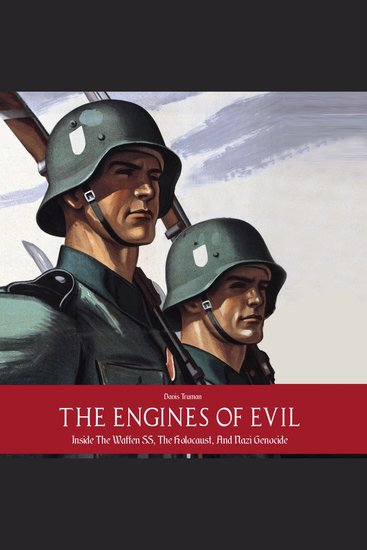
    The Engines of Evil is an intelligent and comprehensive exploration of the Waffen SS's pivotal role in World War II and the Holocaust. It sheds light on how this formidable military organization not only fought battles on the front lines but also became the vanguard of Nazi terror and genocide. 
    Key Features of the Book:In-Depth Analysis: The book provides a thorough examination of the Waffen SS's evolution from Hitler's elite personal guard to a multifaceted force intricately involved in Nazi atrocities.Ideological Insights: It explores the National Socialist ideology that fueled the SS's actions and justified its atrocities, offering a deep dive into the mindset that enabled ordinary men to commit extraordinary crimes.Mechanisms of Genocide: The book meticulously details the operational and bureaucratic systems that facilitated the Holocaust and other genocidal acts, exposing the cold efficiency with which these atrocities were carried out.Personal Narratives: Through firsthand accounts and historical records, the experiences of both perpetrators and victims are brought to life, providing a human dimension to the historical narrative.Broader Context: The work places the Holocaust within the wider spectrum of Nazi genocidal policies, including the conquest and racial reshaping of Eastern Europe. 
    Understanding the origins and execution of the Holocaust and Nazi genocide is crucial for preventing future atrocities. The Engines of Evil provides a critical and timely examination of the forces that led to one of the darkest chapters in human history. It serves as a stark reminder of the capacity for evil that exists within society and the importance of maintaining vigilance against the ideologies and systems that foster hatred and violence. 
    We invite you to read The Engines of Evil and join the ongoing conversation about the lessons of the past and the path to a more just and humane future.
    Show book
  • The Great American Transit Disaster - A Century of Austerity Auto-Centric Planning and White Flight - cover

    The Great American Transit...

    Nicholas Dagen Bloom

    • 0
    • 0
    • 0
    A potent re-examination of America’s history of public disinvestment in mass transit. 
      
    Many a scholar and policy analyst has lamented American dependence on cars and the corresponding lack of federal investment in public transportation throughout the latter decades of the twentieth century. But as Nicholas Dagen Bloom shows in The Great American Transit Disaster, our transit networks are so bad for a very simple reason: we wanted it this way. 
      
    Focusing on Baltimore, Atlanta, Chicago, Detroit, Boston, and San Francisco, Bloom provides overwhelming evidence that transit disinvestment was a choice rather than destiny. He pinpoints three major factors that led to the decline of public transit in the United States: municipal austerity policies that denied most transit agencies the funding to sustain high-quality service; the encouragement of auto-centric planning; and white flight from dense city centers to far-flung suburbs. As Bloom makes clear, these local public policy decisions were not the product of a nefarious auto industry or any other grand conspiracy—all were widely supported by voters, who effectively shut out options for transit-friendly futures. With this book, Bloom seeks not only to dispel our accepted transit myths but hopefully to lay new tracks for today’s conversations about public transportation funding.
    Show book