Join us on a literary world trip!
Add this book to bookshelf
Grey
Write a new comment Default profile 50px
Grey
Subscribe to read the full book or read the first pages for free!
All characters reduced
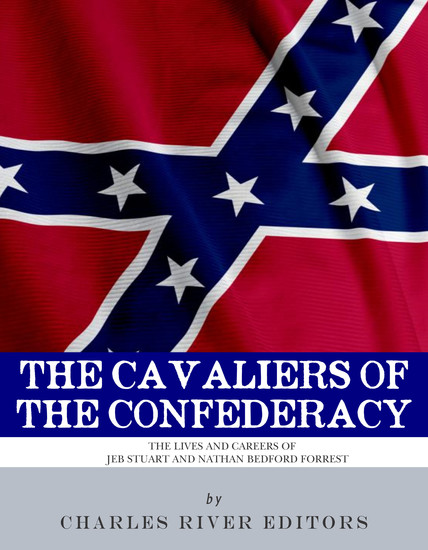
The Cavaliers of the Confederacy - The Lives and Careers of JEB Stuart and Nathan Bedford Forrest - cover

The Cavaliers of the Confederacy - The Lives and Careers of JEB Stuart and Nathan Bedford Forrest

Editors Charles River

Publisher: Charles River Editors

  • 0
  • 0
  • 0

Summary

Despite the fact that the Civil War was fought nearly 150 years ago, it remains a polarizing topic for the country to this day. But among the most popular perceptions of the Civil War is the “Lost Cause”, which romanticized the war’s toughest and most famous fighters and continues to fuel the popularity of generals like Robert E. Lee.
 
Alongside Lee, no one epitomized the chivalry and heroism celebrated by the Lost Cause more than JEB Stuart (1833-1864), the most famous cavalry officer of the Civil War. Stuart was equal parts great and grandiose, leading the cavalry for the Confederacy in Lee’s Army of Northern Virginia until his death at the Battle of Yellow Tavern in May 1864. Stuart was a throwback to the past, colorfully dressing with capes, sashes, and an ostrich plumed hat, while sporting cologne and a heavy beard. But he was also brilliant in conducting reconnaissance, and he proved capable of leading both cavalry and infantry at battles like Chancellorsville. As the eyes and ears of Robert E. Lee's army, none were better, despite the fact that he was only in his late 20s and early 30s during the Civil War, far younger than most men of senior rank.
 
Nevertheless, Stuart’s tough fighting was and still is eclipsed by his reputation for audacious cavalry movements. He embarrassed the Army of the Potomac by riding around it twice, making him famous and embarrassing Union generals like George McClellan. However, Stuart’s role at Gettysburg was far more controversial. Given great discretion in his cavalry operations before the battle, Stuart’s cavalry was too far removed from the Army of Northern Virginia to warn Lee
 
When the war broke out, Forrest enlisted in the army and was instructed to raise a battalion of cavalry. A self-made man with no formal military training, Forrest spent the entire war fighting in the Western theater, becoming the only individual in the war to rise from the rank of Private to Lieutenant General.  By the end of the war, Forrest was known throughout the South as the “Wizard of the Saddle,” and anecdotes of his prowess in battle were legendary.  In addition to being injured multiple times in battle, Forrest has been credited with having killed 30 Union soldiers in combat and having 29 horses shot out from under him.  
 
History has properly accorded Forrest his place as one of the most courageous soldiers of the Civil War, and Forrest attained a number of command successes in the Western theater of the war.  But Forrest was also at the head of Confederate troops accused of massacring a Union garrison comprised mostly of black soldiers at Fort Pillow, and he was also a prominent slave trader, an overt racist, and likely a leader of the Ku Klux Klan after the Civil War. When he died in 1877, in part due to various war wounds, he was the nation’s most notorious unreconstructed rebel.  John E. Stanchack, an editor of the Civil War Times Illustrated, aptly noted in 1993, “Everything…about [Forrest] is bent to fit some political or intellectual agenda.”  Ashdown and Caudill, authors of The Myth of Nathan Bedford Forrest, write that the story of Forrest “embraces violence, race, realism, sectionalism, politics, reconciliation, and repentance.” 
 
With these characteristics, it has proven almost impossible for any American to have a neutral view of Forrest, and it has been even harder to ignore him.  Subsequently, Forrest’s image has vacillated from celebrated to reviled, sometimes both at the same time, over the last 150 years, as the numerous and notable aspects of Forrest’s life and legacy were considered by different people at different times. 
Available since: 05/04/2025.
Print length: 102 pages.

Other books that might interest you

  • Sound N’ Fury - Rock N’ Roll Stories - cover

    Sound N’ Fury - Rock N’ Roll...

    Alan Niven

    • 0
    • 1
    • 0
    Most rock ’n’ roll books are a bore. They all have the same narrative arc and are aimed at the dwindling following that now follows an artist that has long passed their AARP date. 
    		 
    Sound N’ Fury does not have a story arc. It is a collection of anecdotes, like a record comprised of various tracks — each one has its point and purpose. Alan Niven, who guided Guns N’ Roses from the gutter of Los Angeles to Wembley Stadium, shares stories from his remarkable life as a manager with an immediacy delivered by an extraordinary recall of dialogue. Readers will encounter not just Guns N’ Roses (who have sold almost 10 million tickets to their shows) but The Rolling Stones, Aerosmith, Clarence Clemons, Whitesnake, Elton John, and others who came from humble origins and experienced fame known only to few. Small-town minds collided with worldwide adulation, expectations, and demands. The results are amusing, affirming, and, predictably, disastrous. Keep in mind that rock ’n’ roll is God’s occupation for the unemployable.
    		 
    Written with a crisp and fluid style, the magnificence and idiocy of the music world will dance off the pages and engross even those who are not rock fans.
    Show book
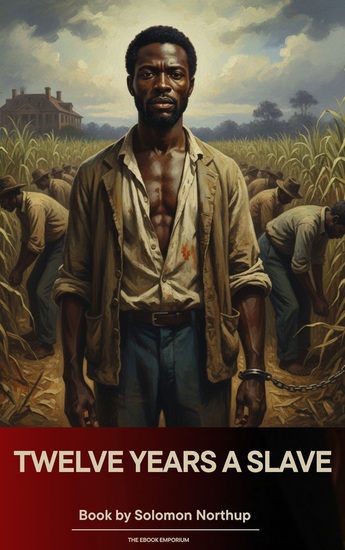
  • Twelve Years a Slave - cover

    Twelve Years a Slave

    Solomon Northup

    • 0
    • 1
    • 0
    "They can take your freedom, but they cannot take your identity."
    
    In 1841, Solomon Northup was a professional violinist and family man living in Saratoga Springs, New York. After being lured to Washington D.C. with the promise of work, he was drugged, shackled, and stripped of his name. For the next twelve years, he was passed from master to master in the bayous of Louisiana, enduring the sadistic cruelty of men like Edwin Epps while witnessing the quiet heroism of his fellow enslaved people. Twelve Years a Slave is a visceral, unflinching look at the "peculiar institution" through the eyes of a man who knew both the dignity of liberty and the agony of the lash. It remains a foundational text of American history and a testament to the endurance of the human spirit.
    
    The Mechanics of Oppression: Northup provides a meticulous, almost journalistic description of the economics and daily operations of the slave trade. He details the cultivation of cotton and sugar, the social hierarchies of the plantation, and the psychological warfare used to keep human beings in subjection.
    
    A Quest for Justice: The narrative is propelled by Northup's secret attempts to communicate with his family in the North. His eventual rescue is a heart-stopping moment of tension and triumph, highlighting the legal and social complexities of a divided nation where a man's status as "property" or "person" could depend entirely on the color of his skin and the geography of his location.
    
    Why It Is a Vital Classic: While many narratives were edited to suit political agendas, Northup's account is praised for its stark realism and descriptive power. It provides names, dates, and locations that were later verified by historians, making it one of the most credible and devastating indictments of slavery ever written.
    
    Bear witness to the truth. Purchase "Twelve Years a Slave" today.
    Show book
  • The Boy Who Survived Auschwitz - cover

    The Boy Who Survived Auschwitz

    Adriana Lerman

    • 1
    • 1
    • 0
    Levi Lerman was a cheerful and lively boy from the town of Ostrowiec. He was only fourteen years old when his life took an unimaginable turn with the outbreak of World War II in 1939, when the Nazi forces invaded Poland and occupied his hometown.
    Over a painful six-year period, Levi endured a harsh life in the Ostrowiec ghetto, suffered devastating losses, performed exhausting forced labor, and survived countless transfers to concentration camps, including the extermination camp of Auschwitz-Birkenau.
    In the middle of this torment, a single light guided him through the darkness: his unbreakable determination to live and to protect his father—a strength that helped him survive against all odds.
    Show book