Join us on a literary world trip!
Add this book to bookshelf
Grey
Write a new comment Default profile 50px
Grey
Subscribe to read the full book or read the first pages for free!
All characters reduced
The Boston Tea Party - cover

The Boston Tea Party

Editors Charles River

Publisher: Charles River Editors

  • 0
  • 0
  • 0

Summary

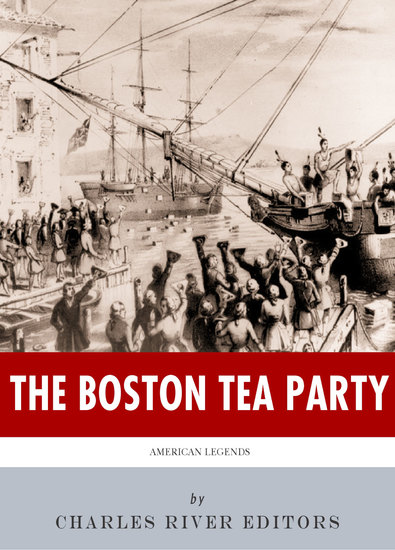
"The people finding all their endeavours for this purpose thus totally frustrated, dissolved the meeting, which had consisted by common estimation of at least seven thousand men, many of whom had come from towns at the distance of twenty miles. In less than four hours every chest of tea on board three ships which had by this time arrived, three hundred and forty-two chests, or rather the contents of them, was thrown into the sea, without the least injury to the vessels or any other property.” – Samuel Adams
 
A lot of ink has been spilled covering the lives of history’s most influential figures, but how much of the forest is lost for the trees? In Charles River Editors’ American Legends series, readers can get caught up to speed on the lives of America’s most important men and women in the time it takes to finish a commute, while learning interesting facts long forgotten or never known.
 
In the years before the American Revolution, the disputes between the colonies and Great Britain produced no shortage of legendary events, all of which can be recited by schoolchildren from an early age, but none has been mythologized or misunderstood quite like the Boston Tea Party, colonial Boston’s most unique act of (relative) non-violent protest. The formation of a group of Americans calling themselves the “Tea Party” in 2009, more than 235 years after the Boston Tea Party, is testament to the enduring legacy of that iconic moment in American history.
 
On the night of December 16, 1773, a group of 30-130 men boarded the tea ship Dartmouth and two other ships and dumped 342 chests of tea into Boston Harbor over the span of 3 hours in protest of the Tea Act of 1773. Agreement over what exactly happened ends there, but a number of legends have since popped up and become part of the common narrative. The urban legend that the people who boarded the ship dressed as Mohawks is not entirely true. The Tea Partiers were not protesting higher taxes on tea. The Tea Party was not coordinated by Samuel Adams. And nobody in Boston called it the “Tea Party” until nearly a century after it took place.
 
However, the impact of the Tea Party is beyond dispute. The bold protest and destruction of the tea induced the British to pass the Coercive or Intolerable Acts, including the closing of Boston Harbor. That spurred the colonies to send delegates to the First Continental Congress in Philadelphia to craft a united response to the Coercive or Intolerable Acts and petition King George III for redress. The First Continental Congress also vowed to reconvene in the summer of 1775. By the time the Second Continental Congress met, the Revolution was underway.
 
American Legends: The Boston Tea Party chronicles the history that led up to the passage of the Tea Act of 1773, the events of December 16, 1773, and the legends and myths surrounding the Boston Tea Party. Along with pictures of important people, places, and events, you will learn about the Tea Party like you never have before, in no time at all.
Available since: 06/29/2025.
Print length: 46 pages.

Other books that might interest you

  • Urban Economics - Understanding City Growth and Economic Development - cover

    Urban Economics - Understanding...

    Lyric Vale

    • 0
    • 0
    • 0
    Urban economics is the study of how economic forces shape the development, growth, and functioning of cities. In today’s rapidly urbanizing world, understanding the dynamics of urban areas is crucial for policymakers, businesses, and residents alike. Cities are the engines of economic activity, often driving national economies through industrialization, technological advancement, and labor market opportunities. The field of urban economics provides a framework for analyzing the complex interactions between land use, housing markets, transportation, and labor, all of which influence the growth and prosperity of cities. 
    One of the core ideas of urban economics is the concept of agglomeration, which refers to the concentration of people and businesses in a specific area to take advantage of economies of scale, reduced transportation costs, and access to a skilled workforce. This concentration leads to the formation of cities as hubs of economic activity, where services, manufacturing, and innovation thrive. However, agglomeration also brings challenges, such as congestion, pollution, and rising living costs. Urban economists seek to understand these trade-offs and develop policies that can foster economic growth while addressing the negative externalities associated with urbanization. 
    Another fundamental aspect of urban economics is the relationship between urban form and economic performance. Cities are not static entities; they evolve over time as they expand, change in function, and adapt to shifting economic realities. The spatial structure of a city—how land is used, where different activities are located, and the connectivity between various areas—can significantly impact its economic performance. Urban economics explores how factors like zoning laws, infrastructure, and transportation systems influence a city’s efficiency, livability, and overall success.
    Show book
  • Strange History Life's Mysteries and Other Bloviation - cover

    Strange History Life's Mysteries...

    J. Dallas Brooks

    • 0
    • 0
    • 0
    A slip and fall changed the course of 20th century history and broadcasting. 
    One man's dislike of cats contributed to the deaths of millions of people. 
    A World War II pilot survives 3 plane crashes before switching gears and changing the world of science fiction forever. 
    A bullet fired in the Civil War nearly wiped yours truly from existence.  
    Told in the spirit of Paul Harvey's The Rest of the Story, this series of short and fantastic historical stories will intrigue and delight readers who enjoy a fresh take on history. All of these stories come with a fun twist at the end, and some readers will enjoy guessing who or what each story is about as they follow along with each new tale. This is a short, but engaging listen about an hour long.
    Show book
  • Greeks of Anatolia The: The History of the Greek City-States and Kingdoms in the Region during the Classical Era - cover

    Greeks of Anatolia The: The...

    Charles River Editors

    • 0
    • 0
    • 0
    After the Sea Peoples cast aside the old world order at the end of the Bronze Age, a number of kingdoms in Anatolia filled the power vacuum for at least a few centuries, including the Phrygians and Lydians, and the Achaemenid Persian Empire would forge the world’s largest empire with Anatolia as its heartland, but a number of Greek cities also began to pop up, and over the course of the region’s turbulent history, their fortunes would rise and fall.  
    Smyrna was one of the various cities that enjoyed brief yet important periods of influence in which they spawned important dynasties, were the scenes of history-changing battles, and were the sites of great advances in philosophy, science, and economics. However, despite the fact it endured in influence for more than 2,000 years, Smyrna never truly gained the reputation of better-known locales in the ancient world. 
    Likewise, Miletus was an ancient city located on the west coast of present-day Turkey, which allowed it to become one of the most important places in Anatolia, linking the Hellenistic world with the great civilizations of Babylon, Egypt, and eventually Persia. Over time, Miletus was ruled by the Minoans, Mycenaeans, Hittites, Ionians, Persians, Seleucids, Attalids, Romans, Byzantines, Seljuk Turks, and Ottomans. Perhaps not surprisingly, it had a massive influence on the Western world during the 6th and 5th centuries BCE, as a revolution in human thinking took place there. 
    Although it is no longer quite as well remembered as it was thousands of years ago, one of the most important cities in the ancient world was Ephesus, a city that dates back nearly 3,000 years and can lay claim to the Temple of Artemis, one of the Seven Wonders of the Ancient World.  
    All of these cities had to deal cautiously with the Achaemenid Persians, but the Greco-Persian Wars also set the Achaemenids on a path with Alexander the Great.
    Show book
  • Plotting: Step-by-Step | Essential Story Plotting Conflict Writing and Plotline Tricks Any Writer Can Learn - cover

    Plotting: Step-by-Step |...

    Sandy Marsh

    • 0
    • 0
    • 0
    Your ‘Why’ for Writing, Will Also Be Their ‘Why’ for Reading 
    Are you struggling to take your story to the next level? Would you like to know the best ways to create intrigue and have your readers rave about your book? Plotting is a step-by-step guide that takes you through the process of developing compelling plots from beginning to end. 
    With tips and tricks taken straight from professional writers, the novelist will learn how to use plotlines for maximum effect, while retaining creative freedom. 
    Making Conflict Real 
    Plotting helps the author weave suspense through improved conflict-writing, centered around a developing plot. Characters are challenged, affected and emerge changed in ways that infuse emotions in your readers, so that they cannot help but be personally invested in the welfare of your protagonist. 
    8 Steps to Conflict Resolution 
    This book acts as a go-to framework for all levels of writers and introduces an 8-Step Process to adding substance to your story through plotting; these include:Get InspiredGetting DirectionTurn Your Ideas into a StoryCreate Your Story ArcStart with the End 
    From understanding the basic principles of a plotline, to placing your characters into situations that will help you get inside their head more, Marsh demonstrates the ways to make a plot event a more profound experience for the reader, to activate emotions and keep them engaged until the end of the book. 
    Order Now!
    Show book
  • Ivy - cover

    Ivy

    Sally Cook

    • 0
    • 0
    • 0
    Ivy tells the story  of a brave young woman who was awarded a special war commendation in signals during World War II in the Women's Arny Corp. She disarmed a German officer pointing a pistol in her face, survived strafing by a German bomber as she walked along a farm path as a Land Girl and  lived in a garage with a dirt floor and cold water tap after migrating to Australia, She raised three young children after her husband dropped dead aged 39. Ivy read adult books at 3 years old and spoke fluent French at 7, She was engaged to one of the Great Escapers who was murdered in the snow near Stalag Luft 3. She made Australia her home and despite many setbacks, came to love the country dearly.
    Show book
  • Sarah's Sensual Awakening - cover

    Sarah's Sensual Awakening

    Dorian Shellan

    • 0
    • 0
    • 0
    Having not seen Sarah since they were girls, Anna is surprised to see what a beauty she blossomed into as a woman. Well educated but only having an academic understanding of sex, Anna introduces Sarah to the sensual aspects she has been unaware of and seduces her into lesbian exploration. Anna then explains that sex with a man is even more pleasurable, causing Sarah to crave what she has never experienced. 
    When Sarah learns that Anna is also Madame Q, she returns to London with her to both be with a man and to join the ladies at The Nunnery.
    Show book