Join us on a literary world trip!
Add this book to bookshelf
Grey
Write a new comment Default profile 50px
Grey
Subscribe to read the full book or read the first pages for free!
All characters reduced
The Boston Tea Party - cover

The Boston Tea Party

Editors Charles River

Publisher: Charles River Editors

  • 0
  • 0
  • 0

Summary

"The people finding all their endeavours for this purpose thus totally frustrated, dissolved the meeting, which had consisted by common estimation of at least seven thousand men, many of whom had come from towns at the distance of twenty miles. In less than four hours every chest of tea on board three ships which had by this time arrived, three hundred and forty-two chests, or rather the contents of them, was thrown into the sea, without the least injury to the vessels or any other property.” – Samuel Adams
 
A lot of ink has been spilled covering the lives of history’s most influential figures, but how much of the forest is lost for the trees? In Charles River Editors’ American Legends series, readers can get caught up to speed on the lives of America’s most important men and women in the time it takes to finish a commute, while learning interesting facts long forgotten or never known.
 
In the years before the American Revolution, the disputes between the colonies and Great Britain produced no shortage of legendary events, all of which can be recited by schoolchildren from an early age, but none has been mythologized or misunderstood quite like the Boston Tea Party, colonial Boston’s most unique act of (relative) non-violent protest. The formation of a group of Americans calling themselves the “Tea Party” in 2009, more than 235 years after the Boston Tea Party, is testament to the enduring legacy of that iconic moment in American history.
 
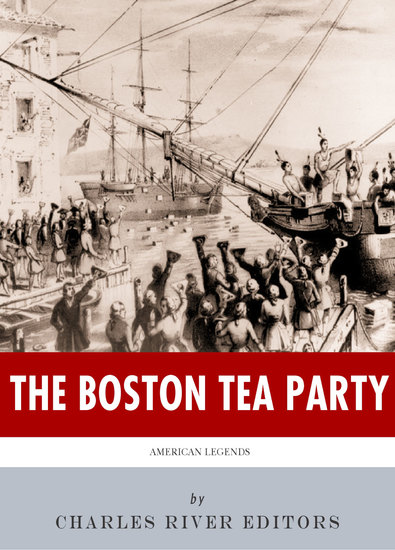
On the night of December 16, 1773, a group of 30-130 men boarded the tea ship Dartmouth and two other ships and dumped 342 chests of tea into Boston Harbor over the span of 3 hours in protest of the Tea Act of 1773. Agreement over what exactly happened ends there, but a number of legends have since popped up and become part of the common narrative. The urban legend that the people who boarded the ship dressed as Mohawks is not entirely true. The Tea Partiers were not protesting higher taxes on tea. The Tea Party was not coordinated by Samuel Adams. And nobody in Boston called it the “Tea Party” until nearly a century after it took place.
 
However, the impact of the Tea Party is beyond dispute. The bold protest and destruction of the tea induced the British to pass the Coercive or Intolerable Acts, including the closing of Boston Harbor. That spurred the colonies to send delegates to the First Continental Congress in Philadelphia to craft a united response to the Coercive or Intolerable Acts and petition King George III for redress. The First Continental Congress also vowed to reconvene in the summer of 1775. By the time the Second Continental Congress met, the Revolution was underway.
 
American Legends: The Boston Tea Party chronicles the history that led up to the passage of the Tea Act of 1773, the events of December 16, 1773, and the legends and myths surrounding the Boston Tea Party. Along with pictures of important people, places, and events, you will learn about the Tea Party like you never have before, in no time at all.
Available since: 06/29/2025.
Print length: 46 pages.

Other books that might interest you

  • Libertarian Policies - cover

    Libertarian Policies

    Arlo Holders

    • 0
    • 0
    • 0
    Libertarianism is a political philosophy centered on the belief that individuals should have the maximum possible freedom to pursue their own lives, with minimal interference from the government. Rooted in the principles of classical liberalism, libertarianism advocates for a limited government whose primary role is to protect individual rights and maintain peace. It emphasizes personal responsibility, free markets, and the belief that voluntary exchange is the foundation of a prosperous society. At its core, libertarianism seeks to protect the rights of individuals to live as they see fit, free from the coercive power of the state. 
    The history of libertarian thought can be traced back to influential philosophers such as John Locke, who argued for the natural rights of individuals to life, liberty, and property. His ideas formed the intellectual groundwork for the concept of limited government, which would later be expanded by thinkers like Adam Smith, who promoted the idea of free markets. The Enlightenment era, with its focus on reason, individualism, and skepticism of authority, provided a fertile ground for the development of libertarian ideas. In the 20th century, libertarianism gained further prominence through the works of economists such as Friedrich Hayek and Milton Friedman, who critiqued the expansion of government power and emphasized the importance of individual liberty in economic affairs. 
    Libertarianism's role in modern politics is to challenge the prevailing trend toward ever-expanding government intervention in people's lives. Libertarians argue that many of society’s problems are caused by government overreach, and that solutions should instead focus on allowing individuals to make their own decisions, free from state-imposed constraints.
    Show book
  • Listen to HSK2 - Listen Your Way to HSK2 Success: 170 Words 17 Audio Files - cover

    Listen to HSK2 - Listen Your Way...

    Letitia Wu

    • 0
    • 0
    • 0
    Are you looking to ace your HSK2 exam? Good news! Introducing Listen to HSK2. This audiobook contains all the 170 words you need to know for the HSK2 exam. With 17 audio files and 10 words in each, you’ll never miss a vocabulary word again! Each word comes with its English translation, example sentence and the English translation of the example sentences. Our expert teacher reads each example sentence twice – the first time slowly, to enable easier pronunciation and imitation, and the second time quickly, to help you practice your comprehension of normal-speed Chinese speaking. All this packaged together into one neat and convenient audiobook! Learn with us! Don’t let HSK2 get in the way of your progress. Our professional, yet witty, materials are the perfect way to enhance your learning experience. With Listen to HSK2, no one is left behind. Make Listen to HSK2 your go-to audiobook and get closer to success.
    Show book
  • School-to-Home Connections - Simple Strategies for Early Childhood Educators - cover

    School-to-Home Connections -...

    Cathryn O'Sullivan

    • 0
    • 0
    • 0
    School-to-Home Connections is bursting with ideas for early childhood educators. Inside, you’ll find simple ways to explain developmentally appropriate practice to parents, ideas on partnering with them on their child’s journey to school readiness, and tips for nurturing families’ active involvement in the school community. Along the way, you discover information on: Understanding the power of playEncouraging children’s individuality and uniquenessCelebrating diversitySupporting children’s development across key domainsNurturing in natureAddressing challenging behaviorsTransitioning to a new class or school
    Show book
  • Kindness - The Gentle Touch - Healing through Compassion - cover

    Kindness - The Gentle Touch -...

    Esther Jameson

    • 0
    • 0
    • 0
    Kindness is often seen as a simple and basic concept, yet it holds immense power in transforming lives. At its core, kindness is the act of being considerate and generous without expecting anything in return. However, its effects extend far beyond the immediate gesture. Research has shown that kindness has a direct influence on mental and physical well-being, not only for the giver but also for the receiver. When we show kindness, whether through small acts like offering a smile or through more profound actions like supporting a loved one in need, we are engaging in a form of healing. The energy we radiate through kindness has the ability to uplift others, create positive connections, and promote emotional growth. 
    The power of kindness is rooted in its ability to create a ripple effect. When someone experiences an act of kindness, it often inspires them to pass it on to others. This chain reaction can spread far and wide, creating a compassionate network that has the potential to change communities and even societies. Kindness has the unique ability to bridge divides and bring people together, creating a sense of unity and understanding. 
    Moreover, studies have shown that kindness has tangible benefits for our own well-being. Acts of kindness activate the brain’s reward system, releasing endorphins, which are known as “feel-good” hormones. This not only boosts mood but also reduces stress, anxiety, and depression. Additionally, when we engage in acts of kindness, we experience a sense of purpose and fulfillment, contributing to a more meaningful life. This emotional uplift can even improve our physical health, as acts of kindness lower blood pressure and enhance heart health by reducing stress levels.
    Show book
  • Silent Child - cover

    Silent Child

    Toni Maguire, Emily Smith

    • 0
    • 0
    • 0
    Unlike people with carefree previous lives, I packed away my past. There are some memories labeled 'Look at', and others 'Leave well alone' . . . 


    Emily Smith was held in a prison of fear for ten years. When she was four, her father left and a new man was brought into her life. He loved her, he kept telling her so, but the emotional and physical abuse she suffered at his hands were a daily nightmare. Until one day, after he crept into her bedroom, her life became unbearable. 


    Emily found she was different in another way as her autism became more noticeable and punishments for her 'abnormal' behavior more severe. Astonishingly, she managed to escape her home of hell, where she was abused right in front of her mother. Emily determinedly gained a university place and emerged triumphant with a new life and family in Ireland, desperate to treat her daughter, so similar to her, to a different life. 


    Heartbreakingly true, Silent Child is a testament to Emily's strength as she sheds light on rampant abuse still happening today. Powerful and shocking, sharing her story means she finally has a voice to say: enough. 


    Contains mature themes.
    Show book
  • WAY OF CRITICAL THINKING THE - Become A Critical Thinker And Revolutionize Your Life With The New Vision Of Facts And Narratives - cover

    WAY OF CRITICAL THINKING THE -...

    Phil Barton

    • 0
    • 0
    • 0
    In this manual you will find a series of tips and mental models to think better while avoiding the most common cognitive biases and logical fallacies, how and why we are persuaded by people and advertisements and how to make better decisions.  
      
    After reading this book, you will realize that an important percentage of the people you hang out with (or hear about) are subject to reasoning errors, but this does not depend on intelligence (or at least marginally) but on habits, partial information and how our mind has been structured during evolution but, above all, it depends on our tendency towards cognitive economy: having to decide on the basis of rational reasoning requires longer times and many resources. In order not to overload our brains and to be able to cope with such continuous requests in a reasonable time without being exhausted, we are forced to use intuition and some cognitive (heuristic) shortcuts. This way of reasoning, however, makes us more likely to choose in an associative, metaphorical and casual way, more rarely in a probabilistic way.  
    Who is this book for?  
      
    To people who want to improve their ability to argue, to those who want to know the most common cognitive biases and logical fallacies but, also, to those who want to deepen persuasion, decision making, logic and some curiosities about the human mind. This book starts from the basics and, vertically, deepens most of the topics covered.
    Show book