Join us on a literary world trip!
Add this book to bookshelf
Grey
Write a new comment Default profile 50px
Grey
Subscribe to read the full book or read the first pages for free!
All characters reduced
The Battle of the Little Bighorn - The History and Controversy of Custer’s Last Stand - cover

The Battle of the Little Bighorn - The History and Controversy of Custer’s Last Stand

Editors Charles River

Publisher: Charles River Editors

  • 0
  • 0
  • 0

Summary

"When I was a boy the Sioux owned the world. The sun rose and set on their land; they sent ten thousand men to battle. Where are the warriors today? Who slew them? Where are our lands?   Who owns them? Is it wrong for me to love my own? Is it wicked for me because my skin is red?  Because I am Sioux? Because I was born where my father lived? Because I would die for my people and my country?” – Sitting Bull
 
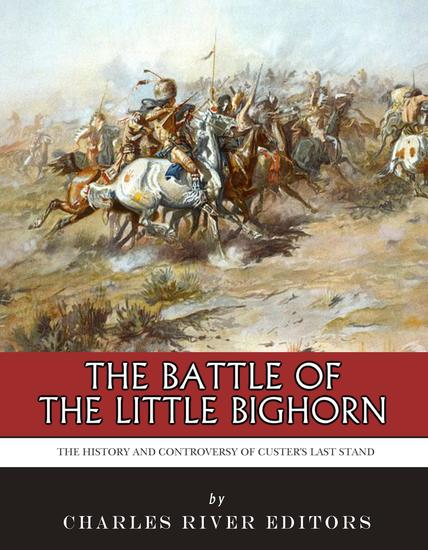
Since the Battle of the Little Bighorn, George Armstrong Custer has possessed one of the most unique places in American history. Although he was a capable cavalry officer who served honorably during the Civil War, he remains one of the most instantly identifiable and famous military men in American history due to the fact he was killed during one of the country’s most well known and ignominious defeats, the Battle of Little Bighorn. At the same time, this one relatively insignificant battle during America’s Indian Wars has become one of the country’s most mythologized events and continues to fascinate Americans nearly 140 years later.
 
On the morning of June 25, Custer’s scouts discovered a Native American village about 15 miles away in the valley of the Little Bighorn River.  Choosing to disregard his superiors’ orders to wait for a concerted effort, the grandstanding Custer intended to deliver his own decisive victory by dividing his command into three units, an extremely bold tactic when done in the face of a much larger force. Due to their belief in the inferiority of the Plains Indians, and mindful of previous Indian tactics that sought to avoid pitched battle, Custer and his men were most concerned with forcing the action and failed to understand the true nature of the situation they had entered. The Native American gathering, centered around the famous Sioux chief Sitting Bull, numbered roughly 8,000 individuals, and about 2,000 of them were warriors. Custer’s forces amounted to a mere 31 officers, 566 troopers, and 50 scouts and civilians, and they had been split into three columns in order to stop a possible retreat.
 
Before the battle, it is believed Custer thought he was facing a group of about 800, which was Sitting Bull’s strength in the weeks before the battle. However, the Army’s Native American scouts and civilian scouts had not adequately informed the Army of the reinforcements that arrived, and at Little Bighorn, Custer’s three-pronged attack was completely overwhelmed. How Custer met his fate, and whether there even was a Last Stand, remain subjects of debate, but what is known is that the Battle of the Little Bighorn was one of the U.S. military’s biggest debacles. All told, the 7th Cavalry suffered over 50% casualties, with over 250 men killed and over 50 wounded. The dead included Custer's brothers Boston and Thomas, his brother-in-law James Calhoun, and his nephew Henry Reed. Custer and his men were buried where they fell.  A year later, Custer’s remains (or more accurately, the remains found in the spot labeled with his name) were relocated to West Point for final interment.
 
The Battle of the Little Bighorn: The History and Controversy of Custer’s Last Stand comprehensively covers the entire campaign leading up to the decisive battle, analyzes the decisions made by the battle’s most important leaders, and explains the controversial aftermath and legacy of the fighting. Along with a bibliography and pictures of important people and places, you will learn about the Battle of the Little Bighorn like you never have before, in no time at all.
 
 
Available since: 05/02/2025.
Print length: 44 pages.
Other books that might interest you

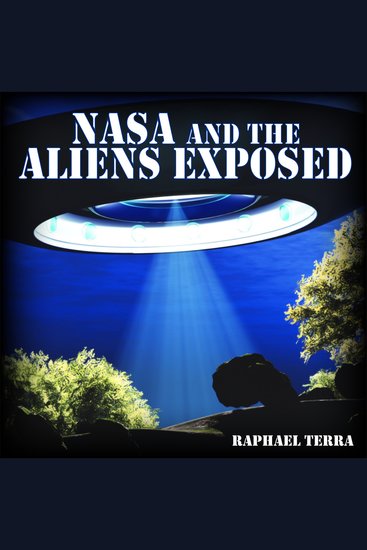
  • NASA and the Aliens Exposed - cover

    NASA and the Aliens Exposed

    Raphael Terra

    • 0
    • 0
    • 0
    This audiobook has been recorded using Text to speech (TTS). 
     
    In 2006 the American Embassy in Lithuania received the following cable from the then Lithuanian prime minister, Albinas Januska. He stated that "a group of UFOs are making their influence from the Cosmos" and that "there exists a decreasing group of persons, who are trying to rationally analyse the situation and objectively evaluate what is happening." 
     
    In 2007 the Japan’s Chief Cabinet Secretary, Nobutaka Machimura said "I am sure that unidentified flying objects exist." 
     
    A former NASA astronaut, Dr. Brian O'Leary stated that "there is abundant evidence that we are being contacted, that civilizations have been visiting us for a very long time. That their appearance is bizarre from any type of traditional materialistic western point of view. That these visitors use the technologies of consciousness, they use toroids, they use co-rotating magnetic disks for their propulsion systems, that seems to be a common denominator of the UFO phenomenon.”
    Show book
  • German Americans in the Civil War: The History and Legacy of German Units Who Fought on Both Sides of the War - cover

    German Americans in the Civil...

    Editors Charles River

    • 0
    • 0
    • 0
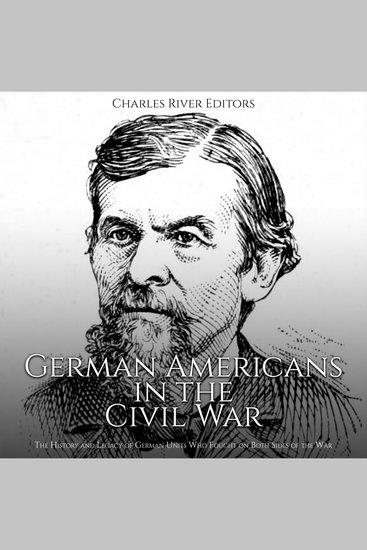
    Americans have long been fascinated by the Civil War, marveling at the size of the battles, the leadership of the generals, and the courage of the soldiers. The Civil War was the deadliest conflict in American history, and had the two sides realized it would take four years and inflict over a million casualties, it might not have been fought. Since it did, however, historians and history buffs alike have been studying and analyzing the military and political history of the conflict ever since.  
    	Immigration to what is now the United States began long before the country was independent. That early immigration included tens of thousands of Germans, many of them religious dissidents like the Dunkards, Amish and Mennonites, who settled particularly in Pennsylvania and in Virginia’s Shenandoah Valley. However, the steady migration became a flood, with a half million German immigrants coming between 1840 and 1850, and almost a million more between 1850 and 1860. 
    	The more recent immigrants tended to settle in cities like New York City, Cincinnati, St. Louis, Milwaukee and Chicago. More than 90% of them settled in states that would remain in the Union, and only a relatively small number settled in what became the Confederacy. Still, there were significant populations of German-born immigrants in the Southern cities of Charleston, Richmond, Wheeling and most notably, New Orleans. 
    	In terms of the Civil War, the most important of the German immigrants were the Forty-Eighters, perhaps 5,000 who had been involved in the Europe-wide revolutions of 1848. Their nickname “Forty-Eighters” refers to the year 1848, when revolutions broke out across Europe. The revolutions in the various German states sought to unify Germany into one nation, topple the old aristocratic structure and turn society toward democracy and socialism.
    Show book
  • The Making of Modern New Zealand - From Colonization to Sovereignty - cover

    The Making of Modern New Zealand...

    Lillian Brooks

    • 0
    • 0
    • 0
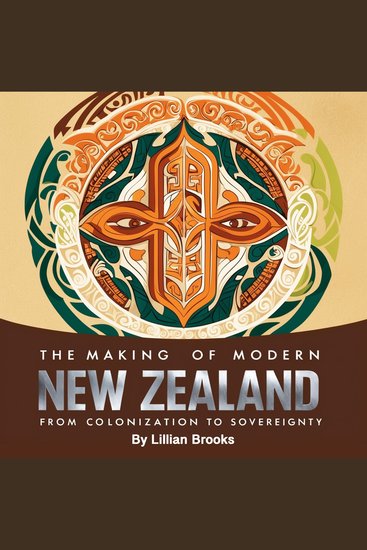
    Before the arrival of Europeans, New Zealand, or Aotearoa, was inhabited solely by the Māori people, who had arrived from Polynesia over a thousand years earlier. Their ancestors navigated vast distances across the Pacific Ocean, using their advanced knowledge of stars, winds, and ocean currents. They eventually settled in Aotearoa, forming distinct tribal communities known as iwi, each with its own territory, social structures, and traditions. 
    The Māori society was organized around iwi (tribes), hapū (sub-tribes), and whānau (families). Each iwi had a paramount chief, or rangatira, who was responsible for making decisions that affected the entire tribe. The rangatira was supported by a council of elders, or kaumatua, who provided guidance based on wisdom and experience. The hapū, made up of extended families, was the primary unit of Māori society, with a strong emphasis on kinship and collective responsibility. 
    Māori were deeply connected to the land, or whenua, and believed that their ancestors, the atua, or gods, imbued the earth, sea, and sky with sacred energy. This connection formed the foundation of Māori spiritual beliefs, which revolved around whakapapa (genealogy), mana (spiritual power or authority), and tapu (sacredness). Their spiritual worldview tied their identity to the land and natural resources, and they saw themselves as stewards, responsible for the care and preservation of the environment.
    Show book
  • Mosque-Cathedral of Córdoba and Mosque of Cristo de la Luz The: The History the Moors’ Most Famous Mosques in Spain - cover

    Mosque-Cathedral of Córdoba and...

    Editors Charles River

    • 0
    • 0
    • 0
    The Calle Cardenal Herrero in Córdoba is an iconic cobbled street impossible to overlook, for it is home to the Andalusian city's spectacular Mosque-Cathedral. Also known as “La Mezquita,” this one-of-a-kind Moorish and Christian place of worship reels in about 1.5 million visitors each year, most of whom find themselves spellbound by its hypnotic architectural features and the riveting history that has transpired and continues to within the beautifully weathered walls of the dual-church. That said, the Mezquita is far more than a mere tourist attraction - in recent years, the Mosque-Cathedral of Córdoba has become the crux of a complicated religious conflict resurrected by impassioned worshipers and patriotic locals who fear not only for the future of its legacy, but the preservation of its true history. 
    	It is easy for those on the outside looking in to make hasty judgments about the ongoing dispute, considering the endless amount of information that is uploaded online by the second. The contentious debates surrounding the Mezquita are often products of outdated prejudices, festering distrust, and whitewashing, all of which make it harder for the Mezquita to remain a non-discriminatory space serviceable to and appreciated by everyone today.  
    	The Mezquita del Cristo de la Luz is nowhere near the largest monument in Toledo. The grand Toledo Cathedral, for instance, dwarfs this modest, two-level structure with its height of 146 feet. The simple elegance of the mezquita pales in comparison to the city's stupendous landmarks. Toledo is, after all, home to the mighty stone fortification known as the Alcazar of Toledo, and the breathtaking masonry showpiece that is the Synagogue of Santa Maria la Blanca. Nevertheless, this multicultural mezquita is often hailed as one of the most precious treasures of Toledo, a place that truly embodies the unique, cross-cultural spirit of the city. 
    Show book
  • Hungary - A History of Hungary It´s People and Culture - cover

    Hungary - A History of Hungary...

    Days of History

    • 0
    • 0
    • 0
    Discover the fascinating story of Hungary's past, filled with epic battles, political intrigue, and powerful rulers. Learn about the country's unique culture and traditions that have shaped its identity over centuries. 
     In this book, you'll find:A comprehensive overview of Hungary's history, from its early origins to modern times.A deep dive into the country's most significant historical events, including wars, revolutions, and political movements.An exploration of Hungary's cultural heritage, including its language, music, and art.A look at the lives of Hungary's most famous historical figures, including kings, queens, and military leaders. 
    Get ready to immerse yourself in Hungary's rich history, as you discover the country's complex past and the people who shaped it. 
    Order your copy today and embark on a journey through Hungary's fascinating history.
    Show book
  • Twilight's Last Gleaming - Can America Be Saved? - cover

    Twilight's Last Gleaming - Can...

    Todd Starnes

    • 0
    • 0
    • 0
    "Todd Starnes is a fierce defender of freedom and a great patriot. He has seen, and understands, what is happening to our country like few others—his book is absolutely terrific, a must read!" —President Trump 


    President Biden ushered in a dark winter of malaise across our great nation. He snuffed out Lady Liberty's bright beacon of hope and brought despair to the land. And now we stand at a time of great choosing. Do we choose the path that leads to freedom or the path that leads to tyranny? 


    We face difficult days, but not hopeless days. Together, we can restore the Republic and reclaim our standing in the world. But first, we must remember our roots and return to the values that made our nation great. A deep and abiding desire for freedom and liberty, girded by faith in God, is the essence of who we are. Those are the precepts that must be reaffirmed if America is to be saved.
    Show book