Join us on a literary world trip!
Add this book to bookshelf
Grey
Write a new comment Default profile 50px
Grey
Subscribe to read the full book or read the first pages for free!
All characters reduced
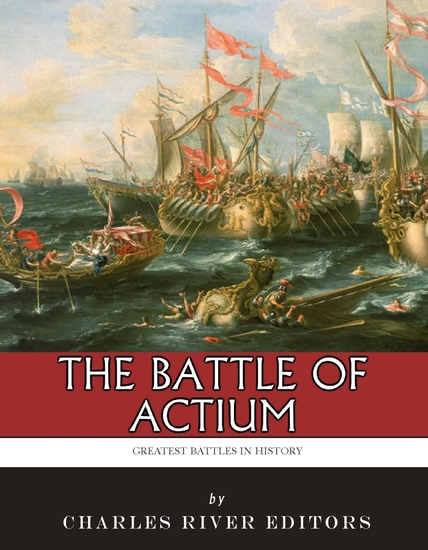
The Battle of Actium - cover

The Battle of Actium

Editors Charles River

Publisher: Charles River Editors

  • 0
  • 0
  • 0

Summary

The names of history’s most famous battles still ring in our ears today, their influence immediately understood by all. Marathon lent its name to the world’s most famous race, but it also preserved Western civilization during the First Persian War. Saratoga, won by one of the colonists’ most renowned war heroes before he became his nation’s most vile traitor. Hastings ensured the Normans’ success in England and changed the course of British history. Waterloo, which marked the reshaping of the European continent and Napoleon’s doom, has now become part of the English lexicon. In Charles River Editors’ Greatest Battles in History series, readers can get caught up to speed on history’s greatest battles in the time it takes to finish a commute, while learning interesting facts long forgotten or never known.
 
Every era has watershed moments that shape the arc of history, and for Ancient Rome, few were as decisive or monumental as the Battle of Actium in 31 B.C. The battle’s importance is understandable given the stakes and people involved; Actium pitted the joint navies of Cleopatra and Mark Antony against the battle fleet of Octavian. In many ways, this climactic battle was the culmination of a years-long power struggle between the heirs of the assassinated Julius Caesar, with Octavian being his legally appointed heir and Antony being his longtime lieutenant and trusted advisor. Antony had even taken Caesar’s Egyptian mistress as his own.
 
Actium is also remarkable because Roman conflicts were almost always decided on land. The generals of the Roman Republic were far more comfortable fighting on land than at sea, and while Pompey Magnus had made a reputation fighting on the Mediterranean, it was his victories during Sulla’s war that earned him his distinguished nickname. Likewise, Caesar had largely shunned naval combat throughout his distinguished career, and he had even been captured by pirates while sailing in the Aegean. Philippi, Mutina, Utica and Pharsalus had all been land battles, and with good reason. Unlike the British Empire of the 19th century or Athens and her “Wooden Wall”, the Roman military machine was almost entirely geared towards land combat, which received the greater part of funding from the state and was considered by far the more honorable profession. While the annals of Roman history are replete with great generals, they are considerably lighter on the side of the admirals, and there were many examples of generals finding the transition to sea difficult. Roman antipathy for sea fighting may explain why the piracy problem was such an endemic one for the Mediterranean during their rule. Indeed, the Romans were so historically unaccustomed to fighting on the sea that when attempting to find a short-term answer to bridging the technical gap between themselves and the more experienced Carthaginian fleets during the Punic Wars, their solution was the corvus, a spike-ended mobile walkway which allowed Roman galleys to latch onto enemy ships and flood them with marines, literally turning a sea battle into a series of miniature land ones where their expertly drilled and equipped troops could prevail.
 
As one of Rome’s most famous battles, the Battle of Actium has taken on a life of its own in popular memory. One of the longest-held myths about the battle is that Cleopatra, sensing defeat, began to sail away from the fight in the middle of the day, and the love struck Antony followed her with his own ship, abandoning his men in the middle of the fight. While that popular myth would be in keeping with explaining Cleopatra’s irresistible charm and magnetism, contemporary accounts of the battle do not suggest it was actually the case. As night approached, Antony and Cleopatra spotted a gap in the now thoroughly jumbled enemy line, and ordered their ships to speed through it without delay, making for Alexandria with all speed and abandoning their entire navy to its fate. 
Available since: 05/02/2025.
Print length: 42 pages.

Other books that might interest you

  • Mosquito Men - The Elite Pathfinders of 627 Squadron - cover

    Mosquito Men - The Elite...

    David Price

    • 0
    • 0
    • 0
    The story of one of the most remarkable – and feared – British aircraft of the Second World War: the de Havilland DH.98 Mosquito fighter-bomber. 
     
    Nicknamed the 'wooden wonder' for its balsawood frame, the two-man Mosquito excelled in several different roles, from reconnaissance to the bombing of sensitive priority targets. Following a Mosquito raid on the main Berlin broadcasting station on 30 January 1943, which succeeded in removing Hermann Goering from the airwaves, the Luftwaffe chief observed ruefully: 'It makes me furious when I see the Mosquito. I turn green and yellow with envy.' From the summer of that year, as RAF Bomber Command intensified its saturation-bombing campaign against German cities and industrial centres, Mosquitos were used by the RAF Pathfinder Force, which marked targets for night-time bombing, to potent and devastating effect. 
     
    David Price's involving and fast-paced narrative traces the contrasting wartime fortunes of a number of Mosquito crews, alongside which the development and operational history of the aeroplane (especially with the Pathfinder Force) forms a descant to the principal human narrative. Like the author's earlier book The Crew, Mosquito Men is rich in evocative and technically authoritative accounts of individual missions flown by an aircraft that ranks alongside the Spitfire, the Hurricane and the Avro Lancaster as one of the RAF's greatest ever.
    Show book
  • The Politics of Digital Pharmacology - Exploring the Craft of Collective Care - cover

    The Politics of Digital...

    Felix Heidenreich, Florian...

    • 0
    • 1
    • 0
    Digitization is transforming our world economically, culturally, and psychologically. The influx of new forms of communication, networking, and business opportunities, as well as new types of distraction, self-observation, and control into our societies represents an epochal challenge. Following Bernard Stiegler's concept of pharmacology, Felix Heidenreich and Florian Weber-Stein propose to view these new forms as digital pharmaka. Properly dosed, they can enable new self-relationships and forms of sociality; in the case of overdose, however, there is a risk of intoxication.
    In this essay, Felix Heidenreich, Florian Weber-Stein, and, in a detailed interview, Bernard Stiegler analyze this complex change in our world and develop new skills to use digital pharmaka.
    Show book
  • The Gender Equation in Schools - How to Create Equity and Fairness for All Students - cover

    The Gender Equation in Schools -...

    Jason Ablin

    • 0
    • 0
    • 0
    This compelling book takes you inside a teacher's journey to explore the question of gender in education. Jason Ablin uses his background in math teaching, school leadership, and neuroscience to present expert interviews, research, and anecdotes about gender bias in schools and how it impacts our best efforts to educate children. He provides practical takeaways on how teachers and leaders can do better for students. In this book, there are step-by-step guides for facilitating faculty-wide conversations around gender; writing learning reports without gender bias; using student assessments to check gendered attitudes about learning; evaluating learning spaces; and creating an inquiry map of your classroom. As a teacher, administrator, DEI director, or homeschooling parent, with the strategies and stories in this book, you'll be ready to embark upon your own journey to balance the gender equation and create greater equity for all of your students.
    Show book
  • Follow First Lead Second - Leadership is for Everyone - cover

    Follow First Lead Second -...

    Max King

    • 0
    • 0
    • 0
    There is the widespread belief that management and leadership are inextricably linked, that every manager is (or should be) a good leader. As a result, management leadership has been elevated to a cause worthy of promotion, and leadership as a term has become a mantra chanted by all and sundry, with numerous voices proclaiming numerous theories, many of which are spoken as facts, particularly by those who are disciples of this management-leadership cause. Examples of their output can be found in any management texts, in texts specializing in engineering management, and, as one might expect, in texts devoted exclusively to the leading cause. Numerous literary fallacies and paradoxes will be examined, and an unusual literary source will be used to illustrate various leadership styles.The concept of leadership will be applied to engineer positions, and some potentially divisive conclusions will be presented.Leadership is a critical field because it affects the entire world. In other words, it is a vital management function that enables organizations to achieve maximum efficiency and effectiveness. Numerous individuals inquire why we should pursue this field of study or why this assignment is necessary. Not only is leadership a position, but it is also a process that shapes how people and organizations interact. All nations, business enterprises, educational institutions, and organizations succeed primarily due to effective leadership.
    Show book
  • Chaste Mimosa - The Psychology of Plants - cover

    Chaste Mimosa - The Psychology...

    Terence McMullen

    • 0
    • 0
    • 0
    Propositions about artificial intelligence are being debated seriously in the 21st Century, but machines, unlike plants, are not even living organisms.
    So, are plants sentient beings, like humans? Do they feel? Can they communicate?
    Plant sentience is a subject that has intrigued mankind over the ages - from the ancient Greeks, Plato and Aristotle, through to modern day philosophers and psychologists.
    In this extraordinary book, Australia's Dr Terence McMullen presents an engaging, systematic and thorough study of plant psychology.
    The aim of this work is to bring together and organize the contentions of serious students of plant life who argue that there are objective grounds for plant psychology.
    Chaste Mimosa: The Psychology of Plants is a compelling and essential book for all thinkers, students and teachers of psychology, philosophy, physiology, plus all disciplines related to the study of plants.
    Show book
  • The Art of Covert Persuasion - (4 Books in 1) Learn the Secrets of How to Stealthily Persuade Influence and Manipulate Anyone Without Being Detected - cover

    The Art of Covert Persuasion -...

    James T. Kent, Dan Crosby,...

    • 0
    • 0
    • 0
    "The Art of Covert Persuasion merges four seminal works into one comprehensive guide, providing an unparalleled exploration into the art of subtle influence and manipulation. This book is an essential resource for those who aspire to master the art of influencing others without their awareness. 
    Dan Crosby's "Psychological Triggers" sets the stage with strategies for controlling, influencing, persuading, and manipulating using dark psychological techniques. It serves as a practical guide to understanding and leveraging human behavior, offering techniques effective in personal and professional realms. 
    "Stealth Mode Persuasion" by James T. Kent delves into the art of persuasion under the radar. Kent offers profound insights into human psychology and subconscious triggers, presenting sophisticated methods of persuasion and manipulation. His work emphasizes respect and ethical use of these powerful techniques, ensuring their responsible application. 
    Daniel Smith's "Banned Methods of Persuasion" explores the more secretive and controversial aspects of persuasion. Smith discusses the intricacies of human psychology, empathy, and perception, providing an in-depth guide to nuanced influence and negotiation tactics. This book is particularly valuable for those aiming to navigate complex social dynamics, whether in office politics or personal relationships. 
    William Legend's "Mass Psychology 101" rounds out the series, focusing on influencing groups and audiences. This book examines mass psychology, exploring how individuals can exert significant influence over large groups. It is a critical guide for understanding group behavior and leveraging it to achieve specific goals.
    Show book