Join us on a literary world trip!
Add this book to bookshelf
Grey
Write a new comment Default profile 50px
Grey
Subscribe to read the full book or read the first pages for free!
All characters reduced
The American Civil War in 1864 - The History and Legacy of the War’s Penultimate Year - cover

The American Civil War in 1864 - The History and Legacy of the War’s Penultimate Year

Editors Charles River

Publisher: Charles River Editors

  • 0
  • 0
  • 0

Summary

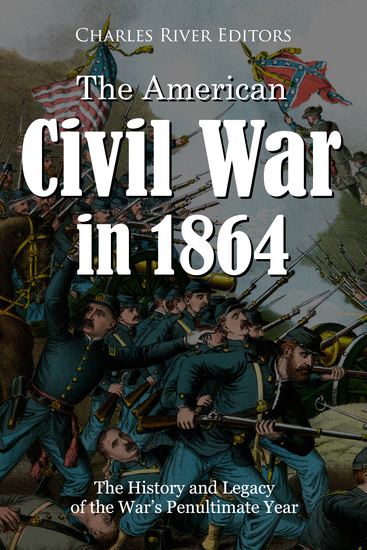
With Robert E. Lee’s Army of Northern Virginia continuing to frustrate the Union Army of the Potomac’s attempts to take Richmond in 1862 and 1863, President Lincoln shook things up by turning command of all the armies of the United States to Ulysses S. Grant in March 1864. , Lee had won stunning victories at battles like Chancellorsville and Second Bull Run by going on the offensive and taking the strategic initiative, but Grant and Lincoln had no intention of letting him do so anymore. Attaching himself to the Army of the Potomac, Grant ordered Army of the Potomac commander George Meade, "Lee's army is your objective point. Wherever Lee goes, there you will go also."
 
From May 5-7, the two most famous generals of the Civil War squared off for the first time. The 100,000 strong Army of the Potomac was double the size of Lee’s hardened but battered Army of Northern Virginia. It was a similar position to the one George McClellan had in 1862 and Joe Hooker had in 1863, and Grant’s first attack, at the Battle of the Wilderness, followed a similar pattern. Nevertheless, Lee proved more than capable on the defensive.
 
The Battle of the Wilderness was fought so close to where the Battle of Chancellorsville took place a year earlier that soldiers encountered skeletons that had been buried in shallow graves in 1863. Moreover, the  woods were so thick that neither side could actually see who they were shooting at, and whole brigades at times got lost in the forest. Both armies sustained heavy casualties while Grant kept attempting to move the fighting to a setting more to his advantage, but the heavy forest made coordinated movements almost impossible.
 
On May 5 and May 6, both armies attempted desperate attacks and counterattacks to strike a knockout blow, but they were ultimately unable to dislodge each other. Given the terrain and the nature of the fighting, it was one of the most horrendous battles of the war, with some wounded men literally burning to death in fires ignited by the battle that sparked the nearby underbrush and spread rapidly. The defending Confederates technically won a tactical victory by holding their ground, but they did so at a staggering cost, inflicting 17,000 casualties on the Army of the Potomac and suffering 11,000 of their own.
 
On May 7, Grant disengaged his army from the battle. His objective had been frustrated by Lee’s skillful defense, the same position as Hooker at Chancellorsville, McClellan on the Virginian Peninsula, and Burnside after Fredericksburg. His men got the familiar dreadful feeling that they would retreat back toward Washington, as they had too many times before. This time, however, Grant made the fateful decision to keep moving south, inspiring his men by telling them that he was prepared to “fight it out on this line if it takes all Summer.” The Battle of the Wilderness would only be the beginning of the Overland Campaign, not the end of it.
 
Despite the fierce fighting, Grant continued to push his battered but resilient army south, hoping to beat Lee’s army to the crossroads at Spotsylvania Court House, but Lee’s army beat Grant’s to Spotsylvania and began digging in, setting the scene for on and off fighting from May 8-21 that ultimately inflicted more casualties than the Battle of the Wilderness. In fact, with over 32,000 casualties among the two sides, it was the deadliest battle of the Overland Campaign.
 
Although the Battle of Spotsylvania technically lasted nearly 2 weeks, it is best remembered for the fighting that took place on May 12 at a salient in the Confederate line manned by Richard S. Ewell’s corps. Known as the Mule Shoe, a Union assault on the salient produced 24 hours of the most savage fighting conducted during the war, forever christening that point in the line as the Bloody Angle. 
Available since: 05/01/2025.
Print length: 279 pages.
Other books that might interest you

  • Thirty Years' War History for Beginners Circumstances Course and Effects of the Thirty Years' War and the Long Road to Peace - cover

    Thirty Years' War History for...

    Markus Neustedt

    • 0
    • 0
    • 0
    Dark clouds cast a shadow over 17th century Europe and color the continent in a dark fog. When they break out, a deluge of blood and sweat rolls over the countries, destroying landscapes and wiping out entire cities. There has never been a more merciless war in the history of Europe. Between state-building and religious conflicts, soldiers are sent to certain death and villages are razed to the ground. But how well do we know the circumstances under which Europe is carried into disaster? How are the people who are directly affected by the consequences of war faring?
    Show book
  • Baxter Meets His Magic Grandpa - cover

    Baxter Meets His Magic Grandpa

    Dr. James Foley

    • 0
    • 0
    • 0
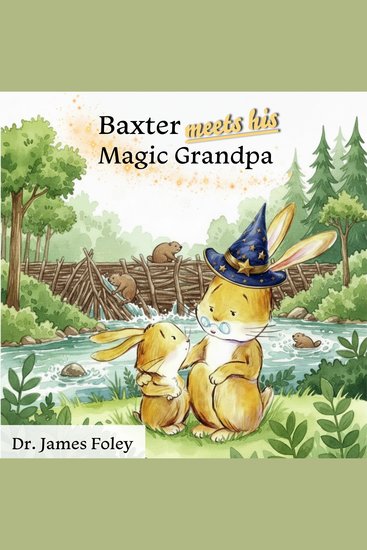
    Baxter Meets His Magic Grandpa is a wonderful children's book that follows Baxter the rabbit as he struggles with impulse control. When he suddenly meets his magical grandpa, Baxter learns clever tricks to help him manage his impulses. 
    Perfect for young children and their parents, this story includes a helpful guide that shows families how to use the book—along with other techniques—to support children, particularly those with ADHD and hyperactivity, in managing their feelings. 
    Immerse yourself in a wonderful soundscape world with Baxter the rabbit, his magical grandpa, and some hard-working beavers. 
    Thoughtfully written and narrated by Dr. James Foley, Baxter Meets His Magic Grandpa offers a meaningful way for kids and parents to connect.
    Show book
  • Ukraine in Central and Eastern Europe - Kyiv's Foreign Affairs and the International Relations of the Post-Communist Region - cover

    Ukraine in Central and Eastern...

    Sebastian Schäffer

    • 0
    • 0
    • 0
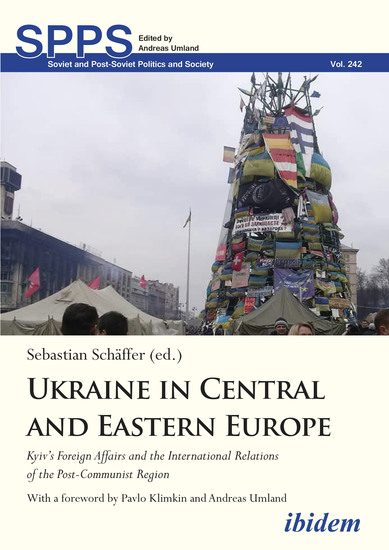
    This volume examines which interests and motivations some select countries in East-Central Europe and the Caucasus have towards Ukraine.
    Show book
  • The Holy Roman Empire - A Complex Realm - cover

    The Holy Roman Empire - A...

    Harris Ropes

    • 0
    • 0
    • 0
    The Holy Roman Empire traces its origins to a time of shifting power dynamics, spiritual authority, and the enduring legacy of Rome. It was neither wholly holy, Roman, nor an empire in the traditional sense, but it stood as a significant political and spiritual entity in European history for nearly a millennium. The story begins with the fall of the Western Roman Empire in 476 CE, which left a power vacuum in Europe. Centuries later, Charlemagne, King of the Franks, would revive the idea of a Roman imperium in the West. In the year 800, Pope Leo III crowned Charlemagne as Emperor of the Romans, symbolically linking his rule to the legacy of ancient Rome and establishing a precedent for divine sanction of imperial authority. 
    While Charlemagne’s empire did not last beyond his heirs, his imperial title endured in memory and ambition. The true foundations of the Holy Roman Empire, however, are often credited to Otto I, Duke of Saxony, who became King of East Francia in 936. Through military successes and strong alliances with the Church, Otto consolidated his power. In 962, he was crowned Emperor by Pope John XII, an act widely regarded as the formal beginning of the Holy Roman Empire. Otto’s coronation re-established the notion of a Christian emperor in the West and initiated a tradition that would persist for centuries. 
    This early period also marked the beginning of what would become a recurring struggle between secular rulers and the papacy for supremacy. The Investiture Controversy, though it would fully erupt later, had its roots in the growing tensions between emperors who believed they had the right to appoint bishops and popes who insisted on spiritual independence. This rivalry between church and state would shape the development of the empire’s political structure, often blurring the lines between religious and secular authority.
    Show book
  • The Color of Emotional Intelligence - Elevating Our Self and Social Awareness to Address Inequities - cover

    The Color of Emotional...

    Farah Harris

    • 0
    • 0
    • 0
    It takes strength not to curse someone out when they’re being rude, or not to lose it when your child is being disobedient. It is also emotionally taxing to keep it all together when you are on the receiving end of a microaggression. 
    Each of these instances requires us to use our emotional intelligence (or EQ). And, while it is a basic skill, there are more shades to emotional intelligence than you might think. Emotional intelligence can also be used to break barriers to equity. 
    In The Color of Emotional Intelligence, psychotherapist and well-being expert Farah Harris uses personal stories, anecdotes, and insight to discuss:The fundamentals of emotional intelligence and barriers to practicing EQ effectivelyHow emotional intelligence is used as a survival skill by marginalized peopleDifferent types of stressors, including microaggressions, and resulting unhealthy defensive tactics, such as code-switching and maskingSelf-care strategies for handling systemic stressors that affect people from marginalized groupsTools everyone can use to elevate their emotional intelligence to address inequities and become better stewards of humanity 
    Don’t go through life seeing things in black and white. It’s time to see the world in color.
    Show book
  • The Brontës - The True Story of the Life & Time of the Great Authors - cover

    The Brontës - The True Story of...

    Liam Dale

    • 0
    • 0
    • 0
    Interested in delving into the lives of the Brontë Sisters but short on time for lengthy biographies? Join The History Journals for an hourly history tour of their extraordinary lives. 
     
    The Brontë Sisters stand tall as one of literature's most illustrious families. Their timeless classics, including "Jane Eyre" and "Wuthering Heights," continue to define English Literature. These novels grace bookstores, libraries, and digital platforms, captivating readers' hearts and minds. Charlotte, Anne, and Emily Brontë, along with their brother Branwell and father Patrick, left an indelible mark with their passionate narratives and soul-stirring poetry. 
     
    Explore: 
    - Patrick and Maria Brontë, and the birth of the Brontë siblings 
    - The Brontës' relocation to Haworth, early losses, and education 
    - Homesickness, the moors, and their governess roles 
    - The creation of "Wuthering Heights" and "Agnes Grey," accompanied by Branwell's passing 
    - Ongoing family hardships and the Brontës' rising renown 
    - Charlotte's journey, her demise, and the enduring Brontë legacy
    Show book