Join us on a literary world trip!
Add this book to bookshelf
Grey
Write a new comment Default profile 50px
Grey
Subscribe to read the full book or read the first pages for free!
All characters reduced
Maimonides and St Thomas Aquinas - The Lives and Works of the Middle Ages’ Most Influential Religious Philosophers - cover

Maimonides and St Thomas Aquinas - The Lives and Works of the Middle Ages’ Most Influential Religious Philosophers

Editors Charles River

Publisher: Charles River Editors

  • 0
  • 0
  • 0

Summary

Moses Ben Maimon, frequently called Maimonides, was a medieval philosopher who revolutionized thinking about ethics, reason, and the Jewish Torah through his emphasis on reason and evidence. His works were broadly accepted by the Sephardi Jewish community and spread across the medieval world, reaching the Jewish populations as far as Yemen, and though he lived in the 12th century, Maimonides continues to be one of the most studied scholars of Jewish law, philosophy, and theology. Many consider him forward-thinking for his time, and his texts continue to reach numerous modern audiences through translations, commentaries, and in-depth study.
 
Maimonides’ ideas and theological interpretations remain influential in contemporary times. His work influenced numerous Jewish and Islamic scholars for centuries and contributed to the modern understanding of the Torah and Jewish law, while outside of religion, his ideas were popular topics in philosophy and went on to influence thinkers like Thomas Aquinas, Leibnitz, Leo Strauss, and the Humanist intellectual movement. Of particular importance was his emphasis on personal humility, forming decisions based on a body of evidence, and reasoning through arguments before arriving at a conclusion. His work was diverse, forward-thinking for his time, and demonstrated his intellectual pursuits across numerous fields. As a result, despite living almost 1,000 years ago, he continues to be one of the most influential scholars of ethics and Jewish philosophy and law due to the comprehensive and rationalist nature of his work.
 
It would be hard to overstate the influence that St. Thomas Aquinas (1225-1274) has had on both the Catholic world and the West as a whole over the last 750 years. Even in secular circles, Aquinas is known as one of the most important medieval philosophers, and in many respects a harbinger of the Renaissance that began to flourish across Europe in the centuries that followed his life. His groundbreaking work, Summa Theologica, remains one of the most influential philosophical texts in history, earning him a place in the pantheon alongside Plato, Aristotle, and Socrates.
 
Aquinas had just as great an influence on Christianity as well. His philosophical works forged and established natural theology, squaring Catholicism with reason and logic, the ideals and aspects of modern thought that really took hold during the Renaissance. With his work on logic, theology, and metaphysics, as one of the Church’s Doctors, Thomas Aquinas remains the Catholic Church’s greatest theologian and philosopher, and he is still held out by the Church as the role model for those studying to become a Catholic priest.
 
Maimonides and St. Thomas Aquinas: The Lives and Works of the Middle Ages’ Most Influential Religious Philosophers profiles the two philosophers, from their backgrounds to their most important ideas. Along with pictures of important people, places, and events, you will learn about Maimonides and St. Thomas Aquinas like never before.
Available since: 05/01/2025.
Print length: 57 pages.

Other books that might interest you

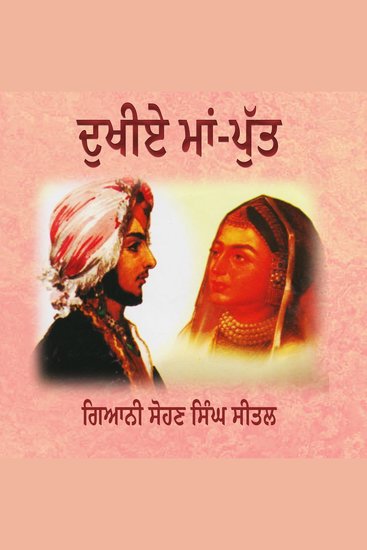
  • Dukhiye Maan-Put - Duleep Singh Da Janam - cover

    Dukhiye Maan-Put - Duleep Singh...

    Giani Sohan Singh Seetal

    • 0
    • 0
    • 0
    Dukhiye Maan-Put by Giani Sohan Singh Seetal 
    In this book, Giani Sohan Singh Seetal tells the story of the deep pain and suffering faced by Maharani Jind Kaur and her son, Maharaja Duleep Singh. It talks about their struggles after the British took control of Punjab, including the emotional distress of being separated from each other. The book shows how they endured great hardships, especially Maharaja Duleep Singh, who lived in exile. It highlights their personal suffering and the challenges they faced under British rule. 
    You can order it from Sikh Siyasat and get it delivered anywhere in the world.
    Show book
  • Deceptive Practices - Actions Taken to Mislead or Misinform - cover

    Deceptive Practices - Actions...

    Cito Harder

    • 0
    • 0
    • 0
    Deception has been a fundamental part of human interaction throughout history, shaping societies, relationships, and institutions. Whether through subtle manipulation, outright lies, or carefully crafted misinformation, deception influences decisions, perceptions, and behaviors in both personal and collective spheres. While often viewed negatively, deception is not always malicious; in some cases, it serves strategic, protective, or even necessary functions. Understanding the role deception plays in society requires examining its various forms, motivations, and consequences. 
    One of the most common areas where deception is prevalent is in personal relationships. People deceive for different reasons, ranging from self-preservation to maintaining social harmony. White lies, for example, are often used to spare feelings or avoid unnecessary conflict, while more harmful deceptions, such as infidelity or emotional manipulation, can cause deep and lasting damage. The complexity of deception in relationships highlights its dual nature—sometimes beneficial, sometimes destructive. 
    Beyond personal interactions, deception extends into professional and institutional environments. In workplaces, deceptive practices can manifest as misleading job descriptions, false performance evaluations, or office politics designed to manipulate outcomes. Deception in business, such as false advertising or hidden fees, can mislead consumers, erode trust, and cause financial harm. Similarly, political deception—through propaganda, misinformation, and strategic framing of facts—shapes public opinion, influencing elections, policies, and societal norms.
    Show book
  • Interview with Serial Killer Ed Kemper An - cover

    Interview with Serial Killer Ed...

    Ed Kemper

    • 0
    • 0
    • 0
    Edmund Emil Kemper III (born December 18, 1948) is an American serial killer convicted of murdering seven women and one girl between May 1972 and April 1973. Years earlier, at the age of 15, Kemper had murdered his paternal grandparents. Nicknamed the "Co-ed Killer," as most of his non-familial victims were female college students hitchhiking in the vicinity of Santa Cruz County, California, Kemper's murders often included necrophilia, decapitation, dismemberment and possibly cannibalism. Found sane and guilty at his trial in 1973, Kemper requested the death penalty for his crimes, however, capital punishment was suspended in California at the time, and he instead received eight concurrent life sentences. Since then, he has been incarcerated at California Medical Facility in Vacaville. The following recording is from a 1984 jailhouse tv interview.
    Show book
  • Willie Horton: 23 - Detroit's Own Willie the Wonder the Tigers' First Black Great - cover

    Willie Horton: 23 - Detroit's...

    Kevin Allen, Willie Horton, Jake...

    • 0
    • 0
    • 0
    A compelling autobiography from one of Detroit's favorite sons 


    At fifteen, Willie Horton received his first contract offer to become a professional baseball player. At twenty, he smacked his first major-league home run. At twenty-four, Horton stood in full uniform on the hood of his car, in the midst of burning homes and overturned vehicles, and pleaded for an end to the violence of the 1967 Detroit riots. 


    In this new autobiography, Horton shares the fascinating story of his life and career, from growing up in Detroit's Jeffries Projects as the youngest of twenty-one children to winning a World Series with his hometown Tigers in 1968. Horton also candidly discusses the opposition he faced as a Black player, his fond memories of Al Kaline, the joy he felt in returning to the Tigers as a front office executive, and the many ways he still tries to give back to Detroit and his community. 


    By turns heartrending and hilarious, this timely chronicle is an essential contribution to baseball's written history.
    Show book
  • Let Me Save You 25 Years - Mistakes Miracles and Lessons from the Lovesac Story - cover

    Let Me Save You 25 Years -...

    Shawn D. Nelson

    • 0
    • 0
    • 0
    A raucous and raw tale awaits within the pages of Shawn D. Nelson's part-memoir/part-business book, Let Me Save You 25 Years. As the Founder and CEO of Lovesac, Nelson unveils a magnificent and unvarnished account of his entrepreneurial journey spanning a quarter-century. With unapologetic honesty, he shares both triumphant victories and humbling defeats, painting a vivid and authentic picture of the entrepreneurial rollercoaster. From its humble beginnings as a college side gig through to its IPO and beyond, the Lovesac saga unfolds quickly through 25 gripping micro-chapters, each accompanied by a nugget of hard-earned wisdom. 
     
    These 25 key lessons, born from sweat, tears, and relentless determination, offer invaluable insights for success not only in business but in life as well. The narrative traces the path from those early days to the pinnacle of achievement—going public on the NASDAQ stock exchange—while imparting practical guidance for aspiring achievers in any field." Let Me Save You 25 Years isn't just a book; it's a mentor, a guide, and a source of inspiration for anyone with the ambition to carve their own legacy.
    Show book
  • René Descartes - Rationalism and Meditations on First Philosophy - cover

    René Descartes - Rationalism and...

    Hector Davidson

    • 0
    • 0
    • 0
    René Descartes, often regarded as the father of modern philosophy, revolutionized the intellectual landscape of the seventeenth century. His groundbreaking ideas in mathematics, metaphysics, and epistemology laid the foundation for a new way of thinking, challenging the dominance of Aristotelian scholasticism. Born in 1596 in La Haye en Touraine, France, Descartes displayed an early aptitude for learning. He was educated at the Jesuit College of La Flèche, where he received a rigorous grounding in classical philosophy and mathematics. However, dissatisfied with the prevailing methods of acquiring knowledge, he sought a more systematic and rational approach, leading to his development of the Method of Doubt. 
    Descartes' intellectual pursuits extended beyond philosophy. His contributions to mathematics were equally significant, particularly in the creation of Cartesian geometry, which established a link between algebra and geometry through the use of coordinate planes. This innovation became a cornerstone of modern mathematics and physics, influencing generations of scientists. His emphasis on deduction and reason over mere observation shaped the trajectory of scientific inquiry, reinforcing the idea that true knowledge must be derived from fundamental principles. 
    His most famous philosophical work, Meditations on First Philosophy, published in 1641, sought to establish an unshakable foundation for human knowledge. In this work, he introduced the concept of radical skepticism, questioning the reliability of sensory perception and challenging assumptions about reality. Through this process, he arrived at his famous conclusion, "Cogito, ergo sum" (I think, therefore I am), which he considered the first indubitable truth. From this foundation, Descartes attempted to prove the existence of God and the distinction between mind and body, a theory known as Cartesian dualism.
    Show book