Join us on a literary world trip!
Add this book to bookshelf
Grey
Write a new comment Default profile 50px
Grey
Subscribe to read the full book or read the first pages for free!
All characters reduced
Commanders of the Army of Northern Virginia - The Lives and Careers of Robert E Lee and Joseph E Johnston - cover

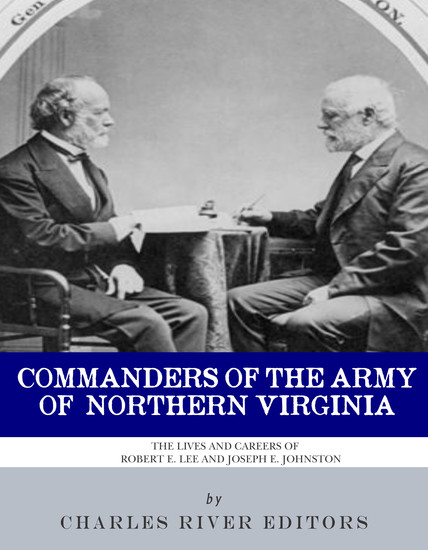
Commanders of the Army of Northern Virginia - The Lives and Careers of Robert E Lee and Joseph E Johnston

Editors Charles River

Publisher: Charles River Editors

  • 0
  • 0
  • 0

Summary

With the exception of George Washington, perhaps the most famous general in American history is Robert E. Lee (January 19, 1807 – October 12, 1870), despite the fact he led the Confederate Army of Northern Virginia against the Union in the Civil War. As the son of U.S. Revolutionary War hero Henry "Light Horse Harry" Lee III, and a relative of Martha Custis Washington, Lee was imbued with a strong sense of honor and duty from the beginning. And as a top graduate of West Point, Lee had distinguished himself so well before the Civil War that President Lincoln asked him to command the entire Union Army. Lee famously declined, serving his home state of Virginia instead after it seceded.
 
Lee is remembered today for constantly defeating the Union’s Army of the Potomac in the Eastern theater from 1862-1865, considerably frustrating Lincoln and his generals. His leadership of his army led to him being deified after the war by some of his former subordinates, especially Virginians, and he came to personify the Lost Cause’s ideal Southern soldier. His reputation was secured in the decades after the war as a general who brilliantly led his men to amazing victories against all odds.
 
Despite his successes and his legacy, Lee wasn’t perfect. And of all the battles Lee fought in, he was most criticized for Gettysburg, particularly his order of Pickett’s Charge on the third and final day of the war. Despite the fact his principle subordinate and corps leader, General James Longstreet, advised against the charge, Lee went ahead with it, ending the army’s defeat at Gettysburg with a violent climax that left half of the men who charged killed or wounded.
 
During the Civil War, one of the tales that was often told among Confederate soldiers was that Joseph E. Johnston was a crack shot who was a better bird hunter than just about everyone else in the South. However, as the story went, Johnston would never take the shot when asked to, complaining that something was wrong with the situation that prevented him from being able to shoot the bird when it was time.
 
 The story is almost certainly apocryphal, but it was aptly used to demonstrate the Confederates’ frustration with a man who everyone regarded as a capable general. Johnston began the Civil War as one of the South’s senior commanders, leading the ironically named Army of the Potomac to victory in the Battle of First Bull Run over Irvin McDowell’s Union Army. But Johnston would become known more for losing by not winning. Johnston was never badly beaten in battle, but he had a habit of strategically withdrawing until he had nowhere left to retreat. When Johnston had retreated in the face of McClellan’s army before Richmond in 1862, he finally launched a complex attack that not only failed but left him severely wounded, forcing him to turn over command of the Army of Northern Virginia to Robert E. Lee.
 
 Johnston and Confederate President Jefferson Davis had a volatile relationship throughout the war, but Johnston was too valuable to leave out of service and at the beginning of 1864 he was given command of the Army of Tennessee. When Johnston gradually retreated in the face of Sherman’s massive army (which outnumbered his 2-1) before Atlanta in 1864, Davis removed Johnston from command of the Army of Tennessee and gave it to John Bell Hood.
 
 Johnston has never received the plaudits of many of the South’s other generals; in fact, there are only a couple of monuments commemorating his service in the South. Yet Johnston was a competent general who fought in some of the most important campaigns of the Civil War, and it’s often forgotten that it was his surrender to Sherman weeks after Appomattox that truly ended the Civil War. Johnston did so over Davis’s command to keep fighting, incurring his wrath once more.  
Available since: 06/20/2025.
Print length: 132 pages.

Other books that might interest you

  • Taking Charge of ADHD - cover

    Taking Charge of ADHD

    Roseanne Lammers

    • 0
    • 0
    • 0
    Taking Charge of ADHD: A Guide on How to Navigate ADHD. Learn Tips on How to Maximize Your Potential and Achieve Success With ADHDAttention-deficit/hyperactivity disorder (ADHD) is a neurodevelopmental disorder that affects millions of people worldwide. It is characterized by symptoms of inattention, hyperactivity, and impulsivity, which can make it difficult for individuals with ADHD to succeed in school, work, and personal relationships. Despite its prevalence, there is still much that is not understood about ADHD, and many people with the disorder go undiagnosed or misdiagnosed.This audiobook aims to provide a comprehensive overview of ADHD, from its causes and symptoms to the various treatment options available.This audiobook will cover the following topics:- Childhood and Adult Diagnosis of ADHD- Behavior Assessments- Reimagine Your Environment- Embrace Innate Neurological Tendencies- Tap into the Healing Power of Connection- Consider Medication In Managing ADHD- And many more!If you or someone you know has been affected by ADHD, or if you are simply curious about this complex and fascinating disorder, this audiobook has something for you. So scroll up and click “add to cart” now!
    Show book
  • Rebellion: Book Summary and Analysis - cover

    Rebellion: Book Summary and...

    Briefly Summaries

    • 0
    • 0
    • 0
    This is a concise summary and analysis of Rebellion, by Robert Kagan.
     
    It is not the original book and is not affiliated with or endorsed by Robert Kagan.
     
    Ideal those seeking a quick and insightful overview.


    Rebellion takes listeners on a powerful journey through history, examining the forces that drive people to rise up, resist, and reshape society. Through riveting stories and insightful analysis, the author explores the motivations, tactics, and sacrifices behind some of the most impactful rebellions in history. Listeners gain a deeper understanding of the qualities that fuel change-makers—courage, resilience, and a commitment to justice—and how these same principles can inspire personal and professional growth.
     
    This audiobook is more than a historical account; it’s a motivational guide for those looking to challenge the status quo and create meaningful change in their own lives. With each chapter offering valuable lessons on leadership, adaptability, and the power of vision, Rebellion encourages listeners to embrace the transformative power of resilience and purpose. Inspiring and thought-provoking, this audiobook will empower you to confront challenges, pursue ambitious goals, and make a lasting impact.
    Show book
  • The Plainsman: A Story of Wild Bill Hickok - cover

    The Plainsman: A Story of Wild...

    Frank Jenners Wilstach

    • 0
    • 0
    • 0
    "In the following pages I have endeavoured to give the reader a plain, honest, homespun account of my state in life, and some few of the difficulties which have attended me along its journey, down to this time. I am perfectly aware, that I have related many small and, as I fear, uninteresting circumstances; but if so, my apology is, that it was rendered necessary by a desire to link the different periods of my life together, as they have passed, from my childhood onward, and thereby to enable the reader to select such parts of it as he may relish most, if, indeed, there is any thing in it which may suit his palate."
    Show book
  • Badass Begums - cover

    Badass Begums

    Anoushka Jain

    • 0
    • 0
    • 0
    History rarely shines a light on the formidable Mughal begums who boldly navigated the imperial courts, brokered powerful deals, reshaped Delhi's skyline, created private spaces for women, fought battles and resisted patriarchy - all from their place behind the purdah.  
    In Badass Begums, Anoushka Jain introduces you to ten such Mughal-era women whose lives rippled with ambition, romance, intrigue and fierce resilience. Jahanara Begum, Shah Jahan's favourite daughter who designed Chandni Chowk and her sister, the firebrand Roshanara Begum, who schemed with Aurangzeb to take over her father's empire; the invincible Begum Samru, a tawaif-turned-ruler, who led her own army into battles; Maham Anga and Mubarak Begum, whose counsel rivalled that of chief ministers, and the resolute Qudsia Begum who built riverfront gardens only to see them battered by rebellions - these and other stories come alive in a riveting narrative and walking tour maps of the places they lived in or curated.  
    Based on rigorous research and written with warmth, Badass Begums is an eye-opening journey through the breathtaking legacies still hidden in the by-lanes of Delhi.
    Show book
  • A Rare Recording of John E Brown - cover

    A Rare Recording of John E Brown

    John E. Brown

    • 0
    • 0
    • 0
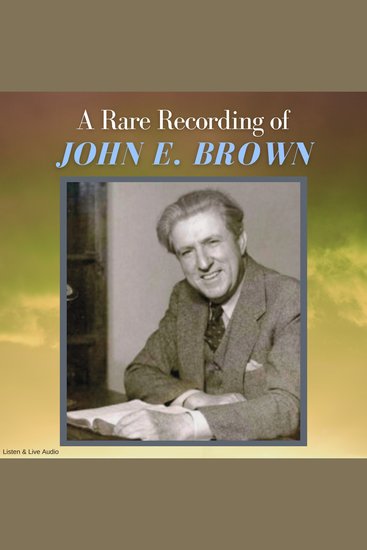
    John E. Brown (April 2, 1879 – February 12, 1957) was a prominent Methodist evangelist, publisher, radio pioneer, and educator in the first half of the twentieth century. In 1919, he established John Brown University, one of Arkansas’ leading private universities to provide an interdenominational, Christian education for needy students. He was also the leading figure in securing passage of a law prohibiting the sale of alcohol in Benton County, a ban that continued into the twenty-first century.
    Show book
  • Witness to Roswell 75th Anniversary Edition - Unmasking the Government's Biggest Cover-up - cover

    Witness to Roswell 75th...

    Thomas J. Carey, Donald R. Schmitt

    • 1
    • 0
    • 0
    “When I finished Witness to Roswell, I said to myself, ‘Case closed!’ for the very wealth and sheer weight of eyewitness testimony.”—George Noory, host, Coast to Coast AM This classic in the field of UFOology is filled with hard-hitting eyewitness testimony of one of the most important events of all time: the actual recovery of a UFO outside of Roswell, New Mexico, in 1947. For more than 70 years, government authorities have led us to believe the wreckage was merely a very conventional weather balloon—but the witnesses who were there continue to tell a different story.Witness to Roswell once again provides a "can't put down" written account of what really transpired in Roswell decades ago. It pries loose the truth the government doesn't want us to know including the revelations of Walter Haut. This edition includes: A growing litany of deathbed confessions describing the "little people" recovered at the crash site.The most comprehensive time line of events ever published on this seminal event.The identity of the Boeing engineer called in to examine the exotic wreckage from the crash.What really took place at the Roswell base hospital and what nurse actually ordered the children’s caskets.The story of the soldier who wore gloves at the dinner table after guarding the "bodies." Clearly, the implications of this information are foreboding. One need only look at the fact that officials now have four explanations for this historic event—but to which one do all the witnesses testify on their deathbeds?Witness to Roswell once again demonstrates to the world that no statute of limitation applies to the truth: We are not alone. This anniversary edition includes a new introduction by the authors and additional material.
    Show book