¡Acompáñanos a viajar por el mundo de los libros!
Añadir este libro a la estantería
Grey
Escribe un nuevo comentario Default profile 50px
Grey
Suscríbete para leer el libro completo o lee las primeras páginas gratis.
All characters reduced
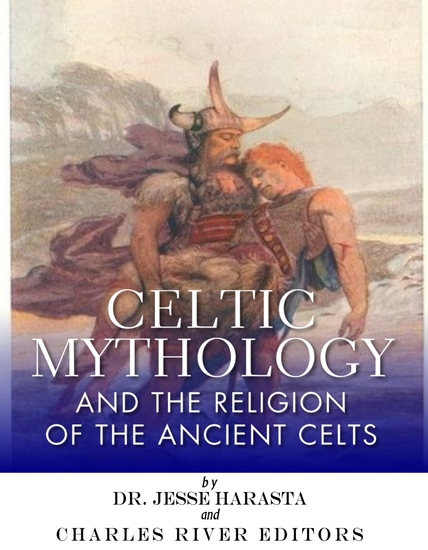
Celtic Mythology and the Religion of the Ancient Celts - cover

Celtic Mythology and the Religion of the Ancient Celts

Editors Charles River

Editorial: Charles River Editors

  • 0
  • 0
  • 0

Sinopsis

“Throughout all of Gaul there are two classes of people who are treated with dignity and honor. This does not include the common people, who are little better than slaves and never have a voice in councils. Many of these align themselves with a patron voluntarily, whether because of debt or heavy tribute or out of fear of retribution by some other powerful person. Once they do this, they have given up all rights and are scarcely better than servants. The two powerful classes mentioned above are the Druids and the warriors. Druids are concerned with religious matters, public and private sacrifices, and divination.” – Julius Caesar
 
The Celts are one of the most well-known groups in Europe and one of the least understood. Depending on which classifications are used, the Celts are also one of the oldest civilizations in Europe. In the centuries before Christ, the Celts were spread out across much of continental Europe, and though they are mostly identified with Gaul, evidence suggests they also spread as far as Portugal. Though they were spread out across Europe before the height of the Roman Empire, most people associate the Celts with the British Isles today, particularly Ireland and Scotland. After they had been relegated to those smaller regions as a result of the Romans and other migrations, the culture of the Celts as it is currently understood began to congeal during the Early Middle Ages, and Celtic culture, folklore, and legend have all become inextricably intertwined with Irish history and British history as a whole.
 
Historically, Celtic cultures differ from their English and French neighbors in a number of ways, including social organization, language, values and economic systems, but one of the most captivating of these has always been their myths. Celtic Myths, which can be read in translation without needing special training in grammar, are more accessible than the Celtic languages, and unlike the other distinctive features that have faded over the centuries, myths still have their immediacy and power when read today.  While much has undoubtedly been lost from the ancient Celts over time, medieval manuscripts help scholars understand how Celtic myths have reached the form they have today. Like many ancient belief systems, Celtic mythology shares Indo-European roots, meaning Celtic beliefs have cousins in related societies like the Norse, Greeks, Romans and Slavs, with a foundation of shared mythmaking that goes back several millennia.  Descriptions of Celtic mythology by their contemporaries, including the Ancient Romans and Greeks, provide a hazy picture, while the tales recorded by Christian monks and undoubtedly bear the stamp of their own religious affiliations.
 
Celtic Mythology: The Religion of the Ancient Celts examines the history and legacy of the religion practiced by the Ancient Celts. Along with pictures and a bibliography, you will learn about Celtic mythology like you never have before, in no time at all.
Disponible desde: 02/05/2025.
Longitud de impresión: 62 páginas.

Otros libros que te pueden interesar

  • Understanding Feminism Find Out Everything You Need to Know About Feminism Its Origins and Its Various Forms in a Clear and Compact Format - cover

    Understanding Feminism Find Out...

    Lena Häfermann

    • 0
    • 0
    • 0
    MeToo movement, gender pay gap, manspreading, catcalling - you hear these terms more and more often these days, and they all revolve around one topic: feminism. Feminism affects us all and a sound basic knowledge of the subject is essential, especially at the moment. In this book, you will learn what all these terms mean and how they relate to feminism. But what exactly is feminism? Haven't we all had equal rights for a long time?
    In which areas is feminism necessary? Does feminism also help men? And what can I do for feminism? These questions are answered in this book. Once you understand how sexism works, how it manifests itself and how feminism can help combat it, you too can contribute to creating a modern world without gender discrimination.
    Ver libro
  • Exodus from the Alamo - The Anatomy of the Last Stand Myth - cover

    Exodus from the Alamo - The...

    Philip Thomas Tucker

    • 0
    • 0
    • 0
    "Contrary to movie and legend, we now know that the defenders of the Alamo in the war for Texan independence—including Davy Crockett, Jim Bowie, and William B. Travis—did not die under brilliant sunlight, defending their positions against hordes of Mexican infantry. Instead, the Mexicans launched a predawn attack, surmounting the walls in darkness, forcing a wild melee inside the fort before many of its defenders had even awoken. In this book, Dr. Tucker, after deep research into recently discovered Mexican accounts and forensic evidence, informs us that the traditional myth of the Alamo is even more off-base: most of the Alamo’s defenders died in breakouts from the fort, cut down by Santa Anna’s cavalry that was positioned to intercept the escapees. A number of the Alamo’s defenders did hang on inside the fort, fighting back every way they could, but most of the Texans, in two groups, broke out of the fort after the enemy had broken in, and the primary fights took place on the plain outside. Still fighting desperately, the Texans’ retreat was halted by cavalry, and afterward, Mexican lancers plied their trade with charges into the midst of the remaining resisters. Notoriously, Santa Anna burned the bodies of the Texans who had dared stand against him. But as this book proves in thorough detail, the funeral pyres were well outside the fort—where the two separate groups of escapees fell on the plain, rather than in the Alamo itself. "
    Ver libro
  • The Valley of the Kings - Tombs and Treasures of the Pharaohs - cover

    The Valley of the Kings - Tombs...

    Omar Khalil

    • 0
    • 0
    • 0
    The Valley of the Kings, one of the most iconic archaeological sites in the world, first captured the attention of explorers and scholars in the 18th century. Though long known to local inhabitants, it was not until European adventurers began systematically exploring Egypt that the valley's true significance came to light. These early explorers, driven by a mix of scholarly curiosity and treasure hunting, began mapping and cataloging the tombs they encountered in the barren hills west of the Nile. Among them were figures like Giovanni Belzoni and Howard Carter, whose efforts would lay the foundation for modern Egyptology. 
    The role of local communities, particularly the people of Qurna and other nearby villages, cannot be overlooked. Many locals worked closely with foreign archaeologists, guiding them through the rugged terrain and even assisting in excavations. Their intimate knowledge of the landscape proved invaluable. Some families, generation after generation, were involved in archaeological digs, and many tombs might have remained hidden much longer without their contributions. However, this collaboration also brought complex dynamics, especially regarding the protection of cultural heritage and the handling of newly uncovered treasures. 
    Transforming what seemed like a lifeless desert into a thriving center of discovery, the Valley soon became a symbol of ancient grandeur and mystery. The dry climate and remote location helped preserve many of the tombs, allowing researchers to uncover not only the resting places of kings but also the beliefs, rituals, and artistry of ancient Egypt. With each new find, the Valley revealed more about the powerful individuals buried there and the civilization they ruled.
    Ver libro
  • Don't die - cover

    Don't die

    Seun Alabi

    • 0
    • 0
    • 0
    "Don't Die" is not just a title; it is a powerful call to action, a reminder that life is a journey worth fighting for, no matter the trials we face.  
    In a world filled with challenges, uncertainties, and obstacles that can sometimes feel insurmountable, the message of resilience and survival becomes more crucial than ever. 
    As we navigate through the complexities of our existence be it in our personal relationships, professional endeavors, or our internal battles with self-doubt and fear we often encounter moments that test our will to persevere. This book serves as a beacon of hope and a guide for those who find themselves at a crossroads, unsure of how to move forward. It challenges us to confront our fears, to embrace our vulnerabilities, and to discover the strength that resides within us all. 
    Through compelling stories, practical advice, and heartfelt reflections, "Don't Die" invites readers to explore the depths of their own experiences and to recognize the power of resilience. Each chapter is a step towards understanding that the journey of life is not about avoiding hardship, but about learning to thrive in spite of it. The lessons within these pages resonate with anyone who has ever felt lost, hopeless, or on the brink of giving up. 
    In a society that often glorifies success and perfection, this book acknowledges the beauty in imperfection and the importance of nurturing our mental and emotional well-being. It empowers us to seek support, to lean on one another, and to foster a community that values empathy and understanding.
    Ver libro
  • The Tech Coup - How to Save Democracy from Silicon Valley - cover

    The Tech Coup - How to Save...

    Marietje Schaake

    • 0
    • 0
    • 0
    Under the cover of "innovation," technology companies have successfully resisted regulation and have even begun to seize power from governments themselves. Facial recognition firms track citizens for police surveillance. Cryptocurrency has wiped out the savings of millions and threatens the stability of the global financial system. Spyware companies sell intelligence tools to anyone who can afford them. This new reality—where unregulated technology has become a forceful instrument for autocrats worldwide—is terrible news for democracies and citizens. 


    In The Tech Coup, Marietje Schaake explains how technology companies crept into nearly every corner of our lives and our governments. She takes us beyond the headlines to high-stakes meetings with human rights defenders, business leaders, computer scientists, and politicians to show how technologies have gone from being heralded as utopian to undermining the pillars of our democracies. To reverse this existential power imbalance, Schaake outlines solutions to empower elected officials and citizens alike. Democratic leaders can—and must—resist the influence of corporate lobbying and reinvent themselves as dynamic, flexible guardians of our digital world. Schaake offers a frightening look at our modern tech-obsessed world—and a clear-eyed view of how democracies can build a better future before it is too late.
    Ver libro
  • Reading the Bible on Turtle Island - An Invitation to North American Indigenous Interpretation - cover

    Reading the Bible on Turtle...

    T. Christopher Hoklotubbe, H....

    • 0
    • 0
    • 0
    In Reading the Bible on Turtle Island, Indigenous scholars Chris Hoklotubbe and Danny Zacharias explore what it means to read the Bible from the lens of Indigenous peoples in North America. Exploring the intersection of Scripture, Cultural Traditions, Hearts and Minds, and Creation, they affirm Creator's presence with Indigenous people since the beginning. By recovering these rich histories, this book offers a fresh reading of Scripture that celebrates the assets, blessings, and insights of Indigenous interpretation. 
     
    Indigenous culture has often been dismissed or deemed problematic within Western Christian circles, and historical practices have often communicated that Indigenous worldviews have little to offer the church or its understanding of Scripture. Hoklotubbe and Zacharias challenge this perspective, reasserting the dignity of these cultures that were condemned through colonial practices and showing how Indigenous interpretations bring invaluable insights to all of God's people. 
     
    Reading the Bible on Turtle Island is a vital resource for scholars who are interested in the intersection of biblical studies and social location, who are seeking to explore Scripture through an Indigenous hermeneutic, or who desire to learn more about the contributions of Indigenous worldviews to Biblical interpretation.
    Ver libro