Join us on a literary world trip!
Add this book to bookshelf
Grey
Write a new comment Default profile 50px
Grey
Subscribe to read the full book or read the first pages for free!
All characters reduced
Ancient Cities - The History of Carthage - cover

Ancient Cities - The History of Carthage

Editors Charles River

Publisher: Charles River Editors

  • 0
  • 0
  • 0

Summary

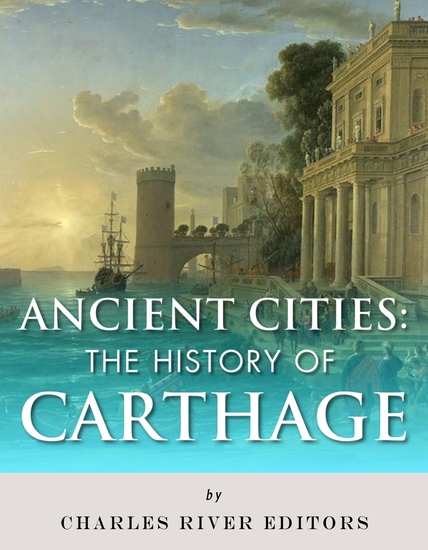
Carthage is, without a doubt, one of the great ancient civilizations. At its peak, the wealthy Carthaginian empire dominated the Mediterranean against the likes of Greece and Rome, with commercial enterprises and influence stretching from Spain to Turkey, and at several points in history it had a very real chance of replacing the fledgling Roman empire or the failing Greek poleis (city-states) altogether as master of the Mediterranean. Although Carthage by far preferred to exert economic pressure and influence before resorting to direct military power (and even went so far as to rely primarily on mercenary armies paid with its vast wealth for much of its history, it nonetheless produced a number of outstanding generals, from the likes of Hanno Magnus to, of course, the great bogeyman of Roman nightmares himself: Hannibal. Through clever use of force projection, both by maintaining a large and very active navy to dominate the seaborne routes along which most of their vast trading empire’s lifeblood flowed and by paying allies with gold or recruiting mercenary armies to fight for them, Carthage was able to go from a minor Phoenician settlement to one of the most powerful trading empires of antiquity.
 
However, the Carthaginians’ foreign policy had one fatal flaw; they had a knack over the centuries of picking the worst enemies they could possibly enter into conflict with. The first serious clash of civilizations which Carthage was involved with was Greece, which rapidly became hostile when the Carthaginians began pushing to spread their influence towards the colonies known as Magna Graecia (“Great Greece”), which had been established in southern Italy and Sicily by several Greek poleis. Much later, Carthage eventually became embroiled in a long series of costly and ultimately unsuccessful wars in Sicily, but they were able to avoid an all-out confrontation with the Greeks mostly because Carthage’s spread across the Mediterranean coincided with the Greeks’ struggle for their very survival against Darius and Xerxes’ Persian invasions. After those, the Peloponnesian War split Greece between Sparta and Athens as the two great cities battled each other for supremacy. Hostilities might have resumed later, but the Greeks were swallowed up by the burgeoning empire of Alexander the Great. The Macedonian himself, after his headlong push to the east had led him onto the plains of India itself, had planned to lead an army West along the coast of North Africa and take Carthage, but he died mysteriously before his dream could ever come to fruition. Thus, more by luck than by design, Carthage had survived a scrap with two of the greatest powers in the Mediterranean.
 
Unfortunately for the Carthaginians, it would not endure the next major confrontation. Certain foreign policy decisions led to continuing enmity between Carthage and the burgeoning power of Rome, and what followed was a series of wars which turned from a battle for Mediterranean hegemony into an all-out struggle for survival, with Hannibal crossing the Alps and threatening Rome itself during the Second Punic War and Roman legions smashing Carthage to rubble at the end of the Third Punic War. As legend has it, the Romans literally salted the ground upon which Carthage stood to ensure its destruction once and for all.
 
Despite having a major influence on the Mediterranean for nearly five centuries, little evidence of Carthage’s past might survives. The city itself was reduced virtually to nothing by the Romans, who sought to erase all physical evidence of its existence, and though its ruins have been excavated they have not provided anywhere near the wealth of archaeological items or evidence as ancient locations like Rome, Athens, Syracuse, or even Troy. Today, Carthage is a largely unremarkable suburb of the city of Tunis.
Available since: 05/02/2025.
Print length: 39 pages.

Other books that might interest you

  • The Personality Color Matrix - The Transformative Tool To Unlock Joy Upgrade Your Awareness & Reconnect - cover

    The Personality Color Matrix -...

    Dawn L. Billings, Corbin B....

    • 0
    • 0
    • 0
    Are you looking for better communication and less conflict in your relationships? Dive into the transformative pages of The Personality Color Matrix where you'll find practical tools to maximize joy and connection while decreasing stress and misunderstanding. As you read, you will uncover insights that will empower you to:Reduce arguments (or prevent them in the first place)Heal and strengthen your fractured relationshipsAccelerate personal and professional growth with tailored strategiesEnhance your emotional intelligence and capacity for empathyExperience greater fulfillment from deeper self-understandingIncrease the quality and effectiveness of your communicationRecognize and manage your destructive personality tendenciesFind value and wisdom in differing perspectivesChoose love and connection over fear and division
    Show book
  • The Disconnected Kids Nutrition Plan - Proven Strategies to Enhance Learning and Focus for Children with Autism ADHD Dyslexia and Other Neurological Disorders - cover

    The Disconnected Kids Nutrition...

    Dr. Robert Melillo

    • 0
    • 0
    • 0
    A scientifically developed program for feeding kids with special needs—based on the popular Brain Balance Program 


    Dr. Robert Melillo's Brain Balance program has helped thousands of families across the country, offering a drug-free, scientifically based method for addressing a wide range of conditions, including autism spectrum disorders and ADHD. In The Disconnected Kids Nutrition Plan, he presents the nutritional side of the Brain Balance Program, featuring guidelines, tips, and kid-friendly recipes based on the latest scientific research on how food affects the brain. 


    Designed to help busy parents feed picky kids in a beneficial way, the book shows how to: recognize the difference between a fussy eater and a problem eater; ease the sensory issues that make for mealtime mayhem; identify food sensitivities using a simple elimination diet; choose supplements that will help ensure adequate daily amounts of the specific vitamins and minerals important to brain health; prepare delicious, healthy meals that will pass the taste test of even the most finicky eaters; and understand how the brain plays a primary role in many dietary and nutritional issue including food sensitivities.
    Show book
  • Asian Immigration in the United States: The History and Legacy of Asian Immigrants in the United States Over the Last 200 Years - cover

    Asian Immigration in the United...

    Editors Charles River

    • 0
    • 0
    • 0
    One of the most important and memorable events of the United States’ westward push across the frontier came with the discovery of gold in the lands that became California in January 1848. Located thousands of miles away from the country’s power centers on the east coast at the time, the announcement came a month before the Mexican-American War had ended, and among the very few Americans that were near the region at the time, many of them were Army soldiers who were participating in the war and garrisoned there. San Francisco was still best known for being a Spanish military and missionary outpost during the colonial era, and only a few hundred called it home. Mexico’s independence, and its possession of those lands, had come only a generation earlier. 
    The flow of Chinese immigrants increased dramatically in 1852, sparked in large part by a crop failure in southern China that caused the custom houses in San Francisco to swell with 20,026 Chinese arrivals. Even more Chinese came as news reached China about the apparent ease of mining in California. By the end of the decade, ⅕ of the population of the Southern Mines consisted of Chinese miners. Chinese miners would become known as the most industrious and tireless of the miners, finding gold in claims that previous owners had thought depleted and persisting in mining an area far longer than others who eventually left the fields altogether. 
    In many ways, this represented the start of an influx of immigrants coming from Asia to the United States, kicking off an often turbulent relationship and history that would lead to alienation, conflicts, immigration quotas, and more. This book looks at that history from the start, and how it affected those who came from Asia in the 19th century.
    Show book
  • Mallin the Play - cover

    Mallin the Play

    William T McCartney

    • 0
    • 0
    • 0
    The play is Inspired by the book, based on the 1916 rising with the heroes Michael Mallin and Countess Markievicz in their last hours. This play is about the Easter Rising, a seminal moment in history as Ireland begins its journey to statehood. Two of the figureheads of the Easter Rising, Michael Mallin and Countess Markievicz spend their last days together as the Citizen Army hold out in the College of Surgeons of Ireland building on the Stephens Green, Dublin. Michael Mallin the trade unionist and Countess Markievicz the aristocrat turned socialist. The people are real and of great historical importance. The events are real. The dialogue is fictitious and is the author’s attempt to simulate the issues at that time
    Show book
  • Your Resilient Core - Building Strength From Within - cover

    Your Resilient Core - Building...

    Caleb David

    • 0
    • 0
    • 0
    Life will test you. Challenges will arise, failures will happen, and uncertainty will push you to your limits. But what if you had an unshakable foundation of inner strength to help you navigate every storm? 
    Your Resilient Core is a powerful guide to developing mental and emotional resilience—the kind that allows you to rise from setbacks, push through adversity, and come out stronger than ever. This book is not about avoiding challenges but about mastering the tools that will help you thrive in the face of them. 
    In these pages, you’ll discover: 
     🔥 How to reframe challenges as opportunities for growth 
     🔥 The science behind mental toughness and how to develop it 
     🔥 The key habits that build long-term resilience and emotional strength 
     🔥 How to manage stress, anxiety, and overwhelm effectively 
     🔥 Why failure is a stepping stone to success—and how to embrace it 
     🔥 Practical strategies to maintain focus, motivation, and confidence in tough times 
    Resilience isn’t something you’re born with—it’s a skill you can build. With the right mindset and tools, you can develop the inner fortitude to handle anything life throws your way. Your Resilient Core will help you become stronger, wiser, and unstoppable.
    Show book
  • Creating a Culture of Repair - Taking Action on the Road to Reparations - cover

    Creating a Culture of Repair -...

    Robert Turner, Liz Theoharis

    • 0
    • 0
    • 0
    Many people are aware of the injustices Black Americans have suffered over the centuries but feel powerless when it comes to repairing the harm done. 


    The inequality remains even after laws and policies have been corrected. Calculating and implementing financial reparations will require large-scale government action, which can feel out of reach or overwhelming for the average person. Robert Turner provides an accessible guide for individuals and groups wanting to influence significant institutional action while also acting on their own to repair the effects of racial injustice in our communities, churches, and spheres of influence. Dividing into categories of individual, social, institutional, and spiritual repair, Turner offers the longest list of reparations currently published, with more than one hundred actions listeners can begin practicing and advocating for to help balance economic injustice, undo hurtful decisions from decades past, and rally public support for bold and principled legislation.
    Show book