Join us on a literary world trip!
Add this book to bookshelf
Grey
Write a new comment Default profile 50px
Grey
Subscribe to read the full book or read the first pages for free!
All characters reduced
American Legends - The Life of Woodrow Wilson - cover

American Legends - The Life of Woodrow Wilson

Editors Charles River

Publisher: Charles River Editors

  • 0
  • 0
  • 0

Summary

"Sometimes people call me an idealist. Well, that is the way I know I am an American." – Woodrow Wilson
 
A lot of ink has been spilled covering the lives of history’s most influential figures, but how much of the forest is lost for the trees? In Charles River Editors’ American Legends series, readers can get caught up to speed on the lives of America’s most important men and women in the time it takes to finish a commute, while learning interesting facts long forgotten or never known.
 
As one of the most influential men of the 20th century, there is no shortage of adjectives to use when describing Woodrow Wilson’s two terms as president of the United States. Wilson was a pioneer of the Progressive movement both before and during his presidency, becoming a populist champion a generation before Franklin Roosevelt’s New Deal. He ran for reelection by touting his neutrality during World War I, only to lead his nation into the war and become the architect of a world body that would lead to greater inter-connection among nations. Today Wilson is best remembered for his Fourteen Points, one of the most forceful arguments for an idealistic foreign policy in American history, and his fight for the League of Nations, which set the model for today’s United Nations.
 
Wilson’s presidency was monumentally consequential, but it is not without its critics, nor is the man himself. Even as Wilson has come to be viewed as one of America’s greatest presidents, perception of Wilson and his administration as racist have also taken hold. Despite being one of the early 20th century’s most forceful proponents of a globalized foreign policy, Wilson’s personal views and comments were ardently anti-immigration, and Wilson’s administration entrenched and expanded segregation in the federal government.
 
Perhaps the greatest controversy over Wilson’s presidency is the way in which it finished. Wilson suffered a debilitating stroke in 1919 that left him severely incapacitated, and he stayed out of both the public eye and even private eye for the remainder of his term. With his wife Edith keeping him isolated from the Vice President, the Cabinet, and Congressmen, she served as a kind of chief of staff, determining what issues were sent to him and which issues were sent to Cabinet officials. Given questions over his competence after the stroke, it has long been speculated that Edith essentially served as president in her husband’s stead until he left office in 1921.
 
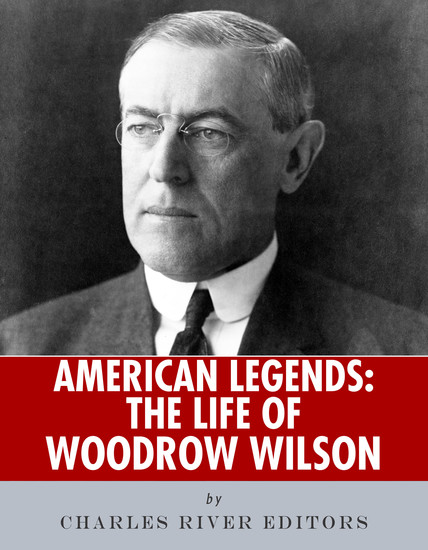
American Legends: The Life of Woodrow Wilson chronicles the life of the idealistic president, examines his groundbreaking presidency, and analyzes his legacy. Along with pictures of important people, places, and events, you will learn about Woodrow Wilson like you never have before, in no time at all.
 
 
Available since: 05/06/2025.
Print length: 56 pages.

Other books that might interest you

  • Sound N’ Fury - Rock N’ Roll Stories - cover

    Sound N’ Fury - Rock N’ Roll...

    Alan Niven

    • 0
    • 1
    • 0
    Most rock ’n’ roll books are a bore. They all have the same narrative arc and are aimed at the dwindling following that now follows an artist that has long passed their AARP date. 
    		 
    Sound N’ Fury does not have a story arc. It is a collection of anecdotes, like a record comprised of various tracks — each one has its point and purpose. Alan Niven, who guided Guns N’ Roses from the gutter of Los Angeles to Wembley Stadium, shares stories from his remarkable life as a manager with an immediacy delivered by an extraordinary recall of dialogue. Readers will encounter not just Guns N’ Roses (who have sold almost 10 million tickets to their shows) but The Rolling Stones, Aerosmith, Clarence Clemons, Whitesnake, Elton John, and others who came from humble origins and experienced fame known only to few. Small-town minds collided with worldwide adulation, expectations, and demands. The results are amusing, affirming, and, predictably, disastrous. Keep in mind that rock ’n’ roll is God’s occupation for the unemployable.
    		 
    Written with a crisp and fluid style, the magnificence and idiocy of the music world will dance off the pages and engross even those who are not rock fans.
    Show book
  • The Boy Who Survived Auschwitz - cover

    The Boy Who Survived Auschwitz

    Adriana Lerman

    • 1
    • 1
    • 0
    Levi Lerman was a cheerful and lively boy from the town of Ostrowiec. He was only fourteen years old when his life took an unimaginable turn with the outbreak of World War II in 1939, when the Nazi forces invaded Poland and occupied his hometown.
    Over a painful six-year period, Levi endured a harsh life in the Ostrowiec ghetto, suffered devastating losses, performed exhausting forced labor, and survived countless transfers to concentration camps, including the extermination camp of Auschwitz-Birkenau.
    In the middle of this torment, a single light guided him through the darkness: his unbreakable determination to live and to protect his father—a strength that helped him survive against all odds.
    Show book
  • Twelve Years a Slave - cover

    Twelve Years a Slave

    Solomon Northup

    • 0
    • 1
    • 0
    "They can take your freedom, but they cannot take your identity."
    
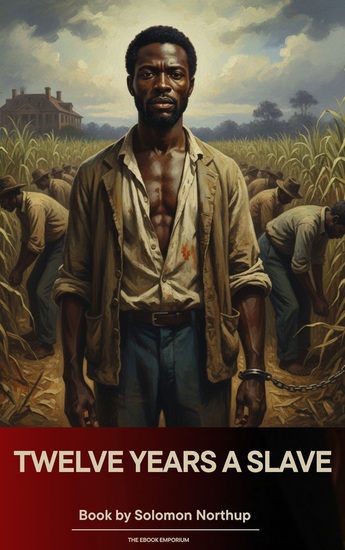
    In 1841, Solomon Northup was a professional violinist and family man living in Saratoga Springs, New York. After being lured to Washington D.C. with the promise of work, he was drugged, shackled, and stripped of his name. For the next twelve years, he was passed from master to master in the bayous of Louisiana, enduring the sadistic cruelty of men like Edwin Epps while witnessing the quiet heroism of his fellow enslaved people. Twelve Years a Slave is a visceral, unflinching look at the "peculiar institution" through the eyes of a man who knew both the dignity of liberty and the agony of the lash. It remains a foundational text of American history and a testament to the endurance of the human spirit.
    
    The Mechanics of Oppression: Northup provides a meticulous, almost journalistic description of the economics and daily operations of the slave trade. He details the cultivation of cotton and sugar, the social hierarchies of the plantation, and the psychological warfare used to keep human beings in subjection.
    
    A Quest for Justice: The narrative is propelled by Northup's secret attempts to communicate with his family in the North. His eventual rescue is a heart-stopping moment of tension and triumph, highlighting the legal and social complexities of a divided nation where a man's status as "property" or "person" could depend entirely on the color of his skin and the geography of his location.
    
    Why It Is a Vital Classic: While many narratives were edited to suit political agendas, Northup's account is praised for its stark realism and descriptive power. It provides names, dates, and locations that were later verified by historians, making it one of the most credible and devastating indictments of slavery ever written.
    
    Bear witness to the truth. Purchase "Twelve Years a Slave" today.
    Show book