Join us on a literary world trip!
Add this book to bookshelf
Grey
Write a new comment Default profile 50px
Grey
Subscribe to read the full book or read the first pages for free!
All characters reduced
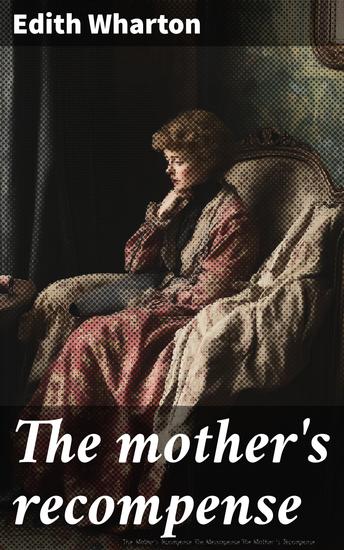
The mother's recompense - cover

The mother's recompense

Edith Wharton

Publisher: Good Press

  • 0
  • 0
  • 0

Summary

Edith Wharton's "The Mother's Recompense" is a poignant exploration of the nuanced interplay between maternal duty and personal desire, framed within the societal constraints of early 20th-century America. The narrative delves into the life of a mother, Judith, who grapples with her past choices and the long-lasting implications they have on her relationship with her children. Wharton employs a rich, introspective prose style, characteristic of her broader body of work, which often critiques the moral rigidity of contemporary society. Set against the backdrop of post-WWI America, this novel reflects the shifting attitudes toward womanhood and independence, making it a significant contribution to the literary canon of its time. Wharton, an astute observer of social dynamics and a prominent figure in American literature, drew from her own experiences as a woman navigating societal expectations to craft this narrative. Her privileged background and deep engagement with the literary and artistic circles of her era informed her exploration of themes such as sacrifice and redemption, particularly in the lives of women. "The Mother's Recompense" allows readers to glimpse the internal conflicts that defined many women's lives during Wharton's time. I highly recommend this novel to readers interested in feminist literature and the intricate psychology of its characters. Wharton's masterful storytelling invites readers to ponder the complexities of love, obligation, and the quest for personal fulfillment, making it an enduring work that resonates even in today's discussions around motherhood and identity.
Available since: 03/02/2025.
Print length: 200 pages.


Other books that might interest you

  • Middlemarch - cover

    Middlemarch

    George Eliot

    • 0
    • 0
    • 0
    Considered one of the great English novels, George Eliot's Middlemarch, A Study of Provincial Life follows myriad characters and their lives in the eponymous town, Middlemarch, in the 1800s. Utilizing a realistic style, Eliot considers issues such as religion, education, and the status of women—to name just a few.
    Show book
  • Peace on Earth Good-Will to Dogs - cover

    Peace on Earth Good-Will to Dogs

    Eleanor Hallowell Abbott

    • 0
    • 0
    • 0
    Experience the heartwarming tale of "Peace on Earth, Good-Will to Dogs" brought to life in a delightful digital audiobook format by Eleanor Hallowell Abbott. 
     
    Join us on an enchanting journey where the unconditional love and loyalty of dogs take center stage. Set against the backdrop of the holiday season, this endearing story follows the adventures of furry friends who teach us the true meaning of compassion, understanding, and the joy of giving. 
     
    Through the soothing voice of our skilled narrator, immerse yourself in the charming world of wagging tails and wet noses as the dogs embark on a mission to unite humans and bring forth an abundance of goodwill and harmony. Eleanor Hallowell Abbott's enchanting prose will tug at your heartstrings, reminding us all of the beauty in simple acts of kindness. 
     
    Whether you're snuggled up by the fireplace or on a relaxing stroll, let this captivating audiobook warm your soul and fill your heart with the spirit of love and generosity. "Peace on Earth, Good-Will to Dogs" is the perfect holiday companion, a timeless tale of friendship that will leave you with a smile and a newfound appreciation for the unspoken bond between humans and their four-legged companions.
    Show book
  • Address Unknown - A Novel - cover

    Address Unknown - A Novel

    Kathrine Kressmann Taylor

    • 0
    • 0
    • 0
    A rediscovered classic and international bestseller that recounts the gripping tale of a friendship destroyed at the hands of Nazi Germany  
    In this searing epistolary novel, Kathrine Kressmann Taylor brings vividly to life the insidious spread of Nazism through a series of letters between Max, a Jewish art dealer in San Francisco, and Martin, his friend and former business partner who has returned to Germany in 1932, just as Hitler is coming to power. 
    Originally published in Story magazine in 1938, Address Unknown became an international sensation. Credited with exposing the dangers of Nazism to American readers early on, it is also a scathing indictment of fascist movements around the world and a harrowing exposé of the power of the pen as a weapon. 
    A powerful and eloquent tale about the consequences of a friendship—and society—poisoned by extremism, Address Unknown remains hauntingly and painfully relevant today.
    Show book
  • To the Lighthouse - cover

    To the Lighthouse

    Virginia Woolf

    • 0
    • 0
    • 0
    “And all the lives we ever lived and all the lives to be are full of trees and changing leaves.” 
    To the Lighthouse chronicles the lives of the Ramsay family and their close friends, from the tranquil and motherly Mrs. Ramsay to the tragic and eccentric Mr. Ramsay, and their eight children and varied guests. Woolf uses the three movements of the novel to capture their complex family allegiances and the tensions between men and women at the time. Centered around their visits to the Isle of Skye between 1910 and 1920, the novel is an examination of the quiet, seemingly trivial moments of everyday life. As the world changes drastically around the Ramsays, they too must come to terms with, and hopefully face head on, their capacity to change along with it. 
    To the Lighthouse is number fifteen on Modern Library’s list of one hundred best English-language novels of the twentieth century, and it was named as one of the best English-language novels since 1923 by Time magazine.
    Show book
  • The Tempest - cover

    The Tempest

    William Shakespeare

    • 0
    • 0
    • 0
    The Tempest is a play by English playwright William Shakespeare, probably written in 1610-1611, and thought to be one of the last plays that Shakespeare wrote alone. After the first scene, which takes place on a ship at sea during a tempest, the rest of the story is set on a remote island, where the sorcerer Prospero, a complex and contradictory character, lives with his daughter Miranda, and his two servants: Caliban, a savage monster figure, and Ariel, an airy spirit. The play contains music and songs that evoke the spirit of enchantment on the island. It explores many themes, including magic, betrayal, revenge, and family. In Act IV, a wedding masque serves as a play-within-a-play, and contributes spectacle, allegory, and elevated language.
    Although The Tempest is listed in the First Folio as the first of Shakespeare's comedies, it deals with both tragic and comic themes, and modern criticism has created a category of romance for this and others of Shakespeare's late plays. The Tempest has been put to varied interpretations, from those that see it as a fable of art and creation, with Prospero representing Shakespeare, and Prospero's renunciation of magic signaling Shakespeare's farewell to the stage, to interpretations that consider it an allegory of Europeans colonizing foreign lands.
    Show book
  • Notes from Underground - cover

    Notes from Underground

    Fyodor Dostoyevsky

    • 0
    • 0
    • 0
    Notes from Underground also translated as Notes from the Underground or Letters from the Underworld) is a novella by Fyodor Dostoevsky, first published in the journal Epoch in 1864. It is a first-person narrative in the form of a "confession": the work was originally announced by Dostoevsky in Epoch under the title "A Confession".The novella presents itself as an excerpt from the memoirs of a bitter, isolated, unnamed narrator (generally referred to by critics as the Underground Man), who is a retired civil servant living in St. Petersburg. Although the first part of the novella has the form of a monologue, the narrator's form of address to his reader is acutely dialogized. According to Mikhail Bakhtin, in the Underground Man's confession "there is literally not a single monologically firm, undissociated word". The Underground Man's every word anticipates the words of an other, with whom he enters into an obsessive internal polemic.
    Show book