Junte-se a nós em uma viagem ao mundo dos livros!
Adicionar este livro à prateleira
Grey
Deixe um novo comentário Default profile 50px
Grey
Assine para ler o livro completo ou leia as primeiras páginas de graça!
All characters reduced
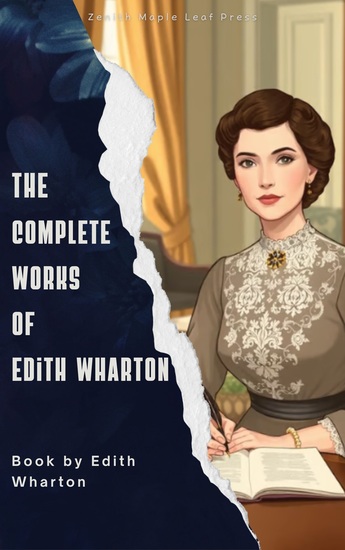
The Complete Works of Edith Wharton - cover
LER

The Complete Works of Edith Wharton

Edith Wharton

Editora: Zenith Maple Leaf Press

  • 0
  • 0
  • 0

Sinopse

Society, love, ambition — told with brilliance and precision.

Edith Wharton, the first woman to win the Pulitzer Prize for Fiction, is one of America's greatest literary voices. Known for her sharp social insight, elegant prose, and unforgettable characters, she captured the struggles of love, class, and morality in a rapidly changing world. The Complete Works of Edith Wharton gathers all of her novels, short stories, and essays in one definitive collection.

Why readers love it:

A full collection. Every novel, story, and essay brought together in one essential volume.

Masterful storytelling. Wharton's works combine realism, wit, and emotional depth.

Cultural significance. Her depictions of Gilded Age and early 20th-century society remain timeless.

A legacy of brilliance
From drawing-room dramas to profound explorations of human ambition, Wharton's works continue to be celebrated as treasures of American literature. This collection is indispensable for readers of classics, students of literature, and fans of sophisticated storytelling.

✨ Step into Wharton's world — refined, dramatic, and enduring.

👉 Click "Buy Now" and own The Complete Works of Edith Wharton—a timeless collection of novels, stories, and essays from a literary pioneer.
Disponível desde: 26/08/2025.
Comprimento de impressão: 10181 páginas.

Outros livros que poderiam interessá-lo

  • Stranger - cover

    Stranger

    Scott Beggs, Phil Cummins,...

    • 0
    • 0
    • 0
    Between doppelgängers and shape-shifters, magical healers and clever tricksters, you should trust no one – including yourself! 
    In this collection, 15 writers try to find answers to how we can truly know each other; on the way, they find psychedelic worms, supernatural roommates, new dimensions and the deeply rooted question of how to know even ourselves.
    Ver livro
  • Bizeban - From their pens to your ears genius in every story - cover

    Bizeban - From their pens to...

    Moritz Jokai

    • 0
    • 0
    • 0
    Móric Jókay de Ásva was born on the 18th February 1825 in Komárom, then in the Kingdom of Hungary but now part of Slovakia.  
    Due to his timid and delicate constitution he was educated at home until the age of 10 and then sent away to complete his studies at the Calvinist college at Pápa. 
    At 12 his father died, and he was pushed to honour him by replicating his career as a lawyer.  He studied hard and completed the curriculum at Kecskemét and Pest.  He won his first case as a newly graduated lawyer. 
    But he found a career in law to be dull and, encouraged by the positive reaction to his first play, he moved to Pest in 1845.  There he published, first in a newspaper, and then as a novel ‘Hétköznapok’ (‘Working Days’).  It was acclaimed as a masterpiece.  To add to his promise he was appointed as the editor of Életképek, the leading Hungarian journal. 
    In 1848 he married the actress, Róza Laborfalvi.  That same year Europe was awash with revolutions and Jókai, a moderate Liberal, enthusiastically supported the nationalist cause and its decision to depose the Habsburg dynasty.  The attempt failed. 
    He was now classed as a political suspect and threw himself into his literary career, writing dozens of novels, many of them masterpieces, stories, essays and the like.  In total he wrote several hundred volumes, many of them in the local Magyar language which helped arrest its declining relevance in society.  
    By 1867 the political temperature had cooled, and he entered parliament as well as becoming the editor a government journal he had founded.   His skills were much admired and helped the government navigate through several difficult matters.   
    His wife died in 1886 but although grief-stricken he continued to work and to write.  
    In 1897 the king appointed him a member of the upper house.  Two years later he caused a minor scandal by marrying the young 20-year-old actress, Bella Nagy.  At the time he was 74.
    Ver livro
  • A Moonlight Fable - cover

    A Moonlight Fable

    H. G. Wells

    • 0
    • 0
    • 0
    In H.G. Wells' short story "A Moonlight Fable," we meet a young boy whose mother gives him a beautiful, silver-white suit, instructing him to save it for a special occasion. The boy, enchanted by the suit’s beauty, dons it one moonlit night, drawn by the desire to experience its magic. Against the surreal backdrop of the moonlit landscape, the boy embarks on a whimsical adventure, seeking freedom and transcendence. However, his innocent act of rebellion leads to an unexpected, poignant conclusion. Wells crafts a fable about the fleeting nature of beauty and the bittersweet pangs of youth, love, and loss.
    Ver livro
  • Gooseberries - From their pens to your ears genius in every story - cover

    Gooseberries - From their pens...

    Anton Chekhov

    • 0
    • 0
    • 0
    Anton Pavlovich Chekhov was born on 29th January 1860 in Taganrog, on the south coast of Russia.  
    His family life was difficult; his father was strict and over-bearing but his mother was a passionate story-teller, a subject Chekhov warmed to. As he later said; ‘our talents we got from our father, but our soul from our mother’.  
    At school Chekhov was distinctly average. At 16 his father mis-managed his finances and was declared bankrupt. His family fled to Moscow. Chekhov remained and eked out a living by various means, including writing and selling short sketches to newspapers, to finish his schooling. That completed and with a scholarship to Moscow University obtained he rejoined his family. 
    He was able to help support them by selling satirical sketches and vignettes of Russian lifestyles and gradually obtained further commissions. In 1884, he qualified as a physician and, although it earned him little, he often treated the poor for free, he was fond of saying ‘Medicine is my lawful wife, and literature is my mistress.’ 
    His own health was now an issue as he began to cough up blood, a symptom of tuberculosis.  Despite this his writing success enabled him to move the family into more comfortable accommodation.  
    Chekhov wrote over 500 short stories which included many, many classics including ‘The Kiss’ and ‘The Lady with a Dog’.  His collection ‘At Dusk’ won him the coveted Pushkin Prize when was only 26.  
    He was also a major playwright beginning with the huge success of ‘Ivanov’ in 1887.   
    In 1892 Chekhov bought a country estate north of Moscow. Here his medical skills and money helped the peasants tackle outbreaks of cholera and bouts of famine. He also built three schools, a fire station and a clinic.  It left him with less time for writing but the interactions with real people gained him detailed knowledge about the peasantry and their living conditions for his stories.  
    His most famous work, ‘The Seagull’ was received disastrously at its premiere in St Petersburg. It was later restaged in Moscow to highlight its psychological aspects and was a huge success. It led to ‘Uncle Vanya’, ‘The Three Sisters’ and ‘The Cherry Orchard’.  
    Chekhov suffered a major lung hemorrhage in 1897 while visiting Moscow. A formal diagnosis confirmed tuberculosis and the doctors ordered changes to his lifestyle.  
    Despite a dread of weddings the elusive literary bachelor quietly married the actress Olga Knipper, whom he had met at rehearsals for ‘The Seagull’, on 25th May 1901. 
    By May 1904 with his tuberculosis worsening and death imminent he set off for the German town of Badenweiler writing cheerful, witty letters to his family and assuring them his health was improving.  
    On 15th July 1904 Anton Chekhov died at Badenweiler.  He was 44.
    Ver livro
  • Terrifying Love - A Halloween Anthology - cover

    Terrifying Love - A Halloween...

    Helle Gade, Victoria Larque,...

    • 0
    • 0
    • 0
    Come on a journey filled with witches, ghosts, hunters, and more. Our authors will thrill you, chill and keep you on the edge of your seat while keeping you reading well into the night.  
    Meet an artist who brings her creations to life, creatures who can save your soul, a desperate healer fighting to save humanity and a contemporary thriller involving fraud and murder and a cursed sailor looking for the reincarnation of his lost love - and these are just some of the stories contained within. 
    Join us on a voyage through the works of our wonderful authors and get a taste for their amazing talent in this collection of romance stories featuring scary encounters, obstacles, and chilling moments where we discern how love can conquer all. 
    Each story is accompanied by a poem written by award-winning poet - Helle Gade. 
    Included in this collection: 
    The Lighthouse by Elizabeth G. Ellis 
    Runes and Fangs by Victoria Larque 
    Imaginary Friends by Boris Bacic 
    The Spade and the Patio by Ada Rossi 
    Bloody Money by Annelie Janssen 
    Affliction by Cassandra Lyle
    Ver livro
  • A Haunted House - From their pens to your ears genius in every story - cover

    A Haunted House - From their...

    Virginia Woolf

    • 0
    • 0
    • 0
    Adeline Virginia Woolf was born on the 25th January 1882 in South Kensington in London. 
    Although lauded as a founder of modernist writing with such classics as ‘Orlando’, ‘Mrs Dalloway’ and ‘To the Lighthouse’ and, of course, many classic short stories, her background is filled with elements of tragedy that she somehow overcame to become such a revered writer.   Her mother died when she was 13, her half-sister Stella two years later and with it her first of several nervous breakdowns.  Appallingly it was later found that three of her half-brothers had sexually abused her so darkness must have seemed ever present.   
    She began writing professionally at age 20 but her father’s death two years later brought a complete mental collapse and she was briefly institutionalised.  Somehow she found within herself a literary career and with it great innovations in writing; she was a pioneer of “stream of consciousness”.    
    Her tight circle of friends were the founders of the Bloomsbury Group, a movement whose legacy still influences across the arts and society in many way to this day.   
    Whilst the dark periods continued to interrupt her emotional state her rate of work never ceased.  Until, on 28th March 1941, Woolf put on her overcoat, filled up its pockets with stones, and walked into the River Ouse, in Lewes, East Sussex and drowned herself.  Her body was not recovered until the 18th April.  She was 59. 
    She left behind a note which read in part “Dearest, I feel certain that I am going mad again.  I feel we can't go through another of those terrible times.  And I shan't recover this time.  I begin to hear voices, and I can't concentrate.  So I am doing what seems the best thing to do”.
    Ver livro