Junte-se a nós em uma viagem ao mundo dos livros!
Adicionar este livro à prateleira
Grey
Deixe um novo comentário Default profile 50px
Grey
Assine para ler o livro completo ou leia as primeiras páginas de graça!
All characters reduced
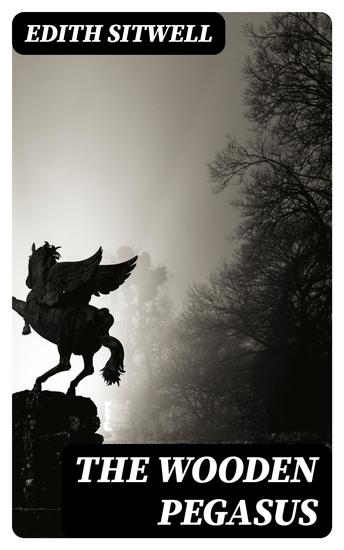
The wooden Pegasus - cover
LER

The wooden Pegasus

Edith Sitwell

Editora: DigiCat

  • 0
  • 0
  • 0

Sinopse

Edith Sitwell's "The Wooden Pegasus" is a captivating collection of poems that intertwines the mythical and the mundane, showcasing her unique brand of modernist verse. The poems are characterized by their rich imagery and innovative use of sound, reflecting Sitwell's fascination with the interplay between the physical world and the ethereal. Set against the backdrop of the early 20th century, a time marked by artistic upheaval and experimentation, Sitwell's work exemplifies the tension between traditional poetic forms and the burgeoning avant-garde movements of her day. Sitwell, a prominent figure in the literary landscape of her era, was steeped in artistic influences from a young age. Born into an aristocratic family, her exposure to literature, music, and art shaped her distinctive voice. Her experiences during the tumultuous interwar period, alongside her relationships with contemporaneous enshrined poets and artists, undoubtedly propelled her towards crafting these intricate verses that channel both personal and universal themes of longing, loss, and the pursuit of beauty. For readers seeking a profound exploration of the human experience imbued with a sense of the fantastical, "The Wooden Pegasus" is an essential read. Sitwell's mastery of language and her ability to evoke vivid visions make this collection a rich tapestry of emotions. Engaging with this work offers an opportunity to appreciate the delicate balance between the everyday and the extraordinary, a testament to Sitwell's enduring legacy in the realm of poetry.
Disponível desde: 21/07/2022.
Comprimento de impressão: 26 páginas.

Outros livros que poderiam interessá-lo

  • Horizons - cover

    Horizons

    Julie S. Paschold

    • 0
    • 0
    • 0
    In this wonderful book, Paschold uses soil, that thin layer sustaining life on earth, to organize their poetry.-- Brian Wienhold, Retired Soil Scientist 
    You will savor the insights and honesty of these poems. Particularly satisfying is this poet’s knowledge of nature.-- Marjorie Saiser, author of The Track the Whales Make 
    The strength of Paschold’s book lies in its poems that emphasize the interconnectedness of all living plants and creatures, including humans—a reality we don’t often acknowledge.-- Twyla M. Hansen, Nebraska State Poet 2013-2018, Author of Feeding the Fire (2022 WSC Press) 
    Embark on a captivating journey through the vibrant world of living soil, where new horizons await under the very ground we tread and the tapestry of human experience unfolds.  
    This is an invitation to delve deep into the bonds of family, to explore identity and the spectacular essence of beauty, and to discover the marvels of Mother Nature's cyclical dance. Horizons pays homage to the richness of soil, a precious nonrenewable resource, blending the art of poetry with the wonders of science and everyday life.  
    So come join us on this expedition, those of you from all walks of life, starting from the bedrock of soil and venturing forth until we reach the breaking of the earth, to bask in the sun. 
    Ver livro
  • aka bpNichol - A Preliminary Biography - cover

    aka bpNichol - A Preliminary...

    Frank Davey

    • 0
    • 1
    • 0
    Reflecting on the career of a prominent poet, this biography focuses on Canadian wordsmith Barrie Nichol — more commonly known by his pen name, bpNichol — who was a practicing lay psychoanalyst and vice president of one the largest and long-lasting North American communes for more than a decade. Recognizing his international influence as both a visual and sound poet, Nichol's literary achievements are reviewed, including The Martyrology, a renowned, seven-volume poem, four novels, two musical comedies, six children's books, hundreds of hand-drawn visual poems, and even 10 episodes of Jim Henson's hit television series Fraggle Rock. Penned by one of Nichol's numerous literary collaborators, this account reveals the close connections among the writer's various activities, particularly how the autobiographical inquiries and Freudian dream theory linked with the young poet's biographical self-awareness. The book demonstrates how the Subject's main psychoanalytic client was his own writing, following Nichol as he explored its slips, accidental puns, and unintended meanings and implications for the communal future of the human species, both in high literature and comical prime time television.
    Ver livro
  • For the Marriage of Faustus and Helen - Poem attempting to bridge the gap between the classic past and the oncoming industrial era - cover

    For the Marriage of Faustus and...

    Hart Crane

    • 0
    • 0
    • 0
    Harold Hart Crane was born on the 21st July 1899 in Garrettsville, Ohio. 
    Crane was drawn to literature at an early age, becoming a voracious reader and pursuing self-education rather than attach himself to a more formal college education, although he did attend East High School in 1913.  His developing love of poetry was nurtured with the works of the English Romantics and the French Symbolists, as well as near contemporary American poets. 
    Much of his youth was spent shuttling between Cleveland and New York as his parents’ marriage descended into continuing conflict before they separated with Crane still in his teens.  Shortly after Crane attempted to enlist in the U S Military but was rejected for being a minor. 
    His first published poem also came in 1917 with ‘C33’ and its reference to the cell number that Oscar Wilde was incarcerated in. 
    Crane now centred more of his time in New York and immersed himself in the vibrant artistic scene of Greenwich Village.  Alongside this he dabbled in various jobs to support himself, including copywriting and work in a munitions factory, as he continued to develop his ambitions for a poetic career.   
    His early work was already being noticed for its lush and rich use of words and by the time ‘White Buildings’ was published in 1926 he was being critically acclaimed. 
    Despite this success his personal life was troubled.  It was both nourishing his work and fuelling complex patterns of despair as he sought to establish his identity.  In a time when homosexuality was openly condemned his openly gay attitude sat uneasily as he pursued relationships that were both intense and emotionally fraught. 
    His acclaimed work ‘The Bridge’ in 1930 was both ambitious and a foundation stone for new American poetry.  Against this his battles with depression and alcoholism were being lost. 
    Hart Crane died on the 27th April 1932 by jumping from the deck of a steamship into the Gulf of Mexico upon his return to the United States from Mexico.  He was 32.
    Ver livro
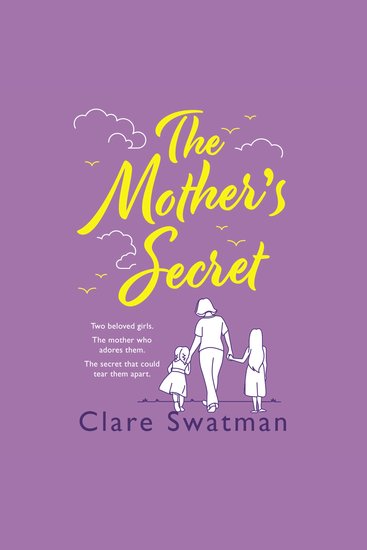
  • The Mother's Secret - A heartbreaking but uplifting novel from the author of Before We Grow Old - cover

    The Mother's Secret - A...

    Clare Swatman

    • 0
    • 0
    • 0
    There’s nothing a mother wouldn’t do for her children – even if it means telling a lie… 
    Sisters Georgie and Kate have always been close. Brought up by their mum Jan after the death of their father, this family of women have always been able to rely on each other.  
    Jan loves her daughters with all her heart. She knows some people think she’s an over-protective mother, but they didn’t know what she knows. She has always kept her girls close but now she can feel them slipping away. 
    Secrets have a nasty habit of refusing to stay hidden, and now Georgie and Kate are about to discover that while lies can cause pain, the truth could destroy them all. 
    Two beloved girls. The mother who adores him. The secret that could tear them apart. 
    Bestselling novelist Clare Swatman returns with a heart-breaking, devastating, but ultimately uplifting story about mothers, daughters and the bonds of love. 
    Praise for Clare Swatman: 
    'Before We Grow Old is an unashamedly big, life-affirming, tear-jerking love story. Beautifully told, characters Fran and Will had me from the first page, and crying buckets by the last ! Just gorgeous.' Katy Regan 
    'Before We Grow Old took me on an intense emotional journey, and I cried at the end (and I rarely cry when I'm reading!) The portrayal of the mother and son bond - with its peaks and troughs of intensity and frustration - felt incredibly real, and the dialogue in particular was brilliantly done.' Victoria Scott  
    'A beautifully written tale of enduring love' - Rowan Coleman  
    'Irresistible . . . A delightfully bittersweet story that will appeal to fans of One Day' - Sunday Mirror 'Wonderful' - Sun
    Ver livro
  • Deserted - cover

    Deserted

    BOb G Kisiki

    • 0
    • 0
    • 0
    Sixteen year old Alyna Kalisa returns from school to find a note from her big sister, Adisa, saying that she's left home to start a new life. Adisa has been looking after Alyna, their 14 year old brother Kibo Kalisa and her own son, Simeon Kafuuma(Four). now the three children are on their own. Afraid that they will be taken to an abondoned children's home if anyone finds out that their big sister is gone. 
    As the two struggle to mange the househol on their own, Simmi's pre-school teacher notices that something is the matter and begins nosing around. Meanwhile, Alyna and Kibo are discovering details of their sister's secret life...
    Ver livro
  • The Poetry of John Milton - Sparkling poems from the famed man behind Paradise Lost - cover

    The Poetry of John Milton -...

    John Milton

    • 0
    • 0
    • 0
    John Milton was born in Bread Street, London, on December 9th, 1608.  His early years were privately tutored before gaining a place at St Paul’s School and in 1625 he matriculated at Christ's College, Cambridge, earning a BA in 1629 and an MA in 1632. At Cambridge he had developed a reputation for poetic skill but also experienced alienation from his peers and university life as a whole.  
    The next 6 years were spent in private study. He read both ancient and modern works of theology, philosophy, history, politics, literature and science, in preparation for a poetical career.  Milton mastered Latin, Greek, Hebrew, French, Spanish, and Italian. To these he would add Old English (whilst researching his History of Britain) and also acquired more than a passing acquaintance in Dutch.  
    Although he was studying, some of his poetry from this time is remarkable; L’Allegro and Il Penseroso in 1631 and Lycidias in 1638. 
    In May 1638, Milton embarked upon a 15 month tour of France and Italy. These travels added a new and direct experience of artistic and religious traditions, especially Roman Catholicism.  He cut the journey short to return home during the summer of 1639 because of what he claimed were "sad tidings of civil war in England."  
    Once home, Milton wrote prose tracts against episcopacy, in the service of the Puritan and Parliamentary cause.  
    He married 16-year-old Mary Powell in June 1643 but she left him after only a few months during which he wrote and published several writings on divorce. Mary did return after 3 years and their life thereafter seemed harmonious.  Milton received a hostile response to the divorce tracts and drove him to write Areopagitica, his celebrated attack on pre-printing censorship.  
    With the parliamentary victory in the Civil War, Milton wrote The Tenure of Kings and Magistrates (1649) which defended popular government and implicitly sanctioned the regicide which led to his appointment as Secretary for Foreign Tongues by the Council of State.  
    On 24 February 1652 Milton published his Latin defense of the English People, Defensio Pro Populo Anglicano, also known as the First Defense. Milton's Latin prose and intellectual sweep, quickly gained him a European reputation.  
    Tragically his first wife, Mary, died on May 5th, 1652 following the birth of their fourth child.   The following year Milton had become totally blind, probably due to glaucoma.  He then had to dictate his verse and prose to helpers, one of whom was the poet Andrew Marvell. 
    He married again to Katherine Woodcock but she died in February 1658, less than four months after giving birth to a daughter, who also tragically died.  
    Though Cromwell’s death in 1658 caused the English Republic to collapse Milton stubbornly clung to his beliefs and in 1659 he published A Treatise of Civil Power, attacking the concept of a state-dominated church. Upon the Restoration in May 1660, Milton went into hiding for his life. An arrest warrant was issued and his writings burnt. He re-emerged after a general pardon was issued, but was nevertheless arrested and briefly imprisoned before influential friends, such as Marvell, now an MP, intervened 
    His third marriage was to Elizabeth Mynshull. Despite a 31-year age gap, the marriage seemed happy and Milton spent the remaining decade of his life living quietly in London, apart from a short spell in Chalfont St. Giles, during the Great Plague of London.  
    Milton was to now publish his greatest works, which had been gestating for many years.
    Ver livro