Join us on a literary world trip!
Add this book to bookshelf
Grey
Write a new comment Default profile 50px
Grey
Subscribe to read the full book or read the first pages for free!
All characters reduced
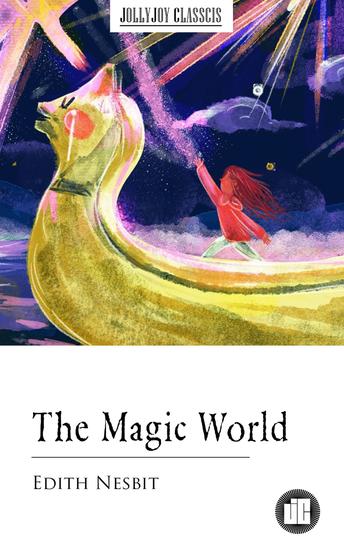
The Magic World - cover

The Magic World

Edith Nesbit

Publisher: Delhi Open Book

  • 0
  • 0
  • 0

Summary

Edith Nesbit (married name Edith Bland; 15 August 1858 – 4 May 1924) was an English author and poet; she published her books for children under the name of E. Nesbit.She wrote or collaborated on over 60 books of fiction for children, several of which have been adapted for film and television. She was also a political activist and co-founded the Fabian Society, a socialist organisation later connected to the Labour Party.Edith Nesbit was born in Kennington, Surrey, the daughter of agricultural chemist and schoolmaster John Collis Nesbit. The death of her father when she was four and the continuing ill health of her sister meant that Nesbit had a transitory childhood, her family moving across Europe in search of healthy climates only to return to England for financial reasons. Nesbit therefore spent her childhood attaining an education from whatever sources were available—local grammars, the occasional boarding school but mainly through reading.At 17 her family finally settled in London and aged 19, Nesbit met Hubert Bland, a political activist and writer. They became lovers and when Nesbit found she was pregnant they became engaged, marrying in April 1880. After this scandalous (for Victorian society) beginning, the marriage would be an unconventional one. Initially, the couple lived separately—Nesbit with her family and Bland with his mother and her live-in companion Maggie Doran.Initially, Edith Nesbit books were novels meant for adults, including The Prophet's Mantle (1885) and The Marden Mystery (1896) about the early days of the socialist movement. Written under the pen name of her third child 'Fabian Bland', these books were not successful. Nesbit generated an income for the family by lecturing around the country on socialism and through her journalism (she was editor of the Fabian Society's journal, Today).
Available since: 05/28/2024.
Print length: 198 pages.

Other books that might interest you

  • Tower of Ivory - A Munich Singer and an English Peer - cover

    Tower of Ivory - A Munich Singer...

    Gertrude Atherton

    • 0
    • 0
    • 0
    John Ordham, a young Englishman in Munich, falls under the spell of Margarethe Styr, the singer the whole city worships in the years when Wagner had hardly a foothold outside Germany — while other people make quite other plans for him. Atherton knew the Munich of the opera house and the court at first hand and wrote it with an outsider's precision; the book is about what art demands of the artist, and what a great name demands of the man who inherits it. Fifty-three plates, among them Hampstead Heath views by John Constable, trace the landscapes and city streets that frame this story of art, ambition, and the pull of place.
    Show book
  • The Mutiny Of The Elsinore - cover

    The Mutiny Of The Elsinore

    Jack London

    • 0
    • 0
    • 0
    Life has lost its savor for Mr. Pathurst. New York, fame, women, and the arts have all become tedious. Searching for excitement, he books passage on a cargo vessel sailing from Baltimore to Seattle on a route that travels around the treacherous Cape Horn. Pathurst encounters more than he ever expected in rough seas, turbulent storms, and a mutinous crew. His epic struggles aboard the sailing ship Elsinore have given him a new love for life, but will he survive to profit from it?
    Show book
  • The Balloon-Hoax - cover

    The Balloon-Hoax

    Edgar Allan Poe

    • 0
    • 0
    • 0
    "The Balloon-Hoax" is the title used in collections and anthologies of a newspaper article by American writer Edgar Allan Poe, first published in 1844 in The Sun newspaper in New York. Originally presented as a true story, it detailed European Monck Mason's trip across the Atlantic Ocean in only three days in a gas balloon. It was later revealed as a hoax and the story was retracted two days later.
    The story now known as "The Balloon-Hoax" was first printed in The Sun newspaper in New York. The article provided a detailed and highly plausible account of a lighter-than-air balloon trip by European balloonist Monck Mason across the Atlantic Ocean taking 75 hours, along with a diagram and specifications of the craft.
    Show book
  • The Mudfog Papers - cover

    The Mudfog Papers

    Charles Dickens

    • 0
    • 0
    • 0
    Dickens parodies the proceedings of the British Association for the Advancement of Science with these records of "The Mudfog Society for the Advancement of Everything" and its delightful professors Snore, Doze, and Wheezy. Originally published monthly in Bentley's Miscellany from 1837-38, "The Mudfog Papers" makes use of Parliamentary reports, memoirs, and posthumous papers, as did Dicken's earlier comic success, "The Pickwick Papers."
    Show book
  • Mesmeric Revelation - cover

    Mesmeric Revelation

    Edgar Allan Poe

    • 0
    • 0
    • 0
    Whatever doubt may still envelop the rationale of mesmerism, its startling facts are now almost universally admitted. Of these latter, those who doubt, are your mere doubters by profession—an unprofitable and disreputable tribe. There can be no more absolute waste of time than the attempt to prove, at the present day, that man, by mere exercise of will, can so impress his fellow, as to cast him into an abnormal condition, of which the phenomena resemble very closely those of death, or at least resemble them more nearly than they do the phenomena of any other normal condition within our cognizance; that, while in this state, the person so impressed employs only with effort, and then feebly, the external organs of sense, yet perceives, with keenly refined perception, and through channels supposed unknown, matters beyond the scope of the physical organs; that, moreover, his intellectual faculties are wonderfully exalted and invigorated; that his sympathies with the person so impressing him are profound; and, finally, that his susceptibility to the impression increases with its frequency, while, in the same proportion, the peculiar phenomena elicited are more extended and more pronounced.
    Show book
  • The Little Governess - cover

    The Little Governess

    Katherine Mansfield

    • 0
    • 0
    • 0
    "The Little Governess" is a 1915 short story by Katherine Mansfield. It was first published in Signature on 18 October 1915 under the pen name of Matilda Berry, and later reprinted in Bliss and Other Stories. The text is written in the modernist mode, without a set structure, and with many shifts in the narrative.
    After receiving advice from the lady at the Governess Bureau, a young and naive English governess (referred to throughout as "the little governess") is off on the train from France to Munich, from where she will go to a new house for work. The governess has never been abroad before, and is duly forewarned of the dangers by the lady at the Governess Bureau, who tells her to "mistrust people at first". She is harassed by a porter on the way to her train, and once aboard, by a group of rowdy French men.
    Show book