Little Death
Edison Marshall
Publisher: Alien Ebooks
Summary
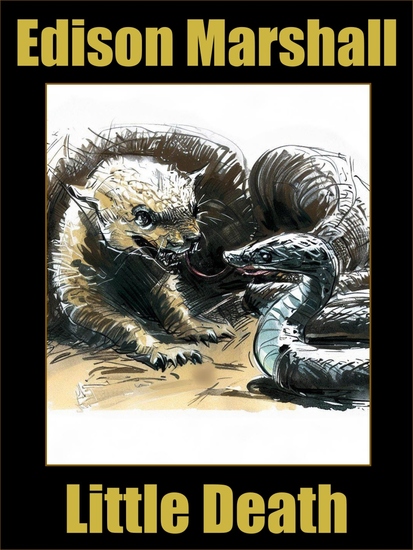
Orignally published in The Blue Book Magazine (Oct 1920), "Little Death" tells the story of a mink named Little Death, following his interactions with a farmer and fellow forest creatures.
Publisher: Alien Ebooks
Orignally published in The Blue Book Magazine (Oct 1920), "Little Death" tells the story of a mink named Little Death, following his interactions with a farmer and fellow forest creatures.
"Reality, she thought, could not be contained; it flowed like the waves against the shore." To the Lighthouse (1927) is one of the most moving masterpieces of modernist literature, a ground-breaking novel that dives deep into the exploration of memory, family, longing and the fragile nature of time. The novel revolves around the Ramsay family and their guests across two summer visits to their holiday home on the Isle of Skye, one before and one after the First World War. Through shifting perspectives and the flow of consciousness, the author captures the beauty of everyday moments—a gesture, a glance, a passing thought—and reveals how they reverberate across time. As children play and adults converse, paint, and reflect, perspectives shift and relationships change in this captivating blend of reminiscence, social critique, and insightful exploration of the human capacity for change. Virginia Woolf (1882 – 1941) was one of the most significant novelists of the twentieth century. A pioneering modernist writer and progressive thinker, she is known for her use of innovative literary techniques and influence on feminist criticism. Born in London to a literary family, she became a prominent figure in the Bloomsbury Group, surrounded by intellectuals and artists who shaped her views on feminism and society. Woolf's notable works, including Mrs. Dalloway, To the Lighthouse, and Orlando, explore themes such as identity, time, and the complexities of human relationships. Her writings have left a lasting legacy, positioning her as a vital voice in 20th-century literature and feminism.Show book
Lose Yourself in the Ghostly Glow of a St. Petersburg Summer. In the ethereal twilight of the Russian "White Nights," a lonely young man—known only as the Dreamer—wanders the deserted streets of St. Petersburg. His solitary existence is suddenly transformed when he saves a young woman, Nastenka, from an unwanted pursuer. Over the course of four hauntingly beautiful nights, the two strangers share their deepest secrets, hopes, and heartbreaks. Fyodor Dostoevsky's White Nights is a profound exploration of the human heart's capacity for both intense joy and crushing isolation. As the Dreamer emerges from his world of shadows to experience a fleeting brush with real love, Dostoevsky masterfully captures the bittersweet transition from youth to disillusionment. This definitive edition presents one of Dostoevsky's most lyrical and accessible works. Subtitled "A Sentimental Story from the Diary of a Dreamer," this novella remains a timeless meditation on the beauty of a single moment of happiness and the enduring power of memory. Experience the magic of the midnight sun. Buy "White Nights" today and discover the soul of Russian literature.Show book
'Who in the rainbow can draw the line where the violet tint ends and the orange tint begins? Distinctly we see the difference of the colours, but where exactly does the one first blendingly enter into the other? So with sanity and insanity.' Sadly left unfinished by his death in 1891, Melville's novella Billy Budd is acclaimed by critics and quickly took its place in the literary canon. Billy Budd, a handsome sailor working on a British naval ship in the eighteenth century, is falsely accused of mutiny against the ship's captain by the master-at-arms, John Claggart. Billy, who unfortunately obtains a speech impediment, is overcome by the accusation and unable to verbally defend himself against Claggart's unfounded hate for him. Instead, he lashes out at Claggart, much to his own demise. An instant classic once published, Billy Budd is a tragic tale that has been adapted into film, plays and even an opera. This audiobook edition is narrated by the talented Christopher Ragland. Herman Melville (1819 – 1891) was a novelist and poet of the American Renaissance, best known for his works in adventure and travel writing, including Mody Dick (1851) and Typee (1846). His writing was met with mixed reviews by his contemporaries; it wasn't until the early twentieth century that he gained recognition for his literary genius.Show book
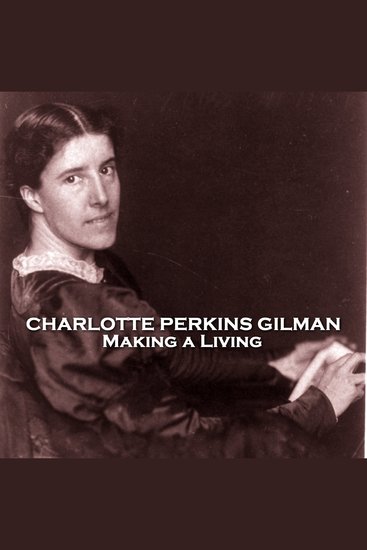
Charlotte Perkins Gilman was born on 3rd July 1860 in Hartford, Connecticut, to an unaffectionate mother and a father who abandoned her and her older brother to a life of poverty. Inevitably her schooling was limited and by 15 she had attended seven different schools but received only four years education. However Charlotte was resourceful and did spend time with her father’s aunts – the suffragist Isabella Beecher Hooker and the ‘Uncle Tom Cabin’s’ author, Harriet Beecher Stowe as well as many hours at the public library studying ancient civilisations. In 1878, she enrolled in classes at the Rhode Island School of Design where she met Martha Luther and they developed a close relationship until Luther married in 1881. Charlotte was devastated and detested romance and love until she met and married the artist Charles Walter Stetson. Their only child, Katharine Beecher Stetson, was born in 1885 but left Charlotte with post-natal depression, then often dismissed as a case of hysteria or nerves. Unsuited to domestic life she ruptured her life and moved to California with Katherine. She divorced in 1894 and then sent Katharine east to live with her father and his second wife confirming that his paternal rights be acknowledged and that Katherine establish a relationship with her father. After her mother died in 1893, Charlotte moved back east and became involved with her first cousin, Wall Street attorney, Houghton Gilman who she married in 1900. After his death she moved back to California, where Katherine now lived. Her most popular story is ‘The Yellow Wallpaper’ which touched on her own post-partum depression and underlined the need for women to be responsible for their mental and physical well-being, as the narrator is ordered by her husband/doctor to take compete rest in her room where she is isolated and becomes obsessed with the revolting yellow wallpaper. She wrote other notable short stories the best of which we also include. Charlotte lectured widely for social reform, wrote important non-fiction works that questioned our patriarchal system and left a legacy as a leading and positive spokesperson for feminism. She was diagnosed with incurable breast cancer in 1932 and, as she wrote in her suicide note and autobiography, she ‘chose chloroform over cancer’ Charlotte Perkins Gilman took her own life on 17th August 1935, aged 75, in Pasadena, California.Show book
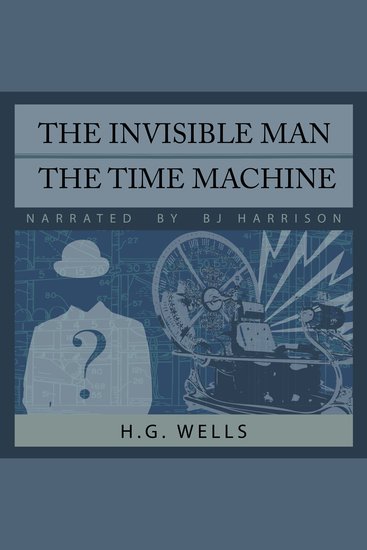
Two novellas by the incomparable H.G. Wells: First, The Invisible Man - A scientist theorizes that if a person's refractive index is changed to exactly that of air his body does not absorb or reflect light, then he will not be visible. He successfully carries out this procedure on himself, but cannot become visible again, becoming mentally unstable as a result.Next, The Time Machine - Follow the Time Traveller to the year 802,701 A.D. He finds a golden race of small, soft, innocent people. but what is it that lurks in the dark shadows? And what happens when the time machine is stolen?Show book
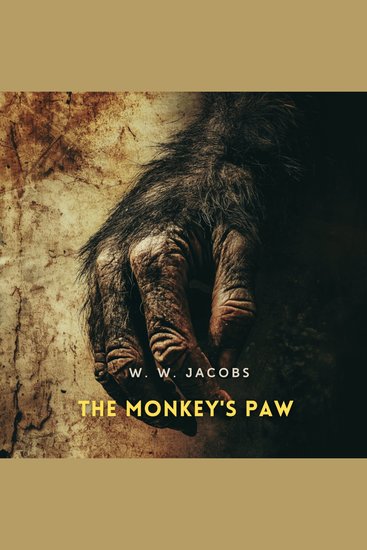
The Monkey’s Paw by W. W. Jacobs is a chilling tale of fate, greed, and the dangers of tampering with forces beyond human control. The story follows the White family, who acquire a mysterious monkey’s paw said to grant three wishes. Despite warnings of dire consequences, they succumb to curiosity and wish for wealth. Tragedy strikes when their wish is fulfilled at a devastating cost. As grief consumes them, further wishes spiral into horror, revealing the paw’s sinister power. Jacobs masterfully crafts an atmosphere of suspense and inevitability, exploring themes of unintended consequences and humanity’s futile attempts to defy fate. A timeless classic, The Monkey’s Paw serves as a haunting reminder that some desires come at too great a price.Show book